
The fintech sector is experiencing a significant transformation as SoFi Technologies (NASDAQ: SOFI) increasingly challenges established players such as PayPal Holdings (NASDAQ: PYPL). While PayPal remains a leading name in digital payments and online checkout services, growth has become more difficult amid market saturation and evolving consumer expectations.
Brokers from Oryxbox note that SoFi has successfully evolved from a student loan refinancing specialist into a fully chartered digital banking platform, offering consumers a comprehensive financial ecosystem.
This strategic expansion highlights a broader industry trend toward integrated financial services, positioning SoFi as a prominent contender in the next generation of fintech innovation and long-term growth.
The Value Trap Profile: Sizing Up PayPal’s Structural Slowdown
From a valuation standpoint, contrarian investors often view PayPal as a buy-the-dip candidate. The stock has fallen 32% over the past three years and remains about 86% below its 2021 peak, reflecting a significant reset in market sentiment. It now trades at a compressed forward P/E of under 8.5× based on 2026 earnings expectations.
However, this low valuation reflects structural challenges that continue to weigh on growth and investor sentiment. User growth is slowing as PayPal approaches saturation with about 439 million active accounts worldwide. Net additions have slowed to roughly 3 million annually, or about 0.6% growth, indicating limited room for expansion in core markets.
Meanwhile, competitive pressure from Apple Pay and Google Pay is eroding PayPal’s checkout dominance across both online and in-store transactions. This reduces pricing power and weakens the stickiness of its branded checkout ecosystem.
Margin pressure is also building as lower-margin unbranded processing, especially Braintree, grows faster than the higher-margin branded checkout business. This mix shift reduces operating leverage and weighs on overall profitability.
Leadership transition adds further uncertainty, with Alex Chriss now leading the company through a challenging turnaround environment. While PayPal still generates over $6 billion in annual free cash flow and supports significant share buybacks, growth expectations have been reset. Analysts now expect long-term earnings growth to moderate to roughly 7%–8% annually.
Despite these headwinds, PayPal remains a highly cash-generative platform with a strong global payments footprint and significant scale advantages in digital commerce. Its large installed base and integrated merchant ecosystem continue to provide resilience even as competitive pressures increase.
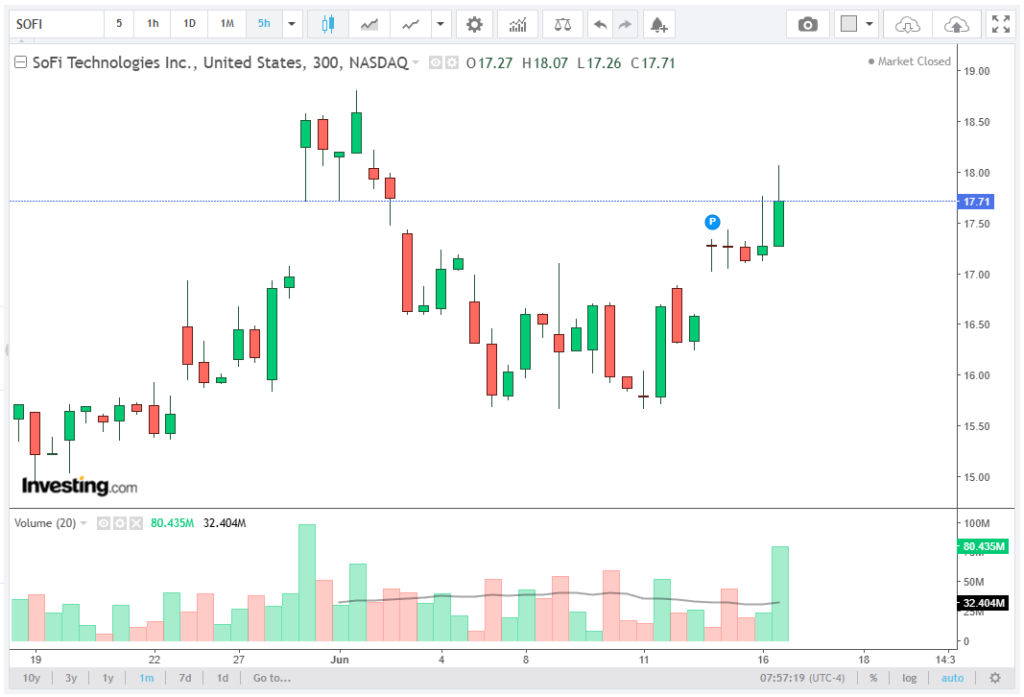
However, without renewed acceleration in account growth or a clear re-acceleration in branded checkout volume, multiple expansion is likely to remain limited in the near term. Investors, therefore, continue to balance valuation appeal against structural risk and evolving competition dynamics.
The Disruption Engine: Checking the Metrics on SoFi’s Scaled Flywheel
In stark contrast to the stagnation observed at PayPal, SoFi Technologies continues to post explosive operational growth. The core of SoFi’s long-term competitive edge lies in its single-app “financial services flywheel.”
By seamlessly clustering high-yield checking, automated investment accounts, credit cards, personal loans, and mortgages into one cohesive digital interface, SoFi drives down customer acquisition costs while maximizing cross-selling metrics.
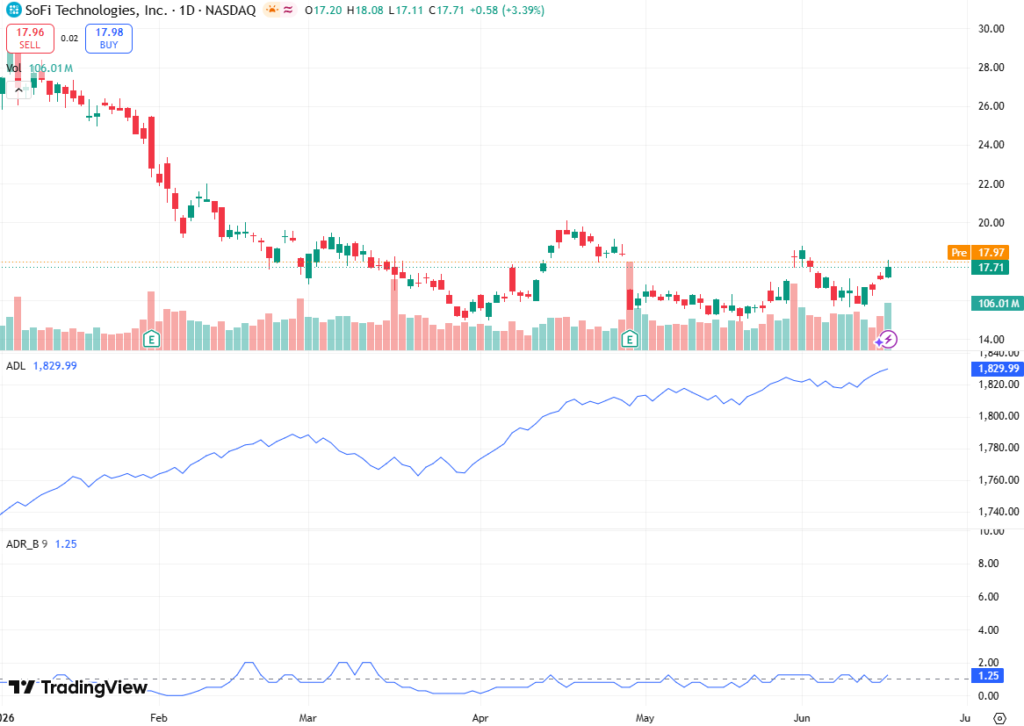
The real-world execution of this model is clear. SoFi’s total membership base has rocketed from 5.22 million users in 2022 to a dominant 14.70 million members in mid-2026. Global public markets have responded aggressively to this customer-capturing machine, sending SoFi shares up 75% over the trailing three-year window.
More importantly, institutional analysts expect this momentum to translate directly into bottom-line profitability, projecting an exceptional 31% compound annual earnings growth rate (CAGR) over the next three to five years.
Evaluating the Operational Counterweights and Risk Exposures
No high-growth financial ecosystem is entirely immune to operational risk. Allocating capital to a disruptor like SoFi Technologies requires assessing its key vulnerabilities.
Premium execution multiples are a central factor. Trading at roughly 30× forward 2026 earnings, SoFi embeds strong expectations around customer acquisition, product adoption, and net interest margins. At this level, even modest execution misses can trigger sharp share price volatility.
Systemic balance sheet credit risk is also material. Since obtaining its national bank charter, SoFi has increasingly originated and held loans on its balance sheet, raising exposure to credit cycles. While this can enhance returns in stable conditions, it also increases sensitivity to macroeconomic downturns, where rising defaults and credit stress can pressure both earnings and capital strength.
The Long-Term Portfolio Allocation Strategy
For capital allocators prioritizing extreme downside protection, PayPal’s robust cash generation and deep-value multiple offer a defensive, range-bound cushion. However, defensively treading water rarely produces long-term, index-beating alpha.
For structural portfolios targeted at aggressive wealth compounding, SoFi Technologies represents a fundamentally superior fintech asset. Its proven cross-selling architecture, explosive demographic adoption, and an earnings growth trajectory nearly quadruple that of legacy platforms position it perfectly to capture market share across the next decade of digital financial services.


