
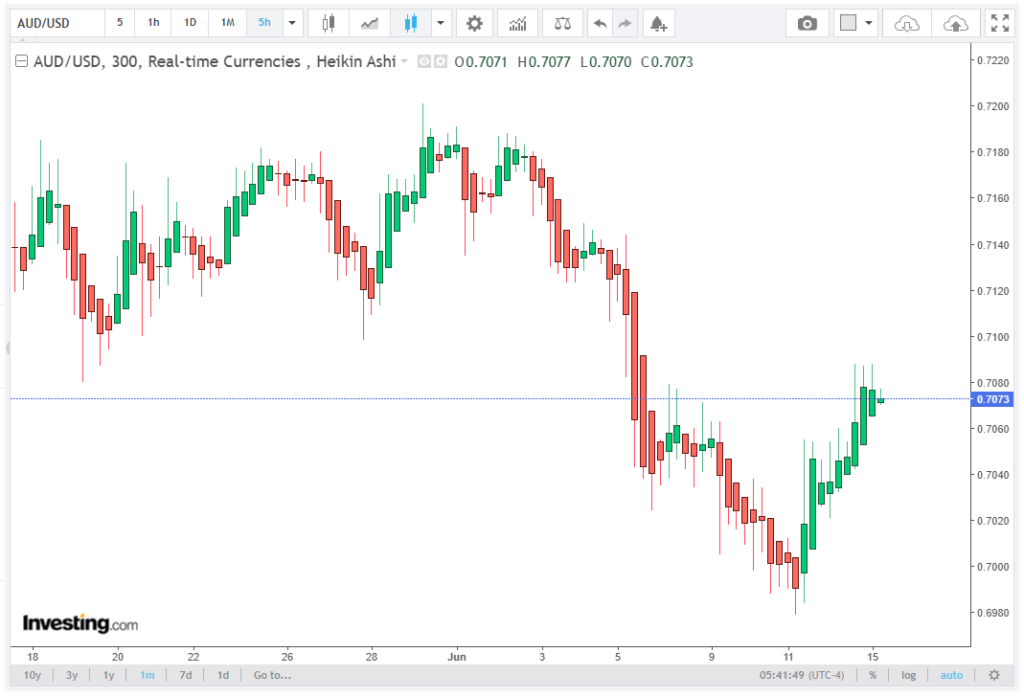
The Australian Dollar (AUD) extended gains against the US Dollar (USD), with AUD/USD rising approximately 0.5% after a mild decline in the previous session. The pair is trading near 0.7080 during Asian trading hours, reflecting a shift toward risk-on positioning across FX markets. Vidasana Group’s experts offer a structured and detailed overview of this topic in the article.
Importantly, the move higher comes even though interest rate expectations for Australia remain largely anchored. Market pricing implies near-zero probability of an RBA rate change at the upcoming June meeting, while implied odds for a follow-up tightening cycle in August have been reduced to below 20%, down from prior estimates closer to the 30–35% range earlier in the month.
US Dollar Weakens as Risk Premium Compresses and Volatility Falls
The US Dollar Index (DXY) has retreated as global safe-haven demand contracts, following a sharp reduction in geopolitical risk premiums. Market participants are responding to the announcement of a US–Iran de-escalation agreement, which materially reduces tail-risk pricing across energy-linked and inflation-sensitive assets.
This shift has triggered a broader macro repricing, with implied volatility in FX markets declining and equity risk proxies improving. The direct FX transmission channel has seen lower demand for USD hedging flows, particularly from macro funds and leveraged accounts.
The reduction in geopolitical tension is also influencing inflation expectations. With reduced risk of supply disruptions in energy markets, particularly through key shipping routes, breakeven inflation rates have eased modestly, reinforcing expectations that US monetary policy may remain less restrictive than previously priced.
Fed Rate Expectations Reprice Sharply Lower
Interest rate derivatives show a clear shift in expectations for US monetary policy. According to the CME FedWatch pricing model, the probability of a Fed rate hike by December has fallen to approximately 27%, down from around 40% just one week earlier.
This 13 percentage point decline reflects a rapid adjustment in terminal rate expectations driven by falling inflation risk premiums and easing global supply concerns. The implied forward curve has flattened, with the market reducing expectations for sustained restrictive policy beyond the near term.
Lower rate hike probability reduces support for the USD, as interest rate differentials versus other G10 currencies compress. The USD typically benefits when US yields outperform global peers, but current pricing suggests a stabilization in yield spreads, particularly at the front end of the curve.
Domestic Policy Expectations Remain Anchored Ahead of CPI Release
Australian monetary policy expectations remain heavily data-dependent. The market is now fully pricing a no-change outcome for the upcoming RBA meeting, with only marginal probability assigned to any hawkish shift in guidance.
Attention is increasingly focused on the upcoming May CPI release scheduled for June 24, which is expected to be the key macro catalyst for reassessing the inflation trajectory. Consensus estimates suggest headline inflation remaining within a 3.4%–3.6% year-on-year range, while trimmed mean inflation is expected near 3.8%–4.0%.
For the RBA, persistence in core inflation above the 3% threshold remains critical for any consideration of policy tightening. Without a clear upside surprise in inflation data, forward rate expectations are likely to remain stable or drift lower, limiting sustained AUD appreciation driven by domestic fundamentals.
AUD/USD Technical Structure and Flow Dynamics
From a technical perspective, AUD/USD is currently consolidating within a 0.7000–0.7100 range, with intraday momentum favoring continuation toward the upper boundary. A sustained break above 0.7100 would expose the 0.7150–0.7180 resistance cluster, where prior distribution zones are located.
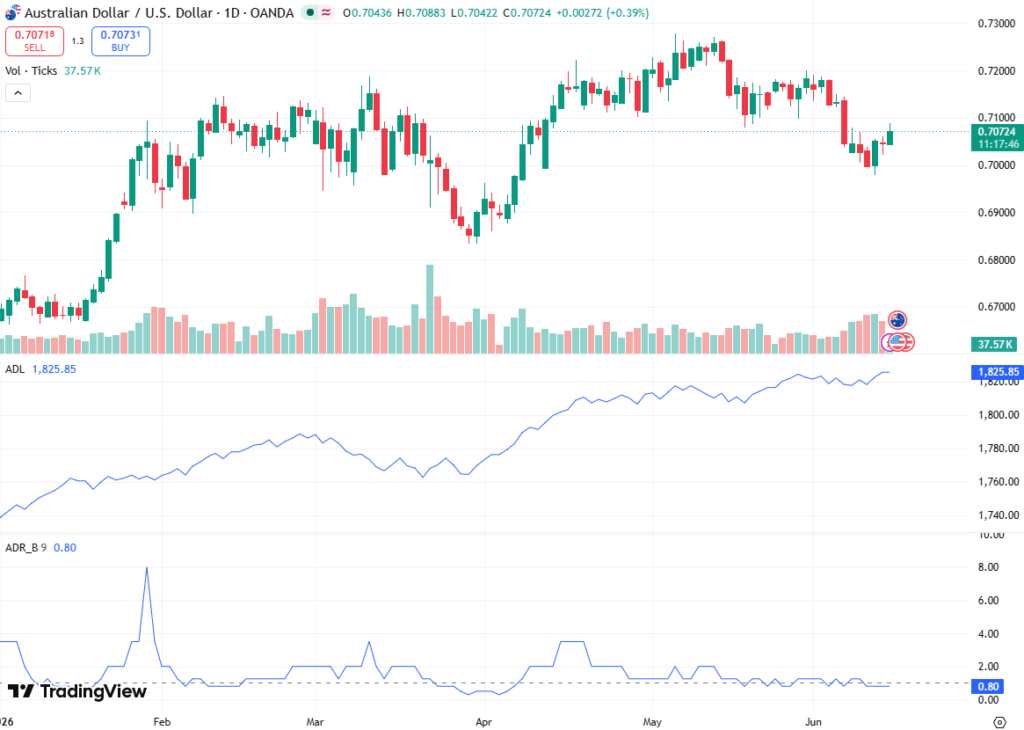
On the downside, the 0.7000 level remains a critical psychological and liquidity threshold. A break below this zone would likely trigger systematic selling, particularly from momentum-driven strategies and macro funds, potentially exposing the 0.6950 region.
Order flow data suggests that recent gains are being driven primarily by USD short-covering rather than aggressive AUD accumulation, indicating that the rally remains tactically driven rather than structurally supported.
Conclusion: Risk Appetite Drives AUD, but Rate Divergence Caps Upside
The recent appreciation in the Australian Dollar reflects a broader shift toward risk-on positioning, supported by a sharp decline in geopolitical uncertainty and a corresponding reduction in US Dollar safe-haven demand.
However, despite the AUD/USD rally toward 0.7080, medium-term upside remains constrained by limited divergence in monetary policy expectations. The RBA’s neutral stance, combined with subdued inflation surprises, reduces the likelihood of sustained rate-driven appreciation.
At the same time, US monetary policy expectations have shifted meaningfully, with Fed rate hike probability falling to 27% for December, reinforcing downward pressure on the USD through narrowing yield differentials.
Overall, the pair remains highly sensitive to incoming macro data, particularly Australian inflation on June 24 and subsequent US inflation prints, which will determine whether the current risk-driven AUD strength evolves into a more durable trend or remains a tactical repricing of USD exposure.


