
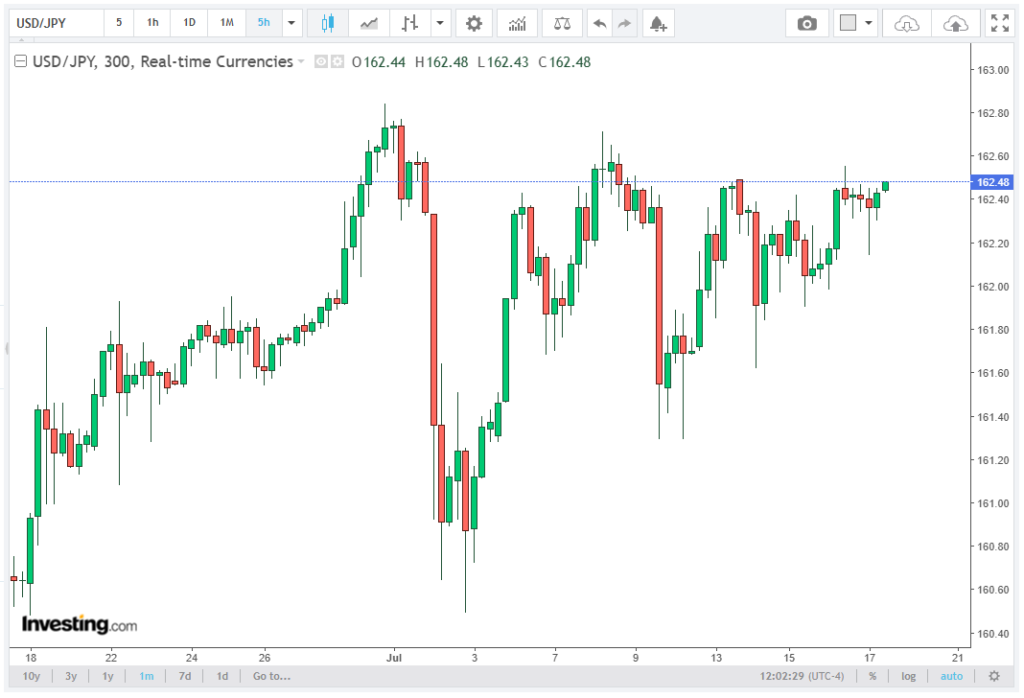
The Japanese Yen (JPY) remains under sustained selling pressure as USD/JPY trades close to four-decade highs, reflecting a powerful combination of interest-rate divergence, elevated energy costs, and renewed US Dollar (USD) strength.
The currency pair continues to hover near historically high levels as investors maintain a preference for higher-yielding US assets over lower-return Japanese investments.
In the article below, the experts at South Quantum Group examine this topic from multiple perspectives.
The primary driver behind the Yen’s weakness remains the substantial US-Japan interest-rate differential. While the Federal Reserve (Fed) continues to maintain a restrictive policy outlook, the Bank of Japan (BoJ) has adopted a slower approach toward monetary normalization.
This policy gap has supported Dollar demand and reduced the attractiveness of the Japanese Yen, particularly among global investors seeking higher returns.
The USD/JPY exchange rate remains sensitive to changes in bond yields, especially the spread between US Treasury yields and Japanese Government Bond (JGB) yields. As long as the US yield advantage remains elevated, the Yen faces difficulty establishing a sustained recovery trend.
Higher Oil Prices Intensify Pressure on Japan’s External Balance
Rising Crude Oil prices have added pressure on the Japanese currency by increasing Japan’s energy import costs. Japan remains heavily dependent on imported energy, leaving it vulnerable to global commodity market fluctuations.
Recent Oil price increases have been driven by Middle East geopolitical risks, raising concerns over potential supply disruptions. Higher energy prices worsen Japan’s trade balance through a larger import bill, reducing natural demand for the Yen as companies require more foreign currency for energy purchases.
Combined with slower growth expectations and a wide interest-rate gap, expensive imports continue to limit the Yen’s recovery against the Dollar.
Japan’s Large Foreign Asset Position Offers Potential Yen Support
Despite the negative pressure, the Yen retains potential support from Japan’s substantial net foreign asset position. Japan remains one of the world’s largest creditor nations, with net foreign assets estimated at approximately $3.6 trillion during the first quarter, equivalent to around 83% of Gross Domestic Product (GDP).
This large external asset base creates the possibility of increased capital repatriation flows. If Japanese households, pension funds, and institutional investors redirect more funds into domestic markets, demand for the Japanese Yen and Japanese Government Bonds (JGBs) could strengthen.
However, the impact of these flows depends on their scale and timing. While even moderate repatriation could generate meaningful Yen demand, current market conditions remain dominated by global yield differentials and expectations surrounding Federal Reserve policy.
Hawkish Fed Expectations Support US Dollar Recovery
The US Dollar Index (DXY) has regained stability as traders reassess the outlook for Federal Reserve interest rates. Earlier softer-than-expected US inflation data reduced expectations for immediate monetary tightening, causing some market participants to adjust their positions.
However, stronger inflation concerns, particularly those linked to rising Oil prices, have helped maintain expectations that the Fed may continue following a restrictive monetary policy path.
Market pricing currently indicates approximately a 73% probability of a Fed rate increase by December, according to the CME FedWatch Tool. This expectation has supported the Dollar by keeping US interest-rate expectations elevated.
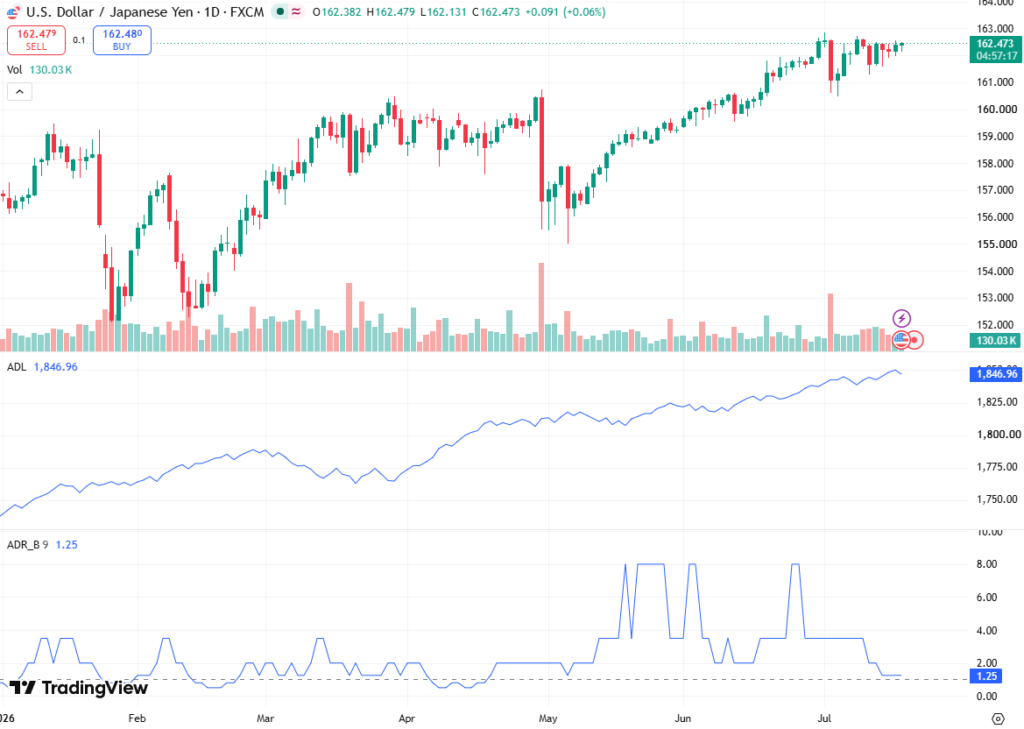
The DXY index, which measures the Dollar against a basket of six major currencies, is trading around 100.75 after reaching a recent low near 100.35. The stabilization of the Dollar has reduced upward momentum for the Yen and reinforced the strength of the USD/JPY bullish trend.
Inflation Data and Core PCE Remain Key Market Drivers
Future movements in USD/JPY are likely to depend heavily on incoming US inflation data, labour market indicators, and central bank communication. The Federal Reserve continues to monitor inflation closely, particularly the core Personal Consumption Expenditures (PCE) index, which excludes volatile food and energy components.
Current estimates indicate that core PCE inflation remains elevated near 3.3%, significantly above the Fed’s longer-term 2% inflation target. Persistent inflation pressure could delay expectations for policy easing and continue supporting US Treasury yields and the US Dollar.
At the same time, the Japanese currency will remain sensitive to developments in BoJ policy, domestic inflation trends, and potential changes in Japanese investor behaviour.
Technical and Fundamental Outlook for USD/JPY
From a technical perspective, USD/JPY remains in a strong long-term uptrend, with price action holding near multi-decade resistance levels. The pair continues to benefit from a combination of positive yield spreads, Dollar strength, and persistent demand for US assets.
However, elevated levels also increase the risk of market intervention concerns and sharp volatility if Japanese authorities respond to excessive Yen weakness.
The fundamental outlook remains tilted toward continued Yen vulnerability as long as the US-Japan rate gap remains wide and Oil prices stay elevated. A sustained Yen recovery would likely require a combination of narrower yield differentials, stronger Japanese capital inflows, and clearer evidence of a shift in global monetary policy expectations.


