
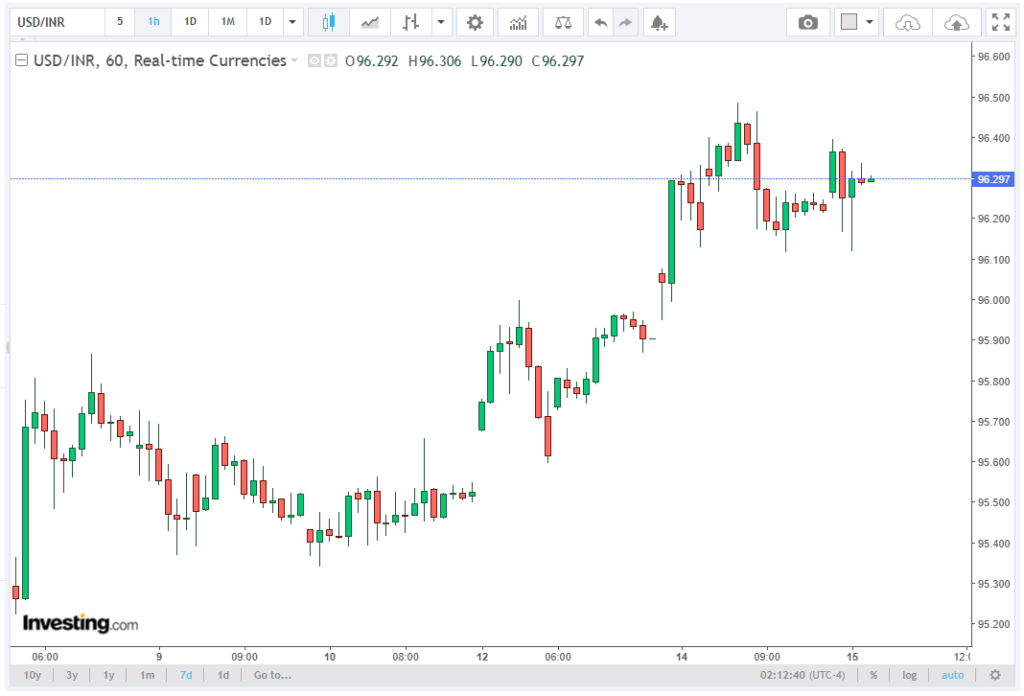
The Indian Rupee (INR) extended its recovery against the US Dollar (USD) on Wednesday as traders reduced expectations of further Federal Reserve (Fed) monetary tightening. The USD/INR exchange rate declined toward 96.11, marking renewed demand for the domestic currency after three consecutive sessions of gains.
Drexeldev’s brokers take a closer look at this topic in the article below, offering key insights and analysis.
The decline in the US Dollar Index (DXY) to around 100.80, down 0.15% on the day, reflected broad-based selling pressure across the Greenback. The move came after the latest US Consumer Price Index (CPI) data showed a faster-than-expected moderation in inflation, forcing markets to reassess the probability of additional Fed interest rate hikes.
The combination of weaker US inflation, lower US Treasury yield expectations, and reduced demand for the Dollar has improved sentiment toward emerging market currencies, allowing the INR to attract fresh buying interest.
US CPI Data Triggers Fed Rate Repricing
The latest June CPI report became the key catalyst behind the shift in market positioning. Headline CPI inflation slowed to 3.5% Year-on-Year (YoY) from 4.2% in May, signaling a meaningful reduction in price pressures. The decline was stronger than market expectations and reinforced views that inflation is moving closer to the Federal Reserve’s 2% target.
Core CPI, excluding volatile food and energy prices, rose 2.6% YoY, below the projected 2.8% and down from the previous 2.9% reading. This moderation in core inflation provided further evidence that underlying price pressures are easing.
Following the release, traders reduced expectations of further Fed tightening, weakening the Dollar as lower rate expectations reduced the appeal of US assets. A softer monetary policy outlook could support currencies like the Indian Rupee by improving risk sentiment and encouraging capital inflows into emerging markets.
Oil Prices Pause After Recent Rally Amid Supply Risks
The recent strength in crude oil prices has temporarily slowed after an extended rally. The pause in oil momentum has reduced immediate pressure on the Indian Rupee, as India remains highly dependent on imported energy.
The Brent crude market had gained significantly due to concerns over potential disruptions in the global energy supply chain, particularly through the Strait of Hormuz, a critical shipping route handling around 20% of global energy flows.
Although immediate supply concerns have eased, geopolitical tensions continue to create upside risks for oil prices. A renewed surge in crude prices could negatively impact the INR by increasing India’s import bill, widening the current account deficit, and weakening foreign exchange stability.
Foreign Institutional Investors Maintain Selling Pressure
Despite recent gains in the currency market, Indian financial assets continue to face pressure from Foreign Institutional Investors (FIIs). Overseas investors remained net sellers in Indian equities for the second consecutive session, reducing exposure by approximately ₹739.69 crore.
FIIs also sold Indian shares worth around ₹3,062.27 crore, highlighting continued caution among global investors. Persistent foreign outflows can weigh on the Indian Rupee because equity market exits often involve converting INR holdings back into foreign currencies.
However, expectations of a less aggressive Fed policy path could improve global liquidity conditions. Lower US interest rate expectations may encourage renewed investment flows into emerging markets, potentially limiting downside pressure on the INR.
USD/INR Technical Analysis: Bullish Structure Remains Intact
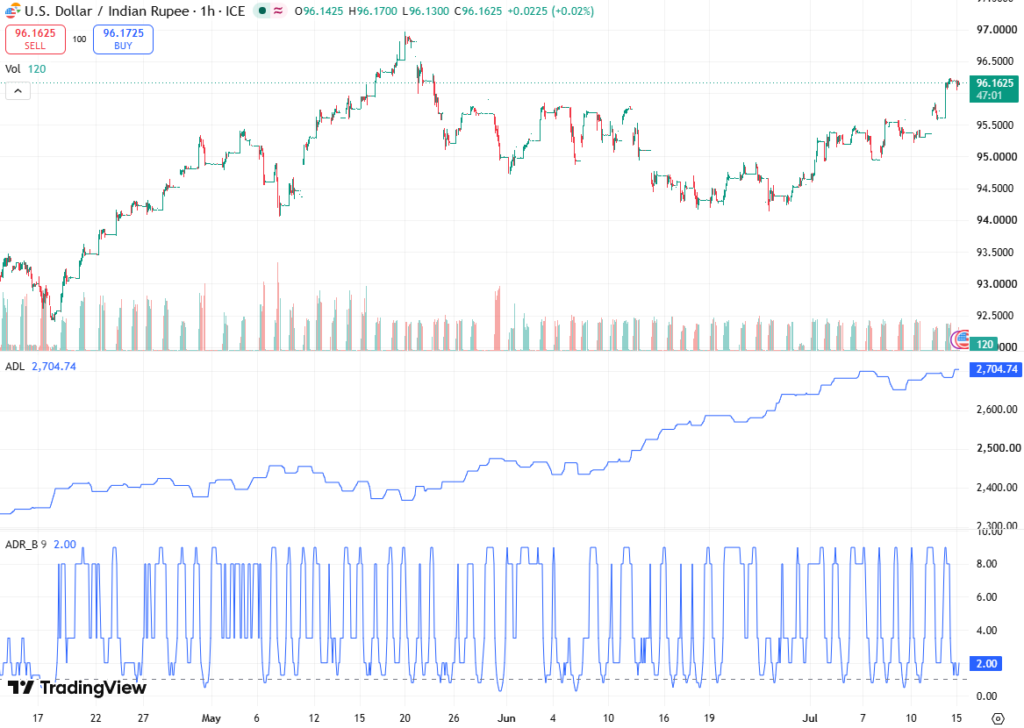
From a technical perspective, the USD/INR pair remains within a broader bullish structure despite the recent pullback. The pair is trading near 96.15, holding above the key 20-day Exponential Moving Average (EMA) at 95.37.
The upward trajectory of the 20-day EMA suggests that the short-term trend remains positive, indicating continued buyer support at lower levels. The Relative Strength Index (RSI) stands at 62.1, confirming bullish momentum while staying below the 70 overbought threshold.
This RSI level indicates that USD/INR still has room for further gains before reaching overextended conditions. A sustained breakout above the 97.10 all-time high would reinforce the bullish outlook and open the door toward higher resistance levels.
On the downside, the 95.37 zone remains the immediate support area. A break below this level could trigger a deeper correction, while a successful defense may attract renewed buying interest.
Market Outlook: INR Supported but USD/INR Trend Remains Positive
The Indian Rupee recovery has been driven primarily by a decline in Fed rate hike expectations, softer US inflation data, and temporary stabilization in oil markets. However, the broader USD/INR trend remains influenced by technical strength, foreign investment flows, and geopolitical risks.
Future movements will depend on upcoming US economic data, Fed policy signals, global crude oil trends, and changes in risk sentiment. While the INR has gained short-term support, the USD/INR pair continues to maintain a constructive technical setup above key moving average levels.


