
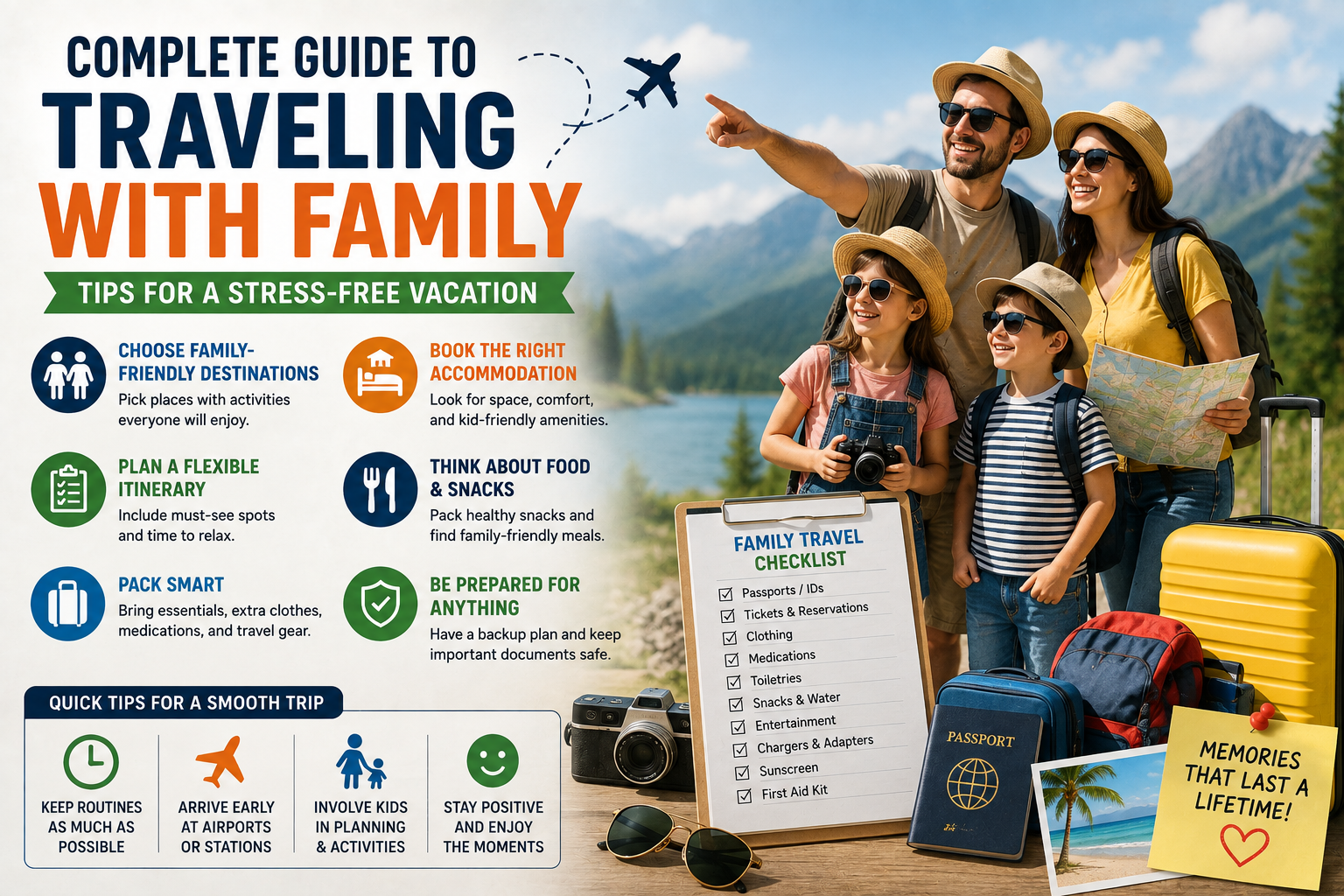
Family vacations are a wonderful opportunity to spend quality time together, explore new places, and create memories that can last for years. However, traveling with children or a larger family group can also require more planning than traveling alone.
From choosing the right destination and accommodation to managing meals, transportation, packing, and unexpected changes, a successful family vacation depends on preparation.
The good news is that family travel does not have to be stressful. With a realistic itinerary, suitable accommodation, thoughtful packing, and enough flexibility, you can create a trip that works for everyone.
Why Family Travel Requires Extra Planning
Every family member may have different needs and expectations.
Adults may want sightseeing and cultural experiences, while children may prefer parks, beaches, games, or activities. Younger children may also need regular meals, naps, and breaks.
A good family vacation balances everyone's needs instead of trying to fit every possible attraction into the schedule.
Before planning, consider:
Ages of the children
Travel duration
Destination
Weather
Transportation
Accommodation
Food preferences
Activities
Budget
Rest requirements
The goal is to create a comfortable trip rather than a perfect schedule.
1. Choose a Family-Friendly Destination
The destination is one of the most important decisions when planning a family vacation.
Look for places that offer activities suitable for different ages and have convenient transportation, reliable accommodation, healthcare access, and family-friendly facilities.
Depending on your family's interests, you might consider:
Beach destinations
Theme parks
Nature destinations
Historic cities
Resort areas
Family-friendly cities
Road-trip destinations
Consider whether the destination is suitable for the youngest traveler in your group, not just the adults.
2. Consider the Travel Time
Long journeys can be challenging for children.
When comparing destinations, consider the total travel time rather than just the distance.
A destination requiring several complicated connections may be more tiring than a slightly farther location with a simple direct journey.
For families, convenient travel arrangements can sometimes be worth paying a little more for.
3. Choose Accommodation Carefully
Accommodation can make a major difference to a family vacation.
Instead of choosing a property based only on price, consider its overall suitability.
Look for:
Family rooms
Connecting rooms when available
Kitchen facilities if useful
Breakfast options
Swimming pools or children's facilities
Laundry access
Convenient location
Nearby restaurants
Easy transportation
Read recent reviews and look specifically for comments from families.
A convenient location can also reduce the amount of time children spend traveling between activities.
4. Plan Around Your Children's Routine
Children often handle travel better when some familiar routines remain in place.
If your child normally sleeps at a particular time, avoid scheduling major activities during that period whenever possible.
Similarly, plan regular meal and snack breaks.
You do not need to follow your normal routine perfectly, but maintaining some structure can make the trip easier for everyone.
5. Avoid Overpacking
Family travel can make it tempting to bring everything.
However, carrying too much luggage can make airports, hotels, transportation, and sightseeing more difficult.
Pack essential clothing, toiletries, medication, and activity-specific items.
For young children, consider what they genuinely need rather than packing every item they use at home.
If your accommodation provides laundry facilities, you may be able to pack fewer clothes.
6. Create a Family Packing Checklist
A shared packing checklist can prevent important items from being forgotten.
Important family travel items may include:
Passports or identification
Travel documents
Comfortable clothing
Extra children's clothing
Toiletries
Medication
Snacks
Chargers
Power bank
Travel adapter
Entertainment items
Comfortable shoes
Necessary baby supplies
Keep important documents and medication accessible rather than placing them in checked luggage.
7. Bring Snacks and Water
Hungry children can quickly become unhappy travelers.
Pack suitable snacks for transportation and sightseeing.
Depending on your destination and transportation rules, useful options may include:
Crackers
Fruit
Granola bars
Sandwiches
Dry snacks
Water
Check applicable airport and transportation rules before bringing food through security.
Having familiar snacks can also be useful when children are not interested in unfamiliar local food.
8. Keep Children Entertained During Travel
Long flights, train journeys, and road trips can feel much longer for children.
Prepare a small collection of entertainment options.
These might include:
Books
Coloring activities
Games
Headphones
Downloaded movies
Music
Travel-friendly toys
Educational apps
Avoid relying entirely on internet access. Download content before departure when possible.
9. Build a Flexible Itinerary
One of the biggest family travel mistakes is trying to see everything.
Children may need more breaks than adults expect.
Instead of planning a packed schedule, choose one or two major activities each day and leave room for flexibility.
For example:
Morning: Main attraction
Afternoon: Lunch and rest
Evening: Easy local activity
This structure provides enough activity without making the entire day exhausting.
10. Include Activities for Everyone
A family vacation should not be designed around only one person's interests.
Try to include a mixture of activities.
For example:
One cultural attraction
One outdoor activity
One child-focused activity
One relaxing experience
Some free exploration
When everyone gets to enjoy something they like, the overall trip can feel more balanced.
11. Plan Rest Days or Breaks
Rest is especially important when traveling with young children.
You do not necessarily need an entire day without activities. Even a few hours at the hotel, a relaxed lunch, or time at a park can help.
Avoid moving from one attraction to another without breaks.
A rested family is more likely to enjoy the activities you have planned.
12. Choose Transportation Wisely
Transportation can affect your family's comfort and budget.
Depending on the destination, options may include:
Public transportation
Rental cars
Trains
Buses
Taxis
Rideshare services
Private transfers
Consider the ages of your children, luggage, travel distance, and convenience.
If you are traveling with young children, check the applicable rules and availability for child safety seats and other transportation requirements.
13. Prepare for Different Weather
Weather can quickly change your family's plans.
Before leaving, check the expected conditions and pack appropriately.
For hot destinations, consider:
Lightweight clothing
Sun protection
Hats
Water
Comfortable footwear
For colder destinations, consider:
Layers
Warm jackets
Gloves
Appropriate footwear
For rainy destinations, waterproof clothing and suitable bags can be useful.
14. Keep Important Items Accessible
Do not bury everything inside your suitcase.
Keep frequently needed items in a small day bag.
You may want to include:
Snacks
Water
Tissues
Medication
Extra children's clothing
Phone
Wallet
Documents
Chargers
Small entertainment items
Having these items accessible can save time during transportation and sightseeing.
15. Prepare for Unexpected Situations
Even carefully planned family trips can experience delays or changes.
Flights can be delayed. Weather can change. Attractions can close. Children can become tired or sick.
Have a simple backup plan.
For example, if an outdoor activity is canceled because of rain, identify an indoor alternative.
If a restaurant is too busy, know another nearby option.
Flexibility can prevent a small problem from becoming a major source of stress.
16. Keep a Family Emergency Plan
Before traveling, make sure adults in the group know what to do in an emergency.
Save:
Local emergency numbers
Accommodation contact information
Travel insurance details
Important medical information
Trusted emergency contacts
For younger children, teach them basic information such as their parent's name and how to seek help from an appropriate adult.
17. Protect Important Documents
Keep passports, identification, visas, tickets, and other essential documents secure.
Make secure copies of important documents where appropriate.
If traveling internationally, verify the latest entry requirements for every family member before departure.
Children may have different documentation requirements from adults, so do not assume that one person's documents are sufficient for the entire family.
18. Think About Food Before Traveling
Food can be one of the biggest challenges when traveling with children.
Research restaurants near your accommodation and major attractions.
If your children have allergies or specific dietary requirements, identify suitable food options in advance and learn how to communicate those needs in the local language.
Accommodation with kitchen facilities can also be useful for families who prefer to prepare some meals themselves.
19. Give Children Small Responsibilities
Family travel can be more enjoyable when children participate in the planning.
Depending on their age, children can:
Choose one activity
Carry a small backpack
Help with the itinerary
Take photographs
Learn basic local phrases
Keep track of simple travel items
Giving children small responsibilities can make them feel involved and excited about the trip.
20. Set Realistic Expectations
Not every moment of a family vacation will be perfect.
Children may become tired. Plans may change. Someone may dislike a restaurant or attraction.
That is normal.
Instead of expecting everything to go exactly according to plan, focus on creating positive experiences and spending time together.
Sometimes the unexpected moments become the most memorable parts of a family trip.
Family Travel Checklist
Documents
Passports or IDs
Visas or travel authorizations if required
Travel reservations
Travel insurance information
Emergency contacts
Copies of important documents
Clothing
Everyday clothing
Extra children's clothes
Sleepwear
Comfortable shoes
Weather-appropriate clothing
Swimwear if needed
Health
Necessary medication
Basic first-aid supplies
Personal health items
Sunscreen
Hygiene supplies
Travel Essentials
Snacks
Water bottles
Chargers
Power bank
Travel adapter
Entertainment
Small day bag
Common Family Travel Mistakes to Avoid
Planning Too Many Activities
A packed itinerary can leave everyone exhausted.
Choosing Accommodation Based Only on Price
A cheap property far from attractions may create additional transportation costs and inconvenience.
Forgetting Snacks
Hungry children can make long journeys much more difficult.
Ignoring Rest
Children and adults both need downtime during a busy vacation.
Packing Too Much
Excess luggage makes transportation and hotel changes harder.
Having No Backup Plan
Weather, delays, and closures can happen. Have alternative activities available.
Frequently Asked Questions
What is the best way to plan a family vacation?
Start by choosing a family-friendly destination, setting a realistic budget, selecting convenient accommodation, and creating a flexible itinerary with activities suitable for different ages.
How can I make family travel less stressful?
Avoid overplanning, allow regular breaks, prepare snacks and entertainment, keep important items accessible, and have backup plans for unexpected changes.
What should I pack when traveling with children?
Pack appropriate clothing, toiletries, medication, snacks, entertainment, travel documents, chargers, and any items your children need regularly. Avoid bringing unnecessary items.
How many activities should a family plan each day?
There is no fixed number. One or two major activities with plenty of breaks can work well for many families, especially when traveling with younger children.
How can I keep children entertained during a long flight?
Books, games, downloaded movies, music, coloring activities, headphones, and travel-friendly toys can help. Prepare entertainment before leaving home so you are not dependent on internet access.
Should families choose hotels or vacation rentals?
Both can work well. Hotels may offer services and convenient facilities, while vacation rentals may provide more space and kitchen access. Compare the overall value for your family's needs.
How can families save money while traveling?
Compare accommodation, travel during less busy periods when practical, use public transportation where convenient, prepare some meals, and prioritize the activities your family values most.
Is travel insurance useful for family vacations?
Travel insurance can provide protection against certain unexpected expenses depending on the policy. Review medical coverage, cancellation conditions, baggage coverage, exclusions, and limits before purchasing.
How can I handle unexpected problems during a family trip?
Stay flexible and focus on solving one problem at a time. Keep emergency contacts, important documents, backup payment methods, and alternative activities available.
How do I choose a destination for children of different ages?
Look for destinations offering a variety of activities, convenient transportation, suitable accommodation, healthcare access, and attractions that can appeal to different age groups.
Should children be involved in travel planning?
Yes. Giving children age-appropriate choices, such as selecting an activity or helping create a checklist, can make them more engaged and excited about the trip.
How can I make a family itinerary flexible?
Schedule major activities but leave free time between them. Avoid booking every hour and keep alternative activities available in case of weather changes, delays, or tiredness.
Conclusion
Family travel does not have to be complicated. The key is understanding that a successful family vacation is different from a tightly scheduled adult trip.
Choose a suitable destination, book convenient accommodation, pack thoughtfully, plan age-appropriate activities, and leave enough time for meals and rest.
Most importantly, stay flexible. Unexpected changes are part of travel, and a relaxed approach can help your family enjoy the journey even when everything does not go according to plan.
With preparation and realistic expectations, family travel can become an opportunity to explore new places, strengthen relationships, and create memories that everyone can enjoy.