
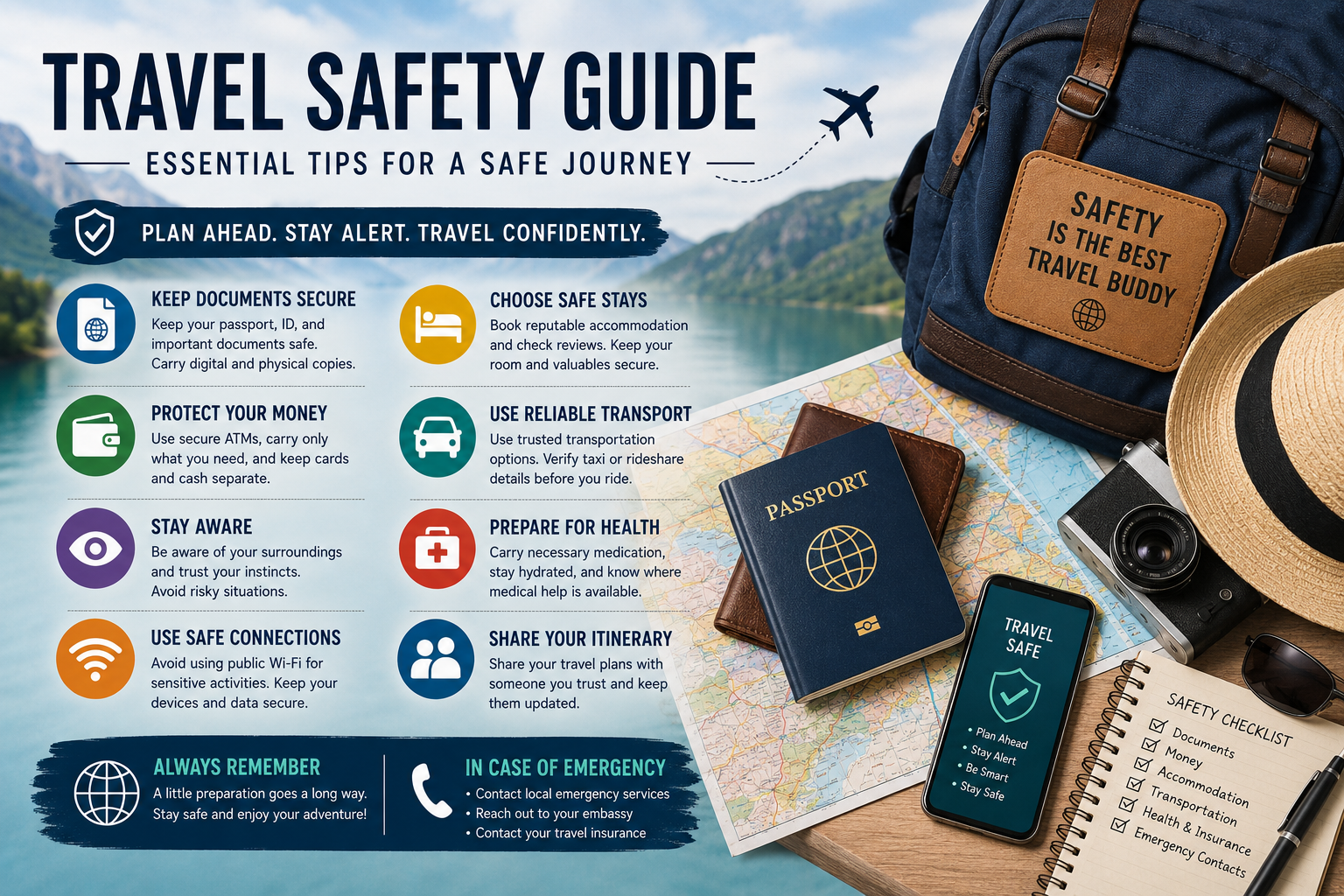
Traveling is an opportunity to explore new places, experience different cultures, meet new people, and create lasting memories. But no matter where you go, basic travel safety should always be part of your planning.
Staying safe does not mean being afraid of new experiences. It means understanding your destination, protecting your belongings, making informed decisions, and knowing what to do if something unexpected happens.
Whether you are traveling alone, with family, as a couple, or with friends, these practical travel safety tips can help you enjoy your journey with greater confidence.
Why Travel Safety Matters
Most trips go smoothly, but unexpected situations can happen anywhere. Lost documents, transportation problems, unfamiliar surroundings, illness, scams, or weather changes can turn a simple travel problem into a stressful experience.
Preparation can make many of these situations easier to manage.
Good travel safety starts before you leave home and continues throughout your trip.
1. Research Your Destination Before Traveling
One of the easiest ways to improve travel safety is to understand your destination before arriving.
Research the local environment, transportation system, common tourist scams, local laws, cultural customs, weather, and emergency services.
For international travel, check current official travel and entry information relevant to your nationality and destination.
Before departure, save important information such as:
Accommodation address
Emergency contact numbers
Transportation details
Travel insurance information
Important local addresses
Copies of travel documents
Knowing basic information before you arrive can help you feel more confident in unfamiliar surroundings.
2. Keep Your Travel Documents Secure
Your passport, identification, visas, tickets, and other travel documents are extremely important.
Keep them secure and accessible during your journey.
For international travel, make sure your passport meets the destination's validity requirements and that you understand any applicable entry rules.
It is also useful to keep secure digital or physical copies of important documents.
If an original document is lost, having a copy can make replacement procedures easier.
3. Protect Your Money and Payment Cards
Avoid carrying more cash than you need.
Keep your money and payment cards secure and consider having a backup payment method available.
Do not keep all your cash and cards in the same place.
When using ATMs, choose locations that appear secure and avoid accepting help from strangers who approach you unexpectedly.
Before international travel, check whether your bank charges foreign transaction or ATM fees and understand how your cards work abroad.
4. Be Aware of Your Surroundings
Situational awareness is one of the simplest travel safety habits.
Pay attention to what is happening around you, especially in crowded areas, transportation stations, tourist attractions, and unfamiliar neighborhoods.
Avoid becoming completely distracted by your phone while walking.
You do not need to be suspicious of everyone. Simply remain observant and trust your judgment.
5. Choose Accommodation Carefully
Where you stay can have a significant impact on your comfort and safety.
Before booking accommodation, check recent reviews and consider the location, surrounding area, access arrangements, and transportation options.
Look for practical safety features such as secure entrances and appropriate staff support.
When you arrive, familiarize yourself with the exits and basic procedures of the property.
Avoid sharing your room number or detailed accommodation information with strangers.
6. Be Careful With Your Personal Information
Travelers sometimes share more information than necessary.
You do not need to tell strangers exactly where you are staying, how long you will be in the destination, or whether you are traveling alone.
If someone asks questions that make you uncomfortable, provide a general answer or politely end the conversation.
Maintaining reasonable privacy can reduce unnecessary risks.
7. Keep Valuables Secure
Phones, cameras, laptops, jewelry, wallets, and other valuables can attract unwanted attention.
Keep expensive items secure and avoid displaying unnecessary valuables in crowded areas.
When possible, use hotel safes or other appropriate storage options for items you do not need to carry.
Keep your phone and wallet somewhere that is difficult for someone else to access.
8. Learn About Common Travel Scams
Tourist scams can vary from destination to destination.
Before traveling, search for common scams associated with your destination.
Examples may include:
Fake transportation services
Overpriced tours
Unofficial guides
Distraction theft
Fake tickets
Unusual payment requests
Unsolicited offers
Being aware of common tactics can make it easier to recognize suspicious situations.
If an offer seems unusually good or someone is pressuring you to make a quick decision, take a moment to verify the situation.
9. Use Reliable Transportation
Transportation safety is an important part of any journey.
Research reputable transportation options before traveling.
Depending on your destination, this could include official taxis, established rideshare services, trains, buses, or licensed transportation providers.
When using a taxi or rideshare service, verify the vehicle and driver information where applicable.
If you are unfamiliar with a destination, avoid accepting transportation from people who approach you unsolicited at airports or transportation hubs.
10. Be Careful When Using Public Wi-Fi
Public Wi-Fi can be convenient, but travelers should be careful when accessing sensitive information on unfamiliar networks.
Avoid performing highly sensitive transactions on unsecured networks when possible.
Use secure websites and keep your devices updated.
If you frequently travel, consider using a reputable security solution or other appropriate measures to protect your online activity.
11. Keep Your Phone Charged
A smartphone can be an important safety tool.
It can provide navigation, communication, translation, reservations, maps, and access to emergency information.
Keep your phone charged, particularly when you are going somewhere unfamiliar.
A power bank can be useful during long days of sightseeing.
Save important information offline in case mobile data or Wi-Fi is unavailable.
12. Share Your Itinerary
If you are traveling alone or taking a longer trip, consider sharing your general itinerary with someone you trust.
You can provide:
Destination
Accommodation details
Transportation information
Approximate travel dates
Planned activities
You do not necessarily need to provide constant updates. The goal is simply to ensure someone knows where you are generally expected to be.
13. Be Careful With Alcohol and Other Impairing Substances
If you choose to consume alcohol while traveling, use moderation and remain aware of your surroundings.
Avoid accepting drinks from strangers and do not leave your drink unattended.
Being heavily impaired can make it more difficult to recognize risks, navigate unfamiliar places, or respond to unexpected situations.
14. Respect Local Laws and Customs
Laws and social expectations can differ significantly between countries and regions.
Something that is acceptable in one place may be restricted or considered inappropriate somewhere else.
Research local laws and customs before traveling.
Pay particular attention to:
Dress expectations
Photography rules
Religious sites
Public behavior
Transportation regulations
Alcohol restrictions
Local identification requirements
Respecting local rules can help prevent unnecessary problems.
15. Take Health Precautions
Health preparation is another important part of travel safety.
Depending on your destination, consider your routine healthcare needs, necessary medications, food and water safety, and access to medical services.
Bring essential medication in appropriate packaging and keep it accessible.
For international travel, research whether your destination has specific health requirements or recommendations.
16. Be Prepared for Weather Changes
Weather can change quickly, particularly in mountainous, coastal, or outdoor destinations.
Check the forecast before heading out and dress appropriately.
If severe weather is expected, follow local guidance and reconsider unnecessary travel.
Carry basic weather-related essentials such as suitable clothing, water, and sun protection when appropriate.
17. Avoid Risky Areas at Night
Many destinations are perfectly enjoyable at night, but some areas may become less comfortable after dark.
Research neighborhoods before exploring them late at night.
If you are unfamiliar with an area, use reliable transportation and stay in populated, well-used locations.
If you feel uncomfortable, do not continue simply because your original plan included that location.
18. Trust Your Instincts
Your instincts can be useful when something feels wrong.
If a situation makes you uncomfortable, you do not need to wait for something bad to happen before leaving.
Move toward a populated or secure location, contact someone you trust, or seek appropriate assistance.
Being polite is never more important than your safety.
19. Have an Emergency Plan
Before your trip, think about what you would do if something went wrong.
Know how to contact local emergency services and identify where you could seek help.
Keep backup copies of important documents and have access to emergency funds.
If traveling internationally, know how to contact your country's embassy or consular services if necessary.
A basic emergency plan can reduce panic during an unexpected situation.
20. Consider Travel Insurance
Travel insurance may help with certain unexpected costs depending on the policy.
Coverage can vary considerably, so read the policy carefully before purchasing.
Check details such as:
Medical coverage
Emergency assistance
Trip cancellation
Lost or delayed baggage
Exclusions
Coverage limits
Travel insurance does not prevent problems, but suitable coverage can provide financial protection in certain circumstances.
Travel Safety Checklist
Before leaving, review the following:
Research the destination
Check current travel requirements
Save emergency contacts
Secure travel documents
Make copies of important documents
Prepare backup payment methods
Research transportation
Check accommodation reviews
Share your itinerary with someone you trust
Charge your phone
Carry a power bank
Learn about common scams
Check weather conditions
Pack necessary medication
Review travel insurance coverage
Common Travel Safety Mistakes to Avoid
Ignoring Local Advice
Local authorities and reputable travel providers may have important information about changing conditions.
Carrying Too Much Cash
Carrying excessive cash can increase your potential loss if your wallet is lost or stolen.
Sharing Too Much Information
Avoid telling strangers unnecessary details about your accommodation, schedule, or personal plans.
Ignoring Your Instincts
If something feels wrong, remove yourself from the situation.
Leaving Important Documents Unprotected
Your passport and identification should always be handled carefully.
Forgetting Emergency Contacts
Save important numbers before traveling rather than trying to find them during an emergency.
Frequently Asked Questions
What are the most important travel safety tips?
Research your destination, protect your documents and valuables, stay aware of your surroundings, use reliable transportation, keep your phone charged, and have an emergency plan.
How can I protect my passport while traveling?
Keep your passport secure and accessible when needed. Avoid leaving it unattended and consider keeping a secure copy of the identification page separately.
Is it safe to use public Wi-Fi while traveling?
Public Wi-Fi can be convenient, but avoid using unsecured networks for sensitive activities when possible. Keep your devices updated and use appropriate security measures.
How can I avoid travel scams?
Research common scams at your destination, be cautious with unsolicited offers, verify transportation and tour providers, and avoid making rushed decisions under pressure.
Should I share my travel itinerary with someone?
Sharing your general itinerary with someone you trust can be a useful safety measure, particularly for solo or longer trips.
How can I stay safe when using public transportation?
Research transportation options in advance, use reputable services, keep your belongings secure, and remain aware of your surroundings.
Is travel insurance necessary?
It is not universally required, but it can provide financial protection against certain unexpected events depending on the policy. Review coverage and exclusions carefully.
What should I do if I lose my passport?
Contact the appropriate local authorities and your country's embassy or consular service for guidance. Having a secure copy of your passport information can make the process easier.
What should I do if I feel unsafe?
Move to a populated or secure location and seek help from appropriate staff, local authorities, or someone you trust. Do not remain in a situation simply to avoid appearing rude.
How can I stay safe while traveling alone?
Research your destination, choose reliable accommodation, share your itinerary with someone you trust, protect your belongings, stay aware of your surroundings, and maintain an emergency plan.
Conclusion
Travel safety does not mean avoiding adventure. It means being prepared enough to enjoy your adventure responsibly.
Research your destination, protect your important documents, choose reliable transportation and accommodation, keep your phone charged, and understand local customs and common risks.
Most importantly, stay aware and trust your instincts. A few simple precautions can make it easier to handle unexpected situations while allowing you to focus on the best parts of travel.
Whether you are taking a short weekend trip or exploring a new country, preparation is one of the most effective ways to travel with confidence.