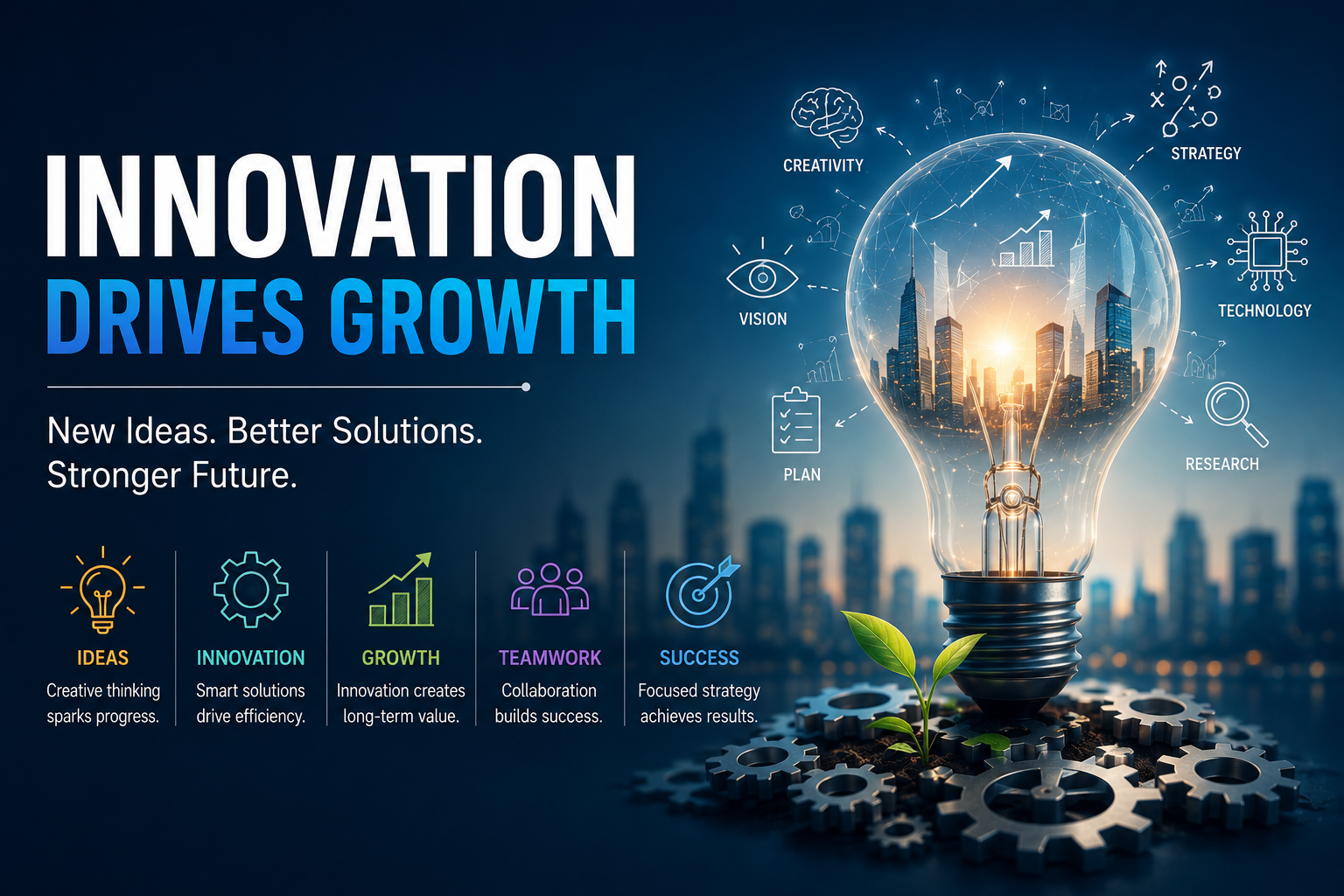
Innovation has become one of the most powerful forces driving business success in today's rapidly changing world. Organizations that embrace innovation are better equipped to adapt to market changes, improve customer experiences, increase operational efficiency, and create lasting competitive advantages. In an era where technology evolves quickly and consumer expectations continue to rise, innovation is no longer optional—it is essential for survival and sustainable growth.
Innovation is often associated with groundbreaking inventions or advanced technologies, but it goes far beyond that. It includes developing new ideas, improving existing products and services, enhancing business processes, and finding creative ways to solve problems. Companies that consistently innovate are more resilient, profitable, and capable of responding to future challenges.
Understanding Business Innovation
Business innovation is the process of introducing new ideas, methods, products, services, or business models that create value for both customers and the organization. It focuses on continuous improvement and discovering better ways to operate, compete, and serve customers.
Innovation can take many forms, including:
Product innovation
Service innovation
Process innovation
Marketing innovation
Business model innovation
Digital innovation
Every organization, regardless of size or industry, can benefit from adopting an innovative mindset.
Why Innovation Matters
Today's business environment is shaped by digital transformation, artificial intelligence, automation, changing consumer behavior, and increasing global competition. Businesses that fail to innovate risk losing relevance, while those that embrace change position themselves for long-term success.
Innovation helps businesses:
Increase productivity
Improve customer satisfaction
Reduce operating costs
Create new revenue opportunities
Strengthen brand reputation
Adapt to changing market conditions
Stay ahead of competitors
Organizations that continuously improve their products, services, and operations are better prepared for future challenges.
Types of Innovation
Product Innovation
Product innovation involves developing new products or improving existing ones to meet evolving customer needs. Businesses that invest in product innovation often gain a competitive advantage by offering unique solutions.
Examples include smart devices, eco-friendly packaging, and AI-powered software applications.
Process Innovation
Process innovation focuses on improving internal operations to increase efficiency and reduce costs.
Examples include:
Workflow automation
Cloud-based collaboration
Robotic process automation
Digital document management
AI-powered analytics
These improvements help businesses save time while increasing productivity.
Marketing Innovation
Modern marketing depends heavily on innovation.
Businesses now use:
Personalized advertising
AI-powered recommendations
Social media campaigns
Interactive content
Influencer partnerships
Voice search optimization
Innovative marketing strategies help companies build stronger customer relationships.
Business Model Innovation
Business model innovation changes how organizations create and deliver value.
Popular examples include:
Subscription services
Online marketplaces
Direct-to-consumer models
Freemium software
Platform-based businesses
These models often create entirely new revenue streams.
Technology as an Innovation Driver
Technology continues to accelerate innovation across every industry.
Artificial Intelligence
AI enables businesses to analyze data, automate repetitive tasks, predict customer behavior, and improve decision-making.
Common applications include:
Customer support chatbots
Fraud detection
Personalized recommendations
Demand forecasting
Predictive maintenance
Cloud Computing
Cloud technology allows businesses to scale quickly while improving collaboration and reducing infrastructure costs.
Internet of Things (IoT)
Connected devices provide real-time data that helps organizations optimize operations and improve customer experiences.
Automation
Automation reduces manual work, minimizes errors, and allows employees to focus on strategic activities.
Building an Innovative Culture
Innovation starts with company culture.
Organizations that encourage creativity, collaboration, and continuous learning are more likely to develop successful innovations.
Successful innovation cultures encourage employees to:
Share ideas freely
Experiment with new solutions
Learn from mistakes
Collaborate across departments
Continuously improve processes
Leadership plays a critical role in creating an environment where innovation can thrive.
Leadership and Innovation
Strong leaders inspire innovation by encouraging curiosity and empowering teams to think creatively.
Innovative leaders:
Support experimentation
Invest in employee development
Encourage collaboration
Accept calculated risks
Focus on long-term growth
Reward creative thinking
When leadership promotes innovation, employees become more engaged and motivated to contribute new ideas.
Customer-Centered Innovation
Successful innovation begins with understanding customer needs.
Businesses should collect feedback through:
Customer surveys
Product reviews
Social media
Website analytics
Customer support interactions
By listening to customers, organizations can develop solutions that solve real problems and deliver greater value.
Sustainability Through Innovation
Innovation also supports environmental and social responsibility.
Businesses increasingly invest in:
Renewable energy
Sustainable packaging
Energy-efficient technologies
Circular economy practices
Waste reduction initiatives
Sustainable innovation benefits both society and long-term business performance.
Challenges to Innovation
Despite its benefits, innovation can present several challenges.
Common obstacles include:
Resistance to change
Budget limitations
Fear of failure
Limited resources
Lack of collaboration
Rapid technological changes
Organizations can overcome these challenges by fostering open communication, providing training, and encouraging continuous learning.
Measuring Innovation Success
Businesses should evaluate innovation using measurable indicators such as:
Revenue from new products
Customer satisfaction
Employee engagement
Operational efficiency
Market share growth
Return on investment
Product development speed
Tracking these metrics helps organizations refine their innovation strategies.
Future Trends in Innovation
Several emerging trends will shape innovation in the coming years:
Artificial intelligence integration
Hyper-personalized customer experiences
Advanced automation
Sustainable product development
Digital transformation
Smart manufacturing
Collaborative innovation ecosystems
Organizations that embrace these trends will be better positioned to compete in the future.
Best Practices for Encouraging Innovation
Businesses can strengthen innovation by:
Investing in employee training
Encouraging creative thinking
Using data to guide decisions
Adopting emerging technologies
Collaborating across teams
Testing ideas quickly
Rewarding innovation
Focusing on customer needs
These practices help create a culture of continuous improvement.
Conclusion
Innovation is the foundation of modern business success. It enables organizations to adapt to change, improve efficiency, create better customer experiences, and unlock new growth opportunities. Whether through advanced technologies, improved processes, creative marketing, or sustainable practices, innovation helps businesses remain competitive in an increasingly dynamic marketplace.
Companies that embrace innovation as a continuous journey rather than a one-time initiative will be better prepared for future challenges and long-term success. By investing in people, technology, and creative thinking, organizations can build resilience, strengthen their competitive position, and shape a more successful future.