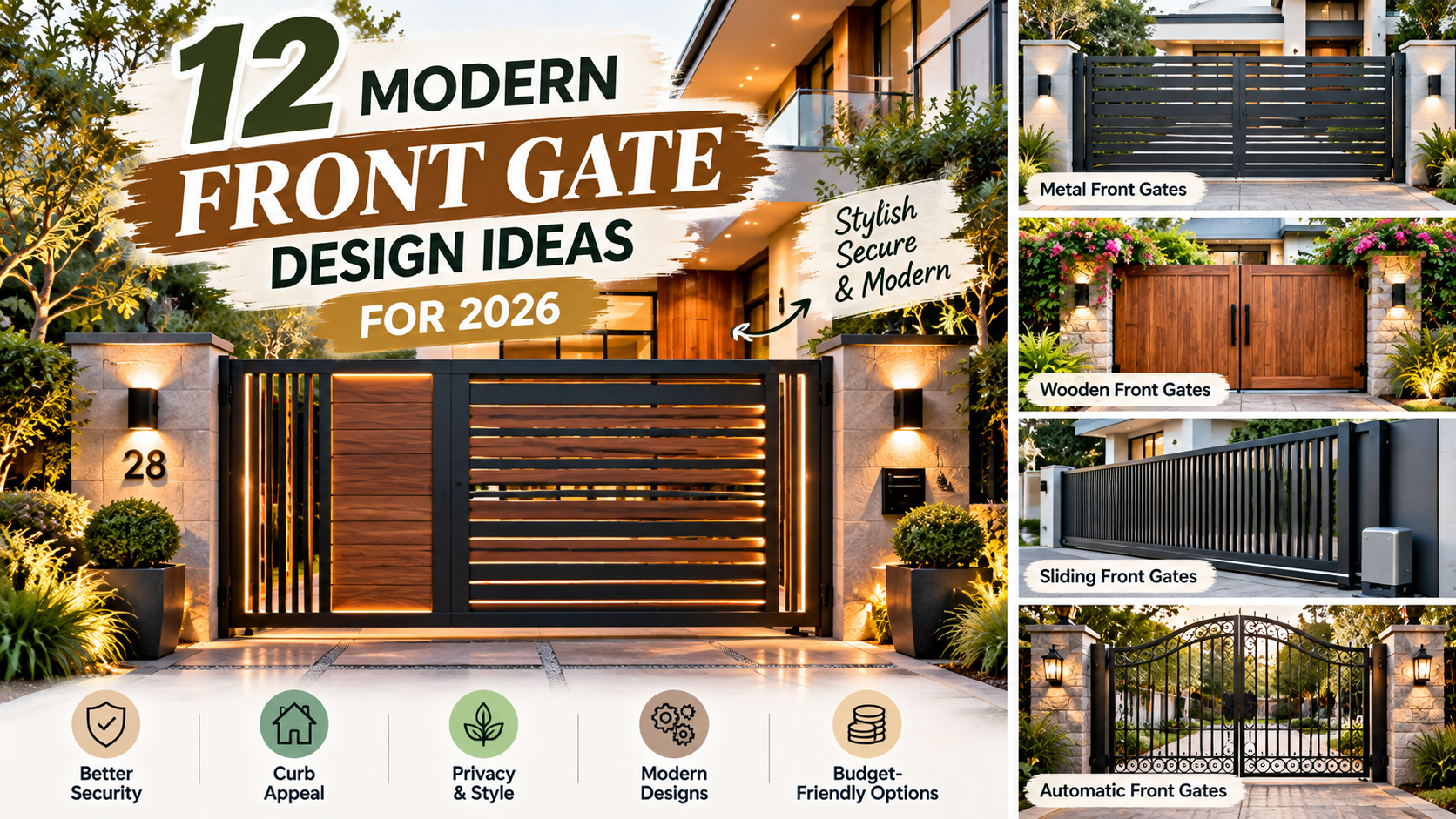
Your front gate is one of the first features people notice when they visit your property. It creates the first impression of your home, improves privacy, and can complement your landscaping and exterior architecture. Whether you live in a modern suburban house, a traditional family home, or a property with a spacious garden, the right gate can make your entrance look more attractive and welcoming.
In 2026, homeowners are exploring front gate designs that combine style, durability, security, and convenience. From sleek metal gates to natural wooden entrances and automated driveway systems, there are options for different architectural styles and budgets.
Choosing a front gate involves more than selecting an attractive design. You should also consider the available space, local weather, maintenance requirements, driveway access, and security needs.
In this guide, we explore 12 modern front gate design ideas, explain their advantages, and share practical tips to help you choose the right option for your property.
1. Modern Minimalist Metal Front Gates
Minimalist metal gates are a popular option for contemporary homes because they offer clean lines and a simple appearance. Their straightforward design can complement modern architecture, neutral exterior colors, and landscaped gardens.
You can choose a flat-panel gate for a solid appearance or a design with narrow horizontal bars for a more open look. Black, charcoal, and dark bronze finishes can create a sophisticated entrance.
Metal gates are also available in different configurations, including swing gates and sliding gates. The best choice depends on your driveway layout and the space available for installation.
Best for: Contemporary homes, modern villas, and properties with simple exterior designs.
Design tip: Match the gate finish with your exterior lighting, house numbers, or other metal details for a coordinated appearance.
2. Natural Wooden Front Gates
Wooden front gates bring warmth and character to a property's entrance. Their natural texture works particularly well with traditional homes, cottages, farmhouse-style properties, and modern houses that use natural materials.
Popular design options include vertical wooden slats, horizontal boards, framed panels, and combinations of wood and metal.
Wood species and finishes should be selected according to local weather conditions. Outdoor wood may require sealing, staining, painting, and periodic inspection to protect it from moisture, sunlight, and insects.
If you like the appearance of wood but want a different maintenance routine, consider suitable wood-look materials designed for outdoor use.
Best for: Farmhouse properties, traditional homes, and nature-inspired landscapes.
Design tip: Choose a finish that complements your front door, porch, or exterior cladding rather than trying to match every wooden surface exactly.
3. Horizontal Slat Front Gates
Horizontal slat gates create a modern architectural look while offering varying levels of privacy. Depending on the spacing between the slats, they can partially screen the property without making the entrance feel completely closed off.
These gates can be made from metal, treated wood, or suitable composite materials. A dark metal frame with warm wooden slats can create an attractive contrast.
Before choosing a closely spaced design, consider wind exposure and the amount of airflow required. Solid or nearly solid gates can experience greater wind loads, so the structure and installation should be appropriate for the location.
Best for: Modern homes, contemporary renovations, and properties with minimalist landscaping.
Design tip: Use consistent slat spacing and a restrained color palette to maintain a clean, balanced appearance.
4. Wrought-Iron Front Gates
Wrought-iron and wrought-iron-style gates offer a timeless appearance. Decorative scrollwork, symmetrical patterns, and elegant vertical bars can complement traditional architecture and formal gardens.
Modern versions may use steel or other metal fabrication methods to achieve a similar look. Powder-coated finishes can provide additional protection, although all metal gates still need appropriate care.
Open metal designs allow visibility through the entrance and can make a property feel more open. However, the level of privacy depends on the pattern and spacing.
Inspect the finish periodically for scratches, corrosion, and loose fittings, especially in humid or coastal environments.
Best for: Traditional houses, formal gardens, and properties with decorative architectural details.
Design tip: Keep surrounding landscaping simple if the gate itself has an elaborate pattern.
5. Double-Swing Driveway Gates
Double-swing gates consist of two panels that open inward or outward, depending on the design and site conditions. They create a balanced entrance and can work well with wide driveways.
These gates are available in wood, steel, aluminum, and composite materials. Their appearance can range from simple modern panels to decorative traditional designs.
Before installation, check whether the panels have enough room to swing without hitting vehicles, walls, pedestrians, or landscaping. The ground should also be suitable for the gate's movement, especially on sloping driveways.
Automated versions can provide convenient access, but they require compatible hardware, safe controls, and professional installation where appropriate.
Best for: Wide driveways, larger homes, and properties with sufficient clearance.
Design tip: Measure the full opening and swing area before ordering a gate to avoid expensive installation problems.
6. Space-Saving Sliding Front Gates
Sliding gates move sideways along a track or through a suitable trackless system rather than swinging across the driveway. They can be useful where there is limited space in front of or behind the entrance.
A sliding gate needs enough room along the fence line for the panel to open fully. Track-based systems also require suitable ground conditions and regular attention to debris that could obstruct movement.
These gates can be designed with solid panels, vertical bars, horizontal slats, or decorative metal patterns.
For automated installations, safety sensors and appropriate safeguards are important to reduce the risk of injury or property damage.
Best for: Narrow driveways, entrances near roads, and properties where swing clearance is limited.
Design tip: Confirm the available side clearance before deciding on a sliding gate system.
7. Aluminum Front Gates
Aluminum gates are worth considering if you want a relatively lightweight metal option. Aluminum naturally forms a protective oxide layer and does not rust in the same way as ordinary steel, although its finish and hardware still require care.
These gates are available in modern slat designs, traditional decorative styles, and simple privacy panels. Their lighter weight can be useful for some gate configurations, but the frame, hinges, posts, and operating hardware must still be properly designed.
Powder-coated aluminum gates can be available in colors such as black, gray, bronze, and white.
Best for: Contemporary homes, properties seeking a lower-maintenance metal gate, and coastal locations where material selection is important.
Design tip: Compare the quality of the frame and finish, not just the initial price.
8. Front Gates With Stone or Brick Pillars
A gate framed by stone or brick pillars can create a substantial, well-defined entrance. This style works especially well with traditional homes, larger properties, and formal landscaping.
The pillars can complement the exterior brickwork or introduce a contrasting material that makes the entrance stand out. A simple metal or wooden gate between the pillars can keep the overall design balanced.
Structural considerations are important. Gate posts and pillars must be designed to support the gate's weight and operating forces. Heavy gates and automated systems may require reinforced foundations and professional installation.
Best for: Large houses, traditional architecture, and properties with established landscaping.
Design tip: Coordinate the pillar materials with the home's exterior so the entrance looks like part of the overall design.
9. Contemporary Glass and Metal Gates
Glass-and-metal gate designs offer a distinctive appearance for modern properties. Depending on the configuration, glass panels may provide a sleek finish while metal framing supplies structural support.
For exterior gates, ordinary household glass is not appropriate. The glass must be a suitable safety-rated product designed for the intended application, and the frame and fixings must be compatible with it.
Glass gates may also require more frequent cleaning to remove fingerprints, dust, and water marks. Privacy depends on whether the panels are clear, tinted, frosted, or otherwise treated.
Best for: Contemporary homes, architect-designed properties, and entrances where a distinctive modern appearance is desired.
Design tip: Consider frosted or textured safety glass if privacy is important.
10. Smart Automatic Front Gates
Automatic gates can make entering and leaving a property more convenient. Depending on the system, access may be controlled using a remote, keypad, intercom, approved smart-home integration, or another compatible device.
Automation can be installed on suitable swing or sliding gates. The correct system depends on gate weight, frequency of use, site conditions, and available power.
Safety is essential. Automatic gates should include appropriate protective devices and be installed and maintained according to applicable local requirements. Keep children and pets away from moving parts, and never assume a gate will automatically detect every obstruction.
If you want remote access, review the system's connectivity requirements, security features, and backup options before purchasing.
Best for: Busy households, properties with controlled access, and homeowners seeking additional convenience.
Design tip: Compare the total installed cost, including the motor, controls, safety devices, electrical work, and ongoing maintenance.
11. Eco-Friendly Front Gate Materials
Homeowners interested in reducing waste may want to consider durable materials, recycled-content products, or responsibly sourced wood.
The most environmentally appropriate choice depends on how the product is manufactured, how long it lasts, how much maintenance it requires, and whether it can be repaired or recycled at the end of its useful life.
A long-lasting gate that can be maintained and repaired may be a practical alternative to a cheaper product that needs frequent replacement.
You can also reduce waste by repairing a sound existing gate, replacing worn hardware, or refinishing suitable surfaces instead of replacing the entire entrance.
Best for: Homeowners who prioritize durability, repairability, and thoughtful material choices.
Design tip: Ask manufacturers about material composition, protective finishes, warranties, and maintenance requirements.
12. Garden Gates That Blend With Landscaping
A front gate does not need to dominate the entire entrance. It can work as a subtle transition between the street, pathway, and garden.
A simple wooden gate framed by shrubs, a metal gate surrounded by ornamental grasses, or a low decorative entrance beside flower beds can complement the landscape.
Choose plants according to the local climate, mature size, sunlight, and water availability. Avoid placing dense vegetation where it blocks visibility for drivers or pedestrians.
Make sure plants do not interfere with hinges, sliding tracks, locks, sensors, or the gate's opening path.
Best for: Cottage gardens, suburban properties, and homes with established outdoor planting.
Design tip: Keep the entrance clear and use planting to frame the gate rather than conceal essential access points.
How to Choose the Right Front Gate for Your Home
The best front gate balances appearance, function, safety, and cost. Before purchasing one, evaluate your property and decide which features matter most.
Consider Your Property's Architecture
A gate should complement the home's exterior rather than look unrelated to it. Minimalist metal designs often suit contemporary houses, while decorative ironwork or natural wood can work well with traditional architecture.
You do not have to match every material exactly. Coordinating colors, textures, and proportions is usually enough to create a cohesive look.
Measure the Entrance Carefully
Measure the width and height of the opening, the available side clearance, and the space required for a swing gate to open. For sliding systems, check that the gate can move fully along the fence line.
Also consider driveway slope, drainage, nearby sidewalks, and access for emergency or service vehicles where applicable.
Compare Materials and Maintenance
Different materials require different levels of care.
Steel: Strong and versatile, but protective finishes and corrosion prevention are important.
Wood: Warm and natural-looking, but may need periodic sealing, staining, or painting.
Aluminum: Lightweight and generally corrosion-resistant, with finish and hardware maintenance still required.
Composite materials: May offer a wood-like appearance with different maintenance needs, depending on the product.
The best material depends on your budget, climate, desired appearance, and expected lifespan.
Set a Realistic Budget
The total price can include more than the gate itself. Remember to consider posts, foundations, hinges, tracks, locks, installation labor, delivery, automation, electrical work, and maintenance.
Request itemized quotes from multiple qualified installers and compare the specifications rather than choosing solely by the lowest price.
Think About Privacy and Security
A solid gate may provide more privacy, while an open design may improve visibility. Neither style automatically guarantees better security.
Look for suitable locks, strong posts, properly designed hinges, and a gate that fits the entrance correctly. If you need a secure driveway entrance, ask a qualified professional to assess your particular property.
Front Gate Design Mistakes to Avoid
Even an attractive gate can become inconvenient if it does not suit the property.
Choosing the wrong opening style: A swing gate may not work well where clearance is limited, while a sliding gate needs room along the fence.
Ignoring local weather: Moisture, intense sunlight, wind, and coastal air can affect different materials and finishes.
Overlooking maintenance: Locks, hinges, tracks, finishes, and automated components need periodic inspection.
Prioritizing appearance over safety: Gates must operate safely and should not obstruct pedestrian routes or create dangerous pinch points.
Underestimating installation costs: Posts, foundations, electrical work, and site preparation can significantly affect the final price.
Blocking visibility: A tall or solid gate near a driveway may affect sightlines. Check local regulations and consider road safety.
Final Thoughts
The right front gate can improve your home's curb appeal, provide useful privacy, and create a more welcoming entrance. Modern metal panels, natural wooden designs, decorative ironwork, sliding systems, and automated gates all offer different advantages.
Before making a decision, consider your property's architecture, driveway layout, local climate, maintenance preferences, and budget. Measure the entrance carefully and compare the full installation cost, not just the advertised gate price.
A well-chosen gate should look attractive while remaining practical, durable, and safe for everyday use.
Frequently Asked Questions
What is the best material for a front gate?
Steel, aluminum, wood, and composite materials can all be suitable. The best choice depends on the local climate, desired appearance, budget, and willingness to perform maintenance.
Which front gate is best for a small driveway?
A sliding gate may be useful when there is limited room for a gate to swing open, provided there is enough space along the fence for it to slide.
Are automatic front gates worth it?
They can offer convenience and controlled access, particularly for frequently used driveways. However, the motor, safety devices, installation, electricity, and maintenance add to the total cost.
How can I make my front gate look more modern?
Consider clean lines, consistent spacing, a restrained color palette, suitable exterior lighting, and materials that complement the house. Repainting or repairing an existing gate may also improve its appearance.
How often should a front gate be maintained?
Inspect it periodically and follow the manufacturer's maintenance schedule. Check hinges, locks, tracks, protective finishes, and automation safety features, paying particular attention after severe weather.