
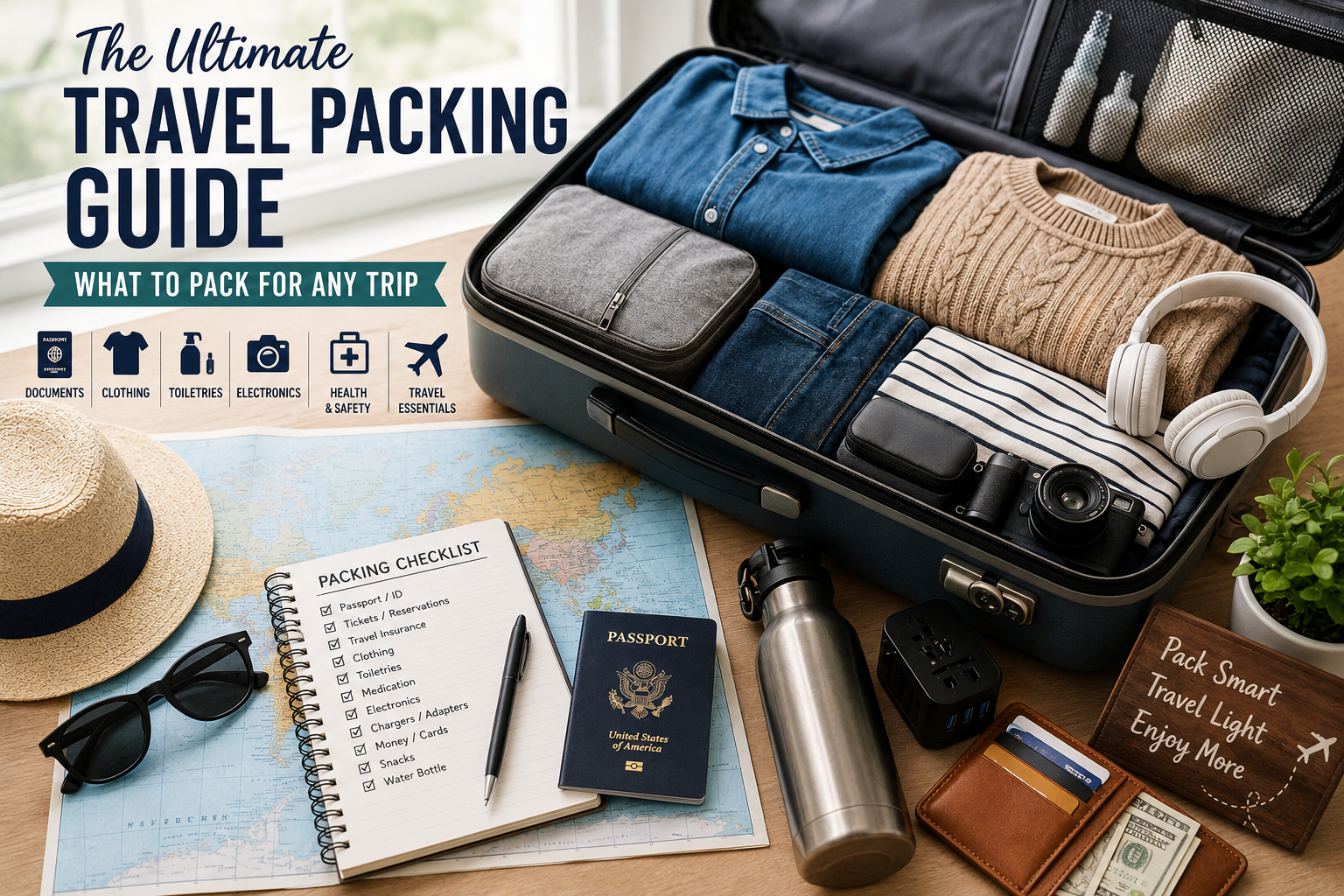
Packing for a trip can be exciting, but it can also become stressful. Many travelers either pack far too much or forget important essentials. The key to successful packing is not taking everything you own. It is choosing the right items based on your destination, weather, trip length, and planned activities.
Whether you are preparing for a weekend getaway, family vacation, business trip, road trip, beach holiday, or international adventure, having a practical packing strategy can make your journey easier and more comfortable.
Why a Good Travel Packing List Matters
A well-planned packing list helps you stay organized and reduces the chance of forgetting something important. It can also prevent overpacking, which makes luggage heavier and more difficult to manage.
Before packing, think about where you are going, how long you will stay, what the weather will be like, and what activities you plan to enjoy.
Instead of creating one packing list for every trip, use a basic list of essentials and customize it for each destination.
1. Start With Your Travel Documents
Travel documents should be among the first things you prepare.
Depending on your destination, you may need a passport, identification, visa, reservations, travel insurance information, or other documentation.
Keep important documents accessible during your journey rather than placing them in checked luggage.
Essential documents may include:
Passport or government-issued ID
Visa or entry documents when required
Flight or transportation reservations
Hotel confirmation
Travel insurance information
Driver's license
Emergency contact information
Copies of important documents
It is also useful to keep secure digital copies of important documents in case the originals are lost or damaged.
2. Pack Clothing for Your Destination
Clothing usually takes up the most space in a suitcase, so choose carefully.
Check the expected weather before you leave and consider the activities you have planned. Select clothing that can be mixed and matched instead of packing completely different outfits for every day.
Basic clothing essentials include:
T-shirts and tops
Pants or trousers
Shorts or skirts when appropriate
Underwear
Socks
Sleepwear
Jacket or sweater
Weather-appropriate clothing
Comfortable walking clothes
Swimwear if needed
Comfortable shoes
Neutral and versatile clothing can often be combined into several outfits, helping you reduce the amount of luggage you need.
3. Choose Comfortable Shoes
Shoes can quickly add weight to your luggage.
For most vacations, a comfortable pair of walking shoes should be a priority. Depending on your destination, you may also need sandals, hiking shoes, formal footwear, or water shoes.
Try to avoid packing multiple pairs that serve the same purpose.
If you are planning extensive sightseeing, comfort should generally be more important than appearance.
4. Organize Your Toiletries
Toiletries can easily take up unnecessary space.
Use a small toiletry bag and bring only the products you actually need. Travel-sized containers can help reduce luggage space when appropriate.
Common toiletries include:
Toothbrush and toothpaste
Shampoo and conditioner
Face wash
Deodorant
Moisturizer
Sunscreen
Hairbrush or comb
Personal hygiene products
Razor
Lip balm
Essential skincare products
If you are flying, check the current liquid restrictions that apply to your airline and departure airport before packing.
5. Remember Your Medication
Medication should always be treated as an essential travel item.
Bring enough medication for your trip and keep it easily accessible. Prescription medication should generally remain in your carry-on rather than checked luggage.
If traveling internationally, check whether your destination has specific requirements for carrying particular medications.
A small personal health kit may also be useful for basic needs during your journey.
6. Pack Your Electronics
Smartphones have become important travel tools for navigation, communication, reservations, photography, and entertainment.
Keep electronic accessories organized in one pouch so that cables and chargers do not become scattered throughout your luggage.
Useful electronics may include:
Smartphone
Phone charger
Charging cables
Power bank
Headphones or earbuds
Travel adapter
Camera
Tablet or laptop if necessary
Avoid taking every electronic device you own. If you are unlikely to use something during the trip, consider leaving it at home.
7. Keep Important Items in Your Carry-On
Your carry-on should contain items you would need if your checked luggage were delayed or unavailable.
Consider keeping the following accessible:
Passport or ID
Wallet
Phone
Medication
Important documents
Chargers
Power bank
Valuable electronics
Essential toiletries
A change of clothes
This can make unexpected luggage delays much easier to manage.
8. Pack According to the Length of Your Trip
A longer trip does not always require significantly more clothing.
For a weekend trip, a few versatile outfits may be enough. For a longer vacation, consider whether you will have access to laundry facilities instead of packing enough clothes for every single day.
Before putting everything into your suitcase, lay your clothes out and plan your outfits.
If something does not have a clear purpose, consider leaving it behind.
9. Consider the Weather
Weather should influence your packing decisions.
A destination that is warm during the day may become cooler at night. Rainy locations may require waterproof clothing, while colder destinations may require multiple layers.
Check the expected weather before departure and pack accordingly.
Layering is particularly useful because you can add or remove clothing as temperatures change.
10. Pack for Your Activities
Your activities should determine what additional items you bring.
If you are going hiking, you may need appropriate footwear, outdoor clothing, and a small backpack.
For a beach vacation, consider swimwear, sun protection, and suitable footwear.
For a business trip, you may need professional clothing and work equipment.
The best packing list combines universal travel essentials with items specific to your itinerary.
11. Use Packing Organizers
Packing cubes and small organizers can make luggage easier to manage.
You can separate your belongings into categories such as:
Tops
Bottoms
Underwear and socks
Toiletries
Electronics
Accessories
You do not need to purchase a large collection of travel organizers. Even a few small bags can help keep your suitcase organized.
12. Avoid Overpacking
One of the biggest travel packing mistakes is bringing items you probably will not use.
Before adding something to your suitcase, ask yourself:
“Will I actually use this during my trip?”
If the answer is uncertain, consider leaving it behind.
Avoid packing multiple items that perform the same function. Versatile clothing and multi-purpose accessories can help you save both space and weight.
13. Prepare a Small Personal Travel Bag
A small personal bag can keep frequently used items within easy reach.
Depending on your journey, you can include:
Phone
Wallet
Passport
Earphones
Charger
Sunglasses
Tissues
Water bottle
Snacks
Necessary medication
Having these items nearby can be much more convenient than repeatedly opening your main luggage.
14. Don't Forget Destination-Specific Essentials
Every destination has different requirements.
A beach holiday may require sunscreen, swimwear, and sandals. A winter vacation may require warm layers, gloves, and suitable footwear.
International destinations may also require specific documentation, electrical adapters, or other travel essentials.
Research your destination before finalizing your packing list.
15. Do a Final Packing Check
Try not to leave packing until the last few minutes before departure.
Before leaving, check your:
Passport or ID
Travel documents
Wallet
Phone
Chargers
Medication
Accommodation details
Transportation arrangements
Weather conditions
Luggage
Charge your electronic devices and make sure important items are easy to access.
A final checklist can help prevent simple mistakes from disrupting your trip.
Complete Travel Packing Checklist
Documents & Money
Passport or ID
Visa or entry documents if required
Travel reservations
Accommodation information
Travel insurance information
Bank cards
Emergency cash
Copies of important documents
Clothing
Underwear
Socks
Tops
Pants or trousers
Sleepwear
Jacket or sweater
Weather-appropriate clothing
Swimwear if needed
Comfortable shoes
Toiletries
Toothbrush
Toothpaste
Face wash
Shampoo
Deodorant
Sunscreen
Personal hygiene products
Essential skincare products
Technology
Smartphone
Charger
Charging cables
Power bank
Headphones
Travel adapter
Camera if needed
Health & Safety
Prescription medication
Basic health supplies
First-aid essentials
Emergency contact information
Common Packing Mistakes to Avoid
Packing Too Many Clothes
Packing more clothes does not necessarily mean you are better prepared. Choose versatile pieces that can be worn in different combinations.
Forgetting Important Documents
A forgotten shirt can usually be replaced. A missing passport or required travel document can create much bigger problems.
Putting Essentials in Checked Luggage
Keep important documents, medication, valuables, and essential electronics accessible.
Ignoring the Weather
Always consider the expected weather before deciding what to pack.
Packing at the Last Minute
Last-minute packing makes it easier to forget important items.
Packing for Every Possible Situation
It is useful to prepare for realistic needs, but packing for every hypothetical situation can make your luggage unnecessarily heavy.
Frequently Asked Questions
What should I pack for any trip?
Start with travel documents, money, medication, suitable clothing, toiletries, comfortable shoes, your phone, and chargers. Then add destination-specific items based on weather and planned activities.
How can I avoid overpacking?
Plan your outfits before packing and choose versatile clothing. Remove items that you are unlikely to use and avoid taking multiple products that serve the same purpose.
What should I keep in my carry-on?
Keep your passport or ID, important documents, medication, valuables, electronics, chargers, and other essential items in your carry-on.
How many clothes should I pack for a week?
There is no universal number. Consider the weather, activities, personal preferences, and whether laundry facilities will be available.
Are packing cubes useful?
Yes. Packing cubes can help organize clothing and make it easier to find items inside your suitcase. They are particularly useful for longer trips or travelers who like organized luggage.
What should I pack for international travel?
International travelers should consider passports, visas or entry requirements, travel documents, payment methods, medication, suitable clothing, chargers, and destination-specific essentials.
Should medication go in checked luggage?
Essential medication is generally better kept accessible in your carry-on rather than checked luggage. For prescription or restricted medications, check the requirements that apply to your destination and transportation provider.
What should I pack for a beach vacation?
Common beach-trip essentials include swimwear, comfortable clothing, sunscreen, sunglasses, suitable footwear, toiletries, and any personal medications you need.
How can I pack light for a long trip?
Choose versatile clothing, use layers, reduce duplicate items, and consider doing laundry during the trip. Focus on essentials rather than packing for every possible situation.
What is the best way to organize a suitcase?
Group similar items together. You can use packing cubes or separate bags for clothing, toiletries, electronics, and accessories. Keep frequently needed items accessible.
Conclusion
Packing well is not about taking everything you own. It is about preparing for the trip you are actually taking.
Start with essential documents, clothing, toiletries, medication, electronics, and other important items. Then customize your luggage according to your destination, weather, activities, and trip length.
A simple packing list can reduce stress, prevent forgotten essentials, and make your journey more comfortable. When you pack with purpose and avoid unnecessary items, you can spend less time worrying about your suitcase and more time enjoying the adventure.