
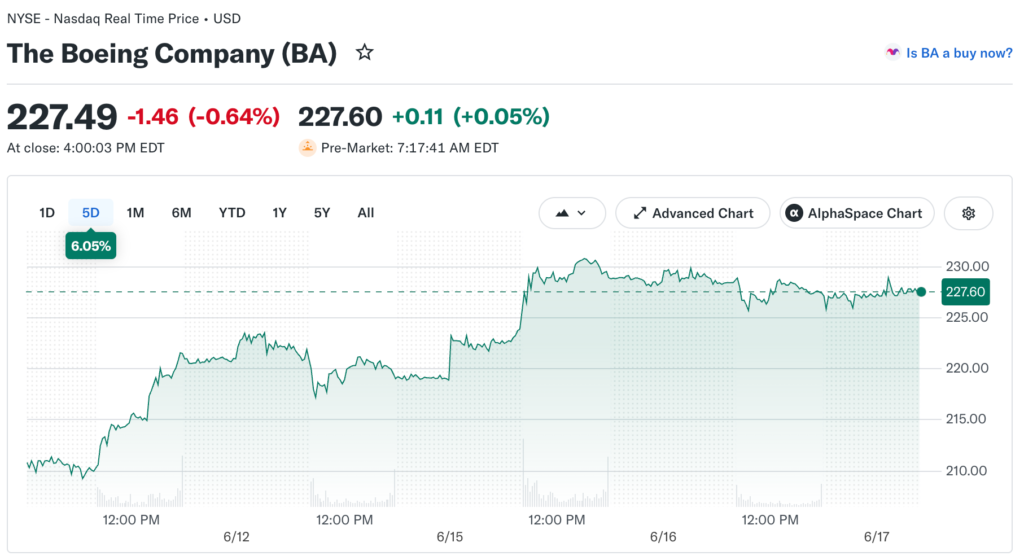
Shares of Boeing (BA) surged 4.5% on June 16, 2026, outperforming the broader market as investors grew more optimistic about the company’s recovery trajectory. Supported by easing geopolitical pressures and improving business fundamentals, the rally highlighted renewed confidence in Boeing’s ability to capitalize on strengthening demand across the aerospace sector.
According to analysts at ClearSky Capital, Boeing’s recent momentum reflects a combination of easing macroeconomic pressures, strengthening commercial aviation demand, and continued progress in restoring production efficiency after several challenging years.
Lower Energy Costs Create a More Favorable Environment
A major factor behind Boeing’s recent rally has been the decline in oil prices, which improves profitability for airlines by reducing one of their largest operating costs. Lower fuel expenses often encourage carriers to invest more aggressively in fleet expansion and aircraft modernization, creating a more favorable environment for aircraft manufacturers.
Boeing is well-positioned to benefit from this trend, with a commercial backlog worth approximately $695 billion and more than 6,000 aircraft orders. Recent commitments from major airlines, including Alaska Airlines’ planned purchase of up to 105 Boeing 737 MAX jets and Delta Air Lines’ order for up to 60 Boeing 787 Dreamliners further highlight growing confidence in the company’s commercial aviation recovery.
Production Recovery Begins to Show Results
Beyond improving industry conditions, Boeing’s operational performance has shown measurable signs of progress.
During the first quarter of 2026, the company delivered 143 commercial aircraft, surpassing rival Airbus in quarterly deliveries for the first time in several years. The achievement marked a significant milestone following the production disruptions, labor challenges, and quality-control issues that affected operations throughout 2024 and parts of 2025.
Another important development came from the Federal Aviation Administration (FAA), which authorized Boeing to increase 737 MAX production to 38 aircraft per month. Management has spent considerable time working toward this target through enhanced quality controls and close regulatory cooperation.
Higher production rates are critical because they directly influence revenue generation and cash flow. Boeing’s long-term objectives remain ambitious, with production targets eventually reaching 63 monthly 737 aircraft and 16 monthly 787 aircraft.
Financial performance has also started reflecting the operational recovery. First-quarter revenue increased 14% year-over-year, exceeding analyst expectations and providing tangible evidence that production improvements are beginning to translate into stronger financial results.
Defense Operations Provide Additional Stability
While Boeing’s commercial aviation business attracts most investor attention, its Defense, Space & Security division provides an important layer of stability. The segment entered 2026 with approximately $12.8 billion in recently secured contracts, including an $8.6 billion F-15IA fighter aircraft order and a $2.7 billion Apache helicopter support agreement.
These long-term contracts offer recurring revenue and greater visibility than commercial aircraft sales, helping to offset fluctuations in airline demand. Boeing is also strengthening its position in emerging defense technologies, with its MQ-28 stealth drone program achieving key milestones in 2026. As global governments continue to increase defense modernization spending, the division could become an increasingly important driver of future growth.
Challenges Still Require Close Attention
Despite encouraging signs of recovery, Boeing still faces several important risks. The company carries approximately $54.1 billion in debt and a debt-to-equity ratio of 9.87, making its balance sheet a key area of focus for investors. Profit margins remain relatively modest at around 4.8%, meaning any production disruptions, supply-chain issues, or regulatory setbacks could have a significant impact on financial performance.
Investors are also closely watching developments in China, where a potential 200-aircraft order could provide a meaningful boost to revenue and cash flow. However, ongoing geopolitical tensions and trade-related uncertainties continue to make the outlook difficult to predict.
Key Indicators Investors Should Follow
Investors may want to closely monitor monthly aircraft deliveries, as they provide one of the clearest measures of Boeing’s production recovery and operational progress. Additional areas to watch include production rate increases, new airline orders, and growth within the company’s defense business.
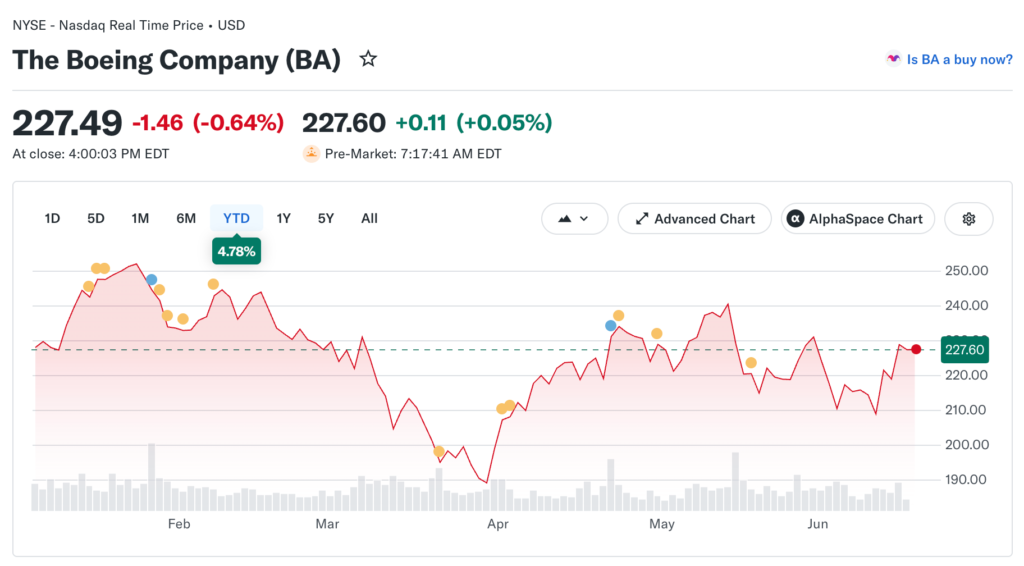
Analysts currently maintain an average 2026 price target of approximately $290.09, indicating potential upside from current levels. However, with the stock still trading about 80% below its 2019 high, Boeing’s recovery story remains ongoing, leaving significant room for both further progress and execution-related challenges..
A Turnaround Story Still in Progress
Boeing’s recent gains reflect growing optimism around its recovery, supported by lower fuel prices, a record commercial backlog, expanding defense contracts, and improving production performance. However, the company’s long-term success will depend on its ability to maintain steady aircraft deliveries, execute its production ramp efficiently, and navigate ongoing supply-chain and regulatory challenges. While Boeing appears to be making meaningful progress, investors will be closely watching whether the company can deliver results that justify the market’s renewed confidence.


