
International energy markets are experiencing a significant period of downside price discovery as physical commodity traders balance complex geopolitical maneuvers against structural supply updates.
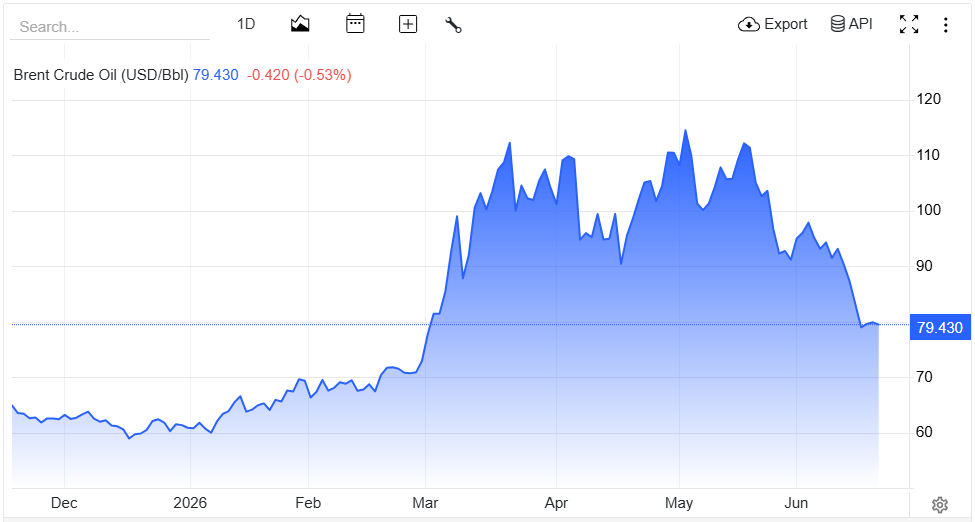
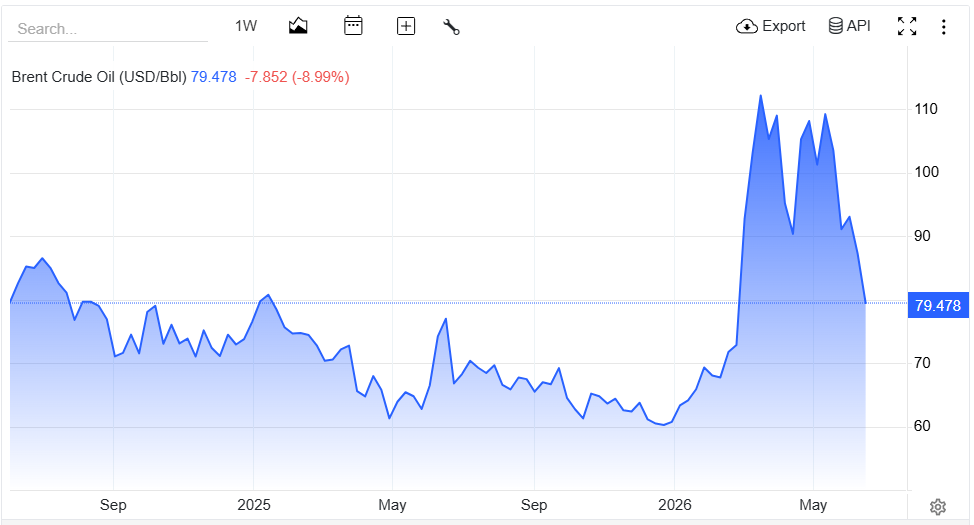
This stark downturn reflects an immediate market recalibration as the initial euphoria surrounding a proposed diplomatic breakthrough encounters real-world execution hurdles. The rapid cooling of energy futures suggests that institutional money managers are aggressively discounting previous worst-case supply disruption scenarios.
The immediate spot price for Brent crude futures hovered at $79.94 a barrel, but as Market specialists at Oryxbox highlighted, this marked a nominal single-digit cent advance while securing its second consecutive weekly retreat.
Simultaneously, domestic energy metrics experienced localized volatility, with front-month West Texas Intermediate (WTI) contracts ticking up near $77.39 a barrel ahead of their imminent expiration cycle. The more actively accumulated subsequent month options contracts followed a similar path, settling closer to $76.11 a barrel as professional allocators adjusted their near-term delivery risk.
This massive weekly price degradation highlights a structural shift in risk premium calculations across global commodity clearing houses.
However, the emerging reality of a highly complicated, non-linear peace process prevents a complete capitulation of energy prices, locking the major benchmarks into a hyper-vigilant trading posture. The transition out of a wartime pricing environment is structurally redefining baseline valuation models across the entire global energy complex.
Diplomatic Execution Delays And Transit Corridor Realities
Near-term market sentiment absorbed a sudden complication following official statements from Swiss authorities confirming that scheduled high-level diplomatic discussions between primary global powers would not materialize as anticipated.
The abrupt cancellation followed sudden logistical modifications from senior state executives, instantly injecting a layer of strategic ambiguity into the permanence of the proposed regional ceasefire. Energy sector analytical desks emphasize that these friction points illuminate the highly precarious path required to achieve an uninterrupted, long-term stabilization of maritime energy corridors.
Despite these immediate diplomatic obstacles, the underlying logistics of the Strait of Hormuz are showing visible signs of operational normalization.
Multiple high-volume supertankers, including several premium vessels sailing under sovereign flags, successfully traversed the vital passage carrying millions of barrels of raw crude. This successful maritime transit materialized almost immediately after regional presidents executed an interim framework agreement designed to cease active cross-border hostilities.
Stranded Inventory Releases And Long Range Market Surplus Projections
Global energy researchers estimate that the formalization of this international accord could effectively unlock more than 85 million barrels of stranded crude oil inventory back into the global distribution sequence.
The structural framework of the treaty also mandates the systematic unwinding of restrictive trade embargoes on regional energy production, promising to introduce substantial baseline supply to the market. Because roughly one-fifth of global petroleum and liquefied natural gas supplies pass directly through this localized maritime bottleneck, any permanent logistical recovery will profoundly alter international balance sheets.
Leading international banking groups assign a dominant 60% probability baseline to a scenario where maritime flows undergo a permanent normalization. Under this primary forecasting model, international energy markets are projected to transition into a sustained supply surplus, forcing global prices down toward an estimated $60 to $65 per barrel threshold by the first quarter of 2027.
Concurrently, prominent European banking research desks have adjusted their year-end targets downward to $80 a barrel, while noting that structural prices will likely remain above pre-war levels for the foreseeable future.
Sovereign Production Restorations And Long Term Demand Cartel Metrics
Compounding this expanding supply matrix, state oil ministers from major West Asian production sectors have publicly affirmed that their primary extraction fields are fully prepared to reactivate idled operations.
Localized production volume is on a definitive path to achieve systemic normalization, systematically restoring aggregate output to historical baseline capacities. This domestic revival ensures that global supply pools will expand precisely as international trade restrictions are systematically dismantled.
Official documentation from international oil producing coalitions indicates that global petroleum consumption is on a trajectory to climb to 113.3 million barrels per day by 2030, advancing from a baseline of 105.1 million barrels per day. This persistent long-range demand growth suggests that the ultimate absorption capacity of the global economy remains robust despite near-term cyclical disruptions.
Persistent Regional Collateral Conflicts And Ceasefire Durability Metrics
The ultimate stability of the overarching international peace treaty faces continuous headwinds due to ongoing, localized military operations outside the primary conflict zone. Active combat engagements between state defense forces and specialized regional paramilitary organizations continue to flare up, raising serious institutional questions regarding whether the broader diplomatic framework can successfully endure.
For macro risk management teams, these lingering secondary conflicts necessitate a highly tactical approach to commodity portfolio allocation. While the dominant structural trend clearly points toward expanding supply aggregates and softening global spot values, the threat of localized sabotage keeps a definitive floor under implied volatility.


