
The architecture of American monetary policy is undergoing a profound structural realignment, forcing major global banking institutions to aggressively recalibrate their macroeconomic projections. Wall Street clearing houses are rapidly unwinding their previous assumptions regarding the timing and velocity of borrowing cost reductions.
This widespread structural shift follows a highly significant central bank gathering that revealed a far more aggressive, inflation-averse posture among top-tier policy architects.
The immediate result of this shifting landscape has been a sweeping revision of interest rate paths across premium institutional desks. According to the Oryxbox financial research team, major financial institutions are delaying their initial monetary relaxation expectations.
This hawkish momentum has effectively shattered previous consensus models, compelling even the most consistently defensive market commentators to abandon their near-term monetary easing timelines.
The broader marketplace is now bracing for a highly volatile period of price discovery as the traditional rules of central bank communication are systematically dismantled. Programmatic trading systems and asset allocators are scrambling to price in a dramatically altered risk matrix where upward adjustments to lending fees are no longer a fringe scenario.
Consequently, fixed-income portfolios are undergoing heavy structural rebalancing to shield balance sheets from an extended period of restrictive financial conditions.
Revised Monetary Timelines And Institutional Consensus Reversals
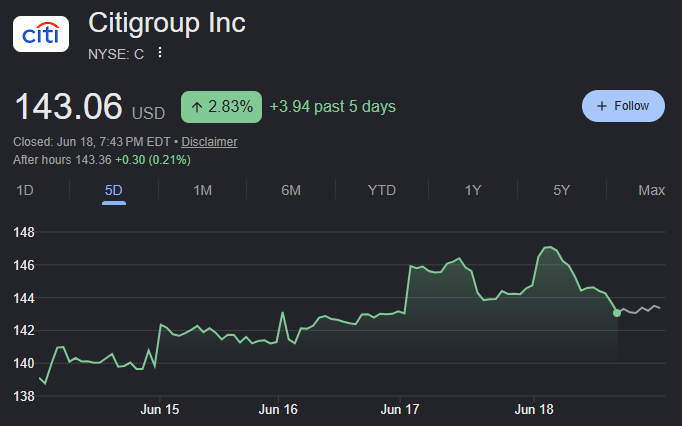
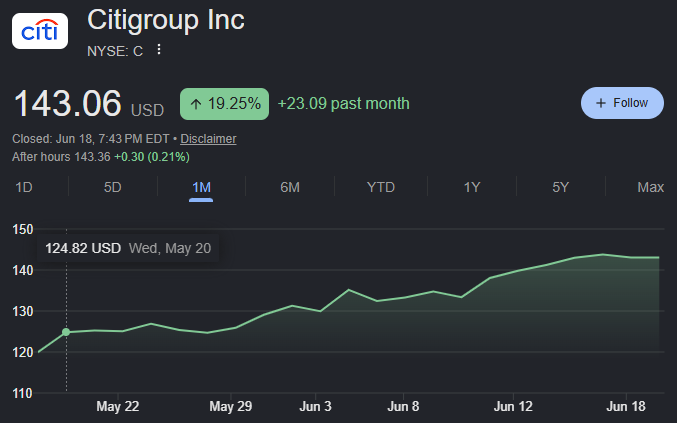
In a notable departure from its historical position as a prominent monetary dove, Citigroup has formally deferred its expected timeline for the central bank’s initial policy easing.
The Wall Street banking giant now projects a sequenced pair of 25-basis-point reductions executing in October and December 2026, followed by a supplementary adjustment in January 2027. This represents a sharp departure from its prior baseline model, which anticipated a consecutive easing sequence beginning as early as September.
Simultaneously, alternative top-tier brokerages, including Nomura and Bank of America, have explicitly warned that the probability of imminent interest rate increases is climbing rapidly.
These institutional revisions materialize in the wake of updated internal central bank tracking maps showing that nearly half of active voting policymakers now favor higher borrowing costs. This collective pivot reflects a deep-seated institutional anxiety regarding persistent inflationary pressures that refuse to yield to previous stabilization measures.
Abandonment Of Forward Guidance And The Rise Of Data Driven Volatility
A primary catalyst for this heightened market anxiety is a sweeping structural overhaul initiated by the newly appointed central bank leader, Kevin Warsh. In his inaugural public briefing, the new chairperson executed a dramatic policy break by completely abandoning the traditional practice of forward guidance.
The chief executive explicitly noted that providing long-range directional roadmaps is fundamentally ill-suited to navigating the highly fluid, discontinuous realities of the current macroeconomic landscape.
This abrupt policy termination has left global financial markets operating without their traditional forward-looking analytical anchors. Prominent European banking groups, including Deutsche Bank, emphasize that a central bank operating free from the constraints of forward guidance can execute aggressive monetary tightening at a significantly accelerated pace.
This structural shift introduces a highly asymmetric risk profile where sudden, high-velocity policy adjustments can be deployed during upcoming regulatory voting cycles with minimal market warning.
Amplified Significance Of Sovereign Communiqués And Policy Reaction Uncertainty
With explicit long-term policy templates entirely removed from the financial landscape, international investment funds are being forced to alter their informational workflows.
Market analysts emphasize that incoming macroeconomic data prints and individual sovereign speeches will now carry unprecedented structural weight in defining short-term capital values. Investment institutions like J.P. Morgan have explicitly alerted clients that individual commentary from regional central bank presidents will now take on immense tactical importance as a primary source of policy discovery.
This transition toward an entirely event-driven operational framework is introducing severe structural uncertainty into institutional risk models. Major British banking research teams, such as Barclays, note that the shift away from structured communication models dramatically obscures the central bank’s underlying policy reaction function.
Extended High Yield Horizons And Asset Allocation Freeze Paradigms
As a direct consequence of this heightened structural ambiguity, prominent research groups are opting to entirely delete monetary easing models from their multi-year forecasts. Barclays has completely discarded its previous expectation of a 25-basis-point reduction originally slated for March 2027, choosing instead to model an extended pause.
The bank now officially projects that the sovereign monetary authority will maintain borrowing costs at highly restrictive ceilings throughout the entirety of the upcoming fiscal year.
This structural commitment to a high-yield environment is sending significant shockwaves through the corporate credit and leveraged finance ecosystems. Corporations facing imminent debt maturity walls are being forced to secure refinancing at significantly higher capital costs than previously budgeted.
This reality is dampening capital expenditure initiatives, compelling corporate boards to prioritize liquidity preservation over aggressive market expansion models as the era of cheap liquidity definitively concludes.


