
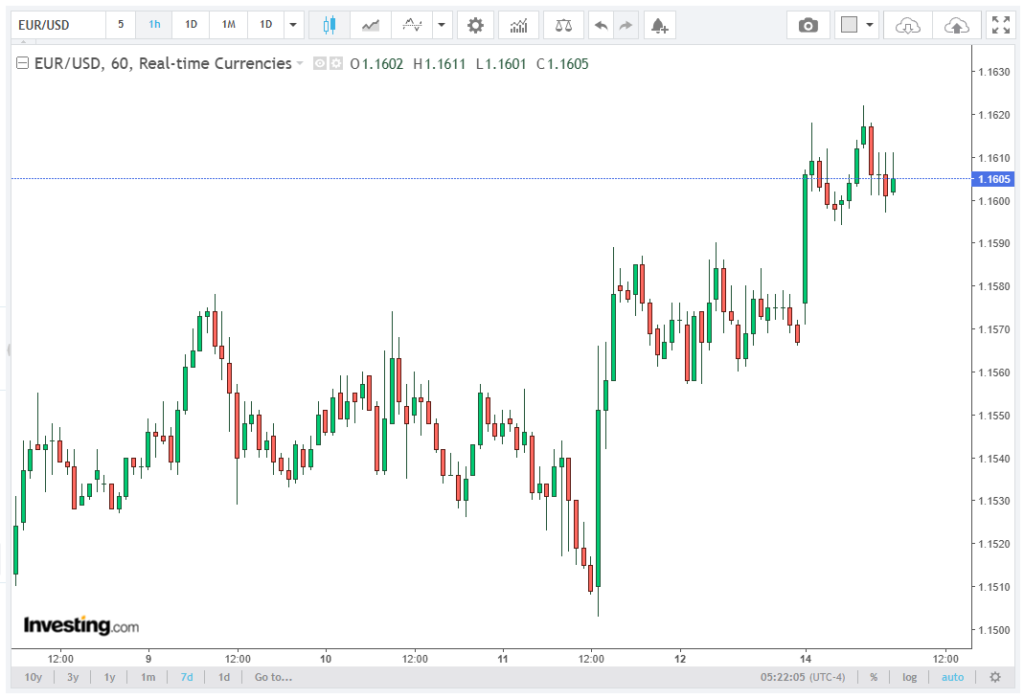
The EUR/USD pair advanced sharply in early European trade, reaching approximately 1.1610, as markets reacted to a rapid shift in geopolitical risk pricing following a confirmed US–Iran peace framework.
The move marks a clear break above the 1.1600 resistance zone, a level that had capped upside attempts in previous sessions and now flips into potential support on a technical basis. Vidasana Group’s experts deliver a comprehensive and easy-to-follow explanation of the subject in the article.
From a price-action perspective, the breakout occurred after a multi-session consolidation between 1.1520 and 1.1590, with momentum accelerating as liquidity conditions improved in the early London session. The intraday advance reflects a combination of USD weakness, risk-on capital flows, and a sharp decline in energy-linked volatility expectations.
Interest Rate Differentials and Forward Expectations
Monetary policy expectations remain a central driver of medium-term EUR/USD valuation. The US Federal Reserve is priced to maintain rates within the 3.50%–3.75% corridor, with futures markets implying a probability above 85% for no change at the upcoming meeting.
However, attention is shifting toward forward guidance, where even a 25–40 basis point shift in terminal rate expectations could trigger significant FX repricing. A more hawkish reaction function would likely stabilize the USD and cap EUR/USD upside near the 1.1650–1.1700 resistance band.
In contrast, Eurozone monetary policy has recently tilted slightly more restrictive. The European Central Bank delivered a rate increase last week, lifting policy rates by 25 basis points, marking the first hike after a prolonged pause cycle lasting several meetings.
This adjustment reflects rising concern over imported inflation pressures, particularly linked to energy price sensitivity. Eurozone headline inflation remains sticky around the 2.4%–2.7% range, while core inflation remains elevated near 2.8%–3.1%, keeping policy bias conditional on external shocks.
ECB Policy Bias and Conditional Tightening Path
A key forward-looking driver is the ECB’s conditional tightening stance. A Governing Council member indicated readiness for a potential second consecutive hike in July, contingent on continued inflation persistence driven by geopolitical energy shocks.
Market pricing currently reflects a roughly 40%–55% probability of an additional 25 basis point hike in the next meeting cycle. This introduces a modest policy divergence offset against the Fed, particularly if US monetary policy remains on hold through the next quarter.
From a yield spread perspective, the US–Germany 2-year differential has narrowed by approximately 15–20 basis points over the past week, contributing to Euro resilience. However, the spread remains USD-supportive at roughly +140–160 bps, meaning sustained EUR upside still requires either further narrowing or weaker US data.
Technical Structure: Breakout Above 1.1600
From a technical standpoint, EUR/USD has completed a bullish breakout structure above the 1.1600 pivot zone, which had acted as a ceiling for multiple intraday attempts. The breakout is confirmed by a close above short-term resistance with expanding momentum indicators on the 4-hour and daily timeframes.
Immediate resistance is now located at 1.1650, which corresponds to a previous distribution zone and minor liquidity cluster. Beyond that, the next structural resistance sits at 1.1700–1.1720, a region that aligns with prior swing highs and Fibonacci retracement confluence levels derived from the 1.1820–1.1450 downtrend leg.
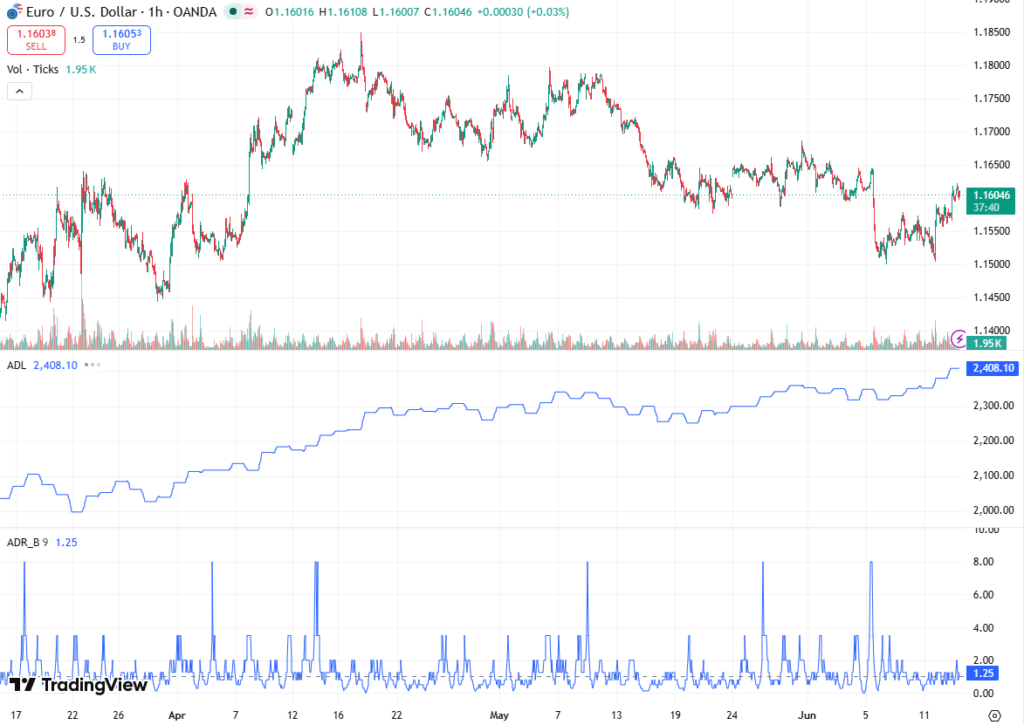
On the downside, initial support has shifted upward to 1.1570–1.1580, which now represents the breakout retest zone. A deeper support band remains at 1.1500, aligning with the 50-period moving average on the daily chart and a prior accumulation base.
Momentum signals show improving bullish divergence, with RSI holding above 55–60, indicating sustained upside pressure without entering overbought territory. Volatility compression prior to breakout suggests potential for a measured move extension of approximately 80–120 pips, targeting the 1.1680–1.1720 range in the short term.
Forward Outlook: Macro Drivers Dominate Price Action
The near-term trajectory of EUR/USD remains heavily dependent on three key variables: the durability of the US–Iran de-escalation, the tone of the upcoming US monetary policy announcement, and the ECB’s willingness to maintain a conditional tightening bias.
If geopolitical stability holds and USD yields fail to reprice higher, the pair retains scope to extend toward 1.1700–1.1750. However, any shift back toward a more restrictive US policy stance could rapidly reintroduce USD demand elasticity, limiting follow-through beyond current breakout levels.
At the same time, the Euro’s medium-term structure is increasingly sensitive to energy-driven inflation transmission mechanisms, meaning that geopolitical calm paradoxically reduces volatility but increases the relative importance of central bank guidance.
For now, EUR/USD remains in a technically confirmed bullish breakout regime above 1.1600, with macroeconomic and policy divergence acting as the primary determinants of whether momentum can transition into a sustained trend phase.


