
A major international equity benchmark architect has implemented a significant downward revision to its operational evaluation of a prominent Southeast Asian securities market.
Global investment managers are grappling with heightened systemic anxieties regarding underlying data clarity, corporate governance metrics, and the integrity of localized asset pricing mechanisms. This sudden downgrade has severely undermined international investor confidence, interrupting recent market stabilization initiatives across regional clearing houses.
The immediate fallout from this administrative action has reawakened broader concerns regarding the long-term classification status of the domestic financial ecosystem. Investment strategists at Oryxbox highlighted that international benchmark providers are actively reviewing whether the sovereign state should preserve its coveted emerging-market designation.
This institutional scrutiny materializes after months of persistent warnings regarding structural market accessibility limitations that prevent foreign capital from operating efficiently.
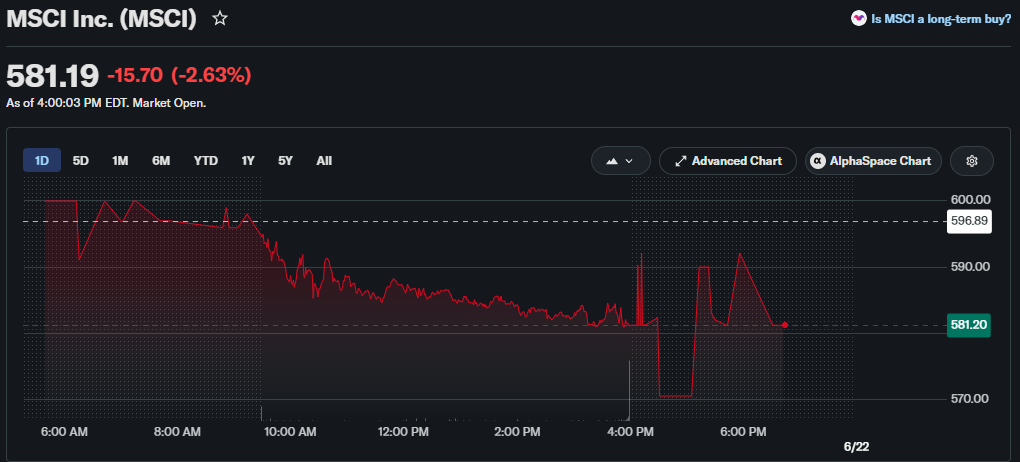
Consequently, domestic equity instruments experienced immediate selling pressure, completely erasing localized intraday gains as algorithmic trading systems reacted to the negative rating adjustment.
Global macro funds are executing rapid capital reallocations, rotating out of vulnerable regional entities into highly transparent alternative markets. This defensive capital flight highlights a structural vulnerability where opaque corporate environments face swift and severe penalties from international asset allocators.
Ownership Ambiguity Cycles And Coordinated Asset Trading Violations
The primary catalyst for this systemic downgrade stems from persistent irregularities surrounding the true distribution of corporate equity across local public enterprises. Global index providers explicitly highlighted highly opaque shareholding architectures that effectively shield dominant equity holders from public scrutiny and regulatory oversight.
This continuous lack of clarity prevents foreign institutional managers from accurately calculating the authentic free-float availability of major public corporations.
Furthermore, quantitative tracking networks have flagged recurring indications of highly synchronized, artificial trading behavior among localized market participants. This suspected manipulation severely disrupts natural price discovery mechanisms, preventing international portfolio managers from relying on observed market values for index replication.
When asset values are driven by concentrated interior networks rather than transparent supply and demand dynamics, global capital faces unmanageable execution risks.
The Accessibility Review Framework And Parallel Emerging Market Downgrades
The formalized data downgrade was officially articulated within the recently published Global Market Accessibility Review, a critical structural scorecard monitored by global fund managers.
The index provider systematically reduced the nation’s Information Flow assessment, classifying the structural environment as problematic for foreign capital allocation. This specific administrative reduction matches a previous warning issued during the winter session, which originally outlined the potential for a complete classification demotion.
Interestingly, the global index operator implemented an identical operational downgrade on Turkey’s sovereign securities market, citing highly similar transparency failures and price formation anxieties.
This synchronized double downgrade underscores a broader, zero-tolerance approach currently being enforced by global index firms against opaque financial regimes. For emerging-market asset classes everywhere, this parallel action serves as a clear warning that regulatory modernizations must outpace protective insular practices.
Small Cap Equity Volatility And Sovereign Currency Depreciation Pressures
Foreign institutional allocators have spent multiple quarters escalating complaints regarding extreme, erratic valuation spikes inside localized small-cap equity tiers. These unpredictable price movements frequently occur within corporations characterized by exceptionally concentrated ownership blocks, maximizing the risk of localized cornering.
The sudden index downgrade validates these institutional grievances, confirming that artificial pricing dynamics are no longer being dismissed as isolated anomalies.
Compounding these internal equity distortions, the sovereign nation’s macroeconomic foundation is enduring intense external duress as the rupiah collapses to historical lows against the greenback.
This persistent currency depreciation is accelerating severe domestic capital flight, complicating corporate balance sheets and leaving fiscal health indicators heavily exposed. In a sudden attempt to defend the embattled exchange rate, the central bank executed a surprise interest rate increase last week, tightening domestic credit access.
The Constraints Of Portfolio Construction And Index Replication Mechanics
The continuous preservation of opaque corporate structures introduces a functional barrier that prevents large-scale institutional participation within the domestic marketplace. International fiduciary managers are legally and structurally restricted from allocating capital to zones where true asset valuations cannot be mathematically verified.
When observed market prints are deemed unreliable, passive index funds and exchange-traded fund managers cannot accurately perform necessary portfolio rebalancing strategies.
If institutional asset managers cannot execute precise replication strategies without enduring non-market execution risks, they will simply configure their benchmarks to exclude the geography entirely. This structural isolation represents an exceptional threat to the domestic corporate sector, which relies heavily on global capital to finance long-term industrial modernization plans.

Classification Forecasts And Strategic Regional Asset Rebalancing
For active global macro funds, the current transparency deficit demands a highly tactical, underweight posture toward the affected Southeast Asian country. Portfolio managers are shifting their focus toward neighboring alternative equity corridors that demonstrate a more disciplined adherence to international transparency benchmarks.
This strategic migration ensures that global portfolios remain insulated from sudden reclassification shocks, maintaining capital alignment with highly predictable, rule-of-law financial systems.


