
Global oil markets have entered a new phase as easing geopolitical tensions begin to outweigh concerns about tight physical supplies. Recent diplomatic progress aimed at restoring stability across key maritime trade routes has prompted a sharp shift in market sentiment, sending crude prices lower despite historically low inventory levels.
Analysts from ClearSky Capital note that the latest move reflects how quickly geopolitical developments can reshape market expectations, even when underlying supply conditions remain supportive. As traders reassess supply risks, the focus has shifted from potential disruptions toward the possibility of smoother global energy flows.
WTI Falls to a Three-Month Low
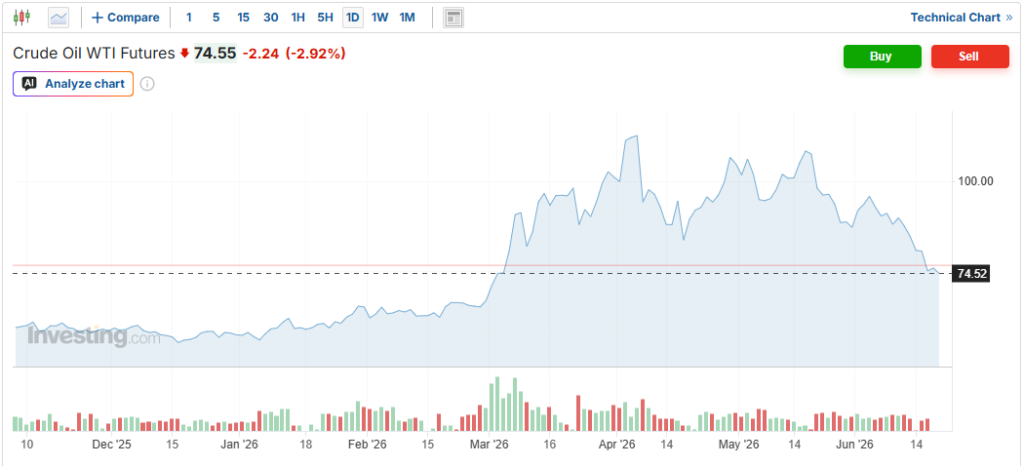
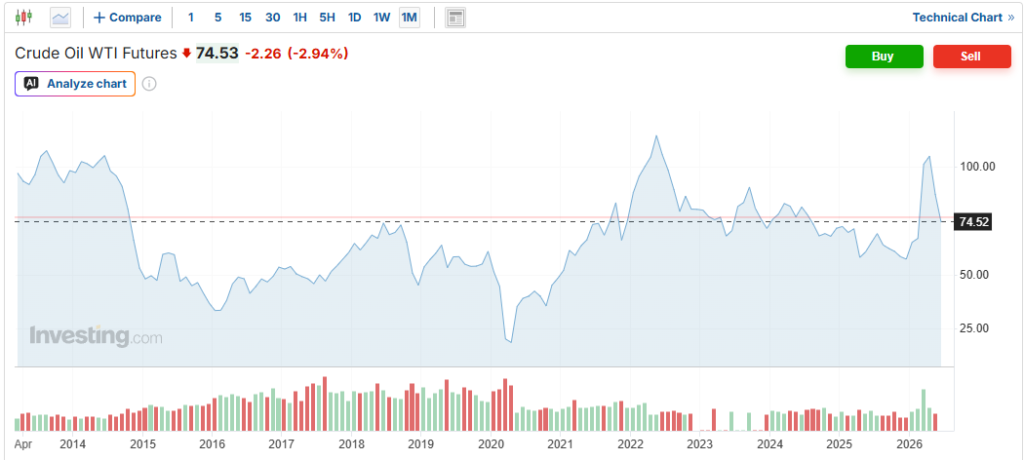
West Texas Intermediate (WTI) crude continued to weaken during recent trading sessions, slipping below $74 per barrel and briefly touching approximately $73.36, its lowest level in three months.
The decline comes as traders increasingly focus on reports that regional rivals have agreed to a diplomatic framework designed to restore secure and uninterrupted transit through key maritime energy corridors. The prospect of smoother global energy flows has eased concerns over potential supply disruptions, reducing one of the major factors that had previously supported higher crude oil prices. .
As a result, oil markets are now pricing in a significantly lower geopolitical risk premium, creating downward pressure on benchmark crude contracts.
Diplomatic Progress Changes Market Expectations
The newly announced agreement aims to ensure safe passage through critical shipping routes, reducing concerns about disruptions to global energy transportation. For oil markets, this is significant because shipping bottlenecks and transit risks have long been major drivers of price volatility.
As confidence grows that regional oil exports could increase and transportation networks may normalize, investors have started reassessing positions that were built on geopolitical risk premiums. The rapid shift in sentiment highlights how quickly energy markets can react when concerns about supply disruptions begin to ease.
Physical Supply Conditions Remain Tight
Despite the recent pullback in crude prices, underlying supply fundamentals remain tight. Commercial crude inventories fell by 8.26 million barrels, far exceeding expectations for a 4.6 million-barrel decline, while marking the tenth consecutive weekly inventory drawdown.
At the same time, U.S. crude reserves remain near their lowest levels in more than 40 years, a condition that would typically support higher oil prices. However, investors are currently placing greater weight on future supply expectations and improving geopolitical conditions than on existing inventory shortages, creating a notable disconnect between market pricing and physical supply fundamentals.
Investor Positioning Adds to Selling Pressure
Another factor contributing to the recent decline has been the unwinding of speculative long positions.
As geopolitical concerns eased, many institutional investors moved quickly to reduce exposure to oil futures. Automated trading systems and quantitative strategies amplified the process by triggering sell signals as important technical levels were breached.
The result has been a wave of profit-taking that accelerated the downward move in crude prices.
At the same time, some investors have begun rotating capital into alternative asset classes as concerns about energy-driven inflation pressures begin to moderate.
This shift in capital flows has reinforced the bearish momentum generated by the diplomatic developments.
Can Tight Inventories Support a Rebound?
While short-term sentiment has weakened, many analysts caution that the market should not overlook historically low inventory levels and strong global energy demand. If the newly announced diplomatic framework faces delays or implementation challenges, traders could quickly shift their attention back to underlying supply constraints.
In that scenario, crude prices could see a sharp rebound, driven by short-covering activity and renewed concerns about supply availability. As a result, many market participants remain hesitant to view the recent decline as the start of a sustained bearish trend.
What Traders Are Watching Next
The next few weeks could be pivotal for the oil market. Traders will be closely watching diplomatic negotiations and upcoming inventory data for clues about future price direction. If the new framework is implemented smoothly, improving global energy transportation flows could continue to weigh on crude prices.
However, any delays, disruptions, or renewed geopolitical tensions could quickly bring back a geopolitical risk premium, supporting higher prices. For now, the market remains caught between improving geopolitical conditions and persistently tight supply fundamentals, making crude oil highly sensitive to both headlines and economic developments.
A Market Balancing Optimism and Scarcity
The recent decline in crude oil prices demonstrates how rapidly sentiment can shift in global commodity markets. While diplomatic progress has reduced fears of immediate supply disruptions, the reality of historically low inventories continues to provide an important counterbalance.
For investors and energy traders, the key question remains whether improving geopolitical conditions can fully offset the impact of tight supply dynamics. The answer will likely determine whether WTI crude establishes a lower trading range or finds renewed support from the physical fundamentals that remain firmly in place.


