Getting your first credit card is an important financial step. A first credit card can provide a convenient way to pay for everyday purchases while helping you establish a credit history. However, choosing the right card can be challenging, especially when you have little or no previous credit experience.
The best first credit card for one person may not be the right choice for another. Students, young adults, people with no credit history, and consumers rebuilding credit can have very different needs.
Instead of choosing a card simply because it offers rewards or a sign-up promotion, beginners should consider factors such as annual fees, APR, credit limits, eligibility requirements, rewards, reporting practices, and opportunities to graduate to a better card.
What Is a First Credit Card?
A first credit card is generally the first revolving credit account someone opens in their own name.
It may be designed specifically for people with:
No credit history
Limited credit history
A thin credit profile
Student status
Fair or developing credit
Previous credit problems
Using a first credit card responsibly can help establish a record of borrowing and repayment. The CFPB explains that products such as secured credit cards can help consumers establish or rebuild credit when payments are reported to the nationwide credit reporting companies.
The important part is not simply obtaining a card. How you manage it can have a much greater impact on your credit journey.
Types of First Credit Cards
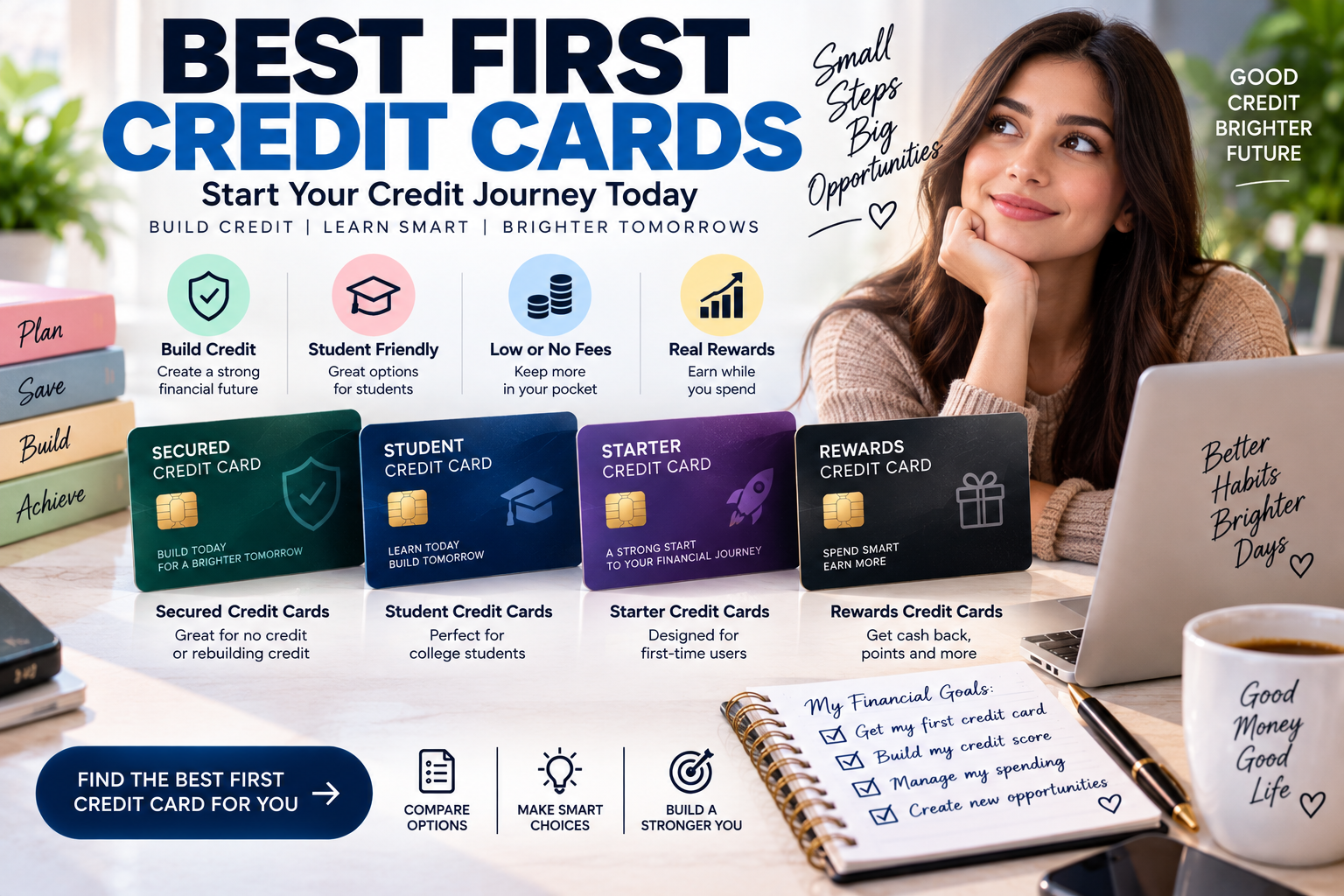
There isn't one universal first credit card. Several categories may be suitable depending on your financial situation.
1. Secured Credit Cards
A secured credit card requires a refundable security deposit that generally supports the credit line.
For example, a card might require a $300 deposit and provide a corresponding credit limit, although requirements vary by issuer.
The deposit reduces the issuer's risk, which can make secured cards an option for people who have difficulty qualifying for conventional cards.
The CFPB specifically identifies secured credit cards as one way to establish or rebuild credit.
When considering a secured card, look at:
Required deposit
Annual fee
APR
Credit limit
Credit-bureau reporting
Upgrade opportunities
Refund policy for the deposit
Some issuers may allow responsible cardholders to move to an unsecured card or receive their deposit back after demonstrating good payment behavior.
2. Student Credit Cards
Student credit cards are designed for qualifying college students.
They may have features intended for people who are new to credit, including relatively accessible approval requirements and rewards on common student spending categories.
Student cards can be useful for establishing credit while attending college, but applicants still need to meet the issuer's eligibility requirements.
Experian notes that student cards can be one option for young people building credit, while secured cards may be an alternative for those who don't qualify.
3. Unsecured Starter Credit Cards
An unsecured starter card does not require a security deposit.
Some are designed specifically for people with limited or developing credit histories.
These cards can be convenient because you don't have to provide collateral, but beginners should pay close attention to fees and interest rates.
Experian's 2026 guidance notes that some unsecured starter cards can have higher APRs or fees, making it important to compare the complete cost before applying.
4. Store Credit Cards
Retailers sometimes offer store-branded credit cards that may be easier for some applicants with limited credit to obtain.
However, store cards can have high interest rates or restrictions on where they can be used.
A store card should therefore be considered based on its actual terms rather than simply its approval requirements.
The CFPB lists retail or store cards among products that can potentially help consumers establish credit history.
What Makes a Good First Credit Card?
When searching for a first credit card, beginners should focus on long-term costs and useful features.
Low or No Annual Fee
An annual fee is charged each year simply for having the account.
For a first credit card, a no-annual-fee option can make budgeting simpler, particularly if the cardholder is not earning enough rewards or benefits to offset a fee.
However, an annual fee does not automatically make a card unsuitable. The important question is whether the benefits justify the cost.
Reasonable APR
APR represents the annualized cost of borrowing.
If you plan to pay your statement balance in full every month, the APR may be less important than it would be for someone who regularly carries a balance.
Nevertheless, every beginner should understand the card's interest rate before applying.
The CFPB explains that credit-card interest may be calculated daily, meaning paying balances sooner can reduce interest costs.
Credit-Bureau Reporting
If your objective is to build credit, you want your responsible payment history to be reported appropriately.
Before applying, check whether the issuer reports account activity to the major credit bureaus.
Experian recommends confirming that a starter card reports to the credit bureaus when the goal is to establish credit history.
Manageable Credit Limit
A first card doesn't need a huge credit limit.
A smaller limit can actually make it easier to control spending while you're learning how credit works.
Your goal should be to spend within your budget rather than treating the credit limit as money available for spending.
Upgrade or Graduation Opportunities
Some secured cards may provide a path toward an unsecured card.
This can be useful because responsible cardholders may eventually qualify for a conventional credit card without having to start the entire application process again.
When comparing secured cards, check whether the issuer evaluates accounts for upgrades and whether the security deposit can eventually be returned.
How to Compare First Credit Cards
Before applying, create a simple comparison checklist.
Annual Fee
Ask:
Is there an annual fee?
Is it waived during the first year?
What benefits justify the fee?
APR
Check:
Purchase APR
Variable or fixed rate
Promotional APR
APR after the promotional period
Rewards
Consider:
Cash back
Points
Travel rewards
Bonus categories
Spending limits
Redemption options
Rewards can be useful, but they shouldn't encourage unnecessary spending.
Foreign Transaction Fees
If you travel internationally or purchase products from overseas merchants, check whether the card charges foreign transaction fees.
Late Fees
Review the fee structure for missed or late payments.
More importantly, establish a system that helps you pay on time.
Credit Reporting
Check whether the issuer reports payments and account activity to the relevant credit bureaus.
Security Deposit
For secured cards, determine:
Minimum deposit
Maximum deposit
Credit limit
Refund conditions
Upgrade options
Should Your First Credit Card Have Rewards?
Rewards can be attractive, but they aren't necessarily the most important feature for a beginner.
A simple cash-back card can be useful if it has low fees and rewards spending you already do.
For example, you might earn rewards on:
Groceries
Gas
Dining
Online purchases
Everyday spending
However, rewards should never be an excuse to spend more than you can afford.
If you spend $500 to earn rewards but then carry the balance and pay significant interest, the rewards may be worth much less than the financing cost.
How to Build Credit With Your First Card
Getting the card is only the beginning.
Pay on Time
Payment history is one of the most important parts of responsible credit management.
The CFPB recommends making payments on time consistently when building a strong credit history.
Consider setting up automatic payments for at least the minimum amount due so that you don't accidentally miss a deadline.
Pay the Balance in Full
Whenever possible, pay your statement balance in full by the due date.
The CFPB states that paying balances in full each month can help avoid finance charges and prevent balances from getting too close to the credit limit.
You do not need to carry a balance from month to month to build credit.
Keep Spending Under Control
Your credit limit is not your budget.
If your card has a $1,000 limit, that does not mean you should spend $1,000.
Instead, use the card for purchases you already have money available to pay for.
Keep Utilization Reasonable
Credit utilization describes how much of your available revolving credit you're using.
For example, if your credit limit is $1,000 and your balance is $200, your utilization is 20%.
Keeping balances relatively low can be helpful when building a credit profile.
Avoid Multiple Applications at Once
Applying for several cards within a short period can create multiple hard inquiries and may make managing new accounts more difficult.
The CFPB recommends applying only for credit you need.
For a first card, starting with one account may make it easier to learn how credit works.
First Credit Card Mistakes to Avoid
Using the Card Like Free Money
A credit card isn't extra income.
Every purchase creates an obligation that must eventually be repaid.
Paying Only the Minimum
Making the minimum payment can keep an account current, but it can also extend repayment and increase interest costs.
Whenever possible, pay the full statement balance.
Missing the Due Date
Late payments can damage a developing credit history.
Use automatic payments, calendar reminders, or banking alerts to stay organized.
Applying for Too Many Cards
Beginners sometimes apply for several cards because they want the highest possible credit limit.
This can make finances more complicated and can result in multiple credit inquiries.
Ignoring Fees
Always check the pricing information before applying.
Look beyond the headline rewards and examine annual fees, foreign transaction fees, late fees, balance-transfer fees, and other charges.
Spending to Earn Rewards
Rewards are only useful when they come from purchases you actually need.
Never buy unnecessary items simply to reach a rewards threshold.
Best First Credit Cards for Different Beginners
Instead of looking for one card that is universally the "best," consider which category matches your situation.
If You Have No Credit History
A secured card or starter card may be worth researching.
Focus on:
Low fees
Credit reporting
Manageable credit limits
Clear terms
Upgrade opportunities
If You're a College Student
A student credit card may be an option if you meet the issuer's eligibility requirements.
Look for:
No or low annual fee
Simple rewards
Manageable credit limit
Credit reporting
Educational resources
If You Have Poor Credit
A secured card may be easier to qualify for than some unsecured cards.
Compare the deposit requirement, fees, APR, and credit-reporting policy.
If You Have Limited Credit
An unsecured starter card may be available depending on your credit profile.
Compare several options rather than automatically accepting the first offer.
If You Want Cash Back
Look for a card that rewards categories where you already spend money.
Don't choose a rewards card solely because it advertises a high percentage.
Check whether the rewards have caps, rotating categories, or other conditions.
How Much Should You Spend on Your First Credit Card?
There is no universal spending amount that every beginner should use.
A simple approach is to put a few predictable purchases on the card each month and pay the statement balance in full.
For example, you could use your card for a recurring subscription, groceries, or a small household expense.
The purpose is to establish consistent responsible payment behavior—not to maximize your credit-card spending.
Do You Need to Carry a Balance to Build Credit?
No.
Carrying a balance is not necessary for building credit.
The CFPB specifically explains that paying a credit-card balance in full each month can help keep interest costs low while still allowing you to build credit.
This is an important misconception for first-time cardholders.
Using a card responsibly and paying it on time is more important than intentionally paying interest.
What Credit Score Do You Need for a First Credit Card?
There isn't one universal minimum credit score for every first credit card.
Eligibility depends on the issuer, card type, income, existing credit history, and other application information.
People with no credit history may have different options from applicants with established credit.
Secured and student cards can sometimes provide alternatives when a traditional card isn't accessible.
Can a First Credit Card Improve Your Credit Score?
A first credit card can help establish credit when the account is reported and managed responsibly.
Factors that can help include:
Paying on time
Keeping balances manageable
Avoiding unnecessary applications
Maintaining accounts responsibly over time
The CFPB notes that a longer history of responsible credit management provides more information about how a consumer handles credit.
How Long Should You Keep Your First Credit Card?
There is no universal rule requiring everyone to close or keep a first card forever.
If the card has no annual fee and remains useful, keeping it open may provide a longer account history and available credit.
Before closing a card, consider:
Annual fee
Account age
Available credit
Utilization
Rewards
Whether you have other accounts
Closing a card can change your available credit and may affect your credit profile.
Final Thoughts
Choosing the best first credit card is less about finding one universally superior product and more about finding an account that matches your financial situation.
For someone with no credit history, a secured card may provide a starting point. Students may consider student cards, while people with limited credit may find starter unsecured cards worth researching.
Regardless of the card type, responsible habits are the foundation.
Pay on time, keep spending within your budget, monitor your account, avoid unnecessary debt, and understand the fees and interest rates before applying.
A first credit card can be a useful financial tool when it is treated as a payment and credit-building tool—not as extra money.
Frequently Asked Questions
What is the best first credit card for someone with no credit?
There is no single best card for everyone. Secured cards, student cards, and starter unsecured cards may all be options depending on eligibility and financial circumstances.
Is a secured credit card good for a first card?
A secured credit card can be useful for people who have no credit history or difficulty qualifying for an unsecured card. It usually requires a security deposit and can help establish credit when payments are properly reported.
Do I need to carry a balance to build credit?
No. You can build credit by using a credit card responsibly and paying the balance in full. Carrying a balance simply to build credit is unnecessary.
Should my first credit card have an annual fee?
Not necessarily. Beginners should compare the annual fee with the card's benefits and consider whether a no-annual-fee alternative is available.
Can students get their first credit card?
Qualifying students may be able to apply for student credit cards. Eligibility requirements vary by issuer.
How much should I spend on my first credit card?
Use only an amount you can comfortably repay. Starting with small, predictable purchases can make it easier to develop responsible habits.
How can I avoid interest on my first credit card?
If your card's terms provide a grace period for purchases, paying the statement balance in full by the due date can generally help you avoid purchase interest. Always check the specific card agreement.
Can a first credit card build my credit score?
It can help establish credit when the account reports to credit bureaus and you consistently manage the account responsibly.
Should I apply for multiple first credit cards?
Usually, beginners should avoid applying for numerous cards at once. Start with an account that fits your situation and learn how to manage it effectively.
What should I check before applying for a first credit card?
Compare the APR, annual fee, rewards, credit limit, fees, eligibility requirements, credit-bureau reporting, foreign transaction fees, and any upgrade or graduation opportunities.