Getting your first credit card is an important financial step. A first credit card can provide a convenient way to make purchases, establish a credit history, and learn how to manage borrowing responsibly. However, choosing the right starter card can be confusing, especially if you have little or no credit history.
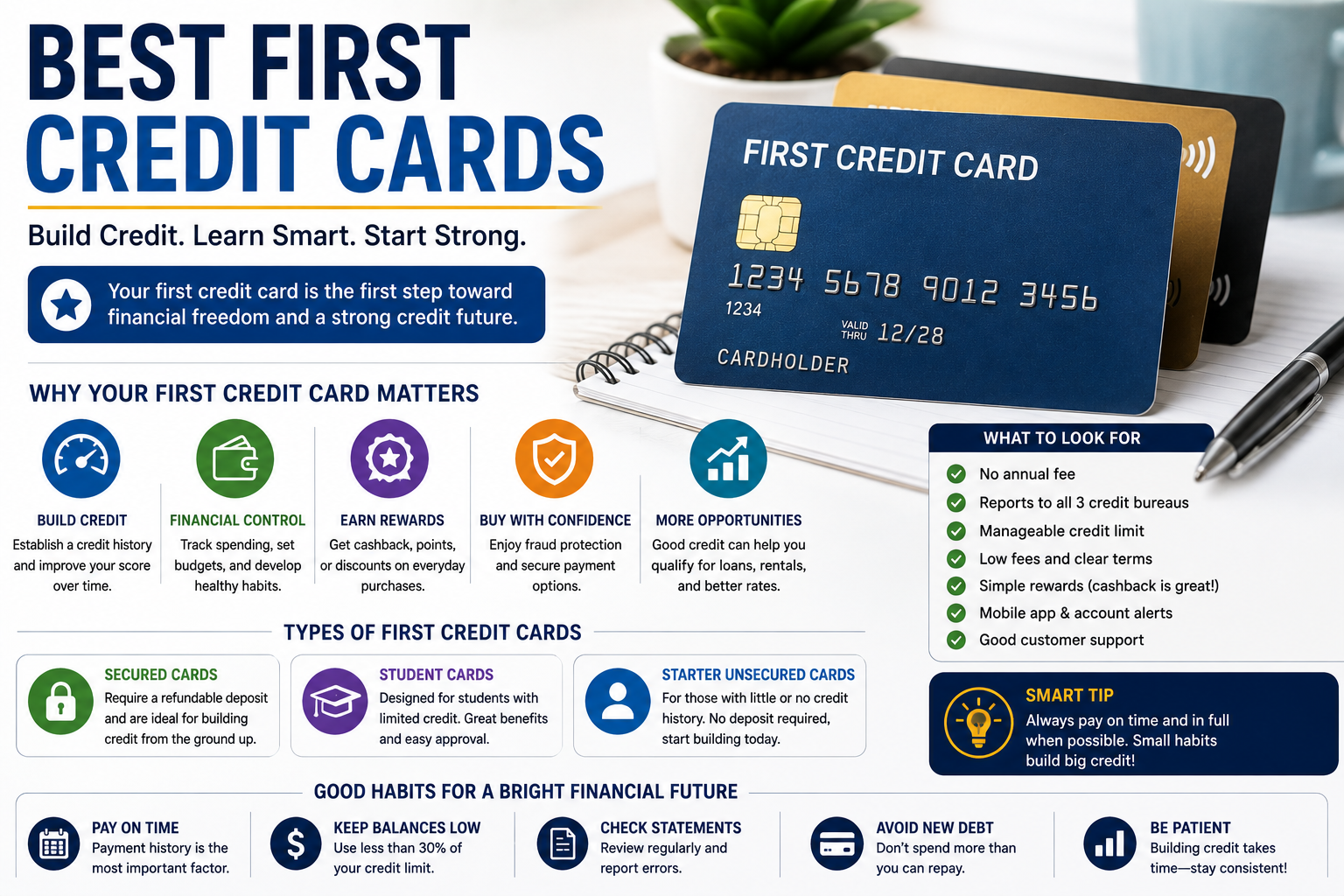
The best first credit card is usually not the card with the biggest rewards or the most premium benefits. For beginners, features such as no annual fee, manageable spending limits, clear terms, and credit-building potential are often more important. Current 2026 guidance for first-time cardholders emphasizes choosing a card that fits your credit profile and supports responsible credit-building.
What Is a First Credit Card?
A first credit card is the card you use when you are beginning to establish your personal credit history.
People with no previous credit history may have fewer options than consumers with established credit. However, there are several types of beginner-friendly cards, including secured credit cards, student cards, and unsecured cards designed for people with limited or no credit history.
Your first card does not need to offer luxury travel benefits or a huge rewards program. Its primary purpose can be to help you develop good financial habits.
What Should You Look for in Your First Credit Card?
Choosing your first card requires looking beyond advertisements and welcome offers.
No Annual Fee
A card with a $0 annual fee can be easier to keep open over the long term. This can be useful because keeping an older account open may contribute to the length of your credit history, depending on your overall credit profile.
For beginners, avoiding unnecessary annual costs can also make managing the account simpler.
Credit-Building Features
One of the most important features is whether the issuer reports payment activity to the major credit bureaus.
Regular, responsible payments can help establish a credit history. Current beginner-card guidance specifically recommends looking for cards that report payment activity to all three major credit bureaus.
Reasonable Credit Limit
A first card may come with a relatively modest credit limit.
That is not necessarily a disadvantage. A lower limit can make it easier to control spending while you learn how credit cards work.
Your credit limit should not be treated as your monthly spending budget.
Simple Rewards
Some beginner cards offer cashback on purchases. Simple rewards can be useful because they do not require complicated points calculations.
However, rewards should be considered a bonus rather than the main reason to spend.
No or Low Fees
Beginners should review fees carefully, including annual fees, late-payment fees, foreign transaction fees, balance-transfer fees, and cash-advance fees.
The Consumer Financial Protection Bureau recommends understanding APRs, fees, grace periods, and other key credit-card terms before choosing a card.
Types of First Credit Cards
There is no single type of starter card that works for everyone.
Secured Credit Cards
A secured credit card generally requires a refundable security deposit.
The deposit can reduce the issuer's risk and may make secured cards accessible to people who cannot qualify for traditional unsecured cards.
For someone with no credit history, a secured card can provide an opportunity to establish credit while starting with a controlled credit limit.
Student Credit Cards
Student credit cards are designed for eligible students who are beginning to establish credit.
They may offer beginner-friendly features and simple rewards. Some student cards do not require an extensive credit history.
However, eligibility depends on the issuer and the applicant's circumstances.
Unsecured Starter Cards
Unsecured credit cards do not require a security deposit.
Some are specifically designed for people with limited or no credit history. For example, current 2026 card comparisons identify the Chase Freedom Rise® as a beginner-oriented option with no security deposit, a $0 annual fee, and rewards, although approval requirements still apply.
Card availability and terms can change, so applicants should verify current details directly with the issuer.
Alternative Credit-Building Cards
Some newer products evaluate applicants using information beyond traditional credit scores.
These products can be useful for people who have difficulty qualifying for conventional credit cards, although their fees, features, and reporting policies vary.
How to Choose the Best First Credit Card
Start by understanding your current credit situation.
If you have no credit history, look at starter, student, or secured cards.
If you already have some credit history, you may qualify for a broader range of cards.
If you have damaged credit, a secured or credit-building product may be more appropriate.
Avoid applying for multiple cards simply because you think having more applications will increase your chances of approval.
Credit Score vs. Credit History
Many beginners assume that they need a high credit score before they can get a credit card.
That's not always true.
If you have no credit history, you may not have a traditional credit score at all. Some credit cards are specifically designed for applicants who are beginning to establish credit.
Credit history is important because lenders use information about your previous borrowing and repayment behavior to assess risk.
A first credit card can therefore be an important starting point.
How to Use Your First Credit Card
Getting approved is only the first step. How you use the card is more important.
Pay on Time
Always make at least the required payment by the due date.
Payment history is an important part of credit management, so consistently paying on time is one of the most valuable habits you can develop.
Pay the Balance in Full When Possible
If your budget allows, paying the full statement balance can help you avoid carrying unnecessary credit card debt and, under applicable terms, can help you avoid interest on qualifying purchases.
The CFPB notes that paying all or part of a balance sooner can reduce the amount of interest paid when interest applies.
Keep Spending Under Control
Your credit limit is not free money.
For example, if your credit limit is $1,000, that does not mean you should spend $1,000 every month.
Instead, use the card for purchases that already fit within your budget.
Monitor Your Account
Check your account regularly for unfamiliar transactions.
Monitoring your account can help you identify unauthorized purchases and understand how quickly your spending is adding up.
How Your First Credit Card Can Help Build Credit
Responsible credit card use can help establish a credit history.
Several factors can influence credit scores, including payment history, amounts owed, length of credit history, and other information in your credit report.
Using a card responsibly and paying bills on time can demonstrate that you can manage revolving credit.
However, building credit takes time. You should not expect your credit profile to become excellent immediately after opening your first card.
Should You Choose a Cashback Card?
Cashback can be an attractive feature for beginners because it is relatively easy to understand.
For example, a card may offer a percentage of eligible purchases back as cashback.
However, the reward rate should not be your only consideration.
A card with a slightly lower cashback rate but no annual fee and better credit-building features may be more useful for a first-time cardholder.
The goal should be to build good credit habits first and maximize rewards second.
Should You Choose a Secured Card?
A secured card may be a good starting point if you cannot qualify for an unsecured card.
Because a deposit is generally required, secured cards can also provide a controlled way to learn how credit works.
Before choosing one, check whether the issuer reports payments to the major credit bureaus, whether the deposit is refundable, what fees apply, and whether there is an opportunity to transition to an unsecured card.
Common First Credit Card Mistakes
Beginners can avoid many problems by recognizing common mistakes.
Spending More Than You Can Repay
Credit cards make purchases convenient, but borrowing beyond your budget can lead to expensive debt.
Paying Only the Minimum
The minimum payment may keep the account current, but carrying a balance can result in interest charges.
Missing Payment Due Dates
Late payments can result in fees and potentially hurt your credit profile.
Applying for Too Many Cards
Multiple applications can make managing accounts more complicated and may result in multiple credit inquiries.
Ignoring Fees
Always check the card's fee schedule before applying.
Chasing Rewards
Never spend extra money simply to earn cashback, points, or a welcome bonus.
How Long Should You Keep Your First Credit Card?
There is no universal rule saying you must keep your first card forever.
However, a no-annual-fee card may be worth keeping open if it remains useful and manageable. Closing an account can change your available credit and other aspects of your credit profile.
If the card has an annual fee or no longer fits your needs, review your options before closing it.
Final Thoughts
Choosing your first credit card is less about finding the most impressive card and more about finding a card that supports good financial habits.
Beginners should prioritize low or no fees, credit-building features, manageable limits, straightforward rewards, and transparent terms.
Whether you choose a secured card, student card, or unsecured starter card, the most important factor is how you manage it. Pay on time, keep spending within your budget, monitor your account, and understand how interest works.
With responsible use, your first credit card can become the foundation for a stronger credit history and access to more financial products in the future.
Frequently Asked Questions
1. What is the best first credit card?
The best first card depends on your credit history and financial situation. Beginners should generally prioritize low fees, credit-building features, manageable limits, and clear terms.
2. Can I get a credit card with no credit history?
Yes. Some starter, student, secured, and alternative credit cards are designed for people with limited or no credit history.
3. Is a secured credit card good for a first card?
It can be. Secured cards generally require a refundable deposit and may be useful for people who cannot qualify for traditional unsecured cards.
4. Should my first credit card have an annual fee?
A no-annual-fee card can be a good starting point because it reduces ongoing costs. However, compare the complete benefits and terms before making a decision.
5. Can a first credit card build my credit?
Responsible use can help establish a credit history, particularly when the issuer reports account activity to the major credit bureaus.
6. How much should I spend on my first credit card?
Spend only what fits comfortably within your budget. Your credit limit should not determine how much you spend.
7. Should I pay my first credit card in full?
If possible, paying the statement balance in full can help you avoid carrying debt and may help you avoid interest on qualifying purchases under the card's terms.
8. Are student credit cards good first cards?
They can be useful for eligible students who are beginning to establish credit. Student cards are specifically designed around the needs of people with limited credit histories.
9. Can I get cashback with my first credit card?
Yes. Some beginner cards offer cashback rewards. However, credit-building features and fees should generally be considered before rewards.
10. What should I avoid with my first credit card?
Avoid unnecessary spending, missed payments, cash advances, excessive applications, and carrying balances you cannot comfortably repay.
11. How long does it take to build credit with a first credit card?
Building credit is a gradual process. Consistently managing your account responsibly over time is more important than trying to improve your credit quickly.
12. Should I get more than one credit card as a beginner?
Usually, it is better to learn how to manage one card successfully before considering additional accounts. More cards are not automatically better.