
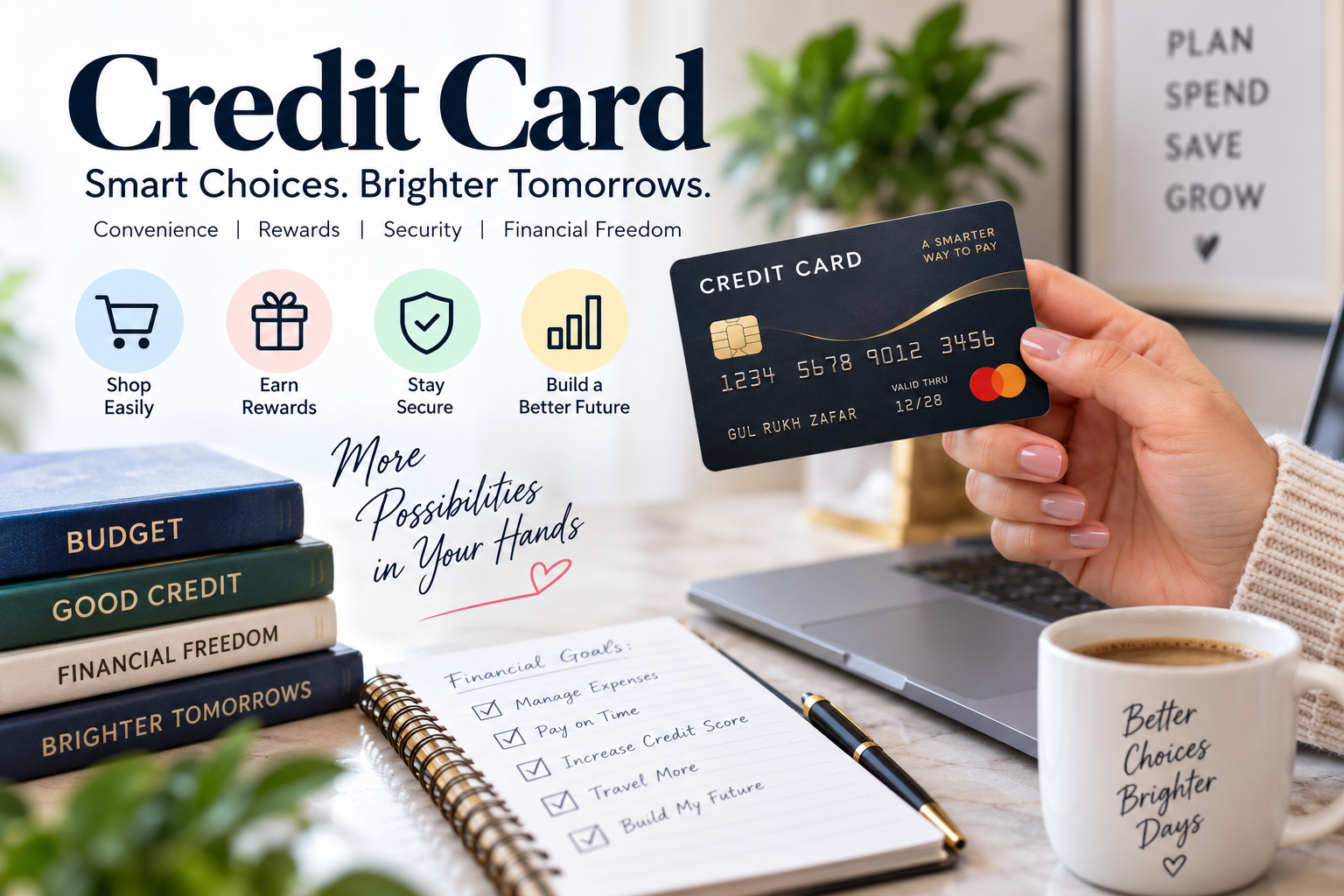
A credit card is a widely used financial tool that allows consumers to make purchases, pay bills, and access short-term credit without paying the full amount immediately from their bank account. Credit cards can provide convenience, security, rewards, and financial flexibility when used responsibly.
However, a credit card is not free money. Every purchase made with a credit card creates an obligation to repay the amount according to the card issuer's terms. Understanding interest charges, minimum payments, fees, credit limits, and repayment rules is essential before using a credit card.
This guide explains how credit cards work, their major benefits and potential disadvantages, different types of credit cards, and practical tips for responsible credit card use.
What Is a Credit Card?
A credit card is a payment card issued by a bank or financial institution that allows an approved customer to borrow money up to a predetermined credit limit.
When you use a credit card to purchase something, the card issuer generally pays the merchant on your behalf. You then repay the card issuer according to the terms of your account.
For example, if your credit card has a limit of $2,000 and you make a $300 purchase, your available credit may decrease to approximately $1,700 until the balance is repaid or otherwise adjusted according to the account terms.
Unlike a debit card, which typically takes money directly from your bank account, a credit card provides access to a line of credit.
How Does a Credit Card Work?
Credit cards operate through a cycle involving purchases, billing, repayment, and potentially interest charges.
1. Application and Approval
A person applies for a credit card from a bank or financial institution. The issuer may evaluate information such as income, existing debts, credit history, and other eligibility requirements.
If the application is approved, the issuer assigns a credit limit and provides the cardholder with account terms.
2. Making Purchases
Once the card is activated, it can generally be used at merchants that accept the card network.
Every eligible purchase is added to the account balance.
3. Billing Cycle
Credit cards normally operate through billing cycles. During each cycle, purchases and other transactions are recorded.
At the end of the billing cycle, the issuer sends a statement showing the account activity and the amount owed.
4. Payment Due Date
The statement normally includes a payment due date.
The cardholder can then make a payment according to the issuer's requirements. Depending on the card and account terms, paying the full statement balance by the due date may help avoid interest on eligible purchases.
5. Interest and Fees
If a balance is carried from one billing period to another, interest may be charged according to the account's terms.
Credit cards can also have fees, such as annual fees, late payment fees, foreign transaction fees, balance transfer fees, cash advance fees, or other charges.
The exact rules vary by issuer, country, and card.
Credit Card vs. Debit Card
Credit cards and debit cards can look similar, but they work differently.
A debit card generally accesses money already available in a bank account. A credit card generally provides access to borrowed funds through a revolving credit line.
For example, when you use a debit card, the transaction typically reduces the available balance in your bank account. With a credit card, the transaction increases the amount you owe to the card issuer.
Credit cards may also provide benefits such as rewards programs, purchase protections, and opportunities to establish or maintain a credit history, depending on the issuer and jurisdiction.
Types of Credit Cards
Credit cards are available in many forms. Different cards are designed for different financial needs.
Rewards Credit Cards
Rewards cards provide points, miles, cashback, or other benefits based on eligible spending.
Rewards structures vary. Some cards may provide higher rewards in specific categories such as dining, travel, groceries, or fuel.
Cashback Credit Cards
Cashback cards return a percentage of eligible purchases as cash rewards or statement credits.
For example, a card might offer a certain percentage of cashback on selected purchases. The rate, limits, eligible transactions, and redemption rules depend on the issuer.
Travel Credit Cards
Travel credit cards are designed for people who frequently travel. They may offer travel points, airline miles, hotel rewards, airport-related benefits, or other travel features.
Some travel cards have higher annual fees, so consumers should compare the total value of benefits with the cost of the card.
Secured Credit Cards
A secured credit card generally requires a refundable security deposit that may serve as collateral for the credit account.
These cards can sometimes be used by people who are building or rebuilding their credit history, subject to issuer requirements.
Business Credit Cards
Business credit cards are designed for business-related expenses. They may offer expense tracking, employee cards, rewards, and other business-oriented features.
Business owners should understand whether they are personally responsible for the account and how the issuer reports account activity.
Student Credit Cards
Student credit cards are designed for eligible students and may have features intended for people who are beginning to establish credit.
Eligibility requirements vary by issuer and jurisdiction.
Benefits of Using a Credit Card
Credit cards can offer several advantages when used responsibly.
Convenience
Credit cards make it easy to pay for purchases without carrying large amounts of cash.
They are also widely accepted for online purchases and recurring payments.
Emergency Flexibility
A credit card may provide access to funds when an unexpected expense occurs. However, relying on credit for emergencies can become expensive if the balance cannot be repaid.
Rewards
Many credit cards offer rewards for eligible spending. Depending on the card, rewards may include cashback, points, travel miles, discounts, or other benefits.
Purchase Protection
Some cards may offer protections for certain purchases, such as extended warranties, purchase protection, or dispute processes.
The availability and terms of these protections vary, so cardholders should read the card's benefits documentation.
Building Credit History
In countries where credit reporting systems use credit card activity, responsible use and timely payments may contribute to a person's credit history.
Credit scoring systems differ between countries and providers, so consumers should understand how credit card activity is reported in their location.
Potential Disadvantages of Credit Cards
Credit cards can also create financial risks if they are not managed carefully.
Interest Charges
Carrying a balance can result in interest charges. Over time, interest can significantly increase the total cost of purchases.
Fees
Credit cards may have various fees. Common examples include annual fees, late fees, cash advance fees, foreign transaction fees, and balance transfer fees.
Always check the card's fee schedule before applying.
Overspending
Because credit cards separate the purchase from the immediate payment of cash, some people may spend more than they otherwise would.
Creating a spending limit and tracking purchases can help prevent this problem.
Debt Accumulation
Repeatedly carrying balances can result in growing debt. Minimum payments may keep an account in good standing under its terms, but paying only the minimum can extend the repayment period and increase total interest costs.
What Is a Credit Limit?
A credit limit is the maximum amount of credit an issuer generally allows a cardholder to use at a particular time.
For example, a card with a $5,000 credit limit generally cannot be used to maintain a balance above that amount unless the issuer's terms allow otherwise.
Credit limits can vary based on factors such as income, credit history, issuer policies, and account characteristics.
A higher credit limit does not necessarily mean someone should spend more. Spending should remain within a person's ability to repay.
What Is a Credit Score?
A credit score is a numerical representation used by some credit reporting and scoring systems to estimate aspects of a person's credit risk.
Credit scoring models can consider factors such as payment history, amounts owed, credit utilization, length of credit history, and other information depending on the model.
Different countries and credit bureaus use different systems.
Paying bills on time and managing debt responsibly can help support a healthy credit profile where such reporting systems apply.
Understanding Credit Card Interest
Credit card interest can be one of the most important costs to understand.
Interest rates are commonly expressed as an annual percentage rate, or APR. However, the actual amount charged depends on the card's terms, balance, transactions, payment timing, and applicable rules.
Some credit cards offer a grace period on eligible purchases when the statement balance is paid in full by the due date. Other transactions, such as cash advances, may have different interest rules.
Before using a credit card, review the issuer's agreement to understand when interest begins and how it is calculated.
Minimum Payment vs. Full Payment
A credit card statement generally provides a minimum amount that must be paid by the due date.
Paying the minimum may prevent certain consequences associated with missing the required payment, but it can leave a substantial balance outstanding.
Paying the full statement balance, when financially possible, can reduce or avoid interest on eligible purchases under many credit card agreements.
For this reason, consumers should distinguish between the minimum payment and the full statement balance.
How to Use a Credit Card Responsibly
Responsible credit card use starts with spending within your ability to repay.
Pay on Time
Late payments can result in fees and may affect your credit history depending on the account and reporting system.
Pay More Than the Minimum
If you cannot pay the full balance, paying more than the minimum can generally reduce the outstanding balance faster and may reduce interest costs.
Monitor Your Transactions
Check your account regularly for unfamiliar purchases, incorrect charges, or suspicious activity.
Understand Your Fees
Before using a card, learn about annual fees, foreign transaction fees, cash advance fees, late fees, and other potential costs.
Keep Your Card Secure
Never share your card's security information unnecessarily. Use trusted websites and services when making online purchases and report suspicious activity to the card issuer.
Avoid Unnecessary Cash Advances
Cash advances can have different fees and interest rules from regular purchases. Review the terms before using this feature.
How to Choose a Credit Card
Choosing a credit card should start with your financial needs rather than advertisements or rewards alone.
Consider the following factors:
Interest Rate
Compare the card's APR and understand when interest applies.
Annual Fee
Some cards have no annual fee, while others charge an annual fee in exchange for additional features or rewards.
Rewards
If rewards matter to you, compare the actual value of the rewards with spending requirements, redemption rules, expiration policies, and fees.
Foreign Transaction Fees
Frequent international travelers should check whether the card charges foreign transaction fees.
Credit Requirements
Different cards have different eligibility criteria. Applying for a card does not guarantee approval.
Additional Benefits
Consider benefits such as travel protections, purchase protection, extended warranties, fraud monitoring, or other services.
Credit Card Security Tips
Credit card fraud can occur both online and offline, so security should be a priority.
Never share your PIN, security codes, passwords, or one-time verification codes with unknown people.
Use strong passwords for online banking and card-management accounts. Enable transaction alerts when available and review statements regularly.
If you notice an unauthorized transaction, contact the card issuer through an official communication channel as soon as possible.
When shopping online, check that you are using a legitimate website and avoid entering card details on suspicious pages.
Credit Cards and Financial Planning
A credit card can be a useful component of a broader financial plan when managed carefully.
Before relying on credit, consider your income, essential expenses, existing debts, savings, and ability to repay new purchases.
Credit cards should generally be treated as a financial tool rather than additional income.
A realistic monthly budget can help you determine how much you can safely spend and repay.
Final Thoughts
A credit card can provide convenience, payment flexibility, rewards, and access to a revolving line of credit. At the same time, interest charges, fees, overspending, and accumulating debt can create financial problems when a card is not managed responsibly.
Understanding the terms of a credit card is one of the most important steps before using one. Pay attention to the interest rate, fees, credit limit, billing cycle, payment due date, rewards conditions, and other account rules.
Used carefully, a credit card can be a practical financial tool. The key is to spend within your means, make payments on time, monitor your account, and understand the costs associated with borrowing.
Frequently Asked Questions About Credit Cards
What is a credit card?
A credit card is a payment card that allows an approved user to borrow money from a card issuer up to a specified credit limit and repay the amount according to the account terms.
How does a credit card work?
When you use a credit card, the issuer generally pays the merchant and adds the transaction to your account. You then repay the issuer according to your billing statement and account terms.
Is a credit card the same as a debit card?
No. A debit card generally uses funds available in a bank account, while a credit card generally provides access to a line of credit that must be repaid.
What is a credit limit?
A credit limit is the maximum amount of credit that the card issuer generally allows you to use on the account at one time.
What is a credit card APR?
APR stands for annual percentage rate. It is a rate used to express the annualized cost of borrowing, although the actual interest calculation depends on the card's terms and applicable rules.
What happens if I only pay the minimum payment?
Paying only the minimum can leave a balance outstanding and may result in additional interest charges. It can also take considerably longer to repay the balance.
Is it better to pay the credit card in full?
For many cards, paying the full statement balance by the due date can help avoid interest on eligible purchases and reduce the risk of accumulating debt.
Do credit cards charge annual fees?
Some credit cards charge annual fees, while others do not. The fee depends on the card and issuer.
Can a credit card help build credit?
In credit-reporting systems where credit card activity is reported, responsible use and timely payments may help establish or maintain a credit history.
What is a secured credit card?
A secured credit card generally requires a refundable security deposit and may be designed for consumers who are establishing or rebuilding credit, depending on the issuer's requirements.
Can I use a credit card internationally?
Many credit cards can be used internationally, but foreign transaction fees, exchange rates, acceptance, and other conditions vary by card and issuer.
Are credit card rewards worth it?
The value of rewards depends on the card's fees, rewards rates, spending categories, redemption rules, and how the cardholder uses it. Rewards should not encourage spending beyond one's ability to repay.
How can I avoid credit card debt?
Create a budget, spend within your means, monitor transactions, make payments on time, and avoid carrying balances that you cannot comfortably repay.
What should I do if my credit card is stolen?
Contact the card issuer immediately using its official customer-service channel, report the card as stolen, and follow the issuer's instructions for securing the account and replacing the card.
Can I have more than one credit card?
Some people have multiple credit cards, but having additional cards does not automatically improve financial health. Consider fees, repayment ability, account management, and your overall debt before opening another account.