
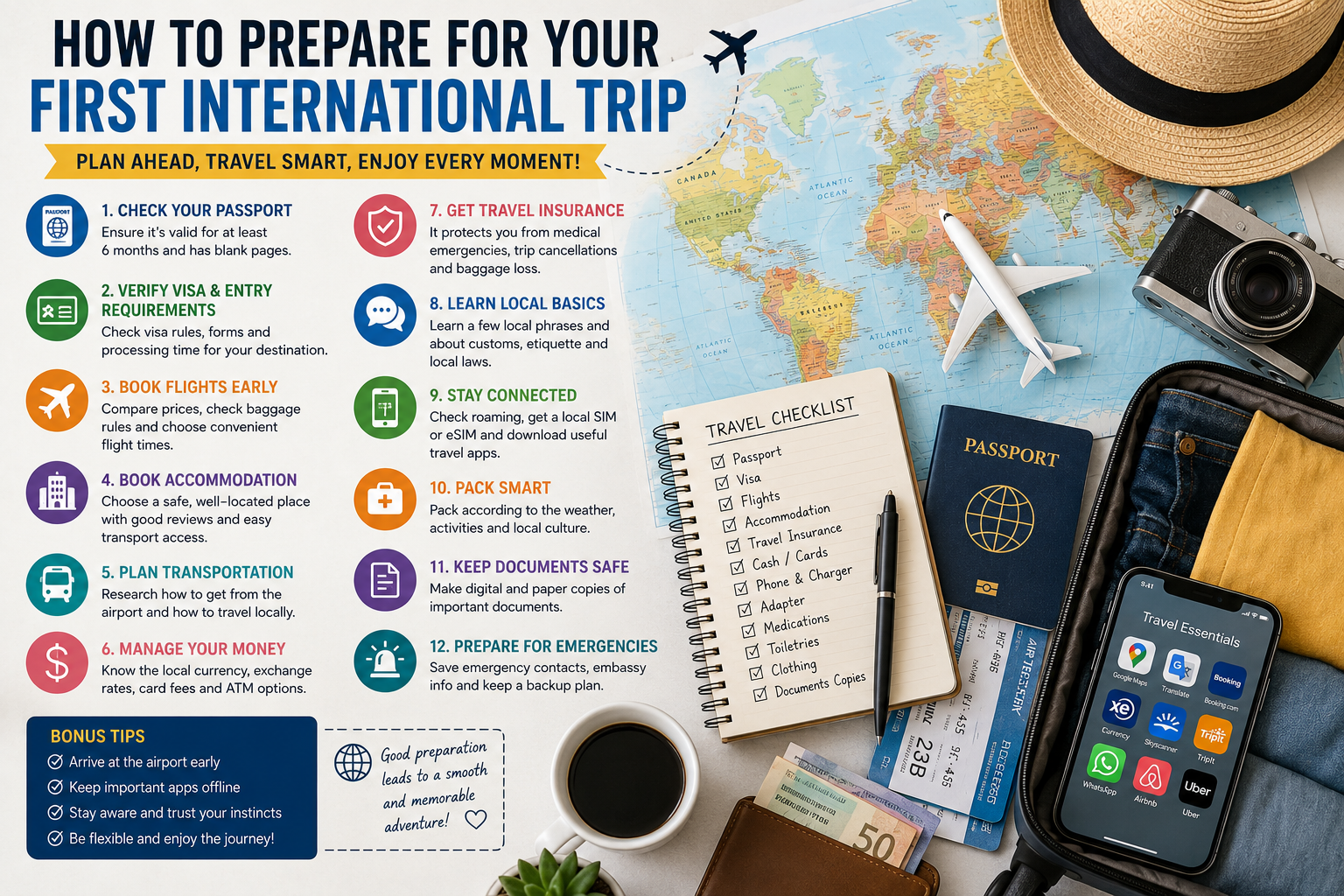
Taking your first international trip can be exciting, but it can also feel overwhelming. There are passports, visas, flights, accommodation, currency, travel insurance, packing, transportation, and many other details to consider.
The good news is that international travel becomes much easier when you prepare in advance.
You do not need to know everything about a destination before you leave. You simply need to organize the important details, understand the requirements, and create a practical plan.
Whether you are traveling for a vacation, visiting family, attending an event, or exploring a new country, this guide will help you prepare for your first international journey with greater confidence.
Why Preparation Matters for International Travel
International travel is different from a domestic trip because you may need to deal with another country's entry requirements, currency, language, transportation system, laws, and customs.
Small mistakes can become stressful when you are far from home.
Preparing in advance can help you:
Avoid document problems
Understand entry requirements
Choose suitable accommodation
Plan transportation
Manage your money
Prepare for language differences
Pack appropriately
Handle unexpected situations
The goal is not to plan every second. It is to make sure the important parts of your trip are under control.
1. Check Your Passport
Your passport is one of the most important documents for international travel.
Before booking your trip, check:
Passport expiration date
Remaining blank pages
Condition of the passport
Destination-specific validity requirements
Some countries require passports to remain valid for a certain period beyond your planned departure date.
Requirements vary by destination, so always verify the latest rules through official government or immigration sources.
If your passport needs renewal, complete the process well before your departure date.
2. Check Visa and Entry Requirements
Never assume that you can enter another country without additional documentation.
Depending on your nationality and destination, you may need:
A visa
Electronic travel authorization
Transit visa
Proof of accommodation
Return or onward ticket
Proof of sufficient funds
Health-related documentation where applicable
Entry requirements can change, so check official sources before finalizing your travel plans.
If you need a visa, allow enough time for processing.
Do not wait until a few days before departure to discover that an application is required.
3. Book Your Flights Carefully
Once you understand the entry requirements, you can start comparing flights.
Do not look only at the ticket price.
Consider:
Departure and arrival times
Number of stops
Layover duration
Baggage allowance
Airport location
Cancellation rules
Change fees
Total travel time
A slightly more expensive flight may be more convenient if it has a shorter journey or better arrival time.
For your first international trip, avoiding extremely complicated connections may make the journey easier.
4. Understand Your Airport and Flight Process
International airports can be large and busy.
Before your departure, understand the basic process:
Check-in → Security → Immigration → Gate → Boarding → Arrival immigration → Baggage claim → Customs
Give yourself enough time at the airport, particularly if you are unfamiliar with international travel procedures.
Check your airline's recommended arrival time and allow additional time if you expect long queues or have special requirements.
5. Book Accommodation in a Convenient Location
Your hotel or accommodation can affect your entire travel experience.
For a first international trip, convenience can be more valuable than choosing the absolute cheapest property.
Look for:
Good recent reviews
Convenient location
Easy transportation access
Clear check-in instructions
Reliable communication
Suitable facilities
Reasonable cancellation terms
Consider how you will reach the property from the airport or train station before booking.
6. Research How You Will Get Around
Transportation systems can be very different from what you are used to.
Research your destination's:
Public transportation
Taxi services
Rideshare options
Train systems
Bus networks
Airport transfers
Walking routes
Save important transportation information before departure.
If you are arriving late at night, confirm your transportation and accommodation arrangements in advance.
7. Learn About the Local Currency
International travel usually means dealing with a different currency.
Before leaving, learn the approximate value of the local currency so you have a general idea of what things cost.
You can use a currency-conversion app to help compare prices.
Also check how your bank cards work internationally.
Find out whether your card provider charges:
Foreign transaction fees
ATM fees
Currency conversion fees
Carry a suitable backup payment method in case your primary card does not work.
8. Prepare Your Travel Budget
Create a realistic budget before leaving.
Include:
Flights
Accommodation
Food
Transportation
Activities
Shopping
Travel insurance
Visa fees
Airport transfers
Emergency expenses
Do not spend your entire budget before the trip begins.
Keep some money available for unexpected situations.
A daily spending estimate can also help you understand whether you are staying within your planned budget.
9. Consider Travel Insurance
Travel insurance can provide protection against certain unexpected situations, depending on the policy.
Coverage varies, so read the terms carefully before purchasing.
Look at:
Medical coverage
Emergency assistance
Trip cancellation
Baggage loss or delay
Travel interruptions
Exclusions
Coverage limits
Travel insurance is particularly worth considering when a trip involves significant non-refundable expenses.
10. Research Local Laws and Customs
Every country has its own laws and cultural expectations.
Before traveling, research basic information about:
Appropriate clothing
Photography
Public behavior
Religious sites
Alcohol regulations
Local transportation rules
Tipping
Identification requirements
You do not need to become an expert in local culture.
Learning a few important customs can help you avoid accidental disrespect or unnecessary problems.
11. Learn a Few Local Phrases
You do not need to become fluent in the local language before your first international trip.
Learning a few basic phrases can still be extremely useful.
Consider learning how to say:
Hello
Thank you
Please
Excuse me
Where is...?
How much?
Help
I do not understand
A translation app can also help when communication becomes difficult.
12. Download Important Travel Apps
Your smartphone can become an important travel tool.
Before leaving home, consider installing:
Map and navigation apps
Translation apps
Currency converter
Weather app
Airline app
Hotel or booking app
Transportation app
Messaging app
Travel itinerary app
Download offline maps and language packs when available.
Do this before you leave rather than waiting until you arrive.
13. Make Copies of Important Documents
Keep copies of important documents in a secure location.
Consider making copies of:
Passport
Visa
Travel insurance
Flight reservations
Hotel reservations
Important contact information
Digital copies can be useful, but protect sensitive information appropriately.
Copies do not replace original documents, but they may make certain recovery processes easier if something is lost.
14. Plan Your First Day
Your first day in another country can be tiring.
You may have spent many hours traveling, dealt with airport procedures, and adjusted to a different time zone.
Do not create an extremely busy itinerary for your arrival day.
Instead, plan something simple:
Arrive
Complete immigration procedures
Collect luggage
Travel to accommodation
Check in
Eat a meal
Rest
Take a short walk if you feel comfortable
A relaxed first day can help you adjust before starting more demanding sightseeing.
15. Pack According to Your Destination
Do not pack the same way for every country.
Consider:
Weather
Local customs
Planned activities
Trip length
Accommodation facilities
Electrical requirements
Essential items may include:
Passport
Travel documents
Suitable clothing
Comfortable shoes
Medication
Toiletries
Phone
Chargers
Power bank
Travel adapter
Keep important documents, medication, valuables, and essential electronics accessible.
16. Check Electrical Requirements
Electrical outlets and voltage can differ between countries.
Before traveling, determine whether your destination requires a plug adapter or whether your devices support the local voltage.
A universal travel adapter can be useful for international travelers who visit multiple countries.
Do not assume that your normal charger will automatically work everywhere.
17. Understand Airport Immigration and Customs
Arriving in another country may involve immigration and customs procedures.
Keep your passport and required documents accessible.
You may be asked about:
Purpose of your visit
Accommodation
Length of stay
Return or onward travel
Answer questions honestly and follow official instructions.
After collecting your luggage, follow the appropriate customs procedures.
18. Keep Your Phone Connected
Having reliable communication can make international travel much easier.
Depending on your destination and phone, options may include:
International roaming
Local SIM card
eSIM
Wi-Fi
Check your options before leaving home.
If you plan to use an eSIM, make sure your phone supports it and that the service covers your destination.
19. Stay Aware of Your Surroundings
Being in a new country can make you more vulnerable to confusion.
Stay aware of your surroundings, particularly in crowded transportation hubs and tourist areas.
Keep your phone and valuables secure.
Avoid displaying large amounts of cash and be cautious with unsolicited offers.
Research common tourist scams before arriving so you know what to watch for.
20. Have an Emergency Plan
Before leaving, know what you would do if something went wrong.
Save:
Local emergency numbers
Accommodation contact information
Travel insurance assistance
Embassy or consular information
Trusted contacts at home
Keep access to emergency funds and backup payment methods.
If traveling alone, consider sharing your general itinerary with someone you trust.
21. Do Not Overplan Your First International Trip
It is tempting to try to see everything.
However, international travel can be tiring because of long flights, unfamiliar transportation, language differences, and changes in routine.
Choose a manageable number of activities each day.
Leave space for:
Rest
Meals
Transportation delays
Unexpected discoveries
Changes in weather
A flexible trip is often more enjoyable than a packed schedule.
22. Arrive With a Basic Plan, Not a Perfect Plan
You do not need to know exactly where you will be every minute.
Have the important details organized:
Where you are staying
How you will get there
What documents you need
How you will access money
How you will communicate
What major activities you want to experience
Once these basics are covered, leave room to explore.
First International Trip Checklist
Documents
Valid passport
Visa or travel authorization if required
Flight confirmation
Hotel confirmation
Travel insurance
Copies of important documents
Emergency contacts
Money
Bank card
Backup payment method
Appropriate amount of cash
Currency information
Technology
Smartphone
Charger
Power bank
Travel adapter
Offline maps
Translation app
eSIM/SIM or roaming plan
Packing
Weather-appropriate clothing
Comfortable shoes
Toiletries
Necessary medication
Travel essentials
Before Departure
Check entry requirements
Confirm flight
Confirm accommodation
Research transportation
Check weather
Learn basic local customs
Share itinerary with someone you trust
Common First-Time International Travel Mistakes
Not Checking Visa Requirements
Never assume that a visa is unnecessary.
Booking Before Checking Entry Rules
Confirm that you can legally enter the destination before making expensive non-refundable arrangements.
Ignoring Baggage Rules
Check your airline's baggage allowance before arriving at the airport.
Carrying Everything in Checked Luggage
Keep important documents, medication, valuables, and essential electronics accessible.
Not Having Backup Payment Methods
A second card or other backup payment option can be useful if your primary payment method fails.
Planning Too Much
Give yourself time to adjust and enjoy the destination.
Forgetting Travel Insurance Details
If you purchase insurance, save the policy information and emergency assistance details where you can access them.
Frequently Asked Questions
What should I do before my first international trip?
Start by checking your passport validity and destination entry requirements. Then book transportation and accommodation, create a budget, research local customs and transportation, arrange connectivity, and prepare important documents.
How early should I plan my first international trip?
There is no universal timeframe, but starting early gives you more time to handle passports, visas, flights, accommodation, and other requirements. Visa processing times can vary, so check the destination's official requirements as soon as possible.
What documents do I need for international travel?
Requirements vary by destination and nationality. Common documents include a valid passport, visa or travel authorization when required, travel reservations, and sometimes additional documentation.
How much money should I take on an international trip?
Your budget depends on the destination, trip length, accommodation, food, transportation, and activities. Create a daily estimate and keep an emergency reserve.
Should I get travel insurance for my first international trip?
Travel insurance can provide protection against certain unexpected expenses depending on the policy. Review medical coverage, cancellation terms, baggage coverage, exclusions, and limits before purchasing.
How can I use my phone internationally?
Depending on your destination and device, you can use international roaming, a local SIM card, an eSIM, or Wi-Fi. Check costs and coverage before leaving home.
Do I need a travel adapter?
Possibly. Electrical plugs and voltage vary between countries. Check your destination's requirements and your device specifications before traveling.
How can I avoid feeling overwhelmed at the airport?
Arrive according to your airline's recommended timing, keep documents accessible, know your terminal and flight information, and follow signs for check-in, security, immigration, and your gate.
What should I do on my first day abroad?
Keep your first day relatively simple. Get to your accommodation, check in, eat, rest, and explore nearby areas if you feel comfortable. Avoid scheduling too many major activities immediately after a long journey.
How can I stay safe during my first international trip?
Research the destination, protect your documents and valuables, use reputable transportation, remain aware of your surroundings, keep emergency contacts available, and follow local laws and official guidance.
What if I do not speak the local language?
You can use translation apps and learn a few basic phrases before traveling. Speaking politely and using simple communication can often make everyday interactions easier.
Should I plan everything before traveling internationally?
No. Plan the important elements such as documents, transportation, accommodation, and major activities, but leave some free time for rest and unexpected experiences.
Conclusion
Your first international trip does not need to be complicated.
The most important thing is to prepare the essentials before you leave. Check your passport and entry requirements, book suitable transportation and accommodation, understand your budget, prepare your payment methods, research local customs, and make sure you can communicate and navigate your destination.
Keep important documents accessible, prepare for emergencies, and give yourself enough time to adjust after arriving.
Most importantly, remember that you do not need to know everything before your first international journey. A little preparation, a flexible attitude, and a willingness to learn can turn your first trip abroad into an exciting and memorable experience.