
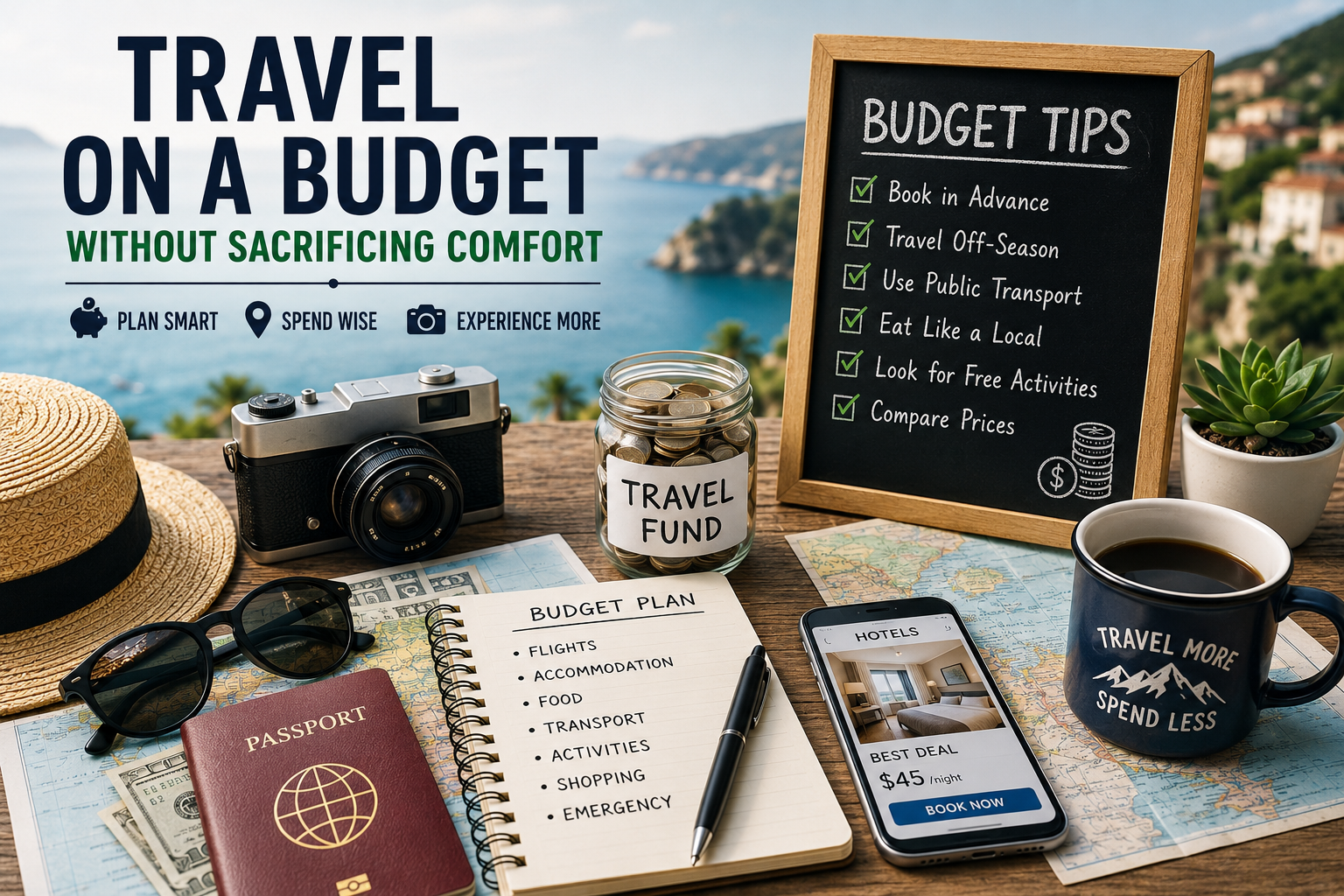
Traveling does not have to be expensive to be enjoyable. With thoughtful planning, smart booking decisions, and a few practical strategies, travelers can experience new destinations without spending more than necessary.
Budget travel is not about choosing the cheapest option every time. It is about spending money where it matters and reducing unnecessary expenses. A comfortable trip can still be affordable when you know how to manage transportation, accommodation, food, activities, and daily expenses.
Whether you are planning a weekend getaway, family vacation, solo adventure, or international trip, these budget travel tips can help you make the most of your money without sacrificing the quality of your experience.
What Does Budget Travel Really Mean?
Budget travel means making deliberate choices about where and how you spend your money.
Some travelers assume that traveling on a budget means staying in the cheapest accommodation, eating inexpensive food, and avoiding activities. That is not necessarily true.
A better approach is to identify the experiences that matter most and save money on things that are less important.
For example, you might choose a comfortable hotel in a convenient location while saving money by using public transportation and eating some meals at affordable local restaurants.
The goal is to create a trip that provides good value rather than simply spending as little as possible.
1. Set a Realistic Travel Budget
Before making reservations, determine how much you can comfortably spend.
Divide your budget into major categories such as:
Transportation
Accommodation
Food
Activities
Shopping
Local transportation
Travel insurance
Emergency expenses
Do not spend your entire budget on flights and accommodation. Leave some money available for unexpected costs.
A realistic budget gives you more control and helps you avoid financial stress during your trip.
2. Choose Your Destination Carefully
Some destinations are naturally more affordable than others.
When comparing destinations, look beyond the flight price. A cheap flight does not necessarily mean a cheap vacation if hotels, food, transportation, and attractions are expensive.
Consider the overall cost of visiting a destination.
Research:
Accommodation prices
Local transportation
Average meal costs
Attraction prices
Airport transfers
Currency exchange
Seasonal price differences
Sometimes a slightly more expensive flight can lead to a much cheaper overall trip.
3. Travel During Less Busy Periods
Peak travel seasons often bring higher prices for flights, hotels, and attractions.
If your schedule is flexible, consider traveling during shoulder seasons or less crowded periods.
You may find better accommodation prices, shorter lines, and a more relaxed atmosphere.
However, always research weather conditions and local events before choosing your travel dates.
The cheapest season is not necessarily the best season if attractions are closed or weather conditions make your trip uncomfortable.
4. Compare Transportation Options
Transportation can become one of the largest parts of a travel budget.
Do not automatically assume that flying is your only option.
Depending on your destination, compare:
Flights
Trains
Buses
Shared transportation
Public transportation
Rental cars
For local travel, public transportation can often be significantly cheaper than taxis or private transfers.
Walking can also be an excellent way to explore destinations when attractions are located close together.
5. Book Accommodation Based on Value
The cheapest hotel is not always the best choice.
A very inexpensive property far away from the main attractions may require expensive transportation every day.
Instead, compare the total value of the accommodation.
Look at:
Location
Cleanliness
Reviews
Included breakfast
Wi-Fi
Transportation access
Additional fees
Cancellation policies
A reasonably priced hotel in a convenient location may save money on transportation while making the trip more comfortable.
6. Consider Alternative Accommodation
Hotels are not the only option for travelers.
Depending on the destination and your preferences, you may consider:
Guesthouses
Hostels
Vacation rentals
Serviced apartments
Family-friendly accommodations
Boutique properties
For longer trips, accommodation with kitchen facilities can sometimes help reduce food expenses.
Always prioritize safety, cleanliness, location, and reliable reviews when selecting accommodation.
7. Eat Like a Local
Food can quickly increase travel expenses, particularly when eating exclusively in tourist areas.
Local restaurants, cafés, markets, and casual dining spots can often provide better value than restaurants located directly beside major attractions.
You do not need to avoid expensive meals completely.
Instead, choose when to spend more.
For example, you might enjoy one memorable dinner while choosing affordable local options for breakfast and lunch.
8. Prepare Some Meals Yourself
If your accommodation provides a kitchen or basic cooking facilities, preparing some meals can reduce costs.
You do not need to cook every meal.
Simple options such as breakfast, snacks, sandwiches, fruit, or drinks can help lower daily expenses.
Buying groceries from local supermarkets can also be more affordable than purchasing food from tourist areas.
9. Look for Free Attractions
Many destinations offer enjoyable experiences that cost little or nothing.
Depending on the location, these may include:
Public parks
Beaches
Walking tours
Historic neighborhoods
Local markets
Scenic viewpoints
Public gardens
Cultural events
Research free attractions before traveling and include them in your itinerary.
A memorable travel experience does not always require an expensive ticket.
10. Prioritize the Experiences That Matter
Trying to do everything can make a vacation expensive and exhausting.
Instead, decide which experiences are most important to you.
If you love history, you may prefer spending money on museums and historic tours.
If you enjoy nature, a national park or outdoor excursion may be more valuable.
If food is important to you, allocate more of your budget to local dining.
Spend money on experiences you will remember rather than purchases you may quickly forget.
11. Use Public Transportation
Public transportation can be one of the easiest ways to control daily travel expenses.
Research the destination's buses, trains, metro systems, and other public transportation options before arriving.
Some cities offer daily or multi-day transportation passes that may provide better value for travelers who expect to use public transit frequently.
However, always consider convenience and safety, especially when traveling late at night or with young children.
12. Walk When Practical
Walking can save money while allowing you to see more of your destination.
Historic districts, shopping streets, parks, markets, and popular attractions may be close enough to explore on foot.
Walking also gives travelers an opportunity to discover cafés, shops, architecture, and neighborhoods they might otherwise miss.
Wear comfortable shoes and consider weather conditions before choosing to walk long distances.
13. Avoid Unnecessary Tourist Expenses
Tourist areas can sometimes have significantly higher prices.
Souvenirs, food, transportation, and activities near major attractions may cost more than similar options elsewhere.
This does not mean you should avoid tourist areas completely. Simply compare prices and look for alternatives nearby.
For souvenirs, consider purchasing locally made products rather than mass-produced items that are available everywhere.
14. Be Careful With Foreign Transaction Fees
International travelers should understand how their payment methods work abroad.
Check whether your bank or card provider charges foreign transaction fees, ATM fees, or currency conversion charges.
Before traveling, research convenient and secure ways to access money at your destination.
Avoid carrying excessive amounts of cash, but keep a reasonable backup payment option available.
15. Build an Emergency Fund
Even carefully planned trips can have unexpected expenses.
A delayed flight, lost luggage, transportation problem, or unexpected change in accommodation can increase costs.
Set aside an emergency amount that is separate from your normal daily travel budget.
Knowing that you have a financial backup can also reduce stress during the trip.
16. Pack Smart
Overpacking can create unnecessary expenses.
Extra luggage can result in baggage fees, especially when traveling by air.
Pack versatile clothing and bring only what you realistically need.
A lighter suitcase can also make public transportation, walking, and hotel changes easier.
17. Plan Your Daily Spending
Instead of spending freely each day, create a rough daily spending limit.
For example, divide your available travel money into categories for food, transportation, activities, and miscellaneous expenses.
You do not need to follow the budget perfectly. The purpose is simply to understand where your money is going.
If you spend more one day, consider spending less the next day.
18. Avoid Last-Minute Decisions
Last-minute bookings can sometimes be expensive, particularly during busy travel periods.
Planning important elements such as transportation and accommodation in advance can give you more choices.
However, avoid booking something simply because it appears cheap. Always check the full price, cancellation policy, location, and additional fees.
19. Use Technology to Control Expenses
Travel apps and digital tools can make budget management easier.
You can use apps or spreadsheets to track:
Accommodation costs
Transportation
Food
Activities
Shopping
Daily spending
Maps can also help you identify walking routes and nearby attractions, potentially reducing transportation costs.
20. Remember That Comfort Has Value
Saving money should not mean making your trip unnecessarily difficult.
If a slightly more expensive hotel gives you better sleep, safer surroundings, and convenient transportation, it may be worth the additional cost.
Likewise, paying for a direct flight may sometimes be worthwhile if it saves significant time and reduces travel fatigue.
Budget travel should be about value, not deprivation.
Sample Budget Travel Strategy
A simple travel budget might look like this:
Before the trip:
Research transportation, accommodation, activities, and expected daily costs.
During the trip:
Track your daily spending and prioritize important experiences.
For savings:
Use public transportation, choose affordable local restaurants, look for free attractions, and avoid unnecessary purchases.
For comfort:
Spend more on the things that have the biggest impact on your experience, such as a convenient hotel or comfortable transportation.
Common Budget Travel Mistakes
Choosing the Cheapest Option Every Time
The cheapest option may create additional costs later.
Ignoring Hidden Fees
Always check taxes, baggage charges, resort fees, cleaning fees, transportation costs, and other additional expenses.
Spending Too Much on Food Near Attractions
Restaurants in major tourist areas can sometimes be significantly more expensive.
Overplanning Expensive Activities
Trying to visit every attraction can quickly increase your budget.
Forgetting an Emergency Fund
Unexpected expenses can happen even on well-planned trips.
Frequently Asked Questions
How can I travel on a budget without sacrificing comfort?
Focus on value rather than choosing the cheapest option. Select convenient accommodation, use affordable transportation, eat at reputable local restaurants, and spend money on experiences that matter most to you.
What is the best way to create a travel budget?
Estimate transportation, accommodation, food, activities, local transportation, shopping, and emergency expenses. Add some extra money for unexpected costs.
Is it cheaper to travel during the off-season?
It can be. Flights and accommodation may be less expensive during less busy periods, but prices vary by destination. Always consider weather and local events as well.
How can I save money on accommodation?
Compare multiple properties, consider alternative accommodation, travel during less busy periods, and look for locations with convenient access to public transportation.
Is public transportation better for budget travelers?
In many destinations, public transportation can be less expensive than taxis or private transfers. However, convenience and safety should also be considered.
How can I save money on food while traveling?
Eat at reputable local restaurants, explore markets, avoid relying exclusively on restaurants in tourist areas, and consider preparing simple meals when your accommodation allows it.
What are some free things to do while traveling?
Depending on the destination, free activities may include visiting parks, walking through historic neighborhoods, exploring markets, enjoying public beaches, and attending free cultural events.
Should I avoid expensive activities completely?
No. Budget travel is not about avoiding every expense. Choose the activities that are most meaningful to you and reduce spending in less important areas.
How much emergency money should I keep while traveling?
There is no universal amount because travel costs vary. Set aside an amount that could help cover unexpected transportation, accommodation, medical, or other urgent expenses.
Can budget travel still be comfortable?
Absolutely. Smart planning allows you to reduce unnecessary expenses while spending more on the things that genuinely improve your experience.
Conclusion
Traveling on a budget does not mean sacrificing comfort or memorable experiences. The most effective approach is to understand where your money is going and make deliberate choices.
Compare transportation, choose accommodation based on overall value, eat at local restaurants, use public transportation, explore free attractions, and prioritize the experiences that matter most.
Most importantly, leave some room in your budget for unexpected expenses. A little preparation can make it possible to enjoy a comfortable vacation without putting unnecessary pressure on your finances.
With the right strategy, budget travel can be both affordable and rewarding. The goal is not simply to spend less—it is to get more value from every part of your journey.