
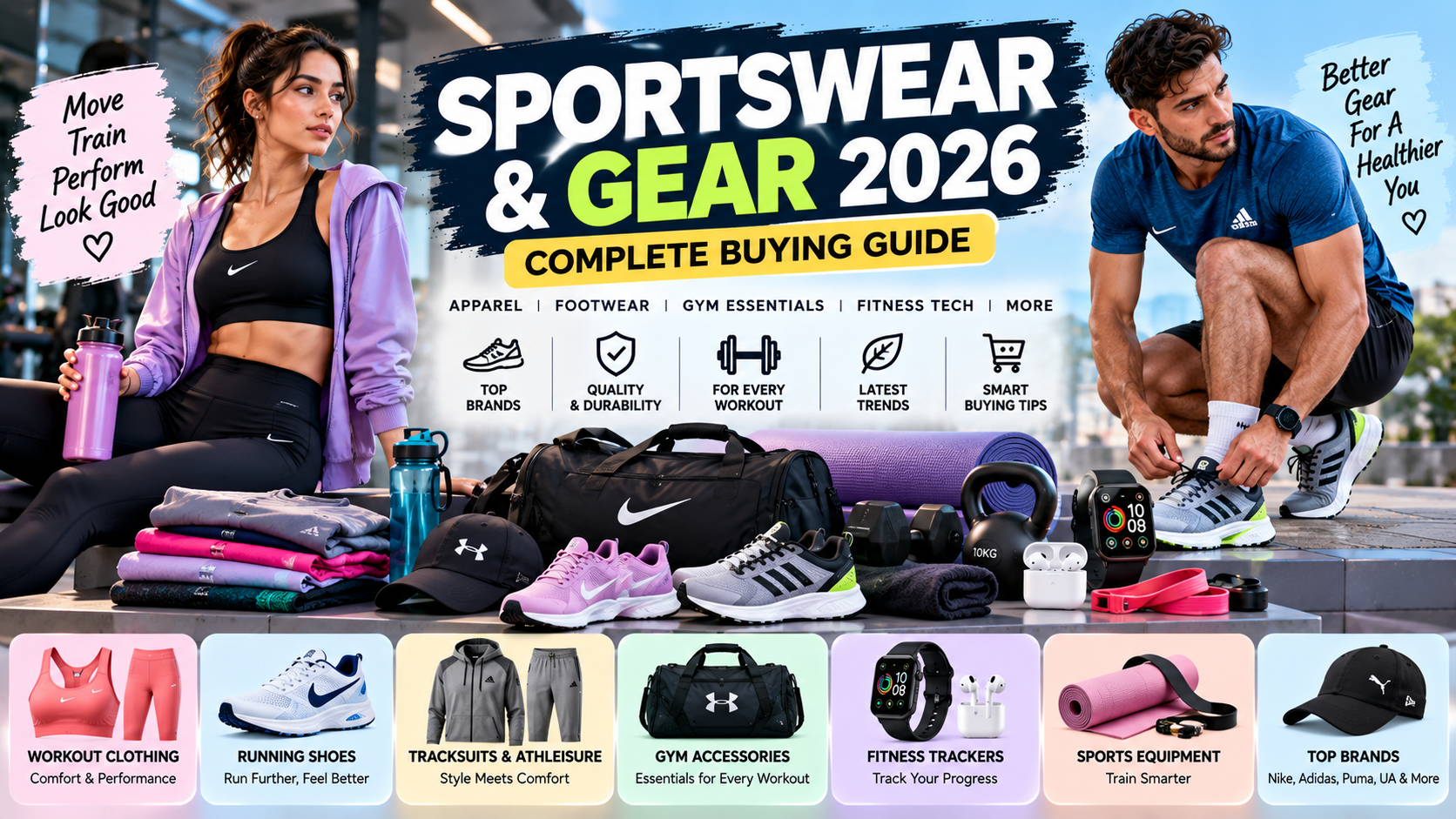
Sportswear and athletic gear have become essential parts of modern life. Whether you are a professional athlete, a regular gym-goer, a runner, or someone who enjoys comfortable everyday clothing, the right sportswear can make physical activities more convenient and enjoyable.
In 2026, the sportswear market continues to combine performance, comfort, fashion, and technology. From moisture-wicking workout shirts and supportive running shoes to smart fitness accessories and durable gym bags, consumers have more options than ever.
But choosing the right products can be challenging. Different sports require different materials, footwear, and equipment. This guide explores sportswear and gear, the features worth considering, popular product categories, and practical tips for shopping smarter.
What Is Sportswear and Athletic Gear?
Sportswear refers to clothing designed for exercise, sports, training, and other physical activities. Athletic gear includes footwear, accessories, protective equipment, and tools that help people participate in their chosen activities.
These products may be designed for performance, comfort, safety, or everyday use.
Common examples include:
Athletic T-shirts, leggings, shorts, and tracksuits
Running shoes, training shoes, and sports-specific footwear
Sports bras, compression clothing, and supportive base layers
Gym bags, water bottles, towels, and training accessories
Protective equipment such as helmets, shin guards, and knee pads
Fitness trackers, sports watches, and other wearable technology
The best combination depends on your activity level, personal preferences, environment, and budget.
Popular Sportswear Categories in 2026
1. Workout Clothing
Workout clothing should allow comfortable movement while managing heat and moisture. The right fabric can help you stay comfortable during strength training, cardio sessions, and group fitness classes.
Popular choices include lightweight T-shirts, athletic shorts, leggings, joggers, and flexible training tops.
When shopping, look for:
Breathable fabrics that support airflow
Moisture-wicking materials for sweaty workouts
Stretch fabrics that allow unrestricted movement
Flat seams or smooth construction to reduce irritation
Durable stitching that withstands repeated washing
For high-intensity workouts, lightweight synthetic blends are often practical. Cotton can be comfortable for casual activities and low-intensity exercise, although it tends to retain moisture during heavy sweating.
2. Running Apparel
Running clothing should be lightweight, comfortable, and appropriate for the weather.
Popular options include running shorts, technical shirts, lightweight jackets, reflective clothing, and leggings. Runners in colder climates may also benefit from thermal base layers and wind-resistant outerwear.
Consider reflective details if you regularly run in low-light conditions. In hot weather, prioritize breathable fabrics, a comfortable fit, and clothing that helps you manage heat.
3. Sports Bras and Supportive Clothing
Sports bras are designed to provide different levels of support during physical activity. Low-impact options may suit walking, yoga, or stretching, while higher-impact activities such as running generally require more support.
Important features include a comfortable band, appropriate coverage, adjustable straps where needed, and materials that remain comfortable during movement.
Compression leggings, supportive base layers, and athletic underwear can also help improve comfort during training.
4. Tracksuits and Athleisure
Athleisure combines athletic-inspired clothing with casual everyday fashion. Tracksuits, sweatshirts, joggers, and performance-inspired sneakers are popular options for travel, errands, casual outings, and relaxed settings.
For everyday use, consider versatility, fabric quality, ease of washing, and whether individual pieces can be paired with clothing you already own.
A simple neutral tracksuit can provide multiple outfit combinations without requiring a large wardrobe.
Choosing the Right Sports Shoes
Sports shoes are among the most important items to choose carefully because different activities place different demands on your feet.
Running Shoes
Running shoes are designed for repetitive forward movement. Depending on the model, they may emphasize cushioning, stability, lightweight construction, or responsiveness.
When comparing running shoes, consider the distance you run, the surface you use, the shoe's fit, and your comfort during movement.
Training Shoes
Training shoes are often designed for varied gym activities, including strength exercises, short cardio sessions, and lateral movements.
Some running shoes have tall, soft cushioning that may feel less stable for heavy lifting. If your workouts involve significant weight training, look for footwear designed to provide the stability you need.
Walking Shoes
Walking shoes prioritize comfort for regular daily movement. Useful features may include cushioning, a secure fit, flexible construction, and a sole suited to the surfaces you walk on.
People who spend long hours standing may also benefit from trying several models and checking how they feel after extended wear.
Sport-Specific Footwear
Sports such as football, basketball, tennis, and hiking may require specialized shoes. Football boots, for example, are designed for particular playing surfaces, while basketball shoes typically emphasize support and traction for court movement.
Always check that footwear is suitable for your sport and playing environment.
Essential Fitness Gear for Every Workout
The right accessories can make exercise more organized and convenient. However, beginners do not need to purchase every available fitness product.
Gym Bags
A good gym bag should have enough room for your clothing, shoes, water bottle, towel, and personal belongings. Separate shoe compartments and easy-to-clean materials can be useful features.
Choose a size that matches your routine rather than paying for extra storage you rarely use.
Water Bottles
Reusable water bottles make it easier to carry water to the gym, workplace, or outdoor training sessions.
Look for a leak-resistant lid, durable construction, easy cleaning, and a capacity that suits your activity and access to drinking water.
Resistance Bands
Resistance bands are compact and versatile tools for warm-ups, mobility work, and strength exercises. They come in different resistance levels and can be useful at home or while traveling.
Inspect bands regularly for cracks or damage and follow the manufacturer's instructions for safe use.
Exercise Mats
Exercise mats can provide cushioning and grip for yoga, stretching, floor exercises, and certain bodyweight workouts.
Thickness, surface texture, portability, and ease of cleaning are important considerations when choosing a mat.
Fitness Trackers and Sports Watches
Wearable devices can track metrics such as steps, heart rate, workout duration, and estimated activity levels. Some models also offer GPS, sleep tracking, and sport-specific training features.
Remember that wearable measurements are estimates. You do not necessarily need an expensive smartwatch to maintain a consistent exercise routine.
Leading Sportswear Brands to Know
Several established brands offer athletic clothing, footwear, and fitness accessories. Product quality and suitability vary by model, so compare individual products rather than relying on a brand name alone.
Nike: Known for athletic footwear, training clothing, running products, and sports-inspired everyday fashion.
Adidas: Offers running shoes, football products, training apparel, and casual athletic clothing.
Puma: Provides sportswear, sneakers, football gear, and fitness-inspired fashion.
Under Armour: Focuses on performance apparel, training clothing, and athletic footwear.
ASICS: Particularly recognized for running footwear and products designed for various training needs.
New Balance: Offers running shoes, walking footwear, training apparel, and lifestyle sneakers.
Decathlon: Sells equipment, clothing, and accessories for a broad range of sports, often including budget-friendly options.
These brands have different product ranges and price points. Check current availability, product specifications, warranties, and return policies before purchasing.
How to Choose Quality Sportswear
A product's appearance is only one part of the buying decision. Performance, comfort, durability, and suitability for your activity matter just as much.
Check the Fabric
Polyester and nylon blends are common in performance clothing because they can be lightweight, durable, and quick-drying. Elastane or spandex adds stretch to leggings, training tops, and other fitted garments.
Merino wool can be useful for some outdoor and cold-weather activities, while cotton remains popular for casual wear.
Read the garment's care instructions because different fabric blends may require different washing methods.
Prioritize Fit and Comfort
Sportswear should allow you to move naturally without excessive tightness, slipping, or rubbing. Try garments in the movements you expect to perform, where possible.
For footwear, check toe room, heel security, and overall comfort. A shoe should not cause persistent pain or pressure simply because it is marketed as a premium model.
Consider Durability
Look for reinforced seams, quality stitching, sturdy zippers, and materials appropriate for your activity. For shoes, inspect the outsole and construction.
Reading recent reviews can help identify recurring concerns, but consider whether reviewers use the products in a way similar to your own routine.
Compare Value Instead of Just Price
The cheapest item is not always the best value, and the most expensive item is not automatically superior.
Compare comfort, materials, expected use, warranty terms, and replacement costs. A moderately priced product that fits well and lasts can be a better choice than a premium item that does not meet your needs.
Sportswear Trends in 2026
Sportswear continues to evolve as consumers look for products that combine function, comfort, and personal style.
Everyday Performance Clothing
Many consumers want clothing that works for exercise and everyday activities. Versatile joggers, lightweight jackets, comfortable sneakers, and simple athletic tops can serve multiple purposes.
Sustainable Materials
Some brands are incorporating recycled fibers, more responsible sourcing, and manufacturing initiatives intended to reduce environmental impact.
However, sustainability claims vary. Look for clear product information and independent certifications where available instead of assuming every item labeled eco-friendly has the same environmental benefits.
Smart Fitness Technology
Wearables and connected fitness equipment allow people to monitor activity, organize workouts, and review performance data.
When selecting connected gear, consider battery life, compatibility with your devices, subscription costs, privacy settings, and whether you will actually use the features.
Functional Minimalism
Simple colors, versatile designs, and practical silhouettes remain useful for shoppers who want athletic clothing that works across different settings.
Buying a smaller collection of versatile items can also make it easier to coordinate outfits and control spending.
Sportswear Buying Guide: What Do You Really Need?
Your ideal shopping list depends on your goals. Here are practical starting points for different activities.
Activity | Useful essentials |
|---|---|
Gym workouts | Training shirt, shorts or leggings, suitable training shoes, water bottle |
Running | Running shoes, moisture-wicking clothing, weather-appropriate layers |
Yoga | Flexible clothing, exercise mat, optional yoga blocks |
Football | Appropriate boots, sports socks, shin guards, team-appropriate clothing |
Hiking | Suitable trail footwear, moisture-managing layers, backpack, weather protection |
Walking | Comfortable walking shoes, breathable clothing, water bottle |
Home workouts | Comfortable clothing, exercise mat, resistance bands |
Start with the items you need most frequently. You can add specialized gear as your experience and training requirements develop.
How to Shop for Sportswear Online
Online shopping offers a wide range of sportswear options, but it is important to check product details before placing an order.
Review the size chart: Sizes vary between brands and product lines.
Read recent customer reviews: Look for comments about fit, comfort, durability, and sizing consistency.
Check the seller: Purchase from the brand's official website or a reputable retailer when possible.
Understand the return policy: Confirm whether used, discounted, or final-sale products can be returned.
Compare the total price: Include delivery charges, taxes, and any import costs.
Check product specifications: Make sure the item is suitable for your intended activity.
Be cautious with unusually low prices: Significant discounts on popular products may warrant additional verification of the seller and product authenticity.
For shoppers in Pakistan, also confirm local sizing, delivery timelines, payment options, and whether the seller offers a practical return or exchange process.
How to Care for Sportswear and Athletic Gear
Proper care can help athletic clothing and equipment last longer.
Follow the washing instructions on each garment.
Avoid excessive heat when drying performance fabrics.
Wash sweaty clothing promptly to reduce odor buildup.
Clean shoes according to the manufacturer's guidance.
Allow damp gear to dry completely before storing it.
Inspect protective equipment and resistance bands for wear.
Replace footwear or equipment when damage compromises its function or safety.
Avoid assuming that every sportswear item should be washed or dried in the same way. Special fabrics and equipment may require specific care.
Frequently Asked Questions
What is the best sportswear for beginners?
Beginners should prioritize comfortable, breathable clothing and footwear suitable for their chosen activity. A few well-fitting essentials are usually enough to get started.
Which fabric is best for workout clothes?
Polyester and nylon blends are common choices for sweaty workouts because they can manage moisture and dry relatively quickly. Cotton may be comfortable for lighter exercise and casual use.
Are expensive sports shoes worth buying?
Not always. The best shoe depends on fit, comfort, durability, and activity requirements. Compare several options and choose the pair that meets your needs rather than selecting by price alone.
How often should sportswear be replaced?
There is no universal replacement schedule. Replace items when they become uncomfortable, lose important functional properties, or show damage that affects their use. Running shoes may need replacement sooner than lightly used casual clothing.
Can sportswear be worn casually?
Yes. Athleisure clothing such as joggers, sweatshirts, athletic tops, and sneakers is widely used for everyday wear. Choose products that suit the setting and provide the comfort you want.
Where can I buy sportswear and fitness gear?
You can shop through official brand websites, established sporting-goods retailers, and reputable online marketplaces. Compare product specifications, seller reliability, and return terms before purchasing.
Final Thoughts
Sportswear and athletic gear play an important role in making exercise more comfortable, convenient, and enjoyable. From performance clothing and sport-specific footwear to reusable water bottles and fitness trackers, the right products can support your routine without requiring an excessive budget.
In 2026, shoppers should focus on fit, fabric, durability, functionality, and value. Choose gear that suits your actual activities, verify product claims, and invest in specialized equipment only when it meets a clear need.
The best sportswear is not necessarily the most expensive or fashionable. It is the gear that fits comfortably, performs reliably, and helps you stay consistent with your goals.


