
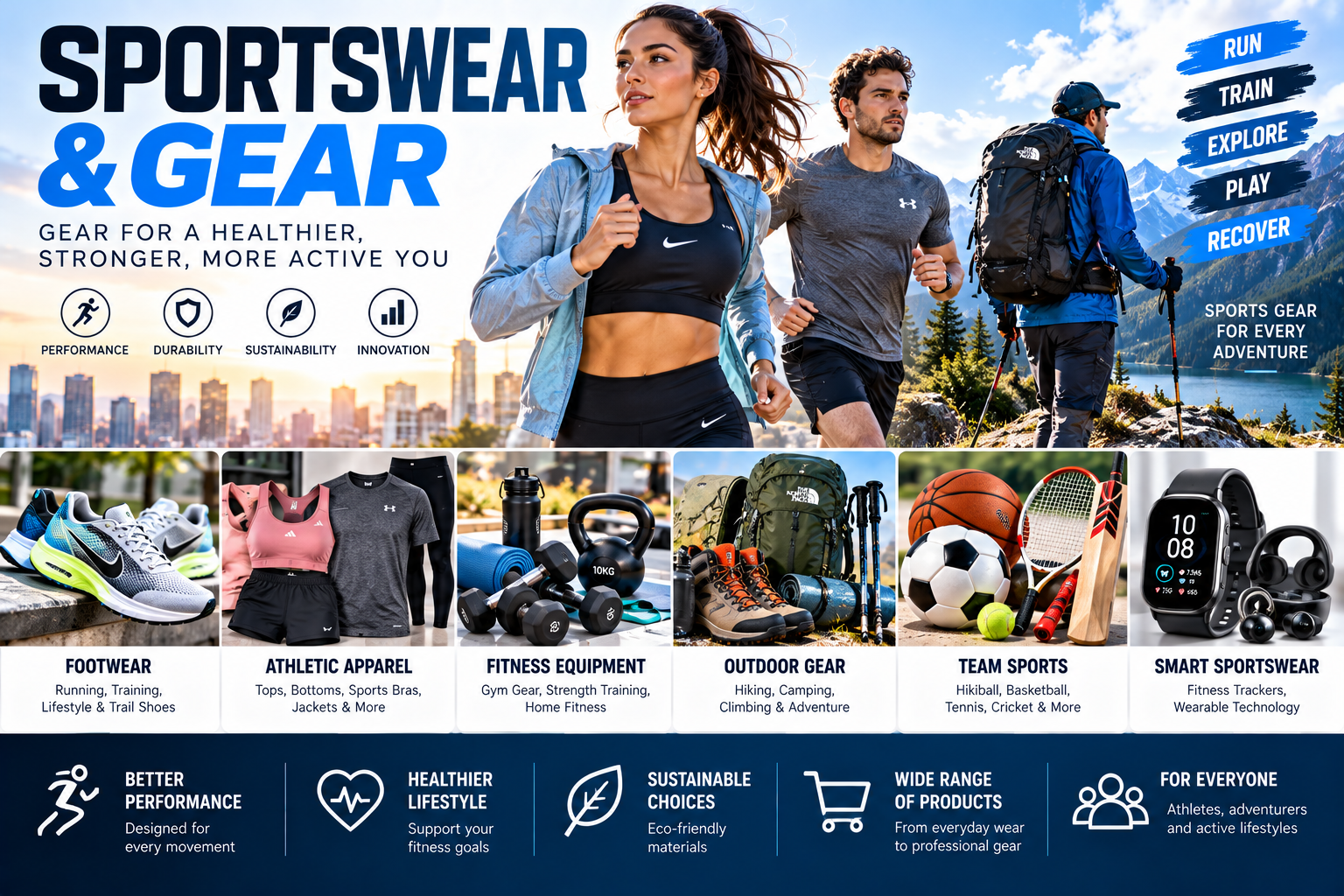
Sportswear and sports gear have evolved far beyond traditional athletic uniforms and basic workout clothing. Today, the category includes performance apparel, running shoes, fitness equipment, outdoor gear, smart wearables, protective equipment, accessories, and lifestyle products designed for both athletic performance and everyday use.
The global sporting goods industry continues to benefit from growing interest in health, fitness, recreational sports, and active lifestyles. McKinsey estimates that the global sporting goods industry grew around 7% annually between 2021 and 2024 and projects approximately 6% annual growth from 2024 through 2029.
At the same time, the industry is changing rapidly. Consumers are looking for products that combine performance, comfort, style, technology, durability, and value. Challenger brands specializing in running, yoga, cycling, hiking, and other activities are also reshaping the competitive landscape.
What Is Sportswear & Gear?
Sportswear refers to clothing and footwear designed for exercise, sports, training, recreation, and active lifestyles.
Sports gear is a broader category that includes equipment and accessories used to participate in sporting and outdoor activities.
Together, sportswear and gear can include:
Running shoes
Training shoes
Sports jerseys
Leggings and tights
Athletic shorts
Sports bras
Performance shirts
Jackets and outerwear
Hiking footwear
Cycling equipment
Gym equipment
Balls and sporting equipment
Protective equipment
Sports bags
Fitness trackers
Smartwatches
Recovery products
Outdoor equipment
The category serves everyone from professional athletes and competitive teams to casual gym users and consumers who simply prefer athletic-inspired clothing.
The Growth of the Sportswear Industry
Sportswear has become one of the most recognizable segments of the global apparel and footwear industry.
The category has benefited from several long-term trends, including increased interest in fitness, running, outdoor recreation, wellness, athleisure, and casual clothing.
McKinsey's sporting goods research highlights a growing group of consumers for whom physical activity has become part of their lifestyle and personal identity.
This creates opportunities for brands to sell products based not only on technical performance but also on identity, community, fashion, and lifestyle.
Sportswear vs. Athleisure
Sportswear and athleisure are related but not identical.
Sportswear
Sportswear is primarily designed for physical activity and athletic performance.
Examples include:
Running shorts
Performance shirts
Training shoes
Compression clothing
Football jerseys
Tennis clothing
Cycling apparel
Athleisure
Athleisure combines athletic-inspired design with everyday fashion.
Examples include:
Leggings
Sneakers
Hoodies
Joggers
Oversized sweatshirts
Casual performance jackets
The popularity of athleisure has helped blur the boundary between sports clothing and everyday fashion.
Consumers can now wear performance sneakers to work, athletic jackets while traveling, and training-inspired clothing for casual social activities.
Major Sportswear Categories
Running Apparel
Running remains one of the most important segments of sportswear.
Running products include:
Running shoes
Lightweight shorts
Technical shirts
Running jackets
Socks
Sports bras
Hydration products
Running watches
Modern running brands increasingly focus on cushioning, weight reduction, stability, energy return, and comfort.
Training and Gym Wear
Gym clothing is designed for activities such as strength training, functional fitness, indoor cycling, and general workouts.
Popular products include:
Training shorts
Leggings
Tank tops
Performance T-shirts
Sports bras
Training shoes
Grip accessories
Gym bags
Stretch fabrics and moisture-management technologies are especially important in this category.
Outdoor Sportswear
Outdoor sportswear is designed for hiking, camping, climbing, skiing, trail running, and other outdoor activities.
Products can include:
Waterproof jackets
Hiking boots
Trail shoes
Fleece layers
Insulated jackets
Outdoor trousers
Technical backpacks
Gloves
Hiking accessories
Weather protection and durability are major purchasing factors.
Team Sports Apparel
Team sports generate demand for specialized clothing and equipment.
Major categories include:
Football
Basketball
Baseball
Cricket
Hockey
Rugby
Volleyball
Tennis
Team apparel also has a strong connection to fan culture because jerseys and licensed merchandise can function as fashion products.
Athletic Footwear
Athletic footwear is one of the most important components of the sporting goods market.
According to the Sports & Fitness Industry Association, U.S. athletic footwear wholesale sales reached $24.1 billion in 2025, making footwear the largest single sales category tracked in its report.
Modern athletic shoes are increasingly engineered around specific activities.
Running Shoes
Running shoes may emphasize:
Cushioning
Stability
Lightweight construction
Energy return
Breathability
Carbon-fiber plates
Foam technologies
Training Shoes
Training shoes generally focus on stability and versatility for gym-based activities.
Trail Shoes
Trail footwear is designed for uneven terrain and often emphasizes:
Grip
Protection
Durability
Water resistance
Stability
Lifestyle Sneakers
Lifestyle sneakers combine athletic design with casual fashion.
This segment demonstrates how sportswear continues to influence mainstream fashion.
Sports Equipment
Sports equipment represents another major part of the broader sporting goods industry.
Equipment varies significantly by sport.
Fitness Equipment
Examples include:
Dumbbells
Kettlebells
Resistance bands
Treadmills
Exercise bikes
Rowing machines
Benches
Home-gym systems
Outdoor Equipment
Outdoor consumers may purchase:
Tents
Sleeping bags
Backpacks
Trekking poles
Camping accessories
Hydration systems
Racquet Sports
Racquet sports require specialized products such as:
Tennis rackets
Pickleball paddles
Squash rackets
Tennis balls
Pickleballs
Court shoes
Emerging and accessible sports are increasingly contributing to industry growth. SFIA reported that pickleball wholesale sales increased 22% year over year in 2025.
Smart Sportswear and Wearable Technology
Technology is becoming increasingly important in sportswear and gear.
Smart products can collect data about:
Heart rate
Distance
Speed
Calories
Sleep
Training load
Recovery
GPS location
Workout intensity
Smartwatches and fitness trackers have made data-driven fitness accessible to mainstream consumers.
The next stage involves integrating sensors directly into clothing, footwear, equipment, and other products.
Artificial Intelligence in Sportswear
Artificial intelligence is beginning to influence both product development and the shopping experience.
Brands can use AI for:
Product recommendations
Demand forecasting
Inventory planning
Customer personalization
Marketing
Product design
Trend analysis
Virtual shopping assistants
AI can also help retailers analyze consumer behavior and identify emerging product trends.
For consumers, AI-powered shopping tools may make it easier to find sportswear based on activity, fit, preferences, price, and previous purchases.
Personalization and Performance
Consumers increasingly expect products to match their individual needs.
A runner may want a shoe based on:
Distance
Running surface
Foot characteristics
Pace
Cushioning preference
A cyclist may prioritize:
Aerodynamics
Breathability
Weight
Weather protection
A gym user may prioritize:
Flexibility
Durability
Sweat management
Comfort
This creates opportunities for brands that can provide highly specialized products rather than generic athletic merchandise.
Sustainability in Sportswear
Sustainability has become an important issue across the sportswear supply chain.
Brands are exploring:
Recycled materials
Lower-impact fibers
Product durability
Repair programs
Resale
Recycling
Reduced packaging
More efficient manufacturing
However, sustainability also creates difficult business decisions.
McKinsey's 2025 sporting goods research found that sustainability remained a priority for many companies, while the share of surveyed executives identifying it as a priority had declined compared with the previous year amid broader economic pressures.
The challenge for brands is to balance environmental objectives with affordability, product performance, and profitability.
The Rise of Challenger Sportswear Brands
The sportswear market is no longer dominated exclusively by the largest global athletic companies.
Specialized brands have gained attention by focusing on particular communities and activities.
Examples include brands centered around:
Running
Trail running
Yoga
Cycling
Outdoor sports
Hiking
Tennis
Pickleball
McKinsey found that publicly traded challenger brands grew faster than Nike and Adidas between 2019 and 2024, with the two large incumbents losing about three percentage points of market share over that period.
This reflects a broader shift toward specialized products and brands with strong connections to particular consumer communities.
E-Commerce and Direct-to-Consumer Sportswear
Online shopping has transformed the sportswear industry.
Consumers can now compare:
Prices
Reviews
Materials
Technical specifications
Colors
Sizes
Performance features
Direct-to-consumer brands can also build relationships with customers without relying entirely on traditional retail distribution.
Digital channels allow brands to collect customer insights and personalize marketing.
However, physical stores remain important because consumers often want to try shoes and apparel before purchasing.
Social Media and Sportswear
Social media has become an important marketing channel for athletic brands.
Platforms can help brands showcase:
New products
Athletes
Fitness creators
Training programs
Sporting events
Community stories
Lifestyle campaigns
McKinsey's research found that social media can influence participation in new sports, with younger active consumers particularly likely to report starting a new sport after seeing others participate online.
This creates a powerful connection between sports participation, content creation, and product discovery.
Sportswear and the Lifestyle Consumer
Sportswear is no longer limited to athletes.
Consumers increasingly wear athletic products while:
Traveling
Shopping
Working remotely
Running errands
Socializing
Walking
Relaxing
Comfort has become a major driver of this behavior.
As a result, sportswear brands increasingly compete not only with athletic companies but also with fashion and lifestyle brands.
2026 Sportswear & Gear Trends
Several trends are shaping the sportswear and gear industry in 2026.
1. Performance Meets Fashion
Consumers increasingly expect athletic products to perform well while also looking stylish.
2. Running Continues to Expand
Running remains a major category for specialized footwear, apparel, communities, races, and digital fitness.
3. Pickleball and Emerging Sports
Newer sports can create opportunities for equipment manufacturers and apparel brands.
4. Smart Fitness Products
Connected watches, sensors, fitness platforms, and data-driven products are becoming more integrated into training.
5. Specialized Challenger Brands
Focused brands are targeting specific communities rather than attempting to serve every athlete.
6. Premium Performance Products
Some consumers remain willing to pay more for products with visible technical advantages.
7. Value-Oriented Products
At the same time, inflation and economic uncertainty are encouraging many consumers to pay closer attention to price and value.
8. Sustainable Materials
Recycled and lower-impact materials remain part of product development and brand positioning.
9. Community-Based Marketing
Running clubs, fitness communities, sports events, and local activities are becoming important ways for brands to build relationships.
10. AI-Powered Shopping
AI can increasingly help consumers discover products based on their activity, preferences, fit, and budget.
Challenges Facing the Sportswear Industry
Despite long-term growth opportunities, sportswear companies face several challenges.
Inflation
Higher costs can affect both consumers and manufacturers.
Supply Chain Disruptions
Sportswear companies depend on global networks for raw materials, manufacturing, transportation, and distribution.
Tariffs and Trade Policies
Changes in trade policy can increase costs and create uncertainty for companies operating international supply chains.
SFIA identified tariffs, supply-chain constraints, and rising costs as significant issues affecting the U.S. sporting goods industry in its 2026 State of the Industry report.
Competition
New brands can enter specialized categories quickly, increasing competitive pressure.
Inventory Management
Demand can change rapidly because of weather, fashion trends, sporting events, and social media.
Sustainability Expectations
Consumers increasingly expect brands to demonstrate progress on environmental issues while maintaining performance and affordability.
The Future of Sportswear & Gear
The future of sportswear will likely combine performance, technology, fashion, personalization, and community.
Products are becoming more specialized, while consumers increasingly expect athletic gear to work across different parts of their lives.
The industry may increasingly move toward a model where:
Sportswear + Technology + Data + Fashion + Community = Modern Active Lifestyle
Brands that understand specific consumer communities can develop products with stronger emotional and functional connections.
At the same time, companies will need to manage costs, supply chains, sustainability expectations, and increasingly competitive digital channels.
McKinsey expects the broader sporting goods industry to continue growing through 2029, although at a slower rate than the 2021–2024 period.
Frequently Asked Questions
What is sportswear?
Sportswear is clothing and footwear designed for sports, exercise, training, fitness, and active lifestyles.
What is sports gear?
Sports gear includes equipment and accessories used for athletic and recreational activities, such as balls, rackets, protective equipment, fitness equipment, bags, and outdoor products.
What are the biggest sportswear categories?
Major categories include athletic footwear, running apparel, gym wear, outdoor clothing, team sports apparel, lifestyle sneakers, and sports accessories.
Is athletic footwear a major sportswear category?
Yes. SFIA reported $24.1 billion in U.S. athletic footwear wholesale sales in 2025, making it the largest single sales category in its sporting goods report.
What are the biggest sportswear trends in 2026?
Major trends include performance-fashion crossover, specialized sports, smart fitness technology, AI-powered shopping, sustainable materials, e-commerce, community marketing, and personalized products.
Is sportswear becoming part of everyday fashion?
Yes. The growth of athleisure has blurred the traditional distinction between athletic clothing and everyday apparel.
Are emerging sports creating opportunities for sportswear brands?
Yes. Sports such as pickleball and padel have attracted increasing participation and created opportunities for specialized apparel and equipment.
Conclusion
Sportswear and gear have become a major part of the global consumer economy, connecting athletic performance with fashion, technology, wellness, and everyday lifestyles.
The industry includes everything from running shoes and gym apparel to smartwatches, outdoor equipment, team uniforms, and specialized sporting products.
Current industry data shows continued growth alongside a more challenging operating environment. U.S. sporting goods wholesale sales reached approximately $130 billion in 2025, while global industry growth is expected to moderate compared with the rapid expansion seen earlier in the decade.
Looking ahead, innovation, specialization, technology, community, sustainability, and value will remain central themes.
For brands, retailers, athletes, and consumers, sportswear is increasingly more than clothing and equipment—it is part of a broader active lifestyle ecosystem.