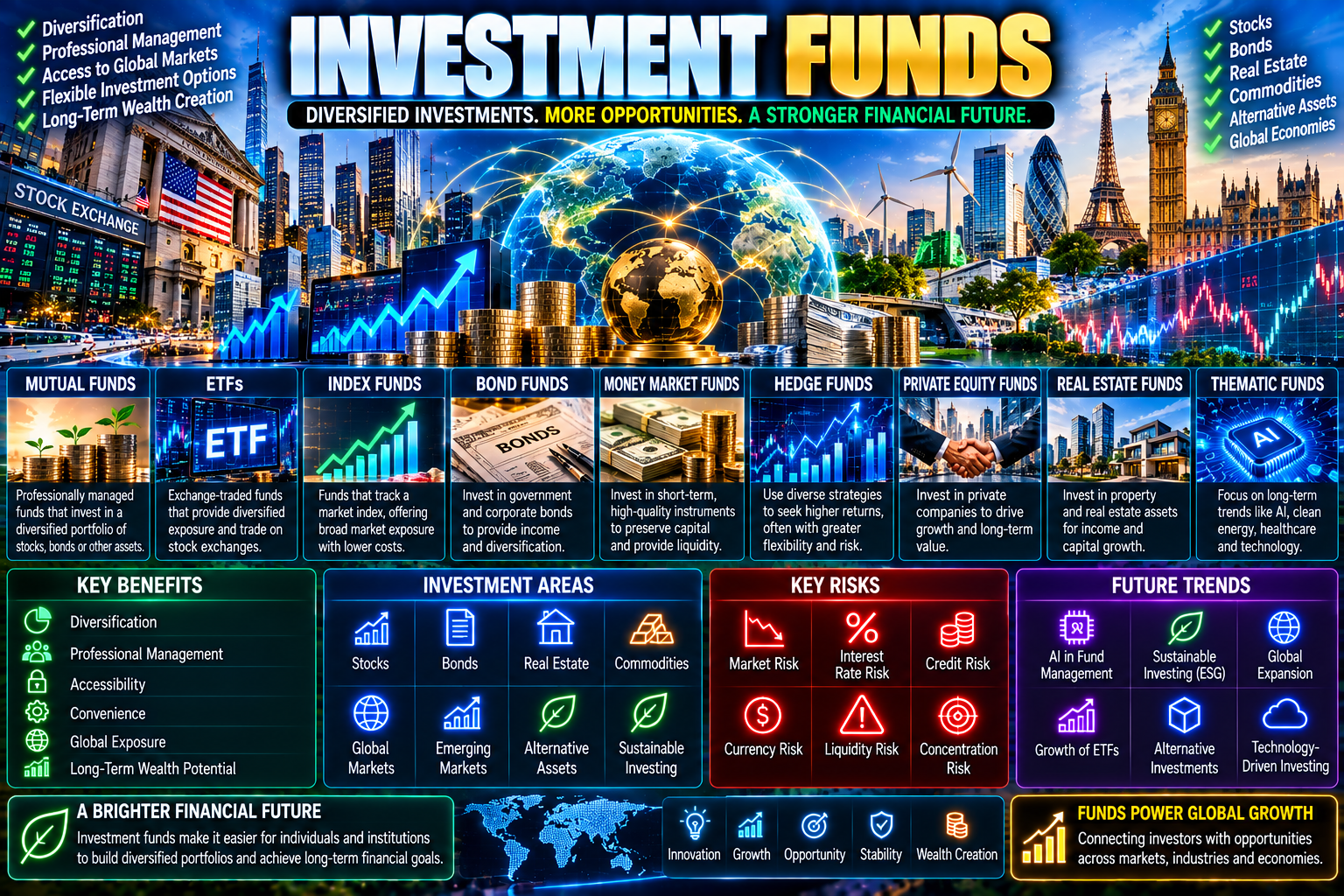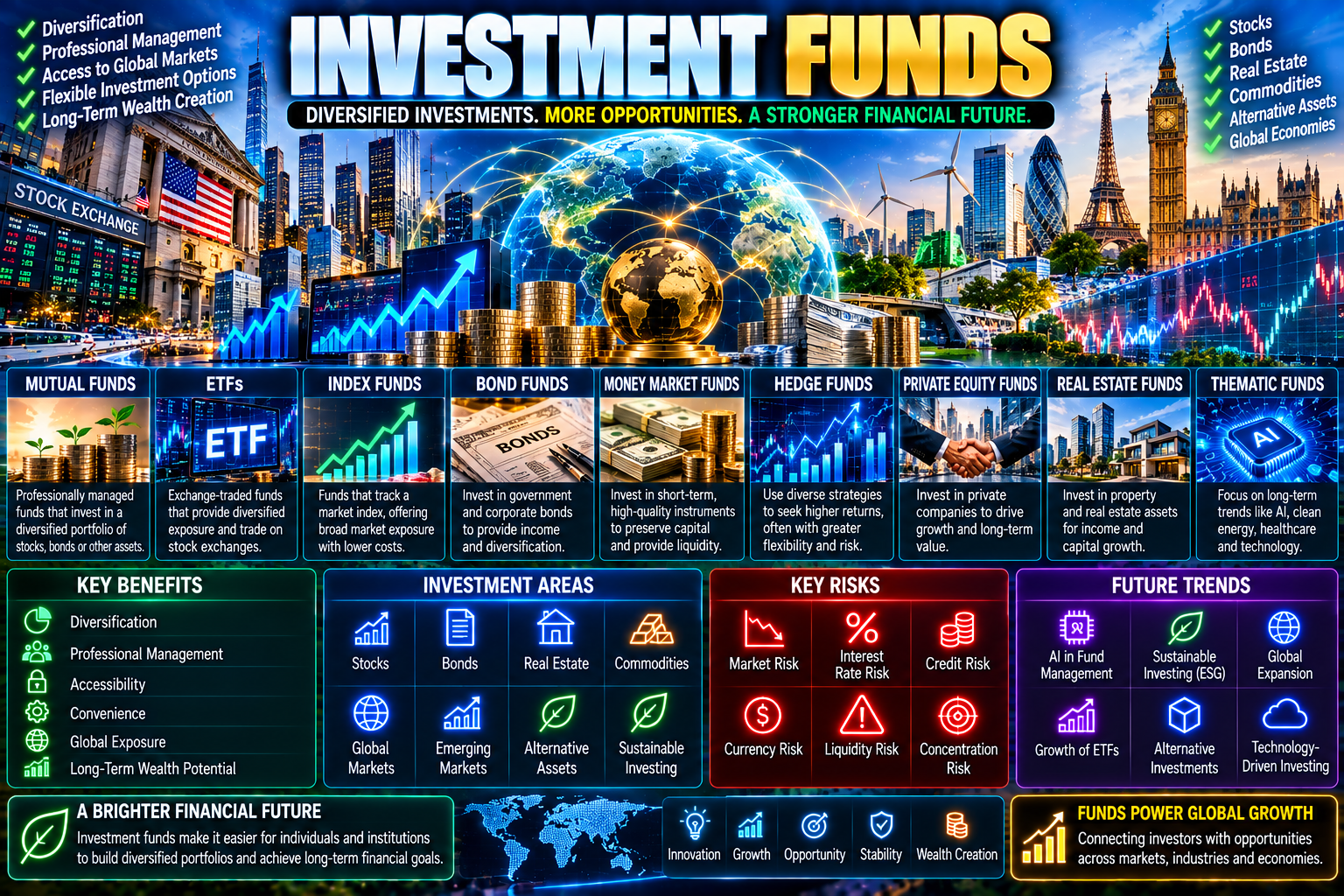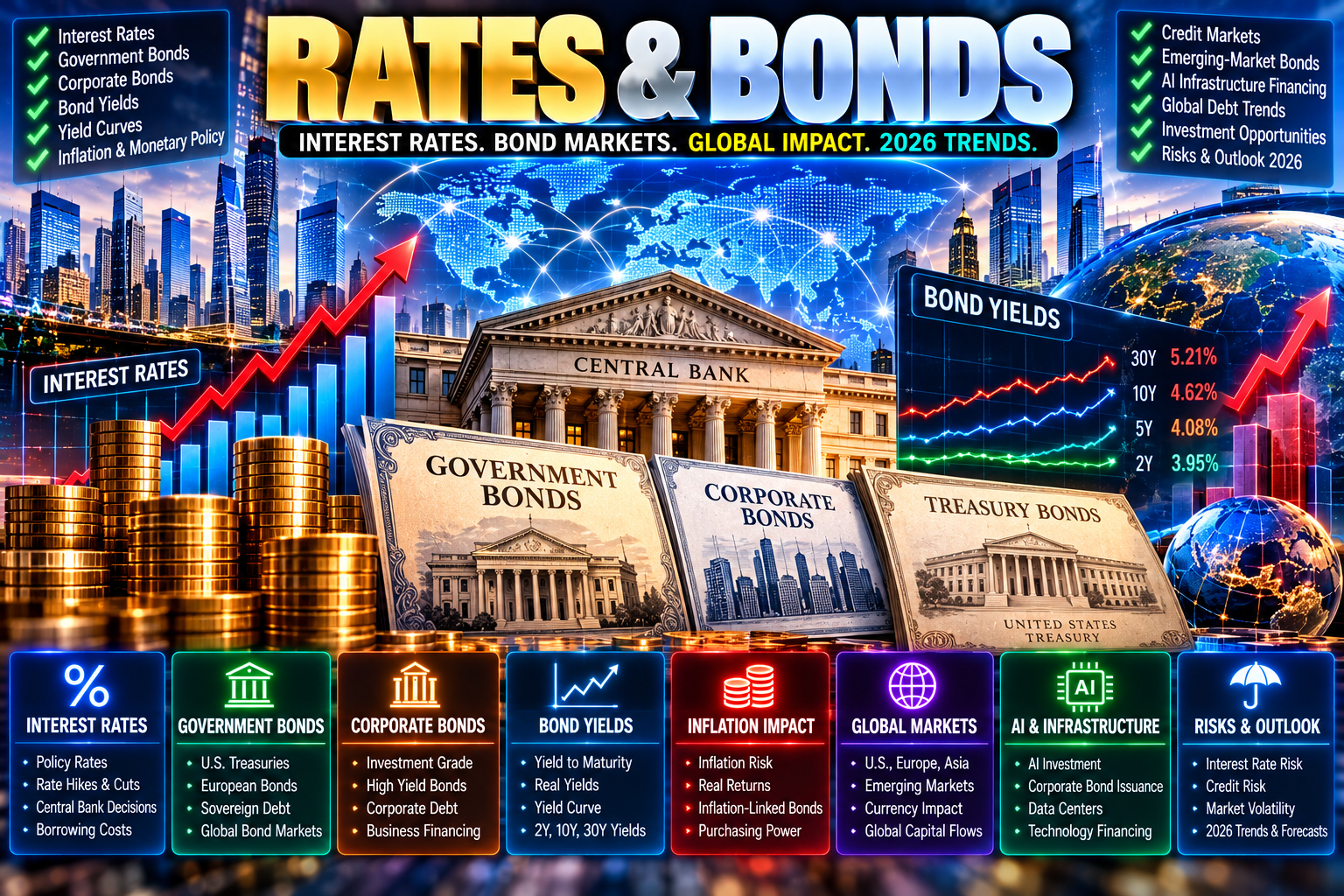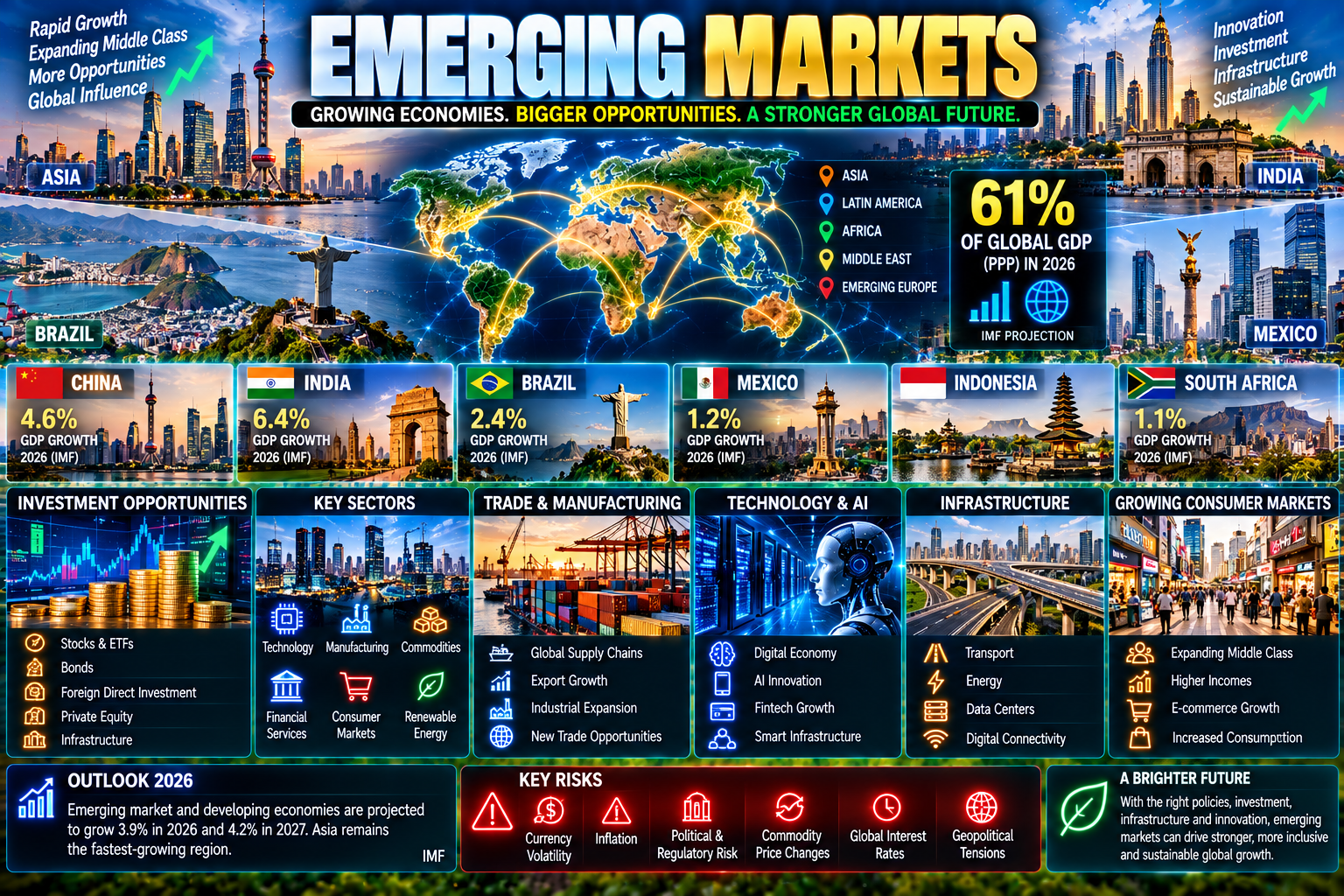

Stocks are one of the most widely followed financial assets in the world. They represent ownership in companies and allow investors to participate in corporate growth, earnings, dividends, and changes in business value. From major technology companies in the United States to banks in Europe, manufacturers in Asia, and emerging-market businesses, stocks connect individual companies with the global financial system.
The stock market in 2026 is being influenced by several major forces, including artificial intelligence investment, interest rates, corporate earnings, energy prices, inflation, government bond yields, trade policies, and geopolitical developments.
The OECD's September 2026 outlook says equity markets have remained strong in many major economies, particularly in Europe, Canada, and Japan, even as long-term interest rates have increased. At the same time, the OECD notes that conventional valuation measures remain stretched in some technology sectors.
Understanding stocks therefore requires more than watching whether an index rises or falls. Investors and businesses need to understand company fundamentals, valuation, market cycles, sectors, interest rates, earnings, dividends, and risk.
What Are Stocks?
A stock represents an ownership interest in a company.
When a company issues shares, investors can purchase those shares and become shareholders. Depending on the type of stock and the company's structure, shareholders may have voting rights and may receive dividends.
The value of a stock can change based on factors such as:
Company earnings
Revenue growth
Profit margins
Future growth expectations
Interest rates
Investor sentiment
Economic conditions
Industry trends
Competition
Corporate announcements
If investors believe a company's future earnings potential has improved, demand for its shares may increase. If expectations deteriorate, the share price may decline.
How the Stock Market Works
Stocks are traded through organized exchanges and electronic trading systems.
Major stock exchanges include:
New York Stock Exchange
Nasdaq
London Stock Exchange
Euronext
Deutsche Börse
SIX Swiss Exchange
Japan Exchange Group
Hong Kong Exchanges and Clearing
Shanghai Stock Exchange
Shenzhen Stock Exchange
National Stock Exchange of India
Toronto Stock Exchange
Australian Securities Exchange
Companies generally list shares through an initial public offering, commonly known as an IPO, before their shares become publicly traded.
After listing, investors can buy and sell shares in the secondary market.
Major Types of Stocks
Stocks can be categorized in several different ways.
Growth Stocks
Growth stocks are companies where investors expect relatively strong future revenue or earnings growth.
Technology, software, semiconductor, biotechnology, and innovative consumer companies often fall into this category.
Value Stocks
Value stocks are companies whose shares may trade at relatively lower valuation multiples compared with their earnings, assets, cash flow, or other financial measures.
Value investing often focuses on companies that investors believe may be undervalued.
Dividend Stocks
Dividend stocks are companies that distribute part of their profits to shareholders.
They are commonly associated with mature businesses in sectors such as utilities, financial services, consumer products, telecommunications, and energy.
Large-Cap Stocks
Large-cap stocks represent companies with relatively large market capitalizations.
They often include multinational corporations with established operations and significant institutional ownership.
Mid-Cap Stocks
Mid-cap companies occupy the middle range of market capitalization.
They can offer exposure to businesses that are more established than small companies but may still have significant room for expansion.
Small-Cap Stocks
Small-cap stocks represent smaller publicly traded companies.
They can offer higher growth potential but often experience greater price volatility and liquidity risk.
Stock Market Indexes
A stock-market index tracks a group of companies or a particular segment of the market.
Important global indexes include:
S&P 500
Nasdaq Composite
Dow Jones Industrial Average
Russell 2000
STOXX Europe 600
FTSE 100
DAX
CAC 40
Nikkei 225
Hang Seng Index
Shanghai Composite
Nifty 50
BSE Sensex
S&P/ASX 200
Indexes allow investors to monitor market performance without following every individual company.
They can also be used as benchmarks for investment funds and portfolios.
Global Stock Markets
Stock markets around the world are increasingly interconnected.
A major move in U.S. technology stocks can influence European and Asian markets. Changes in U.S. Treasury yields can affect international valuations. Commodity prices can influence energy-producing economies, while China's economic activity can affect manufacturers and commodity exporters globally.
This interconnectedness means global investors often monitor several markets simultaneously.
The OECD reported in September 2026 that financial conditions remained broadly supportive despite higher long-term yields, with equity markets performing strongly across several major economies.
Stock Valuation
Stock valuation attempts to determine whether a company's share price is reasonable relative to its financial performance and future prospects.
Common valuation measures include:
Price-to-Earnings Ratio
The price-to-earnings ratio, or P/E ratio, compares a company's share price with its earnings per share.
A higher P/E can reflect stronger expected growth, although it can also indicate that a stock is expensive relative to current earnings.
Price-to-Sales Ratio
The price-to-sales ratio compares a company's market value with its revenue.
It can be particularly useful for companies with low or negative earnings.
Price-to-Book Ratio
Price-to-book compares market value with shareholders' equity.
It is commonly used when evaluating financial institutions and asset-heavy businesses.
Price-to-Free-Cash-Flow Ratio
This measure compares a company's market value with the free cash flow it generates.
Free cash flow is important because it represents cash available after capital expenditures.
Earnings and Stocks
Corporate earnings are among the most important drivers of stock prices.
Investors monitor:
Revenue
Earnings per share
Operating income
Net income
Gross margins
Free cash flow
Guidance
Capital expenditure
Debt
Share buybacks
A company can report strong earnings but still see its stock price fall if investors expected even stronger results.
Likewise, a company can report weak current earnings while its stock rises if investors believe future growth will be significantly stronger.
This illustrates the difference between current performance and market expectations.
Dividends and Stocks
Dividends allow companies to return capital to shareholders.
Companies can distribute dividends quarterly, semiannually, annually, or according to other schedules.
Important dividend metrics include:
Dividend yield
Dividend payout ratio
Dividend growth
Free-cash-flow coverage
Dividend history
A high dividend yield is not automatically a sign of strength. A falling stock price can mechanically increase dividend yield even while the company's financial position deteriorates.
Investors therefore often examine dividend sustainability rather than yield alone.
Stock Buybacks
Share repurchases are another way companies return capital to shareholders.
When a company buys back its own shares, the number of shares outstanding can decline.
If earnings remain constant while the share count falls, earnings per share can increase.
Companies may use buybacks when management believes shares are attractively valued, when excess cash is available, or as part of broader capital-allocation strategies.
Stocks and Interest Rates
Interest rates have a significant influence on stock markets.
Higher rates can affect stocks through several channels.
First, higher borrowing costs can reduce consumer and corporate spending.
Second, higher discount rates can reduce the present value of future earnings.
Third, bonds can become relatively more attractive compared with equities.
The relationship is particularly important for companies whose valuations depend heavily on future growth.
The OECD noted in September 2026 that rising long-term interest rates were putting pressure on equity valuations, even though equity markets had remained relatively strong.
Stocks and Inflation
Inflation can affect companies in different ways.
Businesses may face higher costs for:
Labor
Energy
Raw materials
Transportation
Financing
Real estate
Some companies can pass higher costs to customers. Others may face pressure on profit margins.
Inflation also influences central-bank policy, which can indirectly affect stock valuations.
The OECD projects G20 headline inflation at 4.1% in 2026 before easing to 3.6% in 2027, illustrating why inflation remains an important consideration for financial markets.
AI and Technology Stocks
Artificial intelligence has become one of the defining themes of the stock market in 2026.
AI investment is supporting demand across:
Semiconductors
Data centers
Cloud computing
Networking
Software
Cybersecurity
Power infrastructure
Advanced manufacturing
The OECD says continued AI-related activity is supporting investment, production, and trade. It also warns that expectations surrounding AI investment and future earnings could prove difficult to sustain if returns disappoint or bottlenecks emerge.
This creates opportunities and risks for technology stocks.
Companies supplying AI infrastructure can benefit from increased capital expenditure, but their valuations can also become sensitive to expectations about future growth.
Energy Stocks
Energy companies are another major part of global equity markets.
Energy stocks include companies involved in:
Oil exploration
Natural gas
Refining
Pipelines
Energy services
Renewable energy
Utilities
Energy stocks can be particularly sensitive to commodity prices.
Higher oil prices can increase revenue for producers but may raise costs for consumers and businesses across the economy.
In September 2026, renewed energy-market disruptions and higher oil prices have become important drivers of global inflation and financial-market volatility.
Financial Stocks
Financial companies include:
Banks
Insurance companies
Asset managers
Brokerage firms
Fintech companies
Payment companies
Banks are particularly sensitive to interest rates because their business models depend on lending, deposits, funding costs, and credit quality.
Financial stocks can also be affected by the yield curve and economic growth.
Healthcare Stocks
Healthcare represents another major global equity sector.
It includes:
Pharmaceutical companies
Biotechnology
Medical-device companies
Healthcare providers
Diagnostics
Health technology
Healthcare stocks can be influenced by drug approvals, research results, healthcare spending, regulation, demographic trends, and innovation.
Consumer Stocks
Consumer companies are generally divided into consumer discretionary and consumer staples.
Consumer Discretionary
This includes businesses selling products and services that consumers may choose to purchase depending on income and economic confidence.
Examples include:
Automobiles
Travel
Restaurants
Luxury goods
Entertainment
Retail
Consumer Staples
Staples include products that consumers generally purchase regardless of economic conditions.
Examples include:
Food
Household products
Beverages
Personal-care products
Emerging-Market Stocks
Emerging-market equities provide exposure to developing economies.
Important emerging markets include:
India
China
Brazil
Mexico
Indonesia
South Africa
Saudi Arabia
Türkiye
Poland
Taiwan
South Korea
Emerging-market stocks can benefit from economic growth, rising consumer demand, industrialization, technology adoption, and foreign investment.
However, they can also be sensitive to currency movements, political developments, commodity prices, global interest rates, and capital flows.
Stock Market Volatility
Stock prices can change rapidly.
Volatility may increase because of:
Economic data
Earnings announcements
Interest-rate decisions
Geopolitical events
Trade policy
Commodity prices
Corporate news
Investor sentiment
Recent September 2026 trading illustrates this interaction. Reuters reported on September 29 that technology stocks were gaining on optimism around AI investment and an anticipated Anthropic IPO, while high oil prices, elevated bond yields, and geopolitical uncertainty remained important counterforces.
This demonstrates why stock markets can rise even while significant economic risks remain.
Stocks and the Global Economy
Stocks are closely connected to economic growth.
When economies expand, companies may experience:
Higher sales
Increased employment
Greater investment
Stronger consumer demand
Higher profits
However, stock prices are forward-looking. Markets can decline before economic data deteriorates significantly if investors expect weaker future conditions.
Likewise, markets can rise before economic growth accelerates if investors anticipate an improvement.
Major Stock Market Trends in 2026
Several themes are shaping the stock market in 2026.
1. AI Investment
AI continues to influence technology valuations, semiconductor demand, data-center investment, and capital expenditure.
2. Higher Long-Term Yields
Rising government bond yields are increasing financing costs and can influence equity valuations.
3. Energy Prices
Higher energy prices are affecting inflation expectations and corporate costs.
4. Global Diversification
Investors continue to look across regions rather than focusing exclusively on one national market.
5. Sector Rotation
Changing interest-rate and economic expectations can shift investor attention between technology, financials, energy, healthcare, industrials, and consumer sectors.
6. Earnings Expectations
Corporate earnings remain a central factor in determining whether current valuations can be supported.
Risks of Investing in Stocks
Stocks offer potential for capital appreciation but also involve significant risks.
Market Risk
The overall market can decline.
Company Risk
Individual companies can experience financial or operational problems.
Valuation Risk
A high-quality company can still be a poor investment if its share price becomes disconnected from its fundamentals.
Economic Risk
Recessions can reduce revenue and corporate profits.
Interest-Rate Risk
Higher rates can pressure borrowing costs and valuations.
Geopolitical Risk
Wars, trade restrictions, sanctions, and political instability can affect companies and entire markets.
Currency Risk
International investors can experience gains or losses from exchange-rate movements.
Liquidity Risk
Some smaller stocks may be difficult to buy or sell without affecting their prices.
How Investors Analyze Stocks
Stock analysis commonly combines fundamental and technical approaches.
Fundamental Analysis
Fundamental analysis examines:
Revenue
Earnings
Cash flow
Debt
Margins
Valuation
Competitive advantages
Industry conditions
Management
Growth prospects
Technical Analysis
Technical analysis examines historical market data such as:
Price
Volume
Trends
Support levels
Resistance levels
Momentum
Moving averages
Some investors use one approach while others combine both.
Stocks vs Bonds
Stocks represent ownership.
Bonds represent debt.
The two asset classes therefore have different characteristics.
Feature | Stocks | Bonds |
|---|---|---|
Ownership | Yes | No |
Fixed maturity | Usually no | Usually yes |
Income | Dividends may vary | Coupon generally specified |
Capital growth | Potentially significant | Generally more limited |
Credit risk | Company-specific | Issuer-specific |
Interest-rate sensitivity | Indirect | Often significant |
Volatility | Can be high | Varies by bond type |
Priority in liquidation | Lower | Generally higher |
Investors often combine stocks and bonds to diversify their portfolios.
The Future of Stocks
The future stock market will likely be shaped by several long-term themes.
Artificial intelligence could transform productivity, corporate earnings, manufacturing, software, and infrastructure.
Demographic changes could influence healthcare, consumer spending, labor markets, and retirement investing.
Energy transformation could reshape utilities, industrial companies, transportation, and commodity markets.
Emerging economies could become increasingly important sources of global consumption and investment.
At the same time, higher public debt, geopolitical tensions, trade fragmentation, and changing interest-rate conditions could create new challenges for global equities.
The OECD expects global GDP growth of 2.9% in 2026 and 3.0% in 2027, with AI-related activity providing support while higher interest rates and price pressures moderate growth.
Conclusion
Stocks represent ownership in companies and provide investors with exposure to corporate earnings, growth, dividends, innovation, and the global economy.
The stock market is influenced by a wide range of factors, including interest rates, inflation, economic growth, corporate earnings, valuations, commodity prices, technology, and geopolitical developments.
In 2026, artificial intelligence is one of the most important forces shaping equity markets, while higher long-term bond yields, energy prices, inflation risks, and geopolitical uncertainty are creating additional challenges.
Understanding stocks therefore requires looking beyond daily price movements. Investors and businesses can gain a broader perspective by examining company fundamentals, valuation, sector trends, economic indicators, interest rates, and global market conditions together.
Frequently Asked Questions
What are stocks?
Stocks are financial securities representing ownership in publicly or privately held companies.
How do stocks make money?
Investors can potentially earn through increases in share prices and, for dividend-paying companies, through dividend distributions.
What is a stock market?
A stock market is a network of exchanges and trading systems where shares of publicly traded companies are bought and sold.
What is a stock index?
A stock index measures the performance of a selected group of companies or a particular segment of the market.
What affects stock prices?
Stock prices can be influenced by earnings, economic growth, interest rates, inflation, company news, valuations, investor sentiment, and geopolitical developments.
What are growth stocks?
Growth stocks are shares of companies where investors expect relatively strong future growth in revenue, earnings, cash flow, or market opportunity.
What are dividend stocks?
Dividend stocks are shares of companies that distribute part of their profits to shareholders.
How do interest rates affect stocks?
Higher interest rates can increase borrowing costs and reduce the present value of future earnings, potentially putting pressure on certain stock valuations.
What are emerging-market stocks?
Emerging-market stocks represent publicly traded companies based in developing or rapidly industrializing economies.
Why is AI important for stocks?
AI is driving investment in semiconductors, cloud computing, data centers, software, networking, and other technologies, making it an important theme for global equity markets.
What are the main risks of stocks?
Major risks include market volatility, company-specific problems, valuation risk, economic downturns, interest-rate changes, geopolitical events, and currency fluctuations.