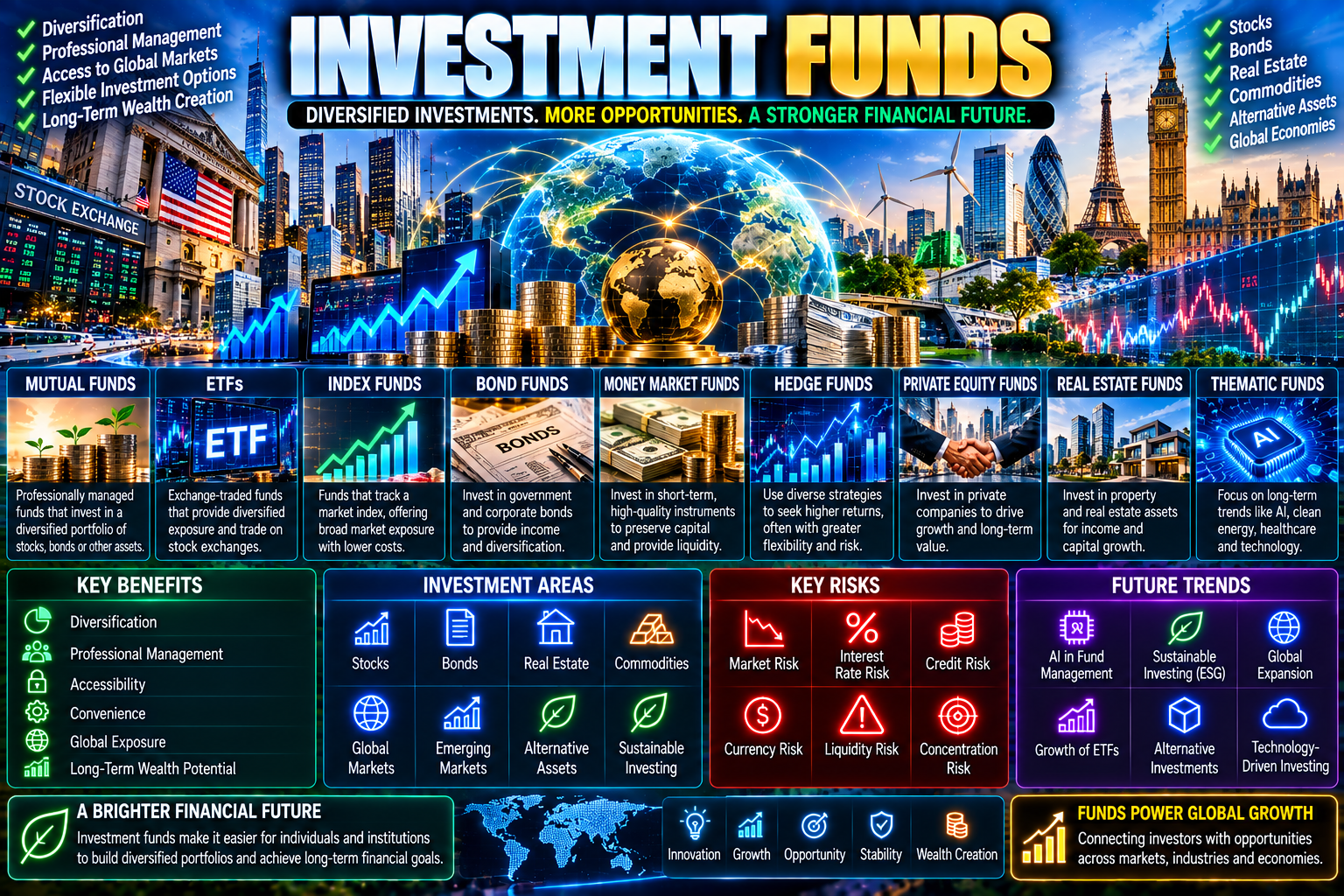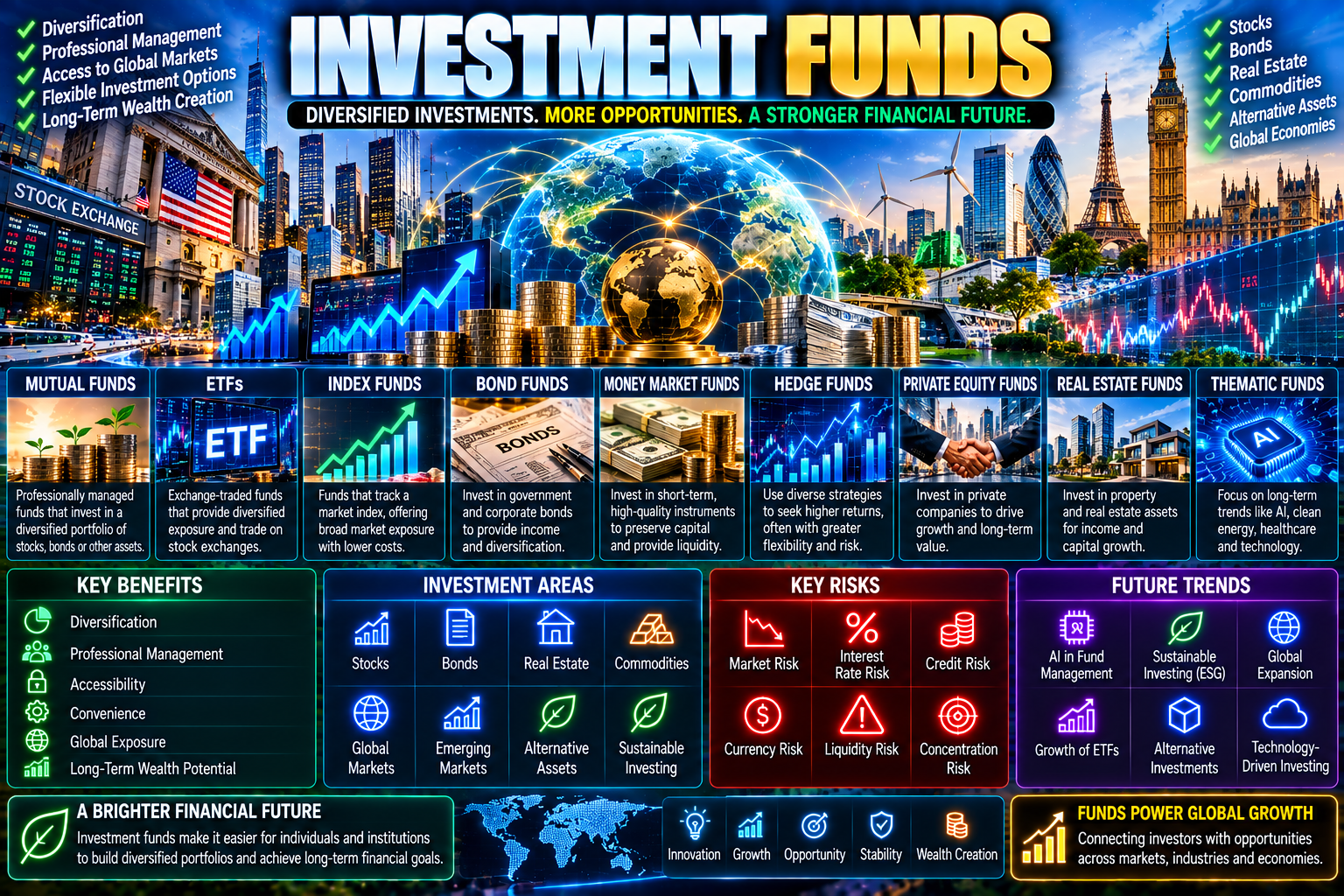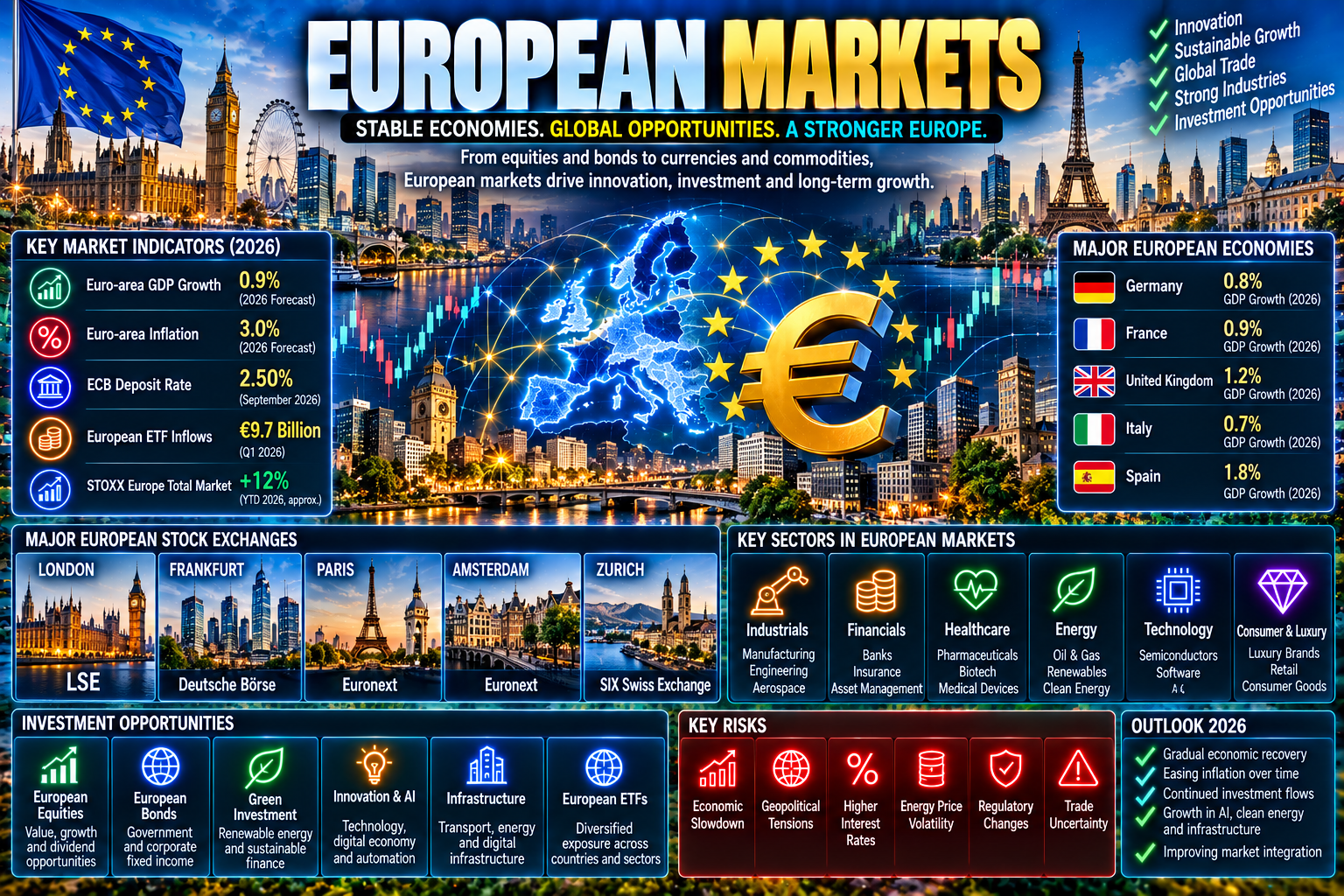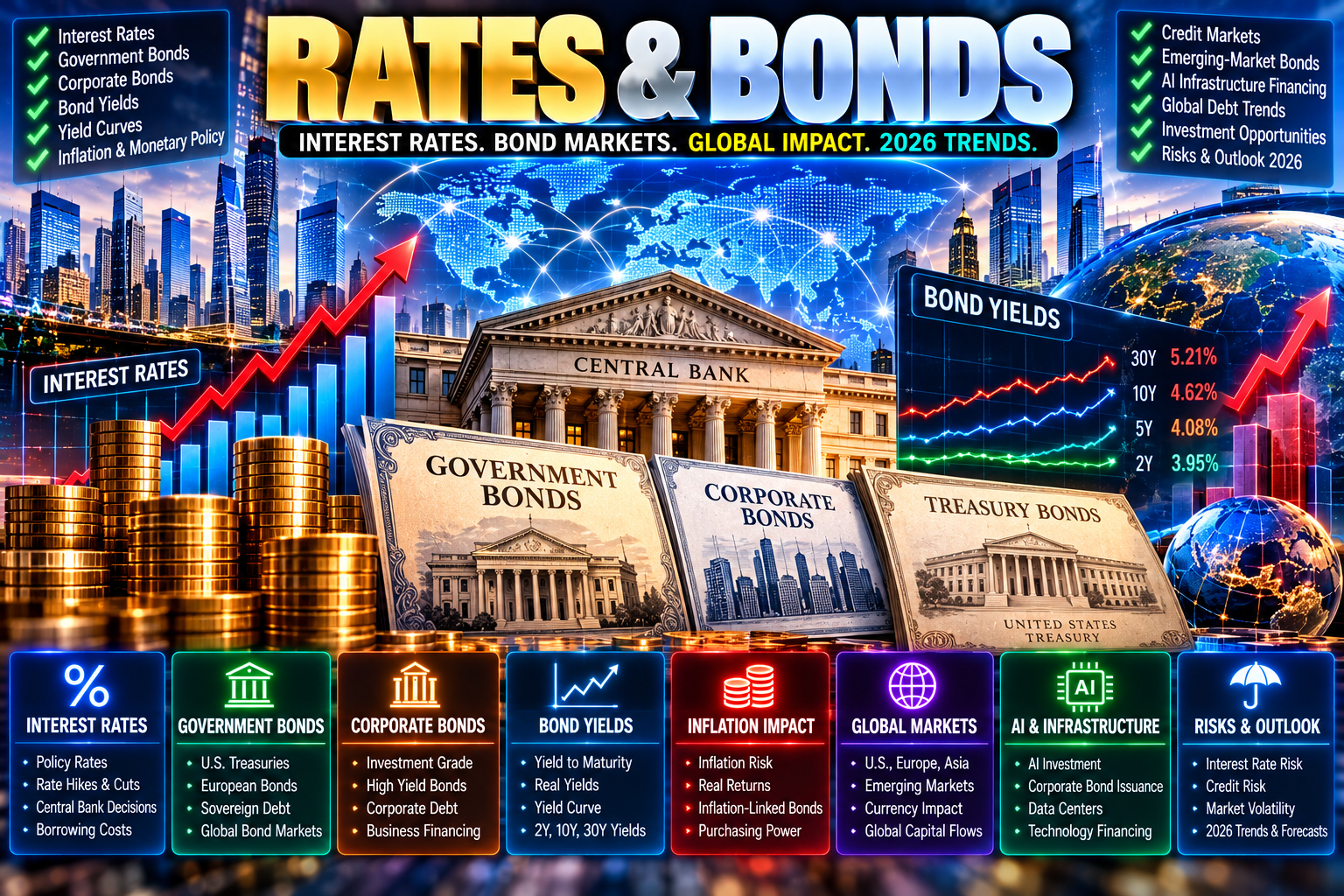
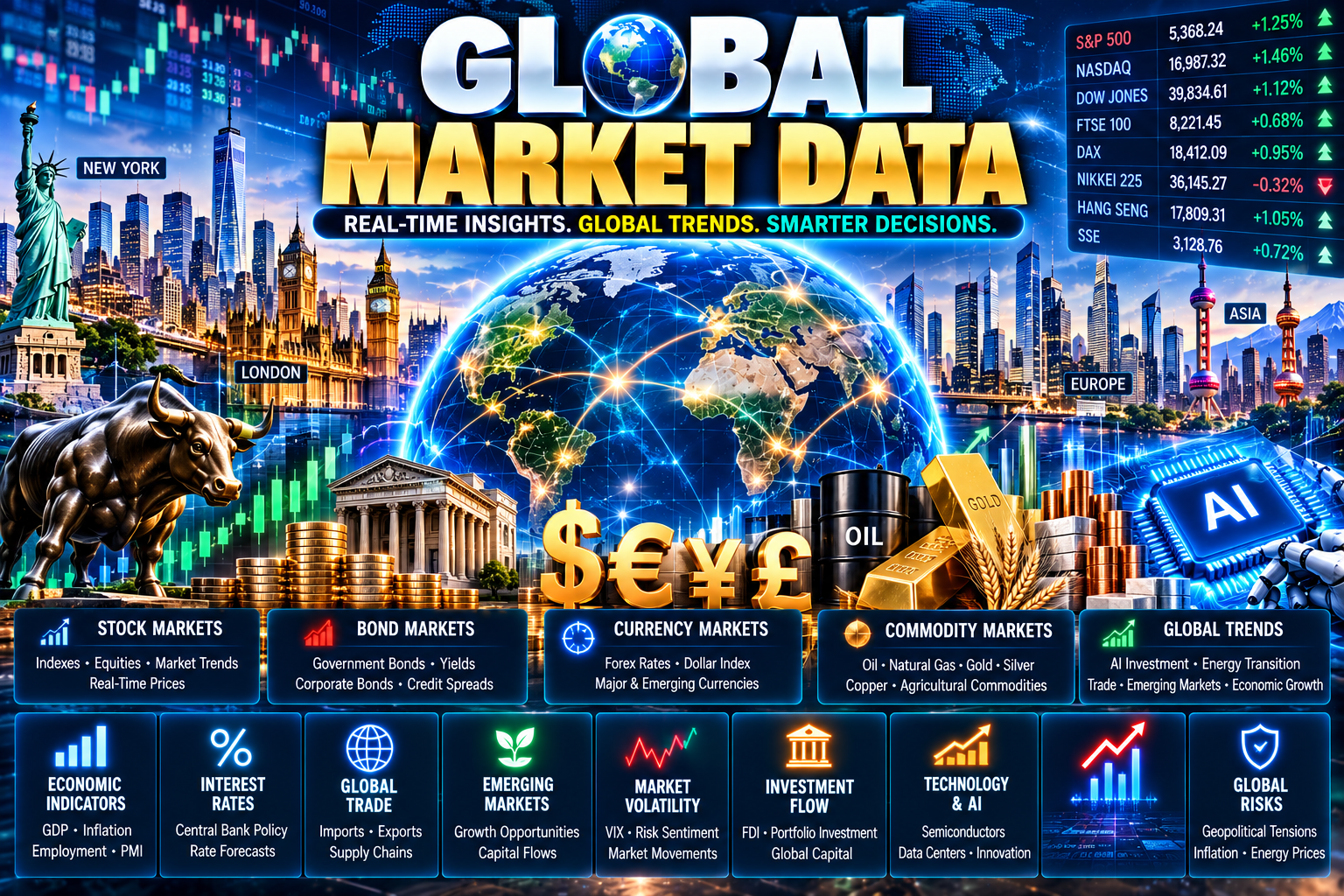
Global market data provides a real-time view of how financial markets, economies, currencies, commodities, interest rates, and investor sentiment are changing around the world. From stock indexes and government bonds to oil prices, foreign exchange rates, gold, emerging-market debt, and technology companies, global market data helps investors, businesses, analysts, and policymakers understand the forces influencing the international financial system.
In 2026, global markets are being shaped by several interconnected forces. Artificial intelligence investment continues to influence technology stocks and capital expenditure, while energy prices, inflation, interest rates, government borrowing, geopolitical tensions, and trade policies are creating significant cross-market effects.
The IMF's Global Markets Monitor reported in late September that higher energy prices were putting renewed pressure on global markets, pushing bond yields higher and strengthening the U.S. dollar while creating additional pressure for emerging-market debt.
Understanding global market data therefore requires looking beyond individual stock prices. The broader picture includes equities, fixed income, currencies, commodities, economic indicators, liquidity, and capital flows.
What Is Global Market Data?
Global market data is information collected from financial markets and economic systems around the world.
It can include:
Stock prices and indexes
Bond yields and prices
Currency exchange rates
Commodity prices
Interest rates
Market capitalization
Trading volumes
Economic indicators
Inflation data
GDP growth
Employment statistics
Corporate earnings
Investment flows
Market volatility
Government debt
Credit spreads
Investors use this information to evaluate market conditions and identify changes in economic expectations.
For businesses, global market data can influence decisions involving expansion, financing, currency exposure, supply chains, acquisitions, and investment.
Why Global Market Data Matters
Financial markets are highly interconnected.
A change in U.S. interest rates can influence the dollar. A stronger dollar can affect emerging-market currencies and dollar-denominated debt. Higher oil prices can increase inflation expectations. Higher inflation can influence central-bank policy, which can then affect bonds and equities.
This creates a chain reaction across markets.
For example:
Energy prices → inflation expectations → interest rates → bond yields → currency markets → equity valuations
This interconnected structure is why global market data is important for understanding the international economy.
Global Stock Market Data
Equity markets are one of the most visible components of global market data.
Major markets include:
United States
Europe
China
Japan
India
United Kingdom
Canada
Australia
South Korea
Southeast Asia
Latin America
Middle East
Africa
Major stock indexes provide a snapshot of market performance.
Examples include the S&P 500, Nasdaq Composite, Dow Jones Industrial Average, STOXX Europe 600, FTSE 100, DAX, CAC 40, Nikkei 225, Hang Seng Index, Shanghai Composite, Nifty 50, and BSE Sensex.
Technology remains particularly important to global equity markets because AI infrastructure, semiconductors, cloud computing, data centers, and software investment have become major sources of corporate spending.
Recent Reuters reporting showed technology stocks gaining in late September 2026 as investor enthusiasm around Anthropic's expected IPO supported AI-related companies, while oil prices and elevated bond yields remained important counterforces.
Global Bond Market Data
The bond market is another critical component of global market data.
Bond-market information includes:
Government bond yields
Corporate bond yields
Credit spreads
Bond prices
Maturity periods
Issuance volumes
Default risk
Real yields
Inflation expectations
Government bond yields are especially important because they influence borrowing costs across the economy.
In September 2026, U.S. Treasury yields moved sharply higher. Reuters reported that the U.S. 10-year Treasury yield reached around 5.1%, its highest level since 2007, while the 30-year yield also climbed to multi-year highs.
Higher yields can affect stock valuations because future corporate earnings are discounted using interest rates. They can also increase borrowing costs for governments, companies, and households.
Global Currency Market Data
Foreign exchange markets operate continuously across major financial centers.
Important currencies include:
U.S. dollar
Euro
Japanese yen
British pound
Swiss franc
Chinese yuan
Australian dollar
Canadian dollar
Indian rupee
Saudi riyal
Singapore dollar
Currency movements are influenced by interest-rate expectations, economic growth, inflation, trade balances, capital flows, commodity prices, and geopolitical developments.
The U.S. dollar remains one of the most important currencies in international finance.
Recent market data showed the dollar strengthening in late September 2026 as higher Treasury yields, elevated oil prices, and expectations surrounding U.S. monetary policy supported demand for the currency.
Currency movements can have significant consequences for multinational companies because revenues and expenses may be denominated in different currencies.
Global Commodity Market Data
Commodities are another major part of global market data.
Key commodity categories include:
Energy
Crude oil
Natural gas
Refined petroleum products
Coal
Electricity
Precious Metals
Gold
Silver
Platinum
Palladium
Industrial Metals
Copper
Aluminum
Nickel
Zinc
Lithium
Agricultural Commodities
Wheat
Corn
Soybeans
Coffee
Cocoa
Sugar
Cotton
Commodity prices can influence inflation, manufacturing costs, transportation expenses, corporate profits, and consumer prices.
Energy is particularly important because oil and gas are embedded in transportation, manufacturing, electricity generation, and supply chains.
The IMF's September 28 Global Markets Monitor noted Brent crude moving toward $108 per barrel amid renewed concerns surrounding geopolitical developments, while higher energy prices contributed to inflation concerns and rising bond yields.
Global Market Data and Interest Rates
Interest rates connect financial markets with the broader economy.
Central banks monitor inflation, employment, economic growth, financial conditions, and other indicators when setting monetary policy.
Major central banks include:
Federal Reserve
European Central Bank
Bank of England
Bank of Japan
People's Bank of China
Reserve Bank of India
Reserve Bank of Australia
Changes in policy expectations can move stocks, bonds, currencies, and commodities simultaneously.
When investors expect higher interest rates, government bond yields can rise and growth-oriented stocks may face valuation pressure. Currency movements can also change as investors adjust expectations for relative returns between countries.
Inflation and Global Market Data
Inflation is one of the most important economic indicators tracked by financial markets.
Higher inflation can:
Reduce household purchasing power
Increase business costs
Influence interest rates
Affect bond valuations
Change currency expectations
Influence commodity prices
Affect corporate profit margins
The relationship between energy prices and inflation has become particularly important in 2026.
Higher energy costs can feed into transportation, manufacturing, food production, and household expenses. Markets therefore closely watch oil and natural-gas prices when assessing future inflation.
Global Economic Growth
Global market data cannot be separated from economic growth.
The OECD's September 2026 outlook projected global GDP growth of 2.9% in 2026 and 3.0% in 2027. The organization said AI-related activity was supporting investment, production, and trade, while higher energy prices and financial costs were creating countervailing pressure.
Different institutions can produce different forecasts because they use different assumptions and models.
The IMF, for example, has also highlighted AI-related investment and technology demand as important factors supporting global economic activity.
This difference between forecasts is itself useful market information because financial markets continuously adjust to changing expectations.
AI and Global Market Data
Artificial intelligence has become one of the most important themes in global financial markets.
AI affects markets through several channels:
Technology investment
Semiconductor demand
Data-center construction
Cloud infrastructure
Electricity demand
Corporate productivity
Venture capital
Private investment
Technology valuations
Labor-market expectations
The AI investment cycle has become large enough to influence broader economic activity.
Reuters reported in September 2026 that AI infrastructure investment was a major driver of global market enthusiasm, while investors were simultaneously evaluating whether the cost of financing such infrastructure could create additional risks.
This makes AI-related market data important not only for technology investors but also for energy, semiconductor, construction, cloud, utilities, and financial companies.
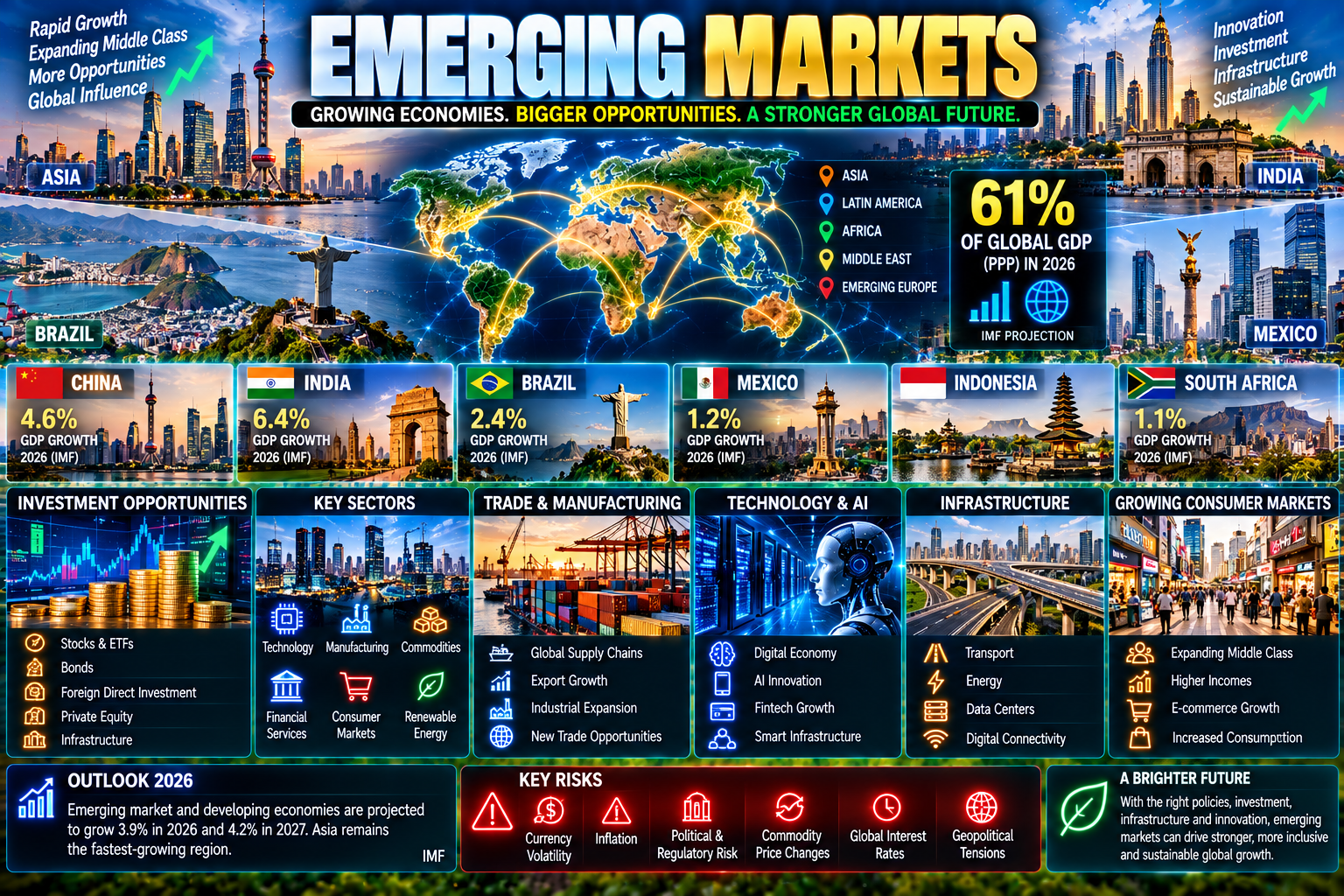
Emerging Markets and Global Market Data
Emerging markets represent another important part of the global financial system.
These markets include economies across:
Asia
Latin America
Africa
Eastern Europe
Middle East
Emerging-market data often includes local stock indexes, currencies, sovereign bonds, inflation, foreign-exchange reserves, capital flows, and economic growth.
Emerging markets can be particularly sensitive to U.S. interest rates and the dollar.
When global yields rise, investors may demand higher returns from emerging-market assets. A stronger dollar can also increase the burden of dollar-denominated debt.
However, emerging markets can benefit from stronger commodity demand, foreign investment, manufacturing expansion, technology adoption, and growing domestic consumption.
Global Market Data and Trade
International trade remains closely connected to financial markets.
Trade data includes:
Exports
Imports
Trade balances
Shipping volumes
Container activity
Tariffs
Supply-chain movements
Manufacturing activity
China remains a major participant in global trade. Reuters reported in September 2026 that China's foreign-exchange authorities expected continued growth in goods and services trade and cross-border investment despite external challenges.
Changes in trade policies can affect currencies, commodity prices, transportation companies, manufacturers, and multinational corporations.
Global Market Volatility
Volatility measures how sharply asset prices move.
Common volatility indicators include:
Equity volatility indexes
Bond-market volatility
Currency volatility
Commodity volatility
Credit spreads
Volatility often increases when markets face uncertainty surrounding:
Interest rates
Inflation
Elections
Geopolitical events
Trade policy
Energy supply
Corporate earnings
Financial stability
In September 2026, global markets experienced renewed volatility as energy prices and government bond yields increased. The IMF's market monitor described pressure across U.S. and European bonds, Japanese government bonds, emerging-market debt, currencies, and commodities.
Global Market Data: Key Indicators to Watch
For anyone following global markets, several indicators deserve regular attention.
Indicator | What It Shows |
|---|---|
S&P 500 | Large U.S. companies |
Nasdaq | Technology-heavy U.S. equities |
STOXX Europe 600 | European equities |
Nikkei 225 | Japanese equities |
MSCI indexes | Global and regional equity performance |
U.S. 10-year Treasury | Global benchmark borrowing conditions |
Dollar Index | U.S. dollar performance |
Brent crude | Global oil benchmark |
Gold | Precious-metal and defensive-asset demand |
VIX | U.S. equity volatility |
Credit spreads | Perceived corporate/credit risk |
PMI | Business activity |
CPI | Consumer inflation |
GDP | Economic growth |
Employment data | Labor-market conditions |
Tracking these indicators together provides a broader picture than watching any individual market.
Major Global Market Trends in 2026
Several themes are particularly important in the current global market environment.
1. Higher Bond Yields
Government borrowing costs have become a major market issue as investors assess inflation, fiscal deficits, debt issuance, and monetary policy.
2. AI Investment
AI infrastructure and technology spending remain major drivers of investment and equity-market activity.
3. Energy Market Risk
Oil and natural-gas prices remain important because energy shocks can affect inflation and interest-rate expectations.
4. Stronger Dollar
Dollar movements influence global trade, commodities, emerging-market debt, and international capital flows.
5. Emerging-Market Financing
Emerging economies continue to access international debt markets despite higher global borrowing costs.
Financial Times reporting indicated that emerging-market governments issued roughly $200 billion of foreign-currency sovereign debt during 2026, according to its September analysis.
6. Geopolitical Uncertainty
Geopolitical developments can rapidly influence energy prices, currencies, bonds, equities, and investor risk appetite.
How Businesses Use Global Market Data
Global market data is not only for investors.
Businesses use market information to make decisions about:
International expansion
Pricing
Currency hedging
Procurement
Supply chains
Financing
Mergers and acquisitions
Capital expenditure
Hiring
Inventory management
For example, a company importing raw materials may monitor currency and commodity markets because changes in either can affect production costs.
A multinational company may monitor interest rates before issuing debt.
A technology company may track semiconductor prices, AI infrastructure costs, and cloud spending before increasing capital expenditure.
The Future of Global Market Data
Global market data is becoming faster, more comprehensive, and increasingly automated.
Artificial intelligence and machine learning are helping financial institutions analyze enormous quantities of information from:
Market prices
Economic reports
Corporate filings
News
Satellite data
Supply-chain information
Consumer activity
Alternative datasets
Real-time data is also becoming increasingly important.
Instead of relying exclusively on monthly or quarterly economic reports, investors can analyze higher-frequency indicators such as shipping activity, energy consumption, online spending, financial transactions, and market prices.
This can improve the speed at which markets respond to changing economic conditions.
Risks in Interpreting Global Market Data
Market data is powerful, but it should be interpreted carefully.
A single market indicator rarely provides the complete picture.
For example, a rising stock market does not necessarily mean every part of the economy is improving. Similarly, higher GDP growth does not guarantee stronger corporate earnings or lower inflation.
Important limitations include:
Data revisions
Different methodologies
Delayed economic statistics
Market volatility
Conflicting indicators
Forecast uncertainty
Regional differences
Temporary shocks
Investors and businesses therefore often combine multiple indicators before making decisions.
Global Market Data Outlook
The global market environment entering the final part of 2026 reflects a mixture of economic resilience and significant financial risks.
Growth remains positive according to major international institutions, while AI investment is supporting technology activity and capital expenditure. At the same time, higher energy prices, elevated government bond yields, inflation concerns, geopolitical tensions, and large financing needs are creating pressure across financial markets.
The interaction between these forces will remain important.
If inflation falls while economic growth remains resilient, financial conditions could become more supportive. If energy prices remain elevated and inflation persists, central banks could face greater pressure to maintain restrictive policies.
Technology investment is another key variable. Continued AI infrastructure spending could support corporate earnings and productivity, but higher financing and infrastructure costs could challenge some projects.
Conclusion
Global market data provides a comprehensive view of the world's financial and economic system. Stocks, bonds, currencies, commodities, interest rates, inflation, trade, economic growth, and investment flows are deeply connected.
In 2026, AI investment, energy prices, interest rates, bond yields, the U.S. dollar, emerging markets, trade policies, and geopolitical developments are among the most important forces shaping global financial markets.
Understanding these indicators together can provide a clearer picture of how the global economy is evolving and why markets respond to changes in economic expectations.
As financial markets become increasingly interconnected and data becomes more available in real time, global market data will remain an essential resource for investors, businesses, analysts, and policymakers.
Frequently Asked Questions
What is global market data?
Global market data is financial and economic information from markets around the world, including stocks, bonds, currencies, commodities, interest rates, economic indicators, and market volatility.
Why is global market data important?
It helps investors, businesses, and analysts understand market conditions, economic trends, financial risks, and changes in international capital flows.
What are the main types of global market data?
Major categories include equity data, bond data, currency data, commodity data, economic indicators, interest rates, volatility measures, and investment-flow data.
What affects global financial markets?
Interest rates, inflation, economic growth, corporate earnings, energy prices, trade policy, geopolitical events, technology investment, and investor sentiment can all affect global markets.
How does the U.S. dollar affect global markets?
The dollar is central to international trade and finance. Changes in its value can influence commodities, emerging-market debt, currencies, corporate earnings, and international capital flows.
Why is AI important for global markets?
AI is driving investment in semiconductors, data centers, cloud infrastructure, software, energy, and technology while also influencing expectations for productivity and corporate earnings.
What global market indicators should investors monitor?
Important indicators include major stock indexes, government bond yields, the dollar index, oil prices, gold, volatility indexes, inflation, GDP growth, employment data, and purchasing-manager indexes.
What are the biggest risks for global markets in 2026?
Major risks include persistent inflation, elevated interest rates, energy-price shocks, geopolitical tensions, high government debt, trade disruptions, financial-market volatility, and uncertainty surrounding large-scale AI investment.