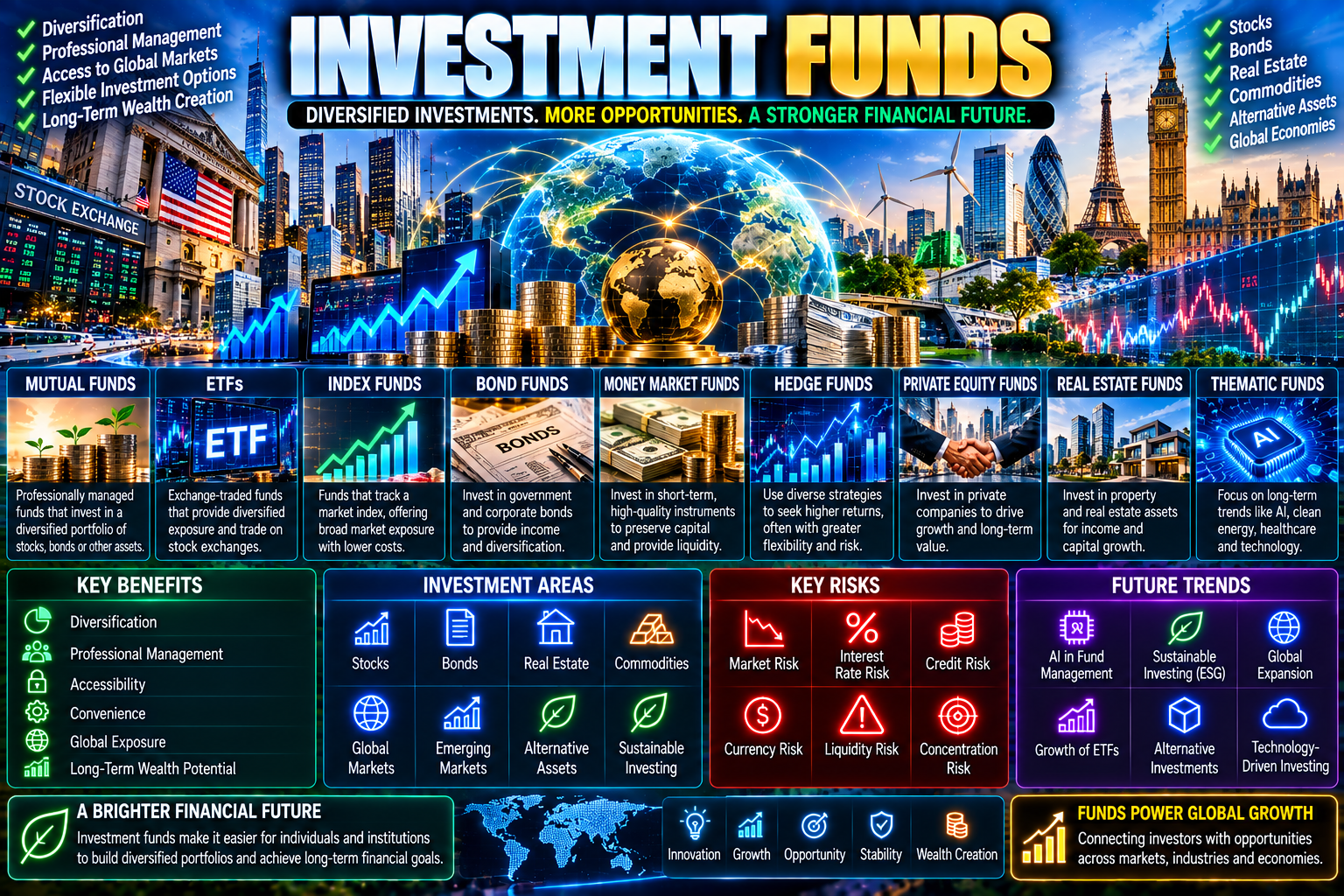

Wealth is more than the amount of money a person has in a bank account. It includes investments, property, business ownership, retirement assets, savings, and other valuable resources after subtracting liabilities. In 2026, wealth creation is being influenced by financial markets, technology, artificial intelligence, real estate, entrepreneurship, changing interest rates, and evolving investment opportunities.
The global wealth landscape has also expanded significantly. UBS reports that global personal wealth increased 10.8% in 2025, while nearly one million new U.S.-dollar millionaires were added worldwide.
What Is Wealth?
Wealth represents the accumulated economic value owned by an individual, household, business, or institution.
A simple way to calculate personal net wealth is:
Net Wealth = Total Assets − Total Liabilities
Assets can include:
Cash and savings
Stocks and bonds
Real estate
Business ownership
Retirement accounts
Private investments
Precious metals
Intellectual property
Other valuable assets
Liabilities include mortgages, personal loans, credit-card balances, business debt, and other financial obligations.
Understanding net wealth provides a clearer picture of financial position than income alone.
Why Wealth Matters
Income determines how much money a person earns, while wealth measures what they have accumulated over time.
Someone can have a high income but relatively low wealth if expenses and debt consume most of their earnings. Conversely, someone with moderate income can build substantial wealth by consistently saving, investing, owning productive assets, and controlling debt.
Wealth can provide:
Financial security
Retirement flexibility
Emergency protection
Business opportunities
Education funding
Home ownership
Intergenerational wealth
Greater financial independence
Global Wealth in 2026
Global wealth has continued to expand, although its distribution remains uneven.
UBS's 2026 Global Wealth Report estimates that personal wealth grew 10.8% in 2025 when measured in U.S. dollars. The report also says nearly one million new dollar millionaires were created globally during the year.
McKinsey estimates that global household wealth reached about $570 trillion in 2025, up around $40 trillion from 2024. It notes that equity valuations were an important contributor to wealth growth in the United States and Canada.
These figures demonstrate how strongly asset prices can influence measured wealth.
The Main Sources of Wealth
1. Employment and Income
Employment remains one of the most common starting points for wealth creation.
Higher and more stable income can create greater capacity for:
Saving
Investing
Buying property
Building businesses
Funding retirement
Reducing debt
Career development, specialized skills, entrepreneurship, and professional experience can therefore contribute to long-term wealth.
2. Investing
Investing allows capital to participate in economic growth.
Common investment categories include:
Stocks
Bonds
Exchange-traded funds
Mutual funds
Real estate
Private equity
Private credit
Infrastructure
Commodities
The appropriate combination depends on factors such as objectives, time horizon, liquidity needs, taxes, and risk tolerance.
3. Real Estate
Real estate remains an important component of household wealth in many economies.
Property can generate wealth through:
Capital appreciation
Rental income
Business use
Development
Long-term ownership
However, property also involves costs and risks, including financing expenses, maintenance, taxes, vacancies, and changes in local market conditions.
4. Business Ownership
Entrepreneurship can create significant wealth when a company grows successfully.
Business owners can build value through:
Revenue growth
Profitability
Intellectual property
Customer relationships
Brand development
Business expansion
Company equity
Business ownership can also introduce concentration risk because a large percentage of an owner's wealth may be tied to one company.
Stocks and Wealth Creation
Stocks represent ownership in publicly traded companies. Over long periods, equities have historically played an important role in wealth creation because investors can participate in corporate earnings and economic growth.
Investors may focus on:
Growth stocks
Value stocks
Dividend stocks
Large-cap companies
Mid-cap companies
Small-cap companies
International equities
Emerging markets
However, stock prices can fluctuate substantially. Diversification and an appropriate investment horizon are important considerations when using equities as part of a wealth strategy.
Bonds and Fixed Income
Bonds can provide income and diversification within a broader portfolio.
Common types include:
Government bonds
Corporate bonds
Municipal bonds
Treasury securities
Inflation-linked bonds
Emerging-market bonds
Bond prices generally respond to changes in interest rates, inflation expectations, credit conditions, and investor demand.
For wealth management, fixed income can serve different purposes, including income generation, capital preservation, liquidity management, and portfolio diversification.
Private Markets and Wealth
Private markets are becoming increasingly relevant to wealth investors.
BlackRock's 2026 outlook highlights growing interest in private credit, infrastructure, real estate, private equity, and secondary strategies. It also notes that newer fund structures are making some private-market investments more accessible to wealth and retirement investors.
Private markets can potentially provide access to companies and projects that are not available through traditional public markets. At the same time, investors need to consider liquidity, fees, valuation uncertainty, complexity, and investment minimums.
Artificial Intelligence and Wealth
Artificial intelligence is becoming an important force across the investment industry.
Investment professionals are increasingly using AI and advanced data technologies to:
Analyze large datasets
Research companies
Monitor portfolios
Model scenarios
Identify investment themes
Automate administrative processes
BlackRock identifies advances in data and technology as one of three major trends shaping investment products in 2026.
AI is also influencing the underlying economy through demand for semiconductors, data centers, energy infrastructure, software, and digital services.
Diversification and Wealth Management
Diversification means spreading assets across different investments rather than relying heavily on one asset or company.
A diversified wealth portfolio might include a combination of:
Equities + Bonds + Cash + Real Estate + Private Assets + Other Investments
The exact allocation depends on the investor's circumstances.
Diversification does not eliminate losses, but it can reduce the impact of poor performance in a single investment or asset class.
The Importance of Cash and Liquidity
Not all wealth needs to be invested.
Cash and liquid assets can help cover:
Emergency expenses
Short-term purchases
Tax obligations
Business needs
Investment opportunities
Unexpected financial requirements
Maintaining appropriate liquidity can reduce the need to sell long-term investments during unfavorable market conditions.
Debt and Wealth
Debt can either support wealth creation or weaken a financial position depending on how it is used.
Potentially productive borrowing can finance:
Education
Business expansion
Real estate
Other long-term assets
High-cost consumer debt, however, can make wealth accumulation more difficult.
Managing interest costs and maintaining sustainable debt levels are therefore important parts of wealth planning.
Wealth and Inflation
Inflation can reduce the purchasing power of cash over time.
For example, if prices increase while savings remain unchanged, the real purchasing power of those savings declines.
This is one reason investors often consider assets that have the potential to grow over time, although every investment carries different risks.
Inflation can also affect real estate, bonds, equities, commodities, business costs, and household spending.
Wealth Protection
Creating wealth is only one part of financial planning. Protecting it can be equally important.
Wealth protection may involve:
Diversification
Emergency savings
Insurance
Tax planning
Estate planning
Appropriate debt management
Asset allocation
Fraud prevention
Legal structures where appropriate
High-net-worth households can also face additional challenges involving concentrated investments, business ownership, taxes, succession, and liquidity.
Intergenerational Wealth
Wealth can move between generations through:
Inheritance
Property
Businesses
Investment portfolios
Trusts
Education
Family-owned assets
Intergenerational wealth planning can involve estate structures, tax considerations, succession planning, and clear communication among family members.
Wealth Management in 2026
Modern wealth management is increasingly moving beyond traditional stocks and bonds.
BlackRock's 2026 research highlights a broader investment universe involving technology, private markets, infrastructure, and alternative investments. It also points to the increasing use of technology and data in portfolio construction.
For investors, this creates more potential choices but also greater complexity.
Understanding an investment's:
Expected return
Risk
Liquidity
Fees
Tax treatment
Time horizon
Correlation with other assets
can be more important than simply following the latest market trend.
Major Wealth Trends for 2026
Several themes are shaping the wealth landscape in 2026.
AI and Digital Infrastructure
AI is driving investment in computing, semiconductors, cloud infrastructure, data centers, and energy systems.
Growth of Private Markets
Private credit, infrastructure, private equity, and secondary markets are becoming increasingly relevant to wealth investors.
Greater Focus on Diversification
Investors are looking beyond traditional portfolios as market relationships become more complex.
Technology-Driven Wealth Management
AI, data analytics, digital platforms, and automated tools are changing how portfolios are researched and managed.
Changing Demographics
Aging populations, longer life expectancy, migration, and changing household structures are influencing investment demand across healthcare, housing, infrastructure, and financial markets.
Risks to Wealth
Wealth can be affected by many factors, including:
Market volatility
Inflation
Interest-rate changes
Recession
Real estate downturns
Business failure
Excessive debt
Currency movements
Geopolitical uncertainty
Concentration risk
Fraud and cybersecurity threats
The relationship between asset prices and the underlying economy is also important. McKinsey's 2026 global balance-sheet analysis notes that some asset classes have become increasingly disconnected from underlying economic activity, creating potential correction risks.
How to Build Wealth Over Time
A long-term wealth-building framework can include:
Increase earning potential.
Maintain an emergency fund.
Control expensive debt.
Save consistently.
Invest according to financial goals and risk tolerance.
Diversify across appropriate assets.
Review investments periodically.
Protect assets through suitable insurance and planning.
Consider taxes and fees.
Reinvest returns where appropriate.
Avoid making financial decisions based solely on short-term market movements.
Adjust the strategy as financial circumstances change.
The Future of Wealth
The future of wealth is likely to be shaped by technology, demographics, entrepreneurship, global markets, artificial intelligence, infrastructure investment, and changing financial products.
The expanding investment universe gives investors more opportunities, but it also makes financial education and risk management increasingly important.
Wealth is ultimately built through the accumulation and management of productive assets over time. A strong wealth strategy therefore focuses not only on potential returns but also on diversification, liquidity, costs, taxes, risk, and long-term financial objectives.
Frequently Asked Questions
What is wealth?
Wealth is the value of assets owned by an individual or household after subtracting liabilities.
What is net wealth?
Net wealth is total assets minus total debts and other liabilities.
What are the main sources of wealth?
Common sources include employment income, business ownership, investments, real estate, savings, and inherited assets.
Can investing build wealth?
Investing can contribute to long-term wealth creation by allowing capital to participate in the growth and income generated by different assets, although investment values can also decline.
Why is diversification important?
Diversification spreads exposure across different investments and can reduce reliance on the performance of a single asset or market.
What are the major wealth trends in 2026?
Major themes include AI, digital infrastructure, private markets, diversification, technology-driven wealth management, demographic changes, and evolving investment products.
Conclusion
Wealth is a long-term financial concept that extends beyond income or cash savings. It includes the assets people build, the businesses they own, the investments they make, and the financial decisions that determine how those assets are protected and transferred.
In 2026, global wealth is being reshaped by strong asset-market performance, artificial intelligence, private markets, technology, infrastructure investment, and demographic change. UBS reports significant growth in personal wealth, while McKinsey highlights record global household wealth and the importance of asset valuations.
For individuals and families, understanding these forces can provide a foundation for making informed long-term financial decisions.