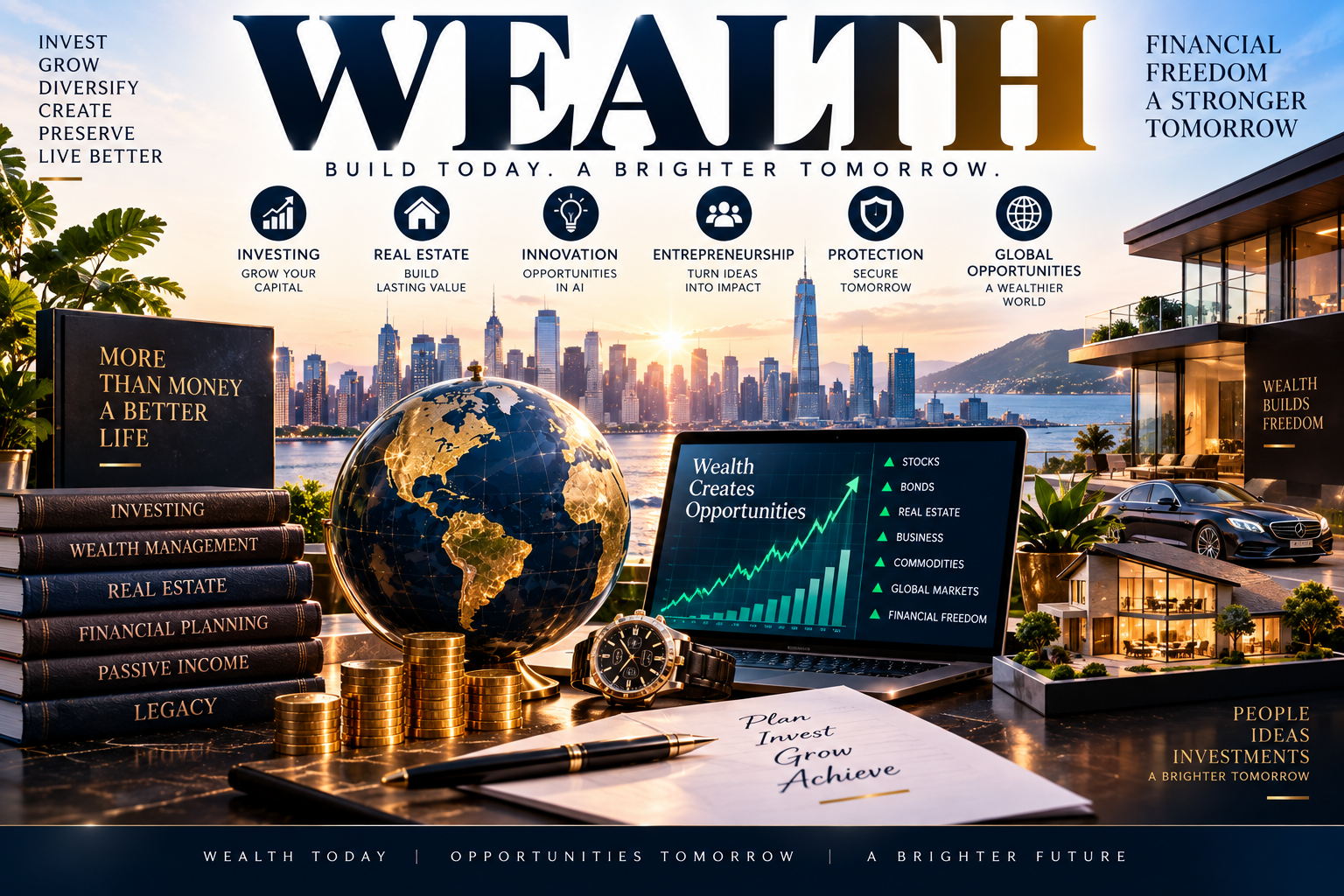
Wealth is more than the amount of money someone has in a bank account. It includes financial assets, property, businesses, investments and other resources that can create long-term economic security.
In 2026, wealth creation is being influenced by strong financial markets, technological innovation, artificial intelligence, real estate, entrepreneurship, changing interest rates and global economic conditions. At the same time, inflation, market volatility, taxation, debt and geopolitical uncertainty can make preserving wealth just as important as creating it.
According to the UBS Global Wealth Report 2026, global personal wealth increased 10.8% in 2025, while nearly one million new U.S.-dollar millionaires were created worldwide. The United States accounted for a significant share of that growth and represented 35.7% of global personal wealth.
What Is Wealth?
Wealth represents the value of assets owned by an individual, family, company or institution after accounting for liabilities.
A person's wealth can include:
Cash and savings
Stocks and bonds
Investment funds and ETFs
Real estate
Business ownership
Retirement accounts
Precious metals
Private investments
Intellectual property
Other valuable assets
A simple way to think about net wealth is:
Net Wealth = Total Assets − Total Liabilities
For example, someone who owns a house, investments and cash worth $1 million but has $300,000 in outstanding debt has approximately $700,000 in net wealth.
Wealth Creation Is Different From Income
Income and wealth are closely connected, but they are not the same.
Income is money earned over a period of time through employment, business activity, investments or other sources. Wealth is the accumulated value of assets after liabilities are deducted.
A person with a high income may not become wealthy if most of their earnings are spent. Conversely, someone with a moderate income can gradually build substantial wealth by saving consistently, investing and acquiring productive assets.
This is why long-term wealth creation often depends on the relationship between earning, saving, investing and compounding.
Global Wealth Trends in 2026
Global wealth has continued to expand, although the distribution of that wealth remains uneven.
UBS reported that global personal wealth rose by 10.8% in 2025, marking the third consecutive year of growth. The report also found that almost one million new dollar millionaires were created during the year.
The growth has been closely connected to financial-market performance. When stocks, property and other assets appreciate, household balance sheets can increase substantially.
However, headline wealth figures do not tell the entire story. Median wealth can behave differently from average wealth because large asset gains among wealthy households can significantly influence overall averages.
This makes it important to distinguish between total wealth growth and broad-based improvements in household financial security.
The Role of Investing
Investing is one of the most important tools for long-term wealth creation.
Instead of keeping all savings in cash, investors can allocate capital to assets that have the potential to generate returns.
Common investments include:
Stocks
Stocks provide ownership in publicly traded companies. Investors can potentially benefit from capital appreciation and dividends.
Bonds
Bonds provide exposure to government or corporate debt and can generate interest income.
ETFs and Funds
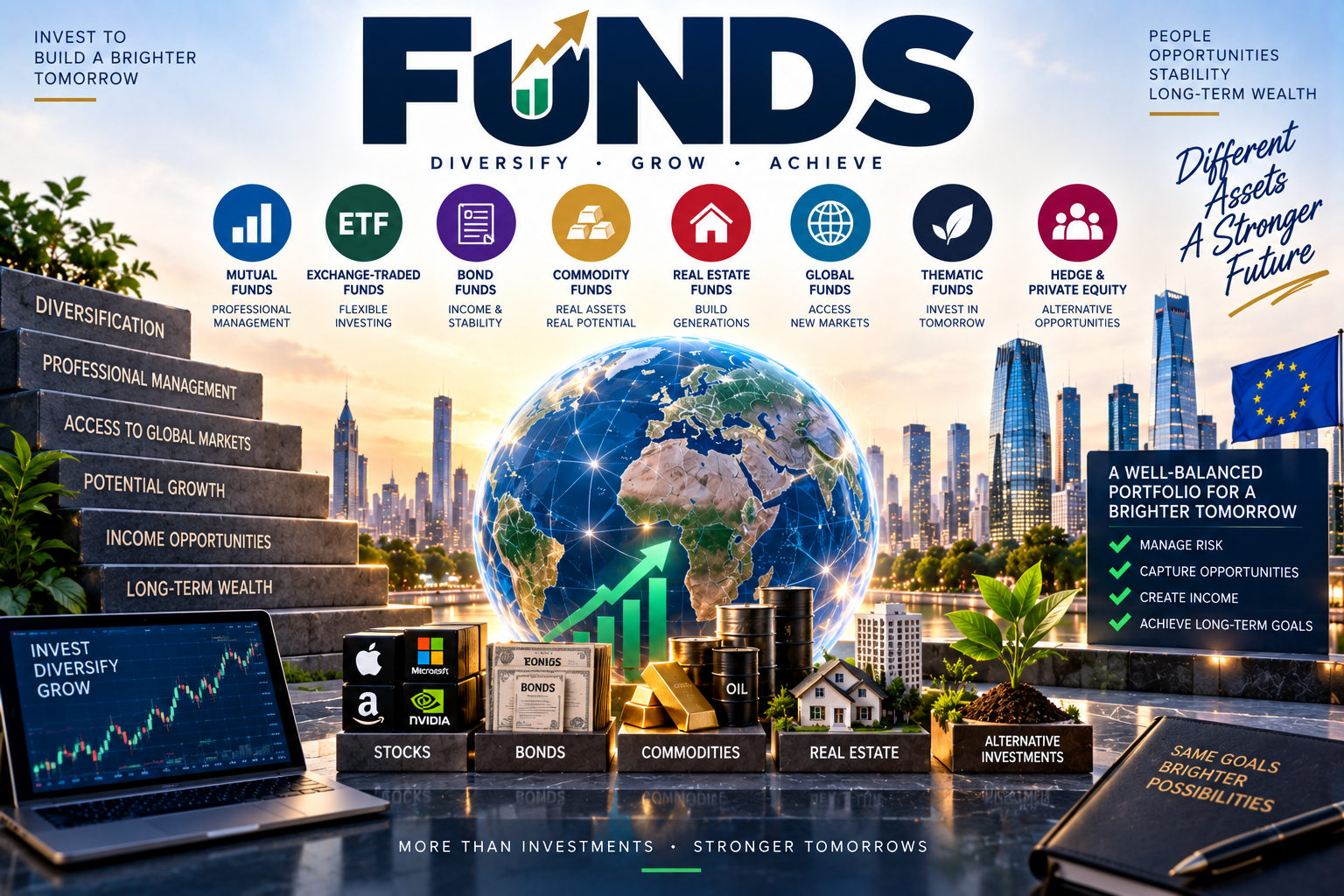
Exchange-traded funds and investment funds allow investors to diversify across multiple securities through a single investment.
Real Estate
Property can generate rental income and potentially appreciate over time.
Private Businesses
Entrepreneurship and business ownership can create significant wealth, although business investments can also carry substantial risks.
Alternative Assets
Some investors allocate part of their portfolios to commodities, private equity, infrastructure or other alternative investments.
The appropriate mix depends on an individual's financial goals, risk tolerance, time horizon and liquidity needs.
The Power of Compounding
Compounding is one of the most important concepts in wealth creation.
When investment returns are reinvested, future returns can be generated on both the original investment and previous gains.
For example, suppose an investor contributes $500 every month and earns an average annual return over a long period. The investor's portfolio can eventually become substantially larger than the total amount contributed because returns themselves begin generating additional returns.
The key advantage of compounding is time.
Starting earlier can make a significant difference because investments have more years to grow.
Diversification and Wealth Protection
Building wealth is only one part of financial planning. Protecting wealth is equally important.
Concentrating too much money in one asset, company, industry or country can expose a portfolio to unnecessary risk.
Diversification can involve spreading investments across:
Stocks
Bonds
Real estate
Cash
Commodities
Different industries
Different countries
Different currencies
Public and private markets
Diversification does not eliminate investment risk, but it can reduce the impact of a poor performance from one particular asset.
This has become increasingly important as investors navigate geopolitical tensions, changing trade relationships and volatile interest rates.
MSCI's 2026 wealth-management research found that many advisers are reassessing regional allocations, with 61% planning to increase allocations to developed markets outside the United States.
Real Estate and Wealth
Real estate remains a major component of household wealth around the world.
Residential property can provide both utility and potential financial appreciation. Investment properties can also generate rental income.
However, real estate has disadvantages.
Property can be illiquid, meaning it may take considerable time to convert into cash. Investors also face maintenance costs, taxes, financing costs and changes in local property markets.
UBS noted that residential property remains the dominant asset for many households, particularly among people with wealth below the higher affluent tiers.
For investors, the key is understanding whether property is being purchased for personal use, income generation, diversification or long-term capital appreciation.
Business Ownership and Entrepreneurship
Business ownership has historically been an important path to wealth creation.
Entrepreneurs can build equity in companies whose value grows over time. A successful business can produce income, reinvest profits and potentially be sold to another company or investor.
Technology has expanded opportunities for entrepreneurship.
Digital businesses, software companies, online commerce, financial technology, artificial intelligence and specialized services can sometimes be launched with lower initial infrastructure requirements than traditional businesses.
However, entrepreneurship carries significant risks. Business owners face competition, changing customer demand, financing challenges and operational uncertainty.
Artificial Intelligence and the Future of Wealth
Artificial intelligence is becoming an important factor in wealth creation.
AI can improve productivity, automate repetitive work, analyze large datasets and create new products and services.
For investors, AI is also creating opportunities across semiconductors, cloud computing, software, cybersecurity, robotics, data centers and energy infrastructure.
For wealth-management firms, AI could change how investment advice and financial services are delivered.
BCG's 2026 research found that 95% of surveyed wealth-management firms expected to increase AI investment over the following three years.
The technology could make financial services more personalized and efficient, but it also creates risks. Rapid technological changes can disrupt existing businesses and cause some investments to lose value.
Interest Rates and Wealth
Interest rates influence nearly every major asset class.
When rates rise, borrowing becomes more expensive. Mortgage costs, business financing and consumer loans can increase.
Higher rates can also make bonds and cash-like investments more attractive compared with riskier assets.
When rates fall, borrowing costs generally decline, potentially supporting housing, business investment and equity valuations.
In 2026, interest-rate uncertainty remains an important consideration for investors. Higher long-term yields and persistent inflation pressures are affecting global asset allocation decisions.
For wealth management, this means investors need to consider both potential returns and the changing cost of capital.
Inflation and Purchasing Power
Inflation can gradually reduce the purchasing power of money.
If prices rise faster than savings and investment returns, the real value of wealth can decline.
For example, someone holding a large amount of cash may see the nominal balance remain unchanged while the cost of housing, food, transportation and services increases.
This is one reason investors often seek assets capable of generating returns above inflation over long periods.
However, inflation protection is not guaranteed. Stocks, property, commodities and other assets can all experience periods of decline.
Wealth Management in a Volatile World
Modern wealth management is increasingly focused on balancing growth with protection.
Rather than simply seeking the highest possible return, investors often consider:
Risk management
Asset allocation
Tax efficiency
Liquidity
Estate planning
Retirement planning
Insurance
Business succession
Currency exposure
Geographic diversification
The objective is to create a financial structure that can withstand different economic environments.
This becomes particularly important for high-net-worth individuals because preserving capital can become as important as generating additional returns.
The Growing Importance of Global Diversification
Investors once focused heavily on their domestic markets. Today, global diversification is increasingly accessible.
International ETFs, global mutual funds and multinational companies allow investors to gain exposure to economies around the world.
This can provide access to different growth opportunities while reducing dependence on one country's economic performance.
At the same time, global investing introduces additional risks, including currency fluctuations, political instability, different regulations and market-specific economic conditions.
Wealth Inequality and Distribution
Global wealth growth does not necessarily mean wealth is distributed equally.
UBS reported that the number of millionaires increased substantially in 2025, but broader measures of household wealth show significant differences between countries and income groups.
The distribution of wealth is influenced by factors including:
Property ownership
Access to financial markets
Education
Business ownership
Inheritance
Employment opportunities
Tax policy
Economic growth
As asset prices increase, households that already own stocks, businesses or property can benefit more quickly than those without significant assets.
This creates an important distinction between wealth creation and wealth distribution.
How Individuals Can Build Wealth
There is no single formula for becoming wealthy, but several principles are widely applicable.
1. Spend Less Than You Earn
Creating a gap between income and expenses provides capital that can be saved or invested.
2. Build an Emergency Fund
Liquid savings can reduce the need to sell investments during a market downturn.
3. Invest Consistently
Regular investing can help individuals participate in long-term market growth.
4. Diversify
Avoid excessive dependence on a single investment.
5. Control High-Cost Debt
High-interest debt can significantly reduce the amount of money available for wealth creation.
6. Increase Earning Potential
Education, entrepreneurship, professional development and new skills can increase long-term income.
7. Think Long Term
Short-term market movements are difficult to predict. Long-term planning can help investors avoid emotional decisions.
Risks to Wealth in 2026
Wealth can be affected by several major risks.
Market volatility: Stocks and other financial assets can experience sharp declines.
Inflation: Rising prices can reduce real purchasing power.
Interest rates: Higher borrowing costs can pressure property and financial assets.
Geopolitical risk: Wars, sanctions and trade disruptions can affect economies and investments.
Concentration: Excessive exposure to one asset or sector can amplify losses.
Taxes: Changes in tax policy can affect investment returns and estate planning.
Technology disruption: AI and automation can create winners and losers across industries.
Liquidity risk: Some assets, especially private investments and property, cannot easily be converted into cash.
The Future of Wealth
The future of wealth creation is likely to be shaped by technology, entrepreneurship, global investment and changing demographics.
AI could increase productivity and create new industries. Financial technology could make investing more accessible. Global markets could provide more opportunities for diversification.
At the same time, rising government debt, geopolitical fragmentation and changing interest rates may create a more complicated investment environment.
McKinsey estimates that the global balance sheet reached nearly $1.8 quadrillion in 2025, while warning that some asset values have become increasingly detached from underlying economic activity.
This suggests that future wealth creation may depend not only on rising asset prices but also on genuine productivity and economic growth.
What Investors Should Watch
Anyone interested in wealth and investing should monitor several indicators:
Inflation
Interest rates
Stock-market performance
Bond yields
Real estate prices
Economic growth
Corporate earnings
Currency movements
Commodity prices
AI investment
Global trade
Tax and regulatory changes
Understanding these factors can help investors make better-informed long-term decisions.
FAQs About Wealth
What is wealth?
Wealth is the total value of assets owned by an individual, family or organization after subtracting liabilities.
What is the difference between income and wealth?
Income is money earned over time, while wealth represents accumulated assets and financial resources after debt is considered.
What is the best way to build wealth?
Consistent saving, long-term investing, diversification, controlling expensive debt and increasing earning potential are common foundations of wealth building.
Is real estate a good way to build wealth?
Real estate can contribute to long-term wealth through property appreciation and rental income, but it also involves financing, maintenance, taxes and market risks.
Why is diversification important?
Diversification can reduce the impact of poor performance from any single investment, sector, asset class or geographic market.
How is AI affecting wealth?
AI is creating new investment opportunities, improving productivity and changing financial services. It may also disrupt existing companies and industries.
Can inflation reduce wealth?
Yes. Inflation can reduce purchasing power when the return on savings and investments fails to keep pace with rising prices.
Conclusion
Wealth in 2026 is being shaped by a rapidly changing global economy. Strong financial markets, technological innovation, AI investment, entrepreneurship and property ownership are creating opportunities, while inflation, interest rates, geopolitical uncertainty and asset valuations create challenges.
Building wealth requires more than chasing the highest-return investment. Sustainable wealth generally comes from a combination of disciplined saving, productive investment, diversification, risk management and long-term planning.
As global wealth continues to evolve, investors who understand both wealth creation and wealth preservation will be better positioned to navigate the opportunities and risks ahead.