
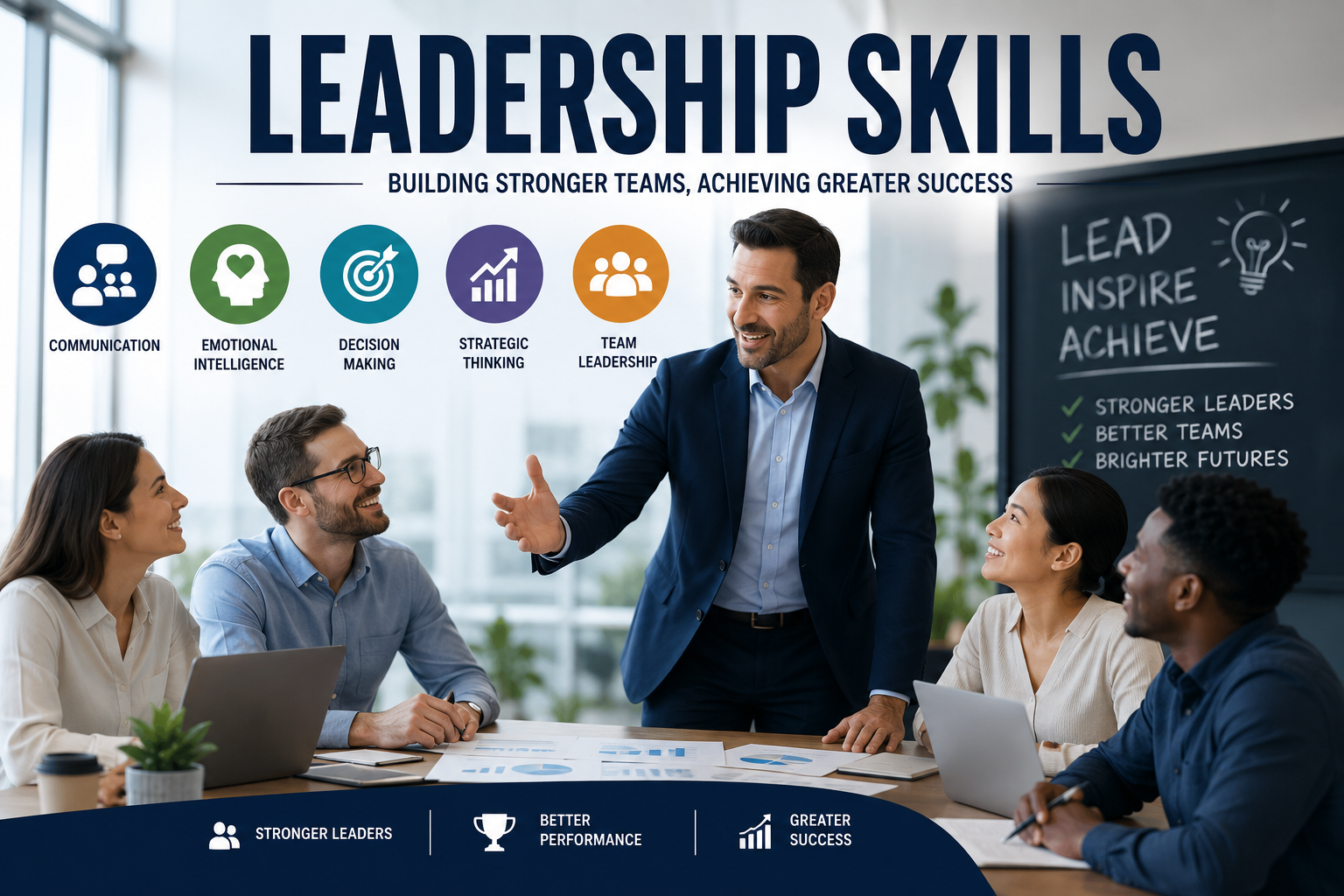
Leadership is one of the most valuable qualities in today's competitive business world. Regardless of industry or company size, organizations rely on effective leaders to guide teams, solve problems, make strategic decisions, and inspire people to achieve common goals. While technical knowledge and experience are important, leadership skills often determine whether a business succeeds or struggles in a constantly changing marketplace.
A great leader does more than manage employees or assign tasks. They create a clear vision, motivate people to perform at their best, and build an environment where innovation, trust, and collaboration thrive. Strong leadership helps businesses adapt to challenges, improve productivity, and achieve sustainable growth.
The good news is that leadership is not a talent reserved for a few individuals. Leadership skills can be learned, developed, and strengthened through continuous practice, self-awareness, and a commitment to personal growth. Whether you are a business owner, manager, entrepreneur, or aspiring executive, mastering leadership skills can positively impact your career and your organization's success.
This guide explores the most important leadership skills every business leader should develop, why they matter, and how they contribute to long-term business success.
What Are Leadership Skills?
Leadership skills are the abilities that enable individuals to guide, influence, motivate, and support others in achieving shared objectives. These skills include communication, decision-making, emotional intelligence, problem-solving, strategic thinking, adaptability, and teamwork.
Unlike management, which focuses primarily on planning and organizing work, leadership emphasizes inspiring people, creating a vision, and encouraging continuous improvement. Effective leaders understand that their success depends largely on the success of the people they lead.
Developing leadership skills helps individuals build stronger relationships, improve workplace culture, and create high-performing teams capable of achieving exceptional results.
Why Leadership Skills Are Important
Leadership skills influence nearly every aspect of business performance. Organizations with effective leaders often experience better employee engagement, higher productivity, stronger customer satisfaction, and improved financial performance.
Some of the key benefits of strong leadership include:
Improved team collaboration
Better communication
Higher employee motivation
Faster problem-solving
Increased innovation
Stronger workplace culture
Better decision-making
Greater organizational growth
Employees are more likely to remain loyal to organizations where leaders provide guidance, support, and opportunities for professional development.
1. Effective Communication
Communication is widely considered the foundation of successful leadership. Business leaders must clearly communicate goals, expectations, company values, and strategic objectives.
Effective communication includes both speaking and listening. Leaders who actively listen to employees understand challenges more effectively and encourage open discussions that lead to better solutions.
Clear communication also reduces misunderstandings, increases productivity, and strengthens trust between leaders and their teams.
Ways to improve communication include:
Listening without interrupting
Providing constructive feedback
Encouraging questions
Using clear and simple language
Holding regular team meetings
Strong communication builds confidence and creates an environment where everyone feels heard and respected.
2. Emotional Intelligence
Emotional intelligence has become one of the most important leadership qualities in modern organizations.
It involves understanding your own emotions while recognizing and responding appropriately to the emotions of others.
Business leaders with high emotional intelligence are better at:
Managing stress
Building relationships
Resolving conflicts
Motivating employees
Demonstrating empathy
Emotionally intelligent leaders create supportive work environments where employees feel valued and motivated to perform their best.
This skill also improves customer relationships and strengthens collaboration across departments.
3. Decision-Making Skills
Business leaders make decisions every day that affect employees, customers, operations, and company growth.
Effective decision-making requires analyzing available information, evaluating risks, considering alternatives, and choosing the best possible solution.
Successful leaders avoid making impulsive decisions based solely on emotions.
Instead, they:
Gather relevant information
Consult experienced team members
Consider long-term consequences
Evaluate potential risks
Accept responsibility for outcomes
Good decision-making increases organizational confidence and supports sustainable business growth.
4. Strategic Thinking
Strategic thinking allows leaders to see the bigger picture while planning for future opportunities and challenges.
Rather than focusing only on daily operations, strategic leaders evaluate market trends, customer needs, competition, and technological developments.
Strategic thinking helps organizations:
Identify growth opportunities
Improve competitive advantage
Allocate resources effectively
Prepare for future challenges
Achieve long-term goals
Leaders who think strategically make informed decisions that support sustainable success rather than short-term gains.
5. Problem-Solving Ability
Every organization encounters challenges such as declining sales, customer complaints, operational delays, or employee conflicts.
Strong leaders remain calm under pressure and approach problems with confidence.
Effective problem-solving involves:
Identifying the root cause
Gathering relevant information
Exploring multiple solutions
Evaluating possible outcomes
Implementing the best strategy
Instead of blaming others, successful leaders focus on finding practical solutions that benefit both employees and the organization.
Problem-solving skills also encourage innovation because leaders view challenges as opportunities for improvement.
6. Adaptability
Today's business environment changes rapidly due to technological advancements, economic conditions, customer expectations, and global competition.
Leaders who resist change often struggle to remain competitive.
Adaptable leaders embrace new ideas, adjust strategies when necessary, and encourage their teams to remain flexible during periods of change.
Adaptability helps businesses respond effectively to:
Market changes
Economic uncertainty
Industry innovations
Customer demands
Digital transformation
Organizations led by adaptable leaders are often more resilient during difficult times.
7. Integrity and Honesty
Trust is built through honesty and ethical behavior.
Employees respect leaders who consistently act with integrity, keep promises, and make fair decisions.
Integrity means doing the right thing even when no one is watching.
Ethical leadership encourages accountability, transparency, and professionalism throughout the organization.
Companies known for ethical leadership often develop stronger reputations and long-lasting customer relationships.
8. Time Management
Business leaders frequently manage multiple responsibilities, meetings, deadlines, and strategic projects simultaneously.
Effective time management helps leaders prioritize important tasks while delegating responsibilities appropriately.
Successful leaders often:
Plan their schedules carefully
Focus on high-priority work
Minimize distractions
Delegate routine tasks
Review progress regularly
Good time management increases productivity while reducing stress and improving work-life balance.
9. Team Building
One person alone cannot build a successful organization.
Great leaders understand the importance of teamwork.
Team-building involves creating an environment where employees collaborate, share ideas, support one another, and work toward common objectives.
Strong teams typically experience:
Better communication
Increased creativity
Higher productivity
Improved employee satisfaction
Faster problem-solving
Leaders who invest in team development create stronger organizations capable of achieving outstanding results.
10. Accountability
Successful leaders accept responsibility for both successes and failures.
Rather than blaming employees when problems occur, accountable leaders analyze mistakes, learn from experiences, and implement improvements.
Accountability encourages employees to take ownership of their own responsibilities as well.
Organizations with accountable leadership often develop stronger workplace cultures based on trust and continuous improvement.
11. Conflict Resolution
Disagreements naturally occur in every workplace.
Effective leaders address conflicts quickly and fairly before they damage team relationships.
Conflict resolution requires:
Listening to both sides
Remaining impartial
Identifying underlying issues
Encouraging respectful communication
Finding mutually beneficial solutions
Resolving conflicts professionally strengthens teamwork and maintains a positive work environment.
12. Continuous Learning
The best leaders never stop learning.
They regularly improve their knowledge through books, leadership courses, business conferences, mentorship, and industry research.
Continuous learning allows leaders to:
Stay updated with industry trends
Improve leadership abilities
Learn new technologies
Develop innovative ideas
Strengthen decision-making skills
Leaders who embrace lifelong learning remain valuable in constantly evolving business environments.
How to Develop Leadership Skills
Improving leadership requires consistent effort and practical experience.
Here are several effective ways to strengthen your leadership abilities:
Read books written by successful business leaders.
Attend leadership workshops and seminars.
Seek feedback from colleagues and mentors.
Practice active listening during conversations.
Volunteer to lead projects and teams.
Learn from both successes and failures.
Develop emotional intelligence through self-awareness.
Stay informed about industry trends and business strategies.
Leadership development is an ongoing journey rather than a one-time achievement.
Common Leadership Mistakes to Avoid
Even experienced leaders make mistakes.
Some common leadership mistakes include:
Poor communication
Micromanaging employees
Ignoring employee feedback
Resisting change
Failing to delegate
Avoiding difficult decisions
Lack of accountability
Recognizing these mistakes early allows leaders to improve their effectiveness and build stronger teams.
Conclusion
Leadership skills are the foundation of business success. From communication and emotional intelligence to decision-making, strategic thinking, adaptability, and accountability, these skills help leaders inspire teams, solve challenges, and achieve long-term organizational goals.
The most successful business leaders understand that leadership is not about authority—it is about influence, trust, service, and continuous improvement. By investing in leadership development and practicing these essential skills consistently, anyone can become a more effective leader capable of driving meaningful results and creating lasting success.
FAQs
Q1. What are leadership skills?
Leadership skills are abilities that help individuals guide, motivate, and influence teams toward achieving common goals.
Q2. Why are leadership skills important in business?
They improve communication, teamwork, productivity, decision-making, and overall business performance.
Q3. Can leadership skills be learned?
Yes. Leadership skills can be developed through practice, education, mentorship, and continuous learning.
Q4. Which leadership skill is the most important?
Effective communication is considered one of the most important leadership skills because it builds trust and improves collaboration.
Q5. How can I become a better business leader?
Focus on developing communication, emotional intelligence, strategic thinking, adaptability, and continuous learning while leading by example.