
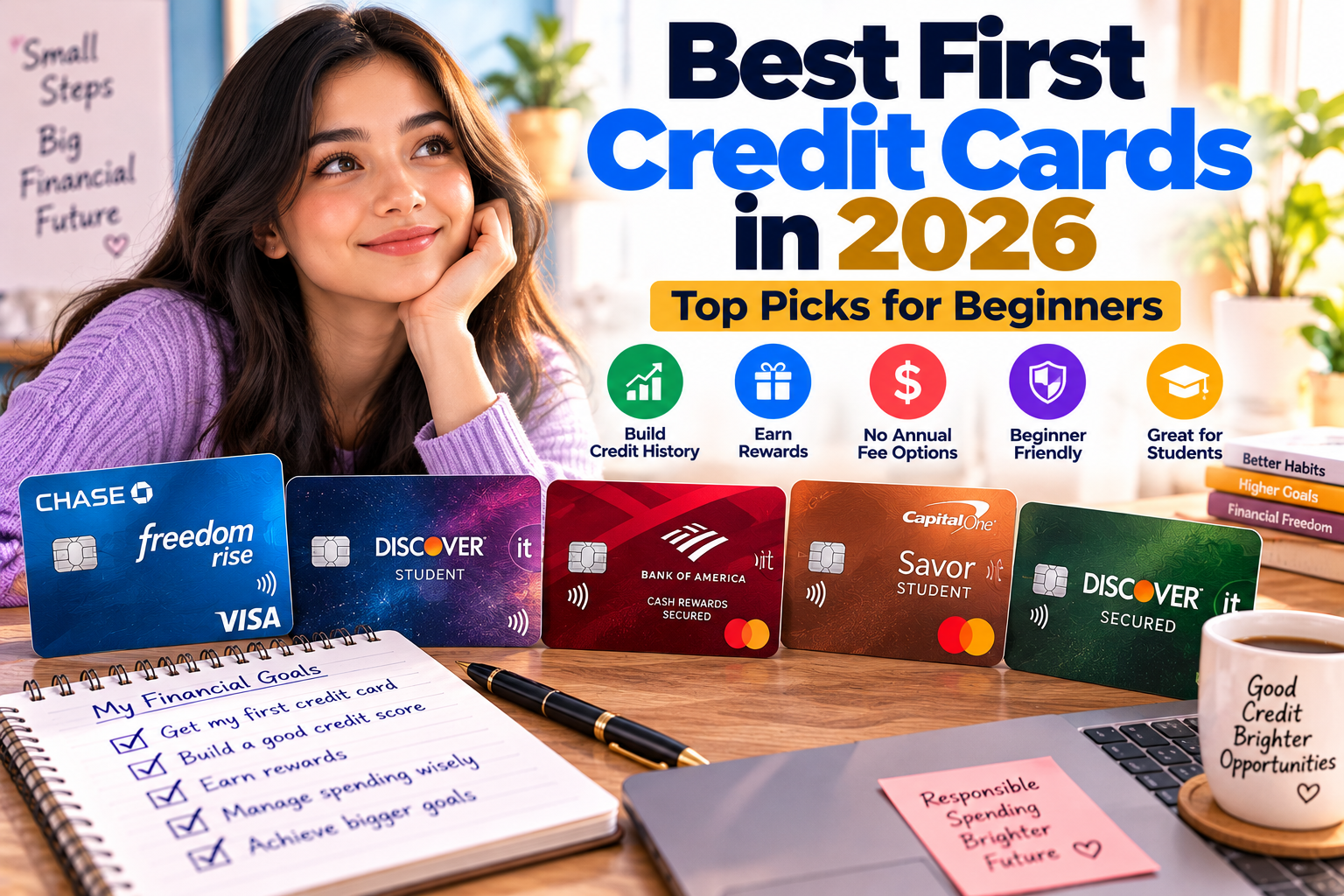
Getting your first credit card is an important step toward building a strong financial future. The right card can help you establish a credit history, manage everyday purchases, earn rewards, and prepare for future financial goals. However, choosing your first card can be challenging, especially if you have never borrowed money or do not have a credit score.
The best first credit cards in 2026 are generally those with no annual fee, manageable eligibility requirements, transparent terms, and a clear path toward building credit responsibly. Some cards are designed for students, while others are suitable for beginners with limited credit history or applicants who need a secured card.
Before applying, it is important to compare fees, interest rates, credit requirements, and payment reporting policies. A card with attractive rewards is not necessarily the best option if it charges expensive fees or encourages spending beyond your budget.
What Is a First Credit Card?
A first credit card is a payment card designed for someone who is beginning to establish a credit history. Unlike premium credit cards, which may require an established credit profile, beginner cards may be available to applicants with limited or no previous borrowing experience.
When you use a credit card, the issuer provides a credit limit that you can borrow against. You then repay the amount you spend according to your monthly statement. Your payment history and other credit-related information may be reported to credit bureaus, helping establish your credit profile.
In the United States, beginners commonly consider three types of cards:
Starter credit cards: Designed for applicants who are new to credit and may not require a security deposit.
Student credit cards: Intended for eligible college students who want to begin building credit.
Secured credit cards: Require a refundable security deposit that generally determines the initial credit limit.
The best option depends on your eligibility, income, financial habits, and whether you can provide a security deposit.
Best First Credit Cards in 2026
Several cards stand out for different beginner needs. The following options are worth comparing, but approval is never guaranteed, and terms can change. Confirm current details directly with each issuer before applying.
1. Chase Freedom Rise: Best for First-Time Cardholders
The Chase Freedom Rise credit card is designed for people who are new to credit. It can be an option for eligible applicants who want to begin building a credit history without putting down a secured-card deposit.
The card offers cash-back rewards, and its lack of an annual fee can make it attractive to beginners who want to avoid paying simply to keep an account open. Applicants who are new to credit should still review eligibility requirements and their ability to manage monthly payments.
Chase indicates that having or opening a Chase checking account and maintaining at least $250 in it shortly before applying may improve an applicant's chances of approval. This does not guarantee acceptance.
Best for: Beginners who want an unsecured credit card and cash-back rewards.
2. Discover it Student Cash Back: Best for Eligible College Students
The Discover it Student Cash Back card is designed for eligible students who want to establish credit while attending college. Discover states that students can apply without an existing credit score, although other eligibility requirements still apply.
The card offers rotating cash-back categories, which may provide higher rewards on eligible purchases when the categories are activated and applicable limits are respected. It also offers a first-year Cashback Match promotion under its published terms.
Students should understand the spending limits, activation requirements, and redemption conditions before relying on projected rewards.
Best for: Eligible college students who want to build credit and earn rewards on everyday spending.
3. Bank of America Unlimited Cash Rewards Secured Credit Card: Best for Building Credit With a Deposit
A secured credit card may be a practical starting point if you have limited credit history or are not eligible for an unsecured card.
The Bank of America Unlimited Cash Rewards Secured Credit Card combines the credit-building structure of a secured account with cash-back rewards. Applicants generally provide a refundable security deposit, subject to the issuer's requirements and account terms.
A secured card can help you develop a positive payment record when the issuer reports account activity to the major credit bureaus. However, providing a deposit does not guarantee approval, and the deposit is not a substitute for making payments.
Best for: Beginners who are comfortable providing a deposit to establish credit.
4. Capital One Savor Student Cash Rewards Credit Card: Best for Student Spending
The Capital One Savor Student Cash Rewards Credit Card is another option for eligible students who want rewards on common spending categories.
Depending on the card's current terms, rewards may include elevated cash back on eligible dining, entertainment, grocery, and streaming purchases. Students should check the issuer's current rewards schedule and exclusions to determine whether the card matches their spending habits.
A rewards card is most useful when you buy things you already need rather than spending extra to earn points or cash back.
Best for: Eligible students whose normal spending matches the card's rewards categories.
5. Discover it Secured Credit Card: Best for Credit-Building Flexibility
The Discover it Secured Credit Card is worth considering if you are starting from scratch or rebuilding a limited credit profile.
A security deposit is generally required, and the amount you provide helps determine your available credit line. The card may offer cash-back rewards and, subject to the issuer's policies, a possible path to an unsecured account.
Before applying, check the minimum deposit, current interest rate, payment requirements, and the conditions for any account review or upgrade. An upgrade is not guaranteed.
Best for: Applicants who prefer a secured card from an established issuer and want the possibility of earning rewards.
Comparison of First Credit Cards
Credit card | Best for | Deposit | Main consideration |
|---|---|---|---|
Chase Freedom Rise | First-time cardholders | Generally no | Approval depends on eligibility |
Discover it Student Cash Back | Eligible students | Generally no | Student eligibility and rotating categories |
Bank of America Unlimited Cash Rewards Secured | Credit building | Yes | Deposit and account terms |
Capital One Savor Student Cash Rewards | Eligible students | Generally no | Rewards depend on eligible spending |
Discover it Secured | Credit building | Yes | Deposit and potential account upgrade |
Card features, approval criteria, rewards, and fees may change. This comparison is intended as a starting point rather than a guarantee that a particular card will be available or suitable for every applicant.
How to Choose Your First Credit Card
The best first credit card is not necessarily the one with the biggest welcome offer. Instead, choose a card that supports your financial goals without creating unnecessary costs.
1. Look for No Annual Fee
An annual fee is a charge for keeping a credit card account open. Beginners often benefit from a card with no annual fee because it reduces the cost of maintaining the account.
If a card charges an annual fee, compare its benefits against the cost. Do not assume that a card is better simply because it offers more rewards.
2. Understand the Credit Requirements
Some cards are designed for people with no credit history, while others require an established credit profile. Student cards may require proof of enrollment, and secured cards usually require a deposit.
Review eligibility requirements before applying. Prequalification or preapproval tools, when available, may help you assess your options, but they do not guarantee final approval.
3. Compare Interest Rates
A first credit card's annual percentage rate, or APR, determines how interest is calculated on eligible balances. If you carry a balance, interest can make purchases considerably more expensive.
For most beginners, the safest strategy is to pay the full statement balance by the due date each month. If you expect to carry a balance, carefully compare the card's APR and other fees before applying.
4. Check Credit Bureau Reporting
Choose a card whose issuer reports account activity to the major credit bureaus relevant to your credit profile. Payment reporting can help establish a credit history over time.
Ask the issuer which bureaus receive reports and how often reporting occurs. Reporting policies can differ by product and issuer.
5. Choose Rewards That Match Your Spending
Cash-back rewards can be useful, but only if they fit your normal purchases. A flat-rate cash-back card may be easier for a beginner to manage than a card with multiple rotating categories.
Never spend more than you planned simply to earn rewards. Interest and fees can outweigh the value of cash back.
How to Apply for Your First Credit Card
Applying for a first credit card is easier when you prepare in advance.
Step 1: Review your financial situation. Consider your income, regular expenses, existing financial commitments, and ability to repay purchases.
Step 2: Compare suitable cards. Look at annual fees, deposit requirements, interest rates, rewards, and eligibility criteria.
Step 3: Gather the required information. Depending on the issuer, you may need identification, contact details, income information, and housing expense details.
Step 4: Submit an application. Apply through the issuer's official website or an authorized application channel. Provide accurate information.
Step 5: Review the decision and terms. If approved, check your credit limit, statement dates, payment due date, APR, fees, and account conditions.
Avoid applying for numerous cards at once. Multiple applications can create hard inquiries and may affect your credit profile.
How to Build Credit With Your First Card
Getting approved is only the beginning. Your financial habits determine whether the card helps you establish a positive credit history.
Pay on Time Every Month
Payment history is an important factor in many credit-scoring models. Set up reminders or automatic payments to help avoid missing a due date. Make sure sufficient funds are available when automatic payments are scheduled.
Pay the Full Statement Balance
Paying the full statement balance by the due date generally helps you avoid interest on purchases when your account has a purchase grace period and you meet its conditions.
Paying only the minimum can leave you paying interest for a long time. If you cannot pay in full, pay at least the required minimum by the due date and make a plan to reduce the remaining balance.
Keep Your Credit Utilization Manageable
Credit utilization describes how much of your available revolving credit you are using. For example, if your credit limit is $500 and your reported balance is $100, your utilization is 20%.
Lower utilization is generally preferable for credit scoring, although scoring models and individual circumstances vary. Avoid treating your entire credit limit as spending money.
Monitor Your Statements
Review every statement for unfamiliar transactions, unexpected fees, and incorrect charges. Report suspected fraud to the card issuer promptly.
Checking your account regularly also helps you understand where your money goes and avoid spending more than you can repay.
Keep Your Account in Good Standing
A long, positive credit history can be useful when you apply for future financial products. If your card has no annual fee, keeping it open may be beneficial, depending on your circumstances. Always consider account terms and your ability to manage it safely.
Common Mistakes to Avoid With a First Credit Card
New cardholders can protect their finances by avoiding a few common mistakes.
Spending beyond your budget: A credit limit is not additional income.
Missing payment deadlines: Late payments may result in fees and harm your credit history.
Paying only the minimum: This can increase interest costs and extend repayment.
Applying for too many cards: Multiple applications can create hard inquiries and complicate credit management.
Ignoring fees: Review late-payment charges, foreign transaction fees, balance-transfer fees, and other costs.
Maxing out the card: High balances relative to the credit limit can negatively affect credit scores.
Chasing rewards: Spending extra for rewards can cost more than the benefits you earn.
A simple approach is often best: choose one suitable card, use it for planned purchases, and pay the statement balance in full.
Are Secured Credit Cards Better for Beginners?
Secured credit cards can be helpful for people who have little credit history or who need to rebuild their credit. The refundable deposit reduces the issuer's risk and usually establishes the starting credit limit.
However, a secured card is not automatically the best choice for everyone. If you qualify for a suitable unsecured starter card with no annual fee, you may prefer not to tie up money in a deposit.
Compare both options based on approval criteria, fees, deposit requirements, reporting practices, and the possibility of moving to an unsecured account. Remember that neither type of card guarantees a particular credit-score increase.
Can You Get a First Credit Card With No Credit History?
Yes, some issuers offer cards specifically for applicants who are new to credit. Student cards and secured cards may also be options, depending on your circumstances.
Approval depends on more than credit history alone. Issuers may consider age, income, ability to make payments, existing obligations, identity verification, and other application details.
In the United States, applicants under 21 generally face additional requirements when applying for a credit card independently, including requirements relating to income or ability to pay. Check the applicable rules and issuer policies before applying.
If you are not approved, review the issuer's explanation and consider a more suitable product rather than immediately submitting multiple applications.
Frequently Asked Questions
What is the best first credit card in 2026?
There is no single best card for everyone. Chase Freedom Rise may suit some first-time applicants, student cards may work for eligible college students, and secured cards may be useful for people who need to establish or rebuild credit with a deposit.
Can I get a credit card with no credit score?
Yes. Some starter and student cards accept applications from people without an established credit score. Secured cards are another option, although approval is not guaranteed.
Is a secured credit card safe?
A secured credit card can be a useful credit-building tool when offered by a reputable issuer and used responsibly. Review the deposit terms, fees, interest rate, and credit reporting policies before applying.
Should I pay my credit card in full every month?
Generally, yes. Paying the full statement balance by the due date helps avoid interest on purchases when the account's grace-period conditions are met. It also helps you manage debt and keep costs under control.
How long does it take to build credit with a first credit card?
The time required varies according to the credit bureau, scoring model, account reporting, and your financial history. Consistent on-time payments and responsible balances can help establish a positive record, but no specific score increase or timeline is guaranteed.
Does applying for a first credit card affect my credit score?
A formal application may trigger a hard inquiry, which can affect your score. The effect varies, and other factors also matter. Compare cards before applying and avoid submitting unnecessary applications.
Final Thoughts
The best first credit cards in 2026 help beginners establish credit without unnecessary fees or complicated rewards structures. An unsecured starter card may be appropriate for some applicants, while students and people with limited credit history may benefit from student or secured options.
Before applying, compare current terms, check eligibility, and choose a card that fits your budget. After approval, use it for planned purchases, monitor your statements, keep balances manageable, and pay on time.
Building credit is a gradual process. Responsible habits matter more than promotional offers, high credit limits, or rewards.
Disclaimer: This article is for general educational purposes and is not personalized financial advice. Credit card offers, eligibility requirements, interest rates, and fees can change. Verify all current details with the card issuer before applying.