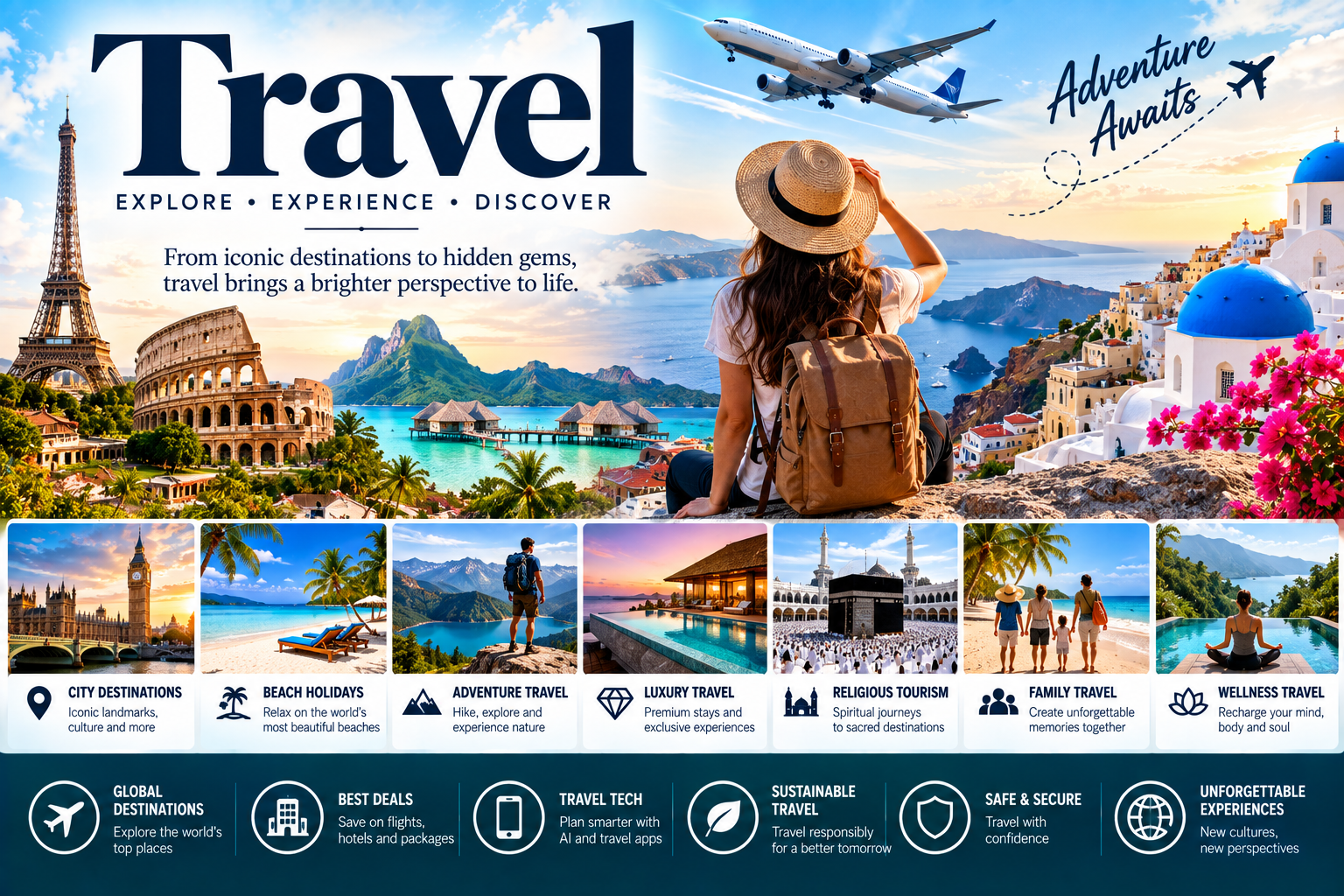
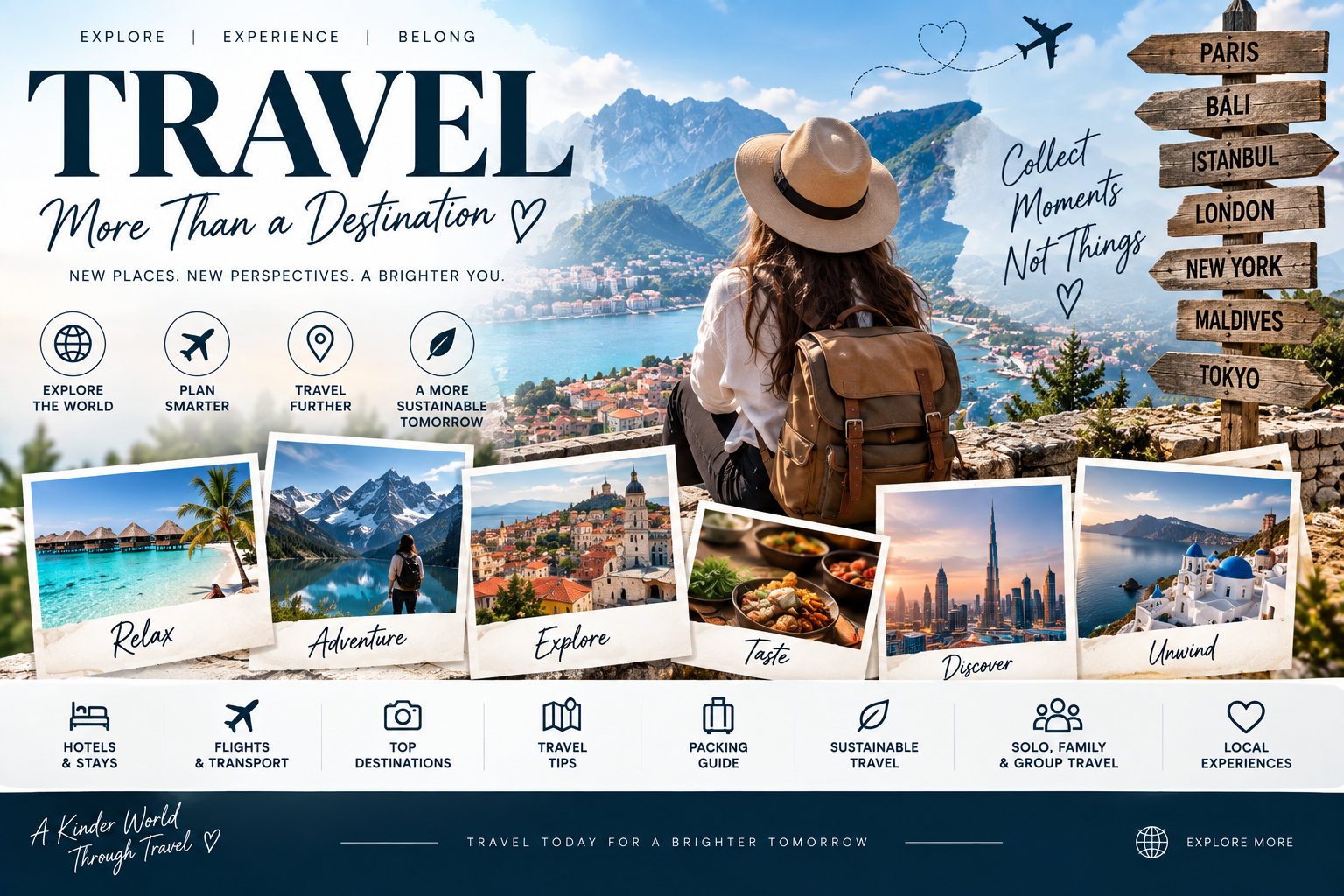
Travel is one of the most rewarding ways to discover new places, cultures, landscapes, foods, and experiences. Whether you are planning a relaxing beach vacation, an adventurous mountain trip, a family holiday, a business journey, or a cultural escape, good travel planning can make the experience smoother, safer, and more enjoyable.
Modern travel has also changed significantly. Travelers now have access to online booking platforms, digital maps, travel apps, instant translation tools, artificial intelligence, online reviews, and thousands of destination guides. At the same time, many travelers are becoming more interested in sustainable tourism, authentic local experiences, wellness, slower travel, and destinations away from traditional tourist crowds.
This guide explores everything you need to know about modern travel, from choosing a destination and creating an itinerary to finding accommodation, managing your budget, packing efficiently, and making the most of your journey.
What Is Travel?
Travel means moving from one location to another for leisure, business, education, cultural exploration, family visits, religious purposes, or other reasons.
Travel can be domestic or international. A domestic trip takes place within your own country, while international travel involves crossing national borders.
Some common types of travel include:
Leisure travel
Family vacations
Business travel
Adventure travel
Luxury travel
Budget travel
Solo travel
Group travel
Cultural travel
Religious travel
Wellness travel
Eco-friendly travel
Road trips
Beach vacations
Mountain adventures
City breaks
Each type of travel offers a different experience, and the right choice depends on your interests, budget, available time, and travel goals.
Why People Love to Travel
Travel provides much more than a change of scenery. It can introduce people to different cultures, traditions, languages, cuisines, architecture, landscapes, and ways of life.
One of the biggest benefits of travel is the opportunity to create memorable experiences. Visiting a historic city, watching a sunset from a mountain, exploring a local market, relaxing beside the sea, or trying traditional food can become memories that last for years.
Travel can also provide a break from everyday routines. A vacation gives people the opportunity to relax, explore, spend time with family and friends, or simply enjoy a different environment.
For some travelers, the purpose is personal growth. Exploring unfamiliar places can encourage independence, adaptability, curiosity, and a greater understanding of the world.
Choosing the Right Travel Destination
Choosing a destination is one of the most exciting parts of planning a trip.
Start by deciding what kind of experience you want. If you want relaxation, consider beaches, resorts, islands, or wellness destinations. If you prefer adventure, mountains, forests, deserts, and outdoor destinations may be more suitable.
For cultural experiences, look for cities and regions known for their history, museums, architecture, festivals, and local traditions.
Before choosing a destination, consider:
Your travel budget
Weather and season
Visa requirements
Flight availability
Accommodation prices
Transportation
Local safety information
Attractions and activities
Trip duration
Local customs
Food options
The best destination is not necessarily the most famous one. Sometimes a less crowded destination can provide a more relaxed and authentic experience.
Popular Types of Travel Destinations
Beach Destinations
Beach vacations remain popular among travelers who want relaxation, sunshine, swimming, water sports, and beautiful scenery.
Popular beach destinations around the world include tropical islands, Mediterranean coastal cities, Southeast Asian beaches, and Middle Eastern resorts.
Beach travel can range from affordable backpacking trips to luxury resort holidays.
Mountain Destinations
Mountain travel is ideal for travelers who enjoy hiking, photography, skiing, camping, nature, and adventure.
Mountain destinations can provide cooler weather, dramatic scenery, hiking trails, lakes, forests, and opportunities to disconnect from busy city life.
City Destinations
Major cities offer a combination of history, entertainment, shopping, restaurants, museums, nightlife, and cultural attractions.
City breaks are particularly convenient for short trips because many attractions can be visited within a few days.
Cultural Destinations
Cultural travel focuses on history, traditions, architecture, art, religion, cuisine, and local communities.
Travelers interested in culture can explore historic neighborhoods, museums, archaeological sites, religious landmarks, traditional markets, and local festivals.
How to Plan a Trip
Good planning can reduce stress and help travelers make better use of their time.
Start by deciding the destination and approximate travel dates. Then research transportation, accommodation, attractions, and estimated expenses.
A simple travel planning process includes:
Choose your destination.
Set your travel dates.
Determine your budget.
Research transportation.
Book flights or other transportation.
Select accommodation.
Research attractions.
Create a flexible itinerary.
Check required documents.
Prepare travel insurance if appropriate.
Pack according to the destination.
Save important documents digitally and offline.
Avoid creating an itinerary that is too crowded. Leaving some free time allows you to rest, explore spontaneously, or adjust your plans when weather or transportation changes.
Travel on a Budget
Travel does not always have to be expensive. Careful planning can significantly reduce costs.
One of the easiest ways to save money is to compare transportation and accommodation prices before booking.
Travelers can also consider:
Traveling during less expensive seasons
Booking flights early when appropriate
Comparing multiple accommodation options
Staying slightly outside expensive tourist centers
Using public transportation
Eating at local restaurants
Buying groceries for some meals
Taking advantage of free attractions
Traveling with friends or family to share costs
Avoiding unnecessary baggage fees
Comparing travel insurance options
Budget travel does not necessarily mean sacrificing the entire experience. It often means spending more carefully on the things that matter most.
Choosing the Right Accommodation
Accommodation can have a major effect on the overall travel experience.
Hotels remain one of the most popular options, but travelers can also choose apartments, guesthouses, hostels, resorts, villas, serviced apartments, or other lodging options.
When comparing accommodation, look beyond the room price.
Consider:
Location
Guest reviews
Cancellation policy
Wi-Fi
Breakfast
Transportation access
Check-in and check-out times
Safety
Taxes and additional fees
Distance from major attractions
A cheaper hotel located far from everything may ultimately cost more once transportation expenses are considered.
Flights and Transportation
Transportation is another important part of travel planning.
For international trips, flights are usually one of the largest expenses. Comparing different airlines, departure dates, baggage policies, and airports can help travelers identify suitable options.
For shorter journeys, trains, buses, rental cars, and other forms of transportation may be practical.
Once you arrive at your destination, research local transportation before traveling. Depending on the city, options may include:
Metro systems
Buses
Trains
Taxis
Ride-hailing services
Rental cars
Walking
Bicycles
Using public transportation can be particularly useful in large cities where parking is expensive or traffic is heavy.
Packing for Travel
Smart packing can make traveling much easier.
Start with the weather and activities you expect during the trip. A beach vacation requires different clothing from a winter mountain trip.
Useful travel essentials may include:
Passport and travel documents
Phone and charger
Power bank
Appropriate clothing
Comfortable shoes
Toiletries
Medication or personal essentials
Travel adapters
Sunglasses
Reusable water bottle
Small first-aid supplies
Copies of important documents
Avoid packing items you are unlikely to use. A lighter suitcase is usually easier to carry through airports, hotels, trains, and city streets.
Travel Technology
Technology has transformed the way people travel.
Travelers can now use smartphones for navigation, translation, boarding passes, hotel reservations, digital payments, weather updates, and communication.
Useful categories of travel technology include:
Navigation apps
Translation tools
Airline apps
Hotel apps
Digital boarding passes
Currency converters
Travel planning platforms
Offline maps
AI travel assistants
Digital wallets
AI is also becoming increasingly useful for trip planning. Travelers can use AI tools to organize itineraries, compare ideas, generate packing lists, discover activities, and customize trips around specific interests.
However, important information such as visa requirements, entry rules, health requirements, transportation schedules, and official travel restrictions should always be verified through authoritative sources.
Sustainable Travel
Sustainable travel is becoming increasingly important as travelers and tourism organizations consider the environmental and social effects of tourism.
Responsible travel can include choosing public transportation, reducing unnecessary waste, respecting local communities, avoiding damage to natural environments, and supporting local businesses.
Travelers can also consider visiting destinations outside peak periods when practical. This can help distribute tourism demand and sometimes provide a quieter experience.
Other responsible travel habits include:
Carrying reusable items
Avoiding unnecessary plastic
Respecting wildlife
Following local environmental rules
Supporting independent businesses
Respecting local traditions
Avoiding overcrowded attractions when possible
Choosing responsible tour operators
Sustainable travel is not about making every trip perfect. Small decisions can contribute to better outcomes for destinations and communities.
Food and Local Experiences
Food is one of the best ways to experience a destination.
Instead of only visiting international restaurant chains, travelers can explore local restaurants, markets, bakeries, cafés, and traditional food stalls.
Local experiences can also include:
Cooking classes
Cultural tours
Local markets
Art workshops
Walking tours
Traditional performances
Historical tours
Nature excursions
Local festivals
These experiences can make a trip more memorable while supporting businesses and communities in the destination.
Solo Travel
Solo travel has become increasingly popular among people who want independence and flexibility.
Traveling alone allows you to create your own schedule and choose activities according to your interests.
However, solo travelers should pay particular attention to practical planning. Share your itinerary with someone you trust, keep important documents secure, research transportation, and understand local safety conditions before arriving.
Solo travel can be especially rewarding when combined with organized tours or group activities that provide opportunities to meet other travelers.
Family Travel
Family vacations require additional planning because different travelers may have different needs.
When traveling with children, consider accommodation location, meal options, transportation, activity duration, and access to basic facilities.
Avoid planning too many activities in a single day. Children may need additional rest time, and flexible schedules can make family trips more enjoyable.
Family-friendly destinations often offer a mixture of entertainment, educational attractions, outdoor activities, and comfortable accommodation.
Adventure Travel
Adventure travel is designed for people who enjoy excitement and outdoor activities.
Examples include:
Hiking
Trekking
Camping
Scuba diving
Snorkeling
Rafting
Skiing
Zip-lining
Mountain biking
Desert excursions
Adventure activities should always be selected according to experience level and local safety guidance.
Using qualified guides and appropriate equipment can be especially important for activities involving mountains, water, wildlife, or extreme environments.
Luxury Travel
Luxury travel focuses on comfort, personalized service, premium accommodation, fine dining, private transportation, and exclusive experiences.
Luxury does not always mean staying in the most expensive hotel. Some travelers define luxury as privacy, convenience, space, exceptional service, or having more time to enjoy a destination.
Luxury travel can include private villas, premium cruises, high-end resorts, personalized tours, wellness retreats, and culinary experiences.
Travel Insurance and Important Documents
Before international travel, check your passport validity and determine whether a visa is required.
Depending on the destination and circumstances, travelers may also want travel insurance covering areas such as medical emergencies, trip interruption, baggage issues, or transportation disruptions.
Keep digital and offline copies of important documents, including:
Passport
Visa
Travel insurance
Flight information
Hotel reservations
Emergency contacts
Important medical information
Having backup copies can be extremely useful if original documents are lost or inaccessible.
Current Travel Trends
Modern travelers are increasingly looking for personalized, meaningful experiences rather than simply visiting as many destinations as possible.
Some notable trends include AI-assisted trip planning, wellness travel, sustainable tourism, off-season travel, local experiences, slower itineraries, and less crowded destinations.
Travelers are also becoming more interested in combining multiple purposes into one trip, such as mixing business with leisure or combining cultural experiences with wellness and outdoor activities.
These trends suggest that modern travel is becoming more personal. Instead of following a standard itinerary, travelers can increasingly design trips around their individual interests, schedules, budgets, and lifestyles.
How to Make the Most of Your Trip
The best travel experiences often come from balancing preparation with flexibility.
Research enough to understand your destination, but do not schedule every minute.
Leave room for unexpected discoveries. A small local restaurant, a quiet street, a beautiful viewpoint, or an unexpected conversation can sometimes become the highlight of a trip.
Respect the destination you are visiting. Learn a few basic local phrases when possible, follow cultural expectations, and treat local communities and natural environments responsibly.
Most importantly, focus on experiencing the destination rather than simply collecting photographs.
The Future of Travel
The future of travel will likely be shaped by technology, sustainability, personalization, changing consumer preferences, and improved transportation.
Artificial intelligence can make travel planning more personalized, while digital tools can simplify booking and navigation. At the same time, environmental concerns may encourage more responsible transportation, accommodation, and destination management.
Travel businesses are also increasingly focused on creating experiences that benefit both visitors and local communities.
As technology develops, travelers may have more tools than ever to create highly personalized journeys while still seeking the human connection, cultural discovery, and sense of adventure that make travel meaningful.
Final Thoughts
Travel is about more than moving from one destination to another. It is an opportunity to explore, learn, relax, connect with people, experience different cultures, and create lasting memories.
Whether you prefer a luxury resort, an affordable city break, a family vacation, an adventurous mountain journey, a cultural exploration, or a peaceful escape, careful planning can help you make the most of your time and budget.
The best trips combine preparation with curiosity. Choose destinations thoughtfully, compare your options, respect local communities, travel responsibly, and leave enough space in your itinerary for discovery.
With the right planning, every journey can become more than a vacation—it can become an experience worth remembering.
Frequently Asked Questions About Travel
What is the best way to plan a trip?
Start by choosing your destination, dates, budget, transportation, and accommodation. Then research attractions and create a flexible itinerary.
How can I save money while traveling?
Compare flights and hotels, consider off-season travel, use public transportation, eat at local restaurants, and look for free or low-cost attractions.
What should I pack for international travel?
Essential items usually include your passport, travel documents, phone, charger, appropriate clothing, comfortable shoes, toiletries, and any personal essentials.
Is travel insurance necessary?
Travel insurance can provide financial protection against certain unexpected events. Coverage varies, so travelers should review the policy carefully before purchasing.
How can I travel more sustainably?
Support local businesses, reduce waste, respect wildlife and local communities, use public transportation where practical, and consider traveling outside peak periods.
Is solo travel safe?
Solo travel can be rewarding, but travelers should research their destination, understand local safety conditions, protect important documents, and maintain communication with someone they trust.
How can technology help with travel?
Travel technology can assist with navigation, translation, bookings, digital payments, itinerary planning, weather information, and communication.
What makes a trip memorable?
Meaningful local experiences, cultural exploration, time with loved ones, beautiful surroundings, new activities, and unexpected discoveries can all contribute to memorable travel experiences.