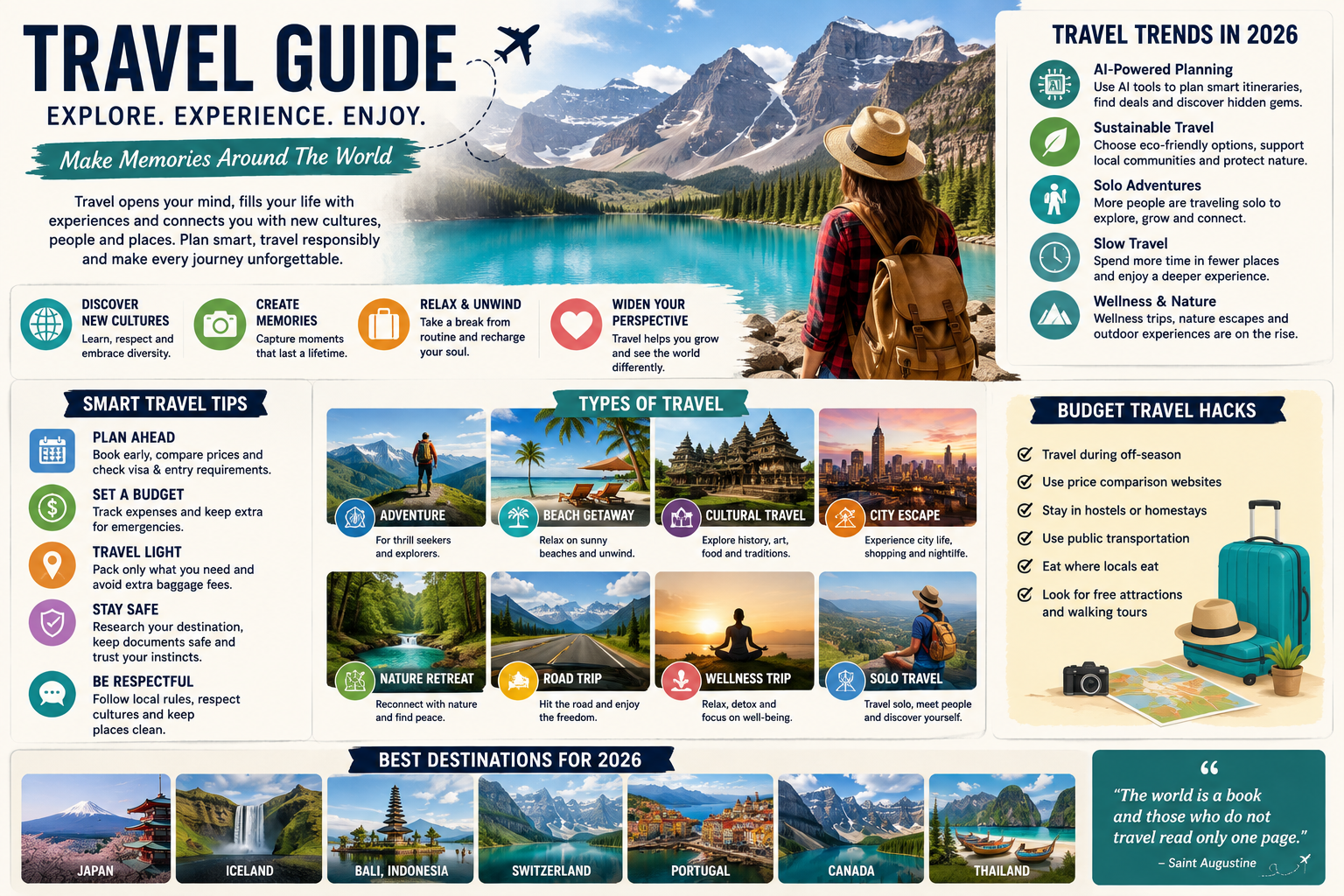
Travel has changed significantly in recent years. Today, travelers are looking beyond traditional sightseeing and searching for experiences that are more personal, flexible, affordable, and meaningful. From slow travel and off-season vacations to AI-powered trip planning and solo adventures, the modern travel experience is becoming more customized.
In 2026, travelers are increasingly interested in avoiding overcrowded destinations, supporting local businesses, spending more time in nature, and choosing experiences that connect them with local cultures. Recent travel research also shows growing interest in AI-assisted planning, solo travel, wellness trips, and destinations where travelers can get better value from their money.
Why Travel Is More Than Just Visiting a Destination
Travel allows people to experience different cultures, cuisines, landscapes, traditions, and ways of life. A successful trip doesn't necessarily mean visiting as many attractions as possible. Instead, many travelers are beginning to focus on the quality of the experience.
A slower itinerary can allow you to spend more time exploring neighborhoods, talking with local people, trying regional food, and discovering places that aren't included in every tourist guide.
This shift toward more meaningful travel is particularly visible in 2026, as travelers increasingly seek cultural experiences, nature, wellness, and less crowded destinations.
Popular Travel Trends in 2026
1. AI-Powered Travel Planning
Artificial intelligence is becoming an increasingly useful tool for travelers.
AI can help travelers organize itineraries, compare destinations, estimate budgets, discover activities, and create personalized travel plans. Mastercard's 2026 Travel Trendline found that travelers are increasingly using AI during trip planning, with saving money being a major motivation.
However, AI should be used as a planning assistant rather than the only source of information. Travelers should still verify important details such as visa requirements, cancellation policies, transportation schedules, and official travel advisories.
2. Sustainable Travel
Sustainable tourism is becoming an increasingly important part of travel planning.
A 2026 Booking.com survey cited by Euronews found that 85% of respondents considered sustainable travel important or very important. Travelers are also increasingly avoiding overcrowded destinations and considering off-season trips.
Sustainable travel can include simple choices such as:
Traveling outside peak season
Supporting local businesses
Using public transportation when practical
Staying at sustainability-certified accommodations
Reducing unnecessary waste
Respecting local communities
Avoiding damage to natural environments
Even small choices can make a trip more responsible.
Slow Travel
Slow travel focuses on spending more time in fewer destinations instead of rushing through a long list of places.
For example, instead of visiting five European cities in seven days, a traveler might spend a week exploring one region.
This approach can make travel less stressful while allowing visitors to understand a destination more deeply.
Slow travel can also benefit local communities because travelers may spend more money at independent restaurants, shops, guides, and locally owned accommodations.
Off-Season Travel
Peak-season travel can mean higher prices, larger crowds, and longer lines at popular attractions.
Traveling during shoulder or off-peak seasons can provide a different experience.
Current travel research shows that avoiding crowds and traveling outside peak periods are increasingly important to travelers.
Before booking an off-season trip, however, check weather conditions, attraction opening dates, transportation schedules, and seasonal activities.
Solo Travel
Solo travel has become increasingly popular.
According to Mastercard's 2026 Travel Trendline, 39% of international travelers surveyed had already taken a trip alone, while many others said they would consider doing so. The research also found strong interest in solo experiences that allow travelers to connect with other people.
Solo travel offers flexibility because you can decide:
Where to go
What to eat
When to wake up
Which attractions to visit
How long to stay
When to change your plans
For first-time solo travelers, starting with a shorter trip can make the experience easier.
Travel for Wellness
Travel isn't always about sightseeing.
Wellness travel has become an important part of modern tourism, with travelers looking for experiences that help them relax and recharge.
Popular wellness trips can include:
Beach vacations
Spa retreats
Yoga holidays
Mountain getaways
Nature retreats
Meditation trips
Wellness resorts
Digital detox vacations
Combining travel with wellness can be especially appealing to people who want to take a break from busy routines.
Nature and Outdoor Travel
Nature-based travel continues to attract people who want to disconnect from everyday life.
National parks, mountains, forests, beaches, lakes, and rural destinations can provide opportunities for hiking, photography, camping, wildlife watching, and relaxation.
Tourism organizations are also increasingly focusing on protecting natural areas and ensuring that tourism contributes positively to local communities.
When visiting natural environments, travelers should follow local rules and avoid disturbing wildlife.
Choosing Less Crowded Destinations
One of the most noticeable travel trends is the search for alternatives to heavily visited destinations.
Instead of visiting the most famous attraction in a country, travelers can explore smaller towns, secondary cities, rural communities, and lesser-known natural areas.
This can provide a more authentic experience while helping distribute tourism spending beyond the most crowded locations.
Research published in 2026 shows that avoiding overcrowded destinations is becoming increasingly common among travelers.
Supporting Local Businesses
Where you spend your travel money matters.
Choosing locally owned restaurants, shops, guides, hotels, and tour operators can help keep more tourism revenue within the destination.
Travelers can support local communities by:
Eating at independent restaurants
Buying locally made products
Hiring local guides
Staying at locally owned accommodations
Visiting local markets
Participating in community-led tours
This can also make the trip more memorable because local businesses often provide experiences that large tourist chains cannot replicate.
How to Plan a Better Trip
Good travel planning doesn't have to be complicated.
Choose Your Purpose
Before selecting a destination, decide what you want from the trip.
Do you want relaxation, adventure, culture, food, nature, shopping, nightlife, or wellness?
Once you know your goal, choosing a destination becomes easier.
Set a Realistic Budget
Your travel budget should include more than flights and hotels.
Remember to account for:
Transportation
Food
Attractions
Travel insurance
Visas
Shopping
Emergency expenses
Local transportation
Leaving some money aside for unexpected costs can prevent financial stress.
Research the Destination
Learn about the local climate, transportation system, currency, customs, language, and major attractions.
Also check official government information for entry requirements and travel advisories.
Don't Overplan
A common mistake is creating an itinerary that is too busy.
Leave some free time for unexpected discoveries.
You might find a local restaurant, market, viewpoint, beach, or neighborhood that wasn't part of your original plan.
How to Save Money While Traveling
Travel doesn't always have to be expensive.
Travel During Shoulder Season
Flights and hotels may be less expensive outside the busiest periods.
Compare Accommodation
Don't automatically choose the cheapest hotel. Compare location, reviews, cancellation policies, transportation access, and included amenities.
Use Public Transportation
Where safe and practical, buses, trains, and metro systems can significantly reduce transportation costs.
Eat Locally
Restaurants in major tourist areas can be expensive. Local neighborhoods and markets may offer better value.
Book Attractions Carefully
Some attractions offer discounts for advance bookings, combination tickets, students, seniors, or specific visiting times.
Stay Longer
Interestingly, staying longer in one destination can sometimes reduce the cost per day because you avoid repeatedly paying for transportation between destinations.
Travel and Technology
Technology has transformed the way people travel.
Smartphones can now handle many tasks that previously required printed maps and guidebooks.
Travelers can use apps to:
Navigate cities
Translate languages
Track flights
Store reservations
Find restaurants
Compare transportation
Manage budgets
Discover attractions
AI can also help create customized itineraries and identify activities based on interests and budgets.
Still, it's wise to keep offline copies of important information in case you lose internet access.
Responsible Travel Tips
Being a responsible traveler means respecting the destination.
A few simple habits can make a difference:
Follow local laws and customs.
Don't litter.
Avoid disturbing wildlife.
Respect religious and cultural sites.
Ask before photographing people.
Support local businesses.
Avoid purchasing illegal wildlife products.
Use water and energy responsibly.
Follow hiking and conservation rules.
Responsible travel benefits both visitors and the communities they visit.
Final Thoughts
Travel in 2026 is becoming more personal, intentional, and experience-focused. Travelers are increasingly combining technology with traditional research while looking for better value, meaningful experiences, nature, wellness, and cultural connections.
Sustainable travel is also becoming more important, with many travelers actively avoiding overcrowded destinations and choosing off-season trips or locally focused experiences.
Whether you're planning a weekend getaway, an international vacation, a solo adventure, or a long-term journey, the best trips usually begin with realistic planning and an open mind.
You don't need to visit every famous attraction or spend a fortune to have an unforgettable journey. Sometimes the most memorable travel experiences come from slowing down, exploring beyond the obvious tourist spots, meeting local people, and giving yourself enough time to truly experience a destination.
Frequently Asked Questions
1. What is travel?
Travel means moving from one location to another for purposes such as vacation, business, education, adventure, culture, or relaxation.
2. What are the biggest travel trends in 2026?
Major trends include AI-assisted trip planning, sustainable travel, solo travel, slow travel, wellness trips, nature tourism, and avoiding overcrowded destinations.
3. What is sustainable travel?
Sustainable travel focuses on reducing negative environmental and social impacts while supporting local communities and protecting destinations.
4. Is solo travel becoming more popular?
Yes. Current 2026 travel research shows substantial interest in solo travel and solo experiences that help travelers meet other people.
5. How can I save money while traveling?
Travel during less busy periods, compare accommodations, use public transportation where practical, eat locally, and create a realistic daily budget.
6. What is slow travel?
Slow travel means spending more time in fewer destinations instead of rushing through a large number of locations.
7. Is AI useful for travel planning?
Yes. AI can help with itinerary ideas, budgeting, destination research, and personalized recommendations, but important travel information should be verified with official sources.
8. How can travelers support local communities?
Travelers can stay at locally owned accommodations, eat at independent restaurants, hire local guides, shop at local businesses, and choose community-led experiences.
9. Why travel during the off-season?
Off-season travel can mean fewer crowds and sometimes lower prices while providing a more relaxed experience.
10. What makes a good travel experience?
A good trip usually combines thoughtful planning, realistic expectations, flexibility, cultural respect, and enough time to enjoy the destination without rushing.