CBD oil has become a widely discussed wellness product in recent years. It is made using cannabidiol (CBD), a naturally occurring compound found in cannabis plants. Unlike THC, the cannabinoid primarily responsible for the intoxicating effects of marijuana, CBD is generally not intoxicating.
CBD oil is available in different concentrations and formulations. People may use it for a variety of reasons, including general wellness, relaxation, pain-related concerns, and interest in sleep or anxiety. However, scientific evidence varies considerably depending on the condition and the specific CBD preparation being studied.
The growing popularity of CBD oil also raises important questions about product quality, dosage, side effects, drug interactions, THC content, and legal requirements.
Understanding the available evidence can help consumers make more informed decisions.
What Is CBD Oil?
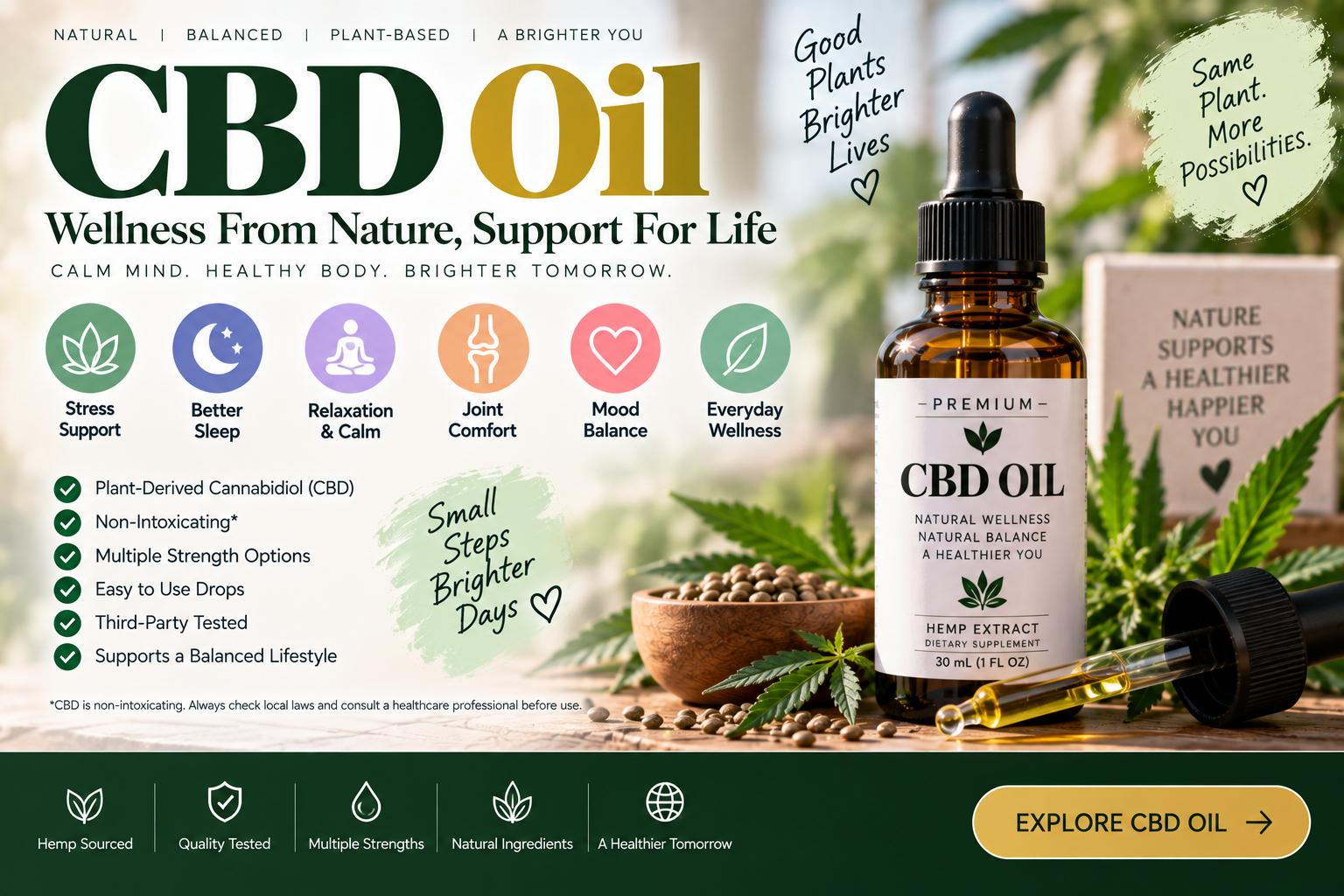
CBD oil is a product containing cannabidiol, or CBD, extracted from cannabis or hemp plants and combined with a carrier oil.
Common carrier oils include:
Coconut-derived oils
MCT oil
Hemp seed oil
Olive oil
Other plant-based oils
CBD oil may be sold in bottles with a dropper, allowing consumers to measure the product according to its label.
The amount of CBD can vary substantially between products. Some products contain relatively low concentrations, while others contain much higher amounts.
CBD oil can also contain other cannabinoids and plant compounds depending on how it is manufactured.
What Is CBD?
CBD stands for cannabidiol and is one of the major cannabinoids found in cannabis.
The two cannabinoids most commonly discussed are CBD and THC.
CBD generally does not produce the typical intoxicating high associated with THC. However, CBD products can sometimes contain THC or other cannabinoids, depending on their formulation and manufacturing quality.
The National Center for Complementary and Integrative Health explains that CBD and THC affect the body differently, although both interact with biological systems involved in cannabis effects.
CBD Oil vs. THC Oil
CBD and THC are chemically related cannabinoids but have different effects.
CBD
CBD is generally considered non-intoxicating. It does not produce the characteristic high associated with significant amounts of THC.
THC
THC is primarily responsible for the intoxicating effects associated with marijuana.
Some products contain CBD and THC together. This can be important for people who need to avoid THC because of drug testing, employment requirements, personal preference, or local laws.
Research has also found that CBD can influence the effects of orally consumed THC. In a controlled study, CBD taken with THC produced stronger and longer-lasting effects than THC alone at the doses studied.
How Does CBD Oil Work?
Researchers are still studying exactly how CBD affects the body.
CBD interacts with biological pathways that are involved in processes such as:
Pain perception
Mood
Sleep
Appetite
Stress responses
Immune activity
CBD is associated with the body's endocannabinoid system, but it does not simply activate the same receptors in the same way as THC.
The effects of CBD can vary depending on factors such as the formulation, amount consumed, individual metabolism, other medications, and whether THC or other cannabinoids are also present.
Why Do People Use CBD Oil?
CBD oil is marketed for many different purposes.
People may be interested in CBD oil for:
General wellness
Relaxation
Stress
Pain-related concerns
Sleep
Anxiety
Muscle discomfort
Other health-related concerns
However, a product being marketed for a particular purpose does not mean that it has been scientifically proven to treat that condition.
NCCIH states that research on cannabis and cannabinoids for many conditions is still in its early stages, while evidence is stronger for certain specific medical applications.
CBD Oil and Pain
Pain is one of the most frequently discussed potential uses of CBD and cannabis-derived products.
Research has examined cannabinoids for chronic pain, especially neuropathic pain.
NCCIH reports that some studies have found modest benefits from cannabis or cannabinoid preparations for chronic pain, although the difference compared with placebo may be small and side effects can occur.
This distinction is important.
Research involving a standardized cannabinoid preparation does not necessarily demonstrate that every commercially available CBD oil will provide the same results.
People with persistent or severe pain should discuss the underlying cause with a healthcare professional rather than relying on CBD oil alone.
CBD Oil and Anxiety
CBD is also frequently marketed for anxiety and relaxation.
Some early human research has investigated whether CBD may influence anxiety-related symptoms. NCCIH describes the evidence as limited, with some small studies suggesting possible effects in specific situations.
This does not establish CBD oil as a proven treatment for anxiety disorders.
People experiencing persistent anxiety, panic attacks, or symptoms that interfere with everyday life should seek appropriate professional assessment.
CBD Oil and Sleep
Sleep is another popular reason people consider CBD oil.
Some users report that CBD helps them relax, but current evidence does not establish CBD as a reliable treatment for insomnia or other sleep disorders.
NCCIH reports that a review of cannabinoid therapies, including CBD, found insufficient evidence to support their use for treating sleep disorders.
Poor sleep can have many causes, including stress, medication effects, sleep apnea, pain, depression, anxiety, and irregular sleep schedules.
Identifying the underlying cause is generally more useful than relying on an unproven supplement.
CBD Oil and Epilepsy
One of the clearest examples of an established medical application of CBD involves certain rare seizure disorders.
The U.S. Food and Drug Administration has approved Epidiolex, a purified CBD prescription medicine, for seizures associated with Lennox-Gastaut syndrome, Dravet syndrome, and tuberous sclerosis complex.
This should not be confused with ordinary CBD oils sold commercially.
Prescription CBD medicine is produced, tested, dosed, and monitored under pharmaceutical standards. Commercial CBD oils can vary substantially in their contents.
Types of CBD Oil
CBD oils are commonly described according to their cannabinoid composition.
Full-Spectrum CBD Oil
Full-spectrum CBD generally contains CBD along with other naturally occurring cannabis compounds.
Depending on the product and applicable regulations, it may contain THC.
Broad-Spectrum CBD Oil
Broad-spectrum CBD products contain multiple cannabis compounds but are generally formulated to remove or minimize THC.
Consumers should still check independent testing when avoiding THC is important.
CBD Isolate Oil
CBD isolate products are formulated around purified CBD without other cannabinoids.
The term "isolate" describes the product's cannabinoid composition but does not automatically guarantee quality or effectiveness.
CBD Oil Strength and Concentration
CBD oils come in different concentrations.
A label may state:
Total CBD in the bottle
CBD per serving
CBD per milliliter
CBD concentration as a percentage
These measurements can be confusing.
For example, the total amount of CBD in a bottle is not the same as the amount in one dropper or serving.
There is no single CBD dosage that is appropriate for everyone. The FDA states that, outside its approved prescription CBD medicine, available evidence does not establish a generally safe and effective dosage for treating specific conditions.
Consumers should therefore avoid assuming that a higher concentration is necessarily better.
CBD Oil Side Effects
CBD is not completely risk-free.
Possible side effects include:
Sleepiness
Reduced alertness
Changes in mood
Reduced appetite
Diarrhea
Other gastrointestinal symptoms
CBD has also been associated with liver injury and interactions with other medicines.
The likelihood of side effects can depend on the amount used, product formulation, other medications, and individual characteristics.
CBD Oil and Liver Health
Liver safety is an important consideration.
The FDA has identified liver injury as a potential risk associated with CBD. In clinical research involving purified CBD, liver enzyme elevations have been observed, particularly at higher doses.
A 2025 FDA randomized trial involving healthy adults found elevated liver enzymes in a portion of participants receiving relatively high daily CBD doses for four weeks. The researchers emphasized the need for additional safety information at commonly used consumer doses.
This is one reason people considering regular CBD use should discuss it with a healthcare professional, particularly if they have liver problems or take medications affecting the liver.
CBD Oil and Medication Interactions
CBD can interact with other medications.
It may change how certain medicines are processed or affect their effectiveness or side effects.
Potential interactions are particularly important for people taking multiple medications or medicines with narrow safety margins.
The FDA warns that CBD can affect other medications and that other medicines can also influence CBD exposure.
Before regularly using CBD oil, speak with a doctor or pharmacist if you take prescription or over-the-counter medicines.
CBD Oil During Pregnancy and Breastfeeding
The FDA advises against using CBD, THC, or marijuana in any form during pregnancy or breastfeeding.
The agency says there are concerns about potential effects on a developing fetus and breastfed infants, as well as concerns about contamination and other unknowns.
Because safety information is incomplete, CBD oil should not be treated as a routine pregnancy or breastfeeding supplement.
CBD Oil and Drug Testing
People who undergo drug testing should carefully consider CBD products.
Although CBD itself is not the primary compound targeted by many THC drug tests, some CBD products can contain THC.
Even products labeled as THC-free may not always contain exactly what their labels claim.
NCCIH notes that commercially available cannabinoid products can contain cannabinoid amounts that differ substantially from their labels and may contain contaminants, including THC.
If avoiding a positive THC test is important, consumers should consider this risk before using CBD products.
How to Choose CBD Oil
Product quality can vary considerably.
If you are researching CBD oil, consider the following factors.
1. Check the CBD Concentration
Look for clear information about the amount of CBD per serving and the total amount in the bottle.
2. Read the Ingredient List
Check for the carrier oil, flavorings, botanical ingredients, preservatives, and other cannabinoids.
3. Look for Independent Laboratory Testing
A certificate of analysis, or COA, can provide information about CBD and THC concentrations and certain contaminants.
Independent testing is especially useful when consumers want to verify the product's cannabinoid content.
4. Check the Manufacturer
Look for manufacturers that provide information about:
Product ingredients
Manufacturing practices
Laboratory testing
Batch information
Product specifications
5. Be Skeptical of Medical Claims
Be cautious about products claiming to cure cancer, eliminate serious diseases, replace prescription medicines, or provide guaranteed results.
The FDA has warned that some CBD products are marketed with unproven medical claims and may be of unknown quality.
CBD Oil Quality and Contamination
One major concern with commercial CBD products is consistency.
NCCIH reports that some cannabinoid products contain different amounts of cannabinoids than their labels indicate. Products may also contain contaminants such as pesticides, microorganisms, or other substances.
For this reason, consumers should not judge quality based solely on packaging, price, or marketing.
Independent testing can provide additional information, although it does not eliminate every potential risk.
CBD Oil vs. CBD Gummies
CBD oil and CBD gummies both deliver CBD, but they have different characteristics.
CBD Oil
Potential advantages include:
Flexible serving measurements
Simple ingredient formulations
Portable packaging
Different concentration options
Potential disadvantages include:
Taste
Measuring requirements
Potential variation in absorption
CBD Gummies
Potential advantages include:
Convenient
Pre-portioned
Flavored
Easy to carry
Potential considerations include:
Added sugars or sweeteners
Additional ingredients
Slower digestive absorption
Potential difficulty adjusting the amount after consuming a gummy
Neither form is automatically better for everyone.
CBD Oil and Alcohol
CBD may increase sedation or drowsiness, particularly when combined with alcohol or other substances that slow brain activity.
The FDA warns that combining CBD with alcohol or certain medications can increase the risk of sedation and drowsiness.
People should therefore avoid assuming that CBD and alcohol can be safely combined simply because CBD itself is generally non-intoxicating.
CBD Oil and Children
CBD oil should be stored securely away from children.
Children may accidentally consume CBD products, particularly when products are packaged in appealing flavors or forms.
Cannabis-derived products have been associated with accidental pediatric exposures, and some cases have required emergency medical care.
CBD products should therefore remain in their original packaging and be kept somewhere children cannot access.
Is CBD Oil Legal?
CBD laws vary considerably between countries and jurisdictions.
In the United States, the FDA states that CBD cannot legally be marketed by adding it to food or labeling it as a dietary supplement under federal law. State laws can differ.
Other countries have their own rules governing hemp, CBD concentration, THC levels, food products, medicines, and supplements.
Anyone purchasing or traveling with CBD oil should check the laws applicable to the specific location.
What Does the Research Actually Show?
CBD research is continuing, but evidence varies considerably.
There is established medical use for purified prescription CBD in certain rare seizure disorders. Research into pain, anxiety, sleep, and other conditions continues, but evidence is not strong enough to treat ordinary commercial CBD oil as a proven therapy for these conditions.
Another challenge is that studies may use standardized CBD preparations that differ significantly from commercially available oils.
A bottle purchased online may contain different CBD concentrations, additional cannabinoids, or other ingredients.
Therefore, results from one clinical study should not automatically be applied to every CBD oil product.
When Should You Talk to a Healthcare Professional?
Consider speaking with a healthcare professional before using CBD oil if you:
Take prescription medications
Take several medicines at the same time
Have liver disease
Are pregnant or breastfeeding
Have a chronic medical condition
Want to use CBD to treat a serious health problem
Need to avoid THC because of drug testing
Experience unusual symptoms after using CBD
A pharmacist can also help identify possible interactions with your medications.
Final Thoughts
CBD oil is a widely discussed cannabinoid product, but its potential benefits should be considered alongside its limitations and safety concerns.
Research supports a specific medical role for purified prescription CBD in certain rare seizure disorders. For other popular uses, such as pain, anxiety, relaxation, and sleep, evidence varies and continues to develop.
Commercial CBD oils also differ in concentration and quality. Some products may contain more or less CBD than their labels indicate and may contain THC or other contaminants.
Potential risks include drowsiness, gastrointestinal symptoms, medication interactions, and liver injury. The FDA also advises against CBD use during pregnancy and breastfeeding.
For consumers considering CBD oil, checking independent testing, reading labels carefully, understanding THC content, and discussing regular use with a healthcare professional are important steps.
CBD may be an interesting area of ongoing research, but consumers should be cautious about treating marketing claims as established medical facts.
Frequently Asked Questions About CBD Oil
1. What is CBD oil?
CBD oil is a product containing cannabidiol, a cannabinoid derived from cannabis or hemp and combined with a carrier oil.
2. Does CBD oil get you high?
CBD itself is generally not intoxicating like THC. However, some CBD products may contain THC, so product testing and labeling are important.
3. What is CBD oil used for?
People use CBD oil for various reasons, including general wellness, relaxation, pain-related concerns, anxiety, and sleep. Scientific evidence varies depending on the intended use.
4. Does CBD oil help with pain?
Some research involving cannabinoids suggests modest benefits for certain types of chronic pain, but this does not prove that every commercial CBD oil is effective for pain.
5. Does CBD oil help with anxiety?
Some early studies have investigated CBD for anxiety, but evidence remains limited for many anxiety disorders. CBD should not automatically replace established mental-health treatment.
6. Does CBD oil help with sleep?
Current evidence is insufficient to establish CBD as a treatment for sleep disorders.
7. Can CBD oil cause side effects?
Yes. Possible effects include sleepiness, reduced alertness, changes in appetite or mood, diarrhea, and other gastrointestinal symptoms. CBD has also been associated with liver injury and drug interactions.
8. Can CBD oil interact with medication?
Yes. CBD can affect how some medicines work and may increase or decrease their effects. Speak with a doctor or pharmacist before using CBD regularly if you take medication.
9. Can CBD oil damage the liver?
Liver injury is a recognized potential risk of CBD. Risk appears to depend partly on dose and other factors.
10. Can you use CBD oil during pregnancy?
The FDA advises against using CBD during pregnancy and breastfeeding because of potential risks and unanswered safety questions.
11. Does CBD oil contain THC?
Some CBD oils contain THC, depending on the formulation. Full-spectrum products may contain THC, while broad-spectrum and isolate products are generally formulated to minimize or exclude it. Independent laboratory testing can provide additional information.
12. Can CBD oil cause a positive drug test?
A CBD product containing THC may potentially result in a positive THC drug test. Even products marketed as THC-free may not always contain exactly what the label states.
13. What is full-spectrum CBD oil?
Full-spectrum CBD oil generally contains CBD along with other naturally occurring cannabis compounds and may contain THC.
14. What is CBD isolate?
CBD isolate is a purified form of CBD intended to contain CBD without other cannabinoids.
15. Is CBD oil FDA approved?
In the United States, the FDA has approved one purified CBD prescription medicine for certain rare seizure disorders. Ordinary commercial CBD oils have not been approved by the FDA as treatments for medical conditions.