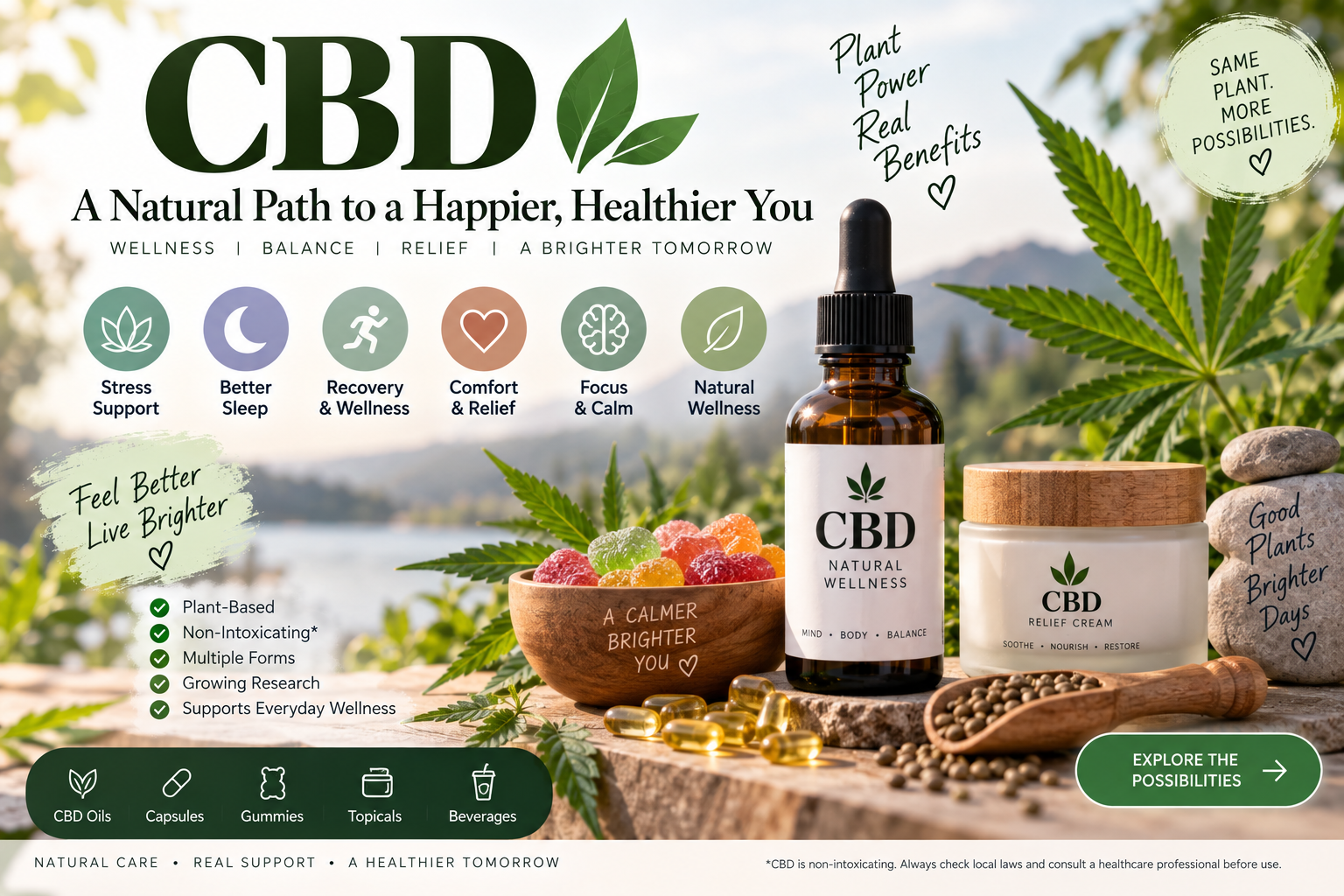
Cannabidiol, commonly known as CBD, has become one of the most widely discussed compounds derived from the cannabis plant. CBD is available in a variety of products, including oils, capsules, topical products, beverages, and other formulations.
Interest in CBD has grown because of research into its potential effects on areas such as pain, anxiety, sleep, and certain neurological conditions. However, many claims made about CBD products go beyond what current scientific evidence can establish.
Understanding what CBD is, how it differs from THC, what research has found, and what safety concerns exist can help consumers make more informed decisions.
What Is CBD?
CBD stands for cannabidiol, one of the major cannabinoids found in cannabis.
Cannabis contains many biologically active compounds, with CBD and tetrahydrocannabinol (THC) among the best known. Unlike THC, CBD does not produce the characteristic intoxicating “high” associated with THC.
CBD can be derived from either hemp or marijuana varieties of cannabis. The chemical compound itself is CBD, although the overall composition of a product can vary depending on its source and manufacturing process.
CBD is sold in numerous forms, including:
CBD oil
Capsules
Gummies
Creams and lotions
Tinctures
Topical balms
Beverages
Other cannabis-derived products
The concentration and quality of CBD can vary considerably between products.
CBD vs. THC
CBD and THC are both cannabinoids, but they have important differences.
CBD is generally not intoxicating, meaning it does not produce the typical “high” associated with THC.
THC, particularly delta-9 THC, is the cannabinoid primarily responsible for the intoxicating effects of marijuana.
Products can contain CBD alone or combinations of CBD and THC. Consumers should therefore check product labels carefully rather than assuming that a product marketed as “CBD” contains only CBD.
Research also indicates that CBD can interact with THC in the body. In one controlled study, oral CBD combined with THC resulted in stronger and longer-lasting effects than THC alone at the doses studied.
How Does CBD Work?
CBD interacts with biological systems in the body, including pathways associated with the endocannabinoid system.
The endocannabinoid system is involved in several physiological processes, including:
Mood
Pain perception
Sleep
Appetite
Immune responses
Stress responses
CBD does not simply act like THC. Researchers continue to investigate the different ways CBD affects receptors, enzymes, and other biological pathways.
Because the body's response to CBD can depend on factors such as dose, formulation, metabolism, other medications, and individual characteristics, research findings cannot automatically be applied to every CBD product available commercially.
Why Are People Interested in CBD?
CBD is often marketed for a wide range of potential uses.
Common reasons people investigate CBD include:
Pain management
Anxiety
Sleep problems
Relaxation
Muscle discomfort
Skin products
General wellness
However, marketing claims should be separated from established medical evidence.
The National Center for Complementary and Integrative Health notes that research into cannabis and cannabinoids is ongoing and that evidence varies substantially depending on the condition and cannabinoid preparation being studied.
CBD and Epilepsy
One of the strongest examples of an established medical use for CBD involves certain rare forms of epilepsy.
The U.S. Food and Drug Administration has approved a purified CBD prescription medication for seizures associated with Lennox-Gastaut syndrome, Dravet syndrome, and tuberous sclerosis complex in appropriate patients.
This is an important distinction.
An FDA-approved prescription CBD medicine is not the same as an over-the-counter CBD oil, gummy, or supplement. Prescription medicines undergo specific evaluation for safety, effectiveness, quality, manufacturing, and dosing.
CBD and Pain
Pain is one of the most common reasons consumers consider CBD.
Research into cannabis and cannabinoids has investigated chronic pain, neuropathic pain, and other conditions. NCCIH reports that some studies have found modest benefits from cannabis or cannabinoid preparations for chronic pain, but the evidence varies and adverse effects can occur.
This does not mean that every CBD product will provide pain relief.
Many studies involve specific cannabinoid formulations rather than commercially available CBD products. Therefore, consumers should be cautious about treating research on one preparation as proof that every CBD oil, cream, or edible has the same effect.
CBD and Anxiety
Anxiety is another area of significant interest.
Some early research has suggested that cannabinoids may have effects related to anxiety, but evidence remains limited for many anxiety conditions. NCCIH describes the evidence for CBD and anxiety as relatively small compared with better-established treatments.
People experiencing persistent or severe anxiety should not replace established medical care with an unproven CBD product.
A healthcare professional can help determine whether symptoms require diagnosis, counseling, medication, lifestyle changes, or another treatment approach.
CBD and Sleep
CBD is frequently marketed as a sleep or relaxation product.
However, research does not currently provide strong evidence that CBD is an established treatment for sleep disorders.
NCCIH notes that a review of cannabinoid therapies for sleep disorders found insufficient evidence to support their use as treatments for sleep disorders.
CBD may also cause sleepiness or reduced alertness in some people, which is different from demonstrating that it effectively treats insomnia or another sleep disorder.
CBD and Skin Care
CBD has also become common in cosmetic and topical products.
CBD creams, lotions, and balms may be marketed for skin wellness or localized discomfort.
However, evidence for many cosmetic and therapeutic claims remains limited. A product being labeled “CBD” does not automatically mean that its effectiveness has been clinically demonstrated.
Consumers should also consider the other ingredients in a topical product because fragrances, preservatives, botanical extracts, or other compounds can affect the skin.
Types of CBD Products
CBD products come in several forms.
CBD Oils and Tinctures
CBD oil or tinctures are commonly administered orally or held in the mouth before swallowing, depending on the product's instructions.
The concentration can vary significantly between products.
CBD Capsules
Capsules provide a measured amount of CBD per serving and can be convenient for people who prefer not to use oils.
CBD Gummies
CBD gummies are edible products designed to contain a specific amount of CBD per serving.
Because edible products must pass through the digestive system, their effects can differ from other forms.
CBD Topicals
Creams, lotions, balms, and other topical products are applied to the skin.
They are often marketed for localized use rather than whole-body effects.
CBD Beverages
CBD may also be added to beverages. Consumers should carefully examine labels and ingredient lists because the regulatory status and formulation of CBD-containing foods and drinks can vary by jurisdiction.
Are CBD Products Safe?
CBD is not risk-free.
The FDA has identified potential safety concerns associated with CBD, including liver injury, drug interactions, and extreme sleepiness.
NCCIH also reports possible CBD-related side effects such as decreased alertness, changes in mood, decreased appetite, diarrhea, and interactions with medications.
Safety can also depend on the quality and composition of the product.
Some commercially available CBD products may contain different amounts of CBD than their labels indicate. Products can also contain contaminants or THC.
CBD and Medication Interactions
CBD can interact with medications.
This is an important consideration for anyone taking prescription or over-the-counter medicine.
NCCIH specifically notes that cannabidiol can interact with many medications.
Potential interactions can be especially important for medications that have a narrow therapeutic range or are processed through pathways affected by CBD.
Before using CBD regularly, people who take medication should discuss it with a healthcare professional or pharmacist.
CBD and Pregnancy
The FDA strongly advises against using CBD, THC, or marijuana in any form during pregnancy or while breastfeeding.
The agency has identified concerns including potential liver toxicity, drug interactions, and possible risks to a developing fetus or breastfed infant.
Because research in pregnancy and breastfeeding remains limited, avoiding CBD during these periods is the safer approach recommended by the FDA.
How to Choose a CBD Product Carefully
CBD products can differ substantially in quality.
If someone is considering a commercially available CBD product, useful factors to investigate include:
Ingredient Information
Look for a complete ingredient list rather than relying only on the front of the package.
CBD Concentration
Check how much CBD is contained per serving and in the entire package.
THC Information
Determine whether the product contains THC or is intended to be THC-free.
Independent Testing
Where available, consumers can look for independent laboratory testing or certificates of analysis that provide information about cannabinoid content and contaminants.
Manufacturer Transparency
Companies should provide clear information about ingredients, manufacturing, testing, and product specifications.
A high price does not necessarily indicate higher quality.
Full-Spectrum, Broad-Spectrum, and CBD Isolate
CBD products are sometimes categorized according to the cannabinoids and other compounds they contain.
Full-Spectrum CBD
Full-spectrum products generally contain CBD along with other naturally occurring cannabis compounds and may contain THC within applicable legal limits.
Broad-Spectrum CBD
Broad-spectrum products contain multiple cannabis compounds but are generally formulated to remove or minimize THC.
CBD Isolate
CBD isolate is intended to contain purified CBD without other cannabinoids.
The terminology alone does not prove the quality or effectiveness of a product, so laboratory testing and labeling remain important.
CBD and Drug Testing
People subject to workplace or athletic drug testing should be particularly careful.
Some CBD products can contain THC even when consumers do not expect it.
If a drug test is designed to detect THC metabolites, using a product containing THC may produce a positive result.
Even products marketed as THC-free may not always contain exactly what the label claims, which is one reason product quality matters.
CBD Regulations
CBD regulations vary by country and region.
In the United States, the FDA states that CBD products other than the approved prescription CBD medicine have not been approved as treatments for diseases or conditions. The FDA also states that CBD cannot legally be marketed by adding it to food or labeling it as a dietary supplement under federal law.
Local laws can differ, and regulations can change.
Anyone purchasing or traveling with CBD should check the laws that apply to their specific location rather than relying on assumptions about hemp or cannabis laws.
Common CBD Marketing Claims
Consumers may encounter CBD products marketed with claims about:
Pain
Anxiety
Sleep
Inflammation
Stress
Skin health
Recovery
General wellness
The existence of a marketing claim does not mean that the product has been proven to provide that benefit.
The FDA has warned that some CBD products are marketed with unproven medical claims and may be of unknown quality.
Consumers should be particularly cautious when a product claims to cure serious diseases or replace established medical treatment.
CBD and Research: What We Still Don't Know
CBD research is continuing, and many questions remain unanswered.
Researchers are studying:
Long-term safety
Appropriate dosing
Drug interactions
Effects of different formulations
Effects on different populations
Potential therapeutic applications
Product quality
CBD combined with other cannabinoids
One major challenge is that commercially available CBD products can differ substantially from the purified or standardized preparations used in scientific studies.
As a result, evidence about one CBD formulation should not automatically be generalized to every product sold online or in stores.
When Should You Talk to a Doctor?
Consider speaking with a healthcare professional before using CBD if you:
Take prescription medications
Have liver problems
Are pregnant or breastfeeding
Have a chronic medical condition
Are considering CBD for a serious health problem
Experience unusual symptoms after using CBD
Need to avoid THC because of drug testing
A pharmacist can also help identify potential medication interactions.
CBD should not be used as a substitute for professional diagnosis or treatment of serious medical conditions.
Final Thoughts
CBD is a widely researched cannabinoid with potential applications in several areas, but its benefits and risks depend heavily on the specific condition, formulation, dose, and individual.
The strongest established medical use in the United States is a prescription purified CBD medicine for certain rare seizure disorders. Other potential uses, including pain, anxiety, and sleep, continue to be studied, and evidence is not strong enough to support many of the broad claims made in commercial marketing.
Consumers should also remember that CBD is not automatically harmless because it is derived from a plant. Potential problems include medication interactions, liver injury, drowsiness, product contamination, and inaccurate labeling.
Choosing products carefully, checking local regulations, avoiding unsupported medical claims, and discussing CBD with a healthcare professional can help people make more informed decisions.
Frequently Asked Questions About CBD
1. What is CBD?
CBD, or cannabidiol, is a cannabinoid found in cannabis. Unlike THC, CBD does not produce the typical intoxicating “high” associated with marijuana.
2. Does CBD get you high?
CBD itself is not considered intoxicating in the same way as THC. However, some CBD products may contain THC, so checking the product's ingredients and testing information is important.
3. What is CBD used for?
CBD is being studied for several potential applications, including certain seizure disorders, pain, anxiety, and sleep-related conditions. Evidence varies considerably depending on the condition and product.
4. Is CBD FDA approved?
In the United States, the FDA has approved one purified CBD prescription drug for specific seizure disorders. It has not approved ordinary CBD oils, gummies, or supplements as treatments for medical conditions.
5. Can CBD interact with medications?
Yes. CBD can interact with medications, which is why people taking prescription or over-the-counter medicines should consult a healthcare professional or pharmacist before using CBD.
6. Can CBD cause side effects?
Possible side effects include diarrhea, decreased alertness, changes in mood, decreased appetite, and sleepiness. CBD has also been associated with liver injury and medication interactions.
7. Is CBD safe during pregnancy?
The FDA strongly advises against CBD use during pregnancy and breastfeeding.
8. Does CBD help with sleep?
CBD is widely marketed for sleep, but current research does not provide sufficient evidence to establish CBD as a treatment for sleep disorders.
9. Does CBD help with pain?
Some research on cannabis and cannabinoids suggests modest benefits for certain types of chronic pain, but evidence varies and not every CBD product has been proven effective for pain.
10. What is full-spectrum CBD?
Full-spectrum CBD generally contains CBD along with other naturally occurring cannabis compounds and may contain THC.
11. What is CBD isolate?
CBD isolate is a purified form intended to contain CBD without other cannabinoids.
12. Can CBD make a drug test positive?
Some CBD products contain THC, which may result in a positive test for THC. People subject to drug testing should carefully consider this risk.
13. Are CBD gummies safe?
CBD gummies can carry the same potential CBD-related risks as other forms, including medication interactions and drowsiness. Product quality and labeling can also vary.
14. Is CBD legal?
CBD laws vary by country and jurisdiction. In the United States, federal rules governing CBD products are different from state-level cannabis laws. Consumers should check the laws applicable to their location.
15. Should I talk to a doctor before using CBD?
It is particularly important to consult a healthcare professional if you take medications, have a medical condition, are pregnant or breastfeeding, or plan to use CBD for a health problem.