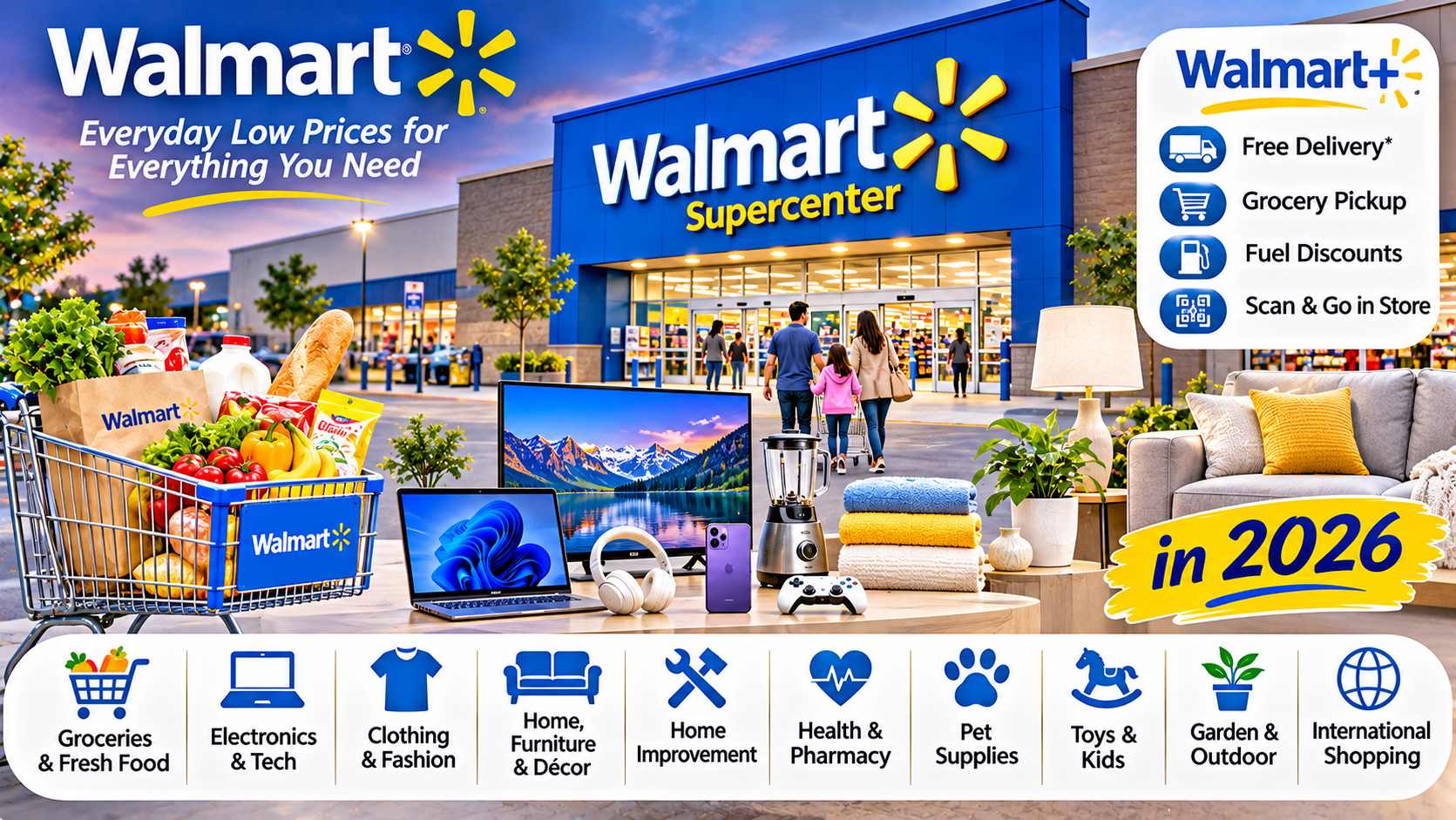
Walmart is one of the world's largest retail companies, serving millions of customers through physical stores, e-commerce platforms, mobile applications, and membership-based shopping services. Known for its everyday low-price strategy, the company has transformed the retail industry by making groceries, electronics, clothing, furniture, household essentials, and other products widely accessible.
Founded by Sam Walton in 1962, Walmart has evolved from a single discount store in Arkansas into a global retail organization. Its operations now include supermarkets, supercenters, warehouse clubs, online marketplaces, grocery delivery, pharmacy services, and international retail businesses.
In 2026, Walmart is continuing to invest in artificial intelligence, e-commerce, automation, supply chain technology, advertising, and faster delivery services. Its strategy combines traditional retail operations with digital innovation to create a connected shopping experience.
This guide explores Walmart's history, product categories, retail brands, online shopping services, business model, financial performance, competitors, and future opportunities.
1. What Is Walmart?
Walmart Inc. is an American multinational retail corporation headquartered in Bentonville, Arkansas.
The company operates through three major business segments:
Walmart U.S. – Retail stores and online shopping operations in the United States.
Walmart International – Retail and wholesale businesses in international markets.
Sam's Club U.S. – Membership-based warehouse clubs and related e-commerce services.
Walmart sells a wide variety of products, including:
Groceries and fresh food
Clothing and footwear
Electronics and appliances
Furniture and home décor
Beauty and personal care products
Toys and children's products
Sports and outdoor equipment
Automotive accessories
Pet supplies
Pharmacy and health products
Garden and home improvement products
Walmart's retail strategy focuses on affordability, product availability, convenience, and customer service.
According to its fiscal 2026 reporting, Walmart served approximately 280 million customers and members weekly through more than 10,900 stores in 19 countries, alongside its e-commerce websites and mobile applications. Source: Walmart 2026 Annual Report
2. Walmart Company History
Walmart's history began with the vision of entrepreneur Sam Walton, who believed customers should have access to quality merchandise at affordable prices.
Before establishing Walmart, Walton operated retail businesses and studied different approaches to discount retailing.
The Beginning in 1962
Sam Walton opened the first Walmart discount store on July 2, 1962, in Rogers, Arkansas.
The business focused on offering customers competitive prices through efficient operations and high-volume sales.
The concept helped Walmart expand into additional communities and eventually develop into a nationwide retail organization.
Important Walmart Milestones
Year | Major Development |
|---|---|
1945 | Sam Walton began his retail business journey |
1962 | First Walmart discount store opened in Rogers, Arkansas |
1970 | Walmart became a publicly traded company |
1983 | First Sam's Club warehouse opened |
1988 | First Walmart Supercenter opened |
1991 | Walmart began its international expansion |
1996 | Walmart launched its first major e-commerce initiative |
2007 | Site-to-Store pickup service introduced |
2018 | Expanded its digital presence through investments in Flipkart and PhonePe in India |
2024–2025 | Continued investments in e-commerce, automation, and digital retail |
2026 | Expanded its technology-powered omnichannel strategy |
Walmart's development demonstrates how a regional discount retailer can grow into a global business by combining low prices, operational efficiency, and large-scale distribution.
Source: Walmart 2026 Annual Report
3. Walmart Grocery and Supermarket Products
Grocery is one of Walmart's largest retail categories.
Its stores and online platforms provide food and household essentials for customers with different budgets and shopping requirements.
Fresh Food
Walmart grocery departments offer products such as:
Fresh fruits and vegetables
Meat and poultry
Seafood
Dairy products
Bakery items
Eggs
Fresh and packaged meals
Packaged Food
Customers can also shop for:
Breakfast cereals
Snacks
Canned foods
Pasta and rice
Cooking ingredients
Frozen meals
Beverages
Baking products
Organic and Health-Conscious Products
Walmart also offers selected organic, natural, and specialty food products.
Availability varies by store, supplier, and market.
Grocery Pickup and Delivery
Walmart has developed digital grocery services that allow eligible customers to order products online and arrange pickup or delivery.
These services help customers save time and manage regular household shopping.
4. Walmart Electronics and Technology Products
Electronics are another major category within Walmart's general merchandise business.
The company offers products for entertainment, communication, productivity, gaming, and everyday technology.
Computers and Laptops
Popular product categories include laptops, desktop computers, monitors, keyboards, and computer accessories.
Customers can compare products based on processors, memory, storage, screen quality, operating systems, and price.
Smartphones and Accessories
Walmart offers smartphones, prepaid mobile devices, chargers, headphones, cases, and other mobile accessories.
Televisions and Entertainment
Electronics departments include televisions, streaming devices, speakers, gaming consoles, and home entertainment accessories.
Smart Home Technology
Customers can explore connected home products such as smart lighting, security cameras, smart plugs, and voice-controlled devices.
Technology products help Walmart attract customers who want convenient access to everyday electronics at competitive prices.
5. Walmart Clothing, Fashion, and Footwear
Walmart offers clothing and footwear for adults, children, and babies.
Its fashion assortment focuses on affordability, convenience, and practical everyday styles.
Men's Clothing
Common product categories include shirts, jeans, trousers, jackets, activewear, underwear, and footwear.
Women's Clothing
Women's collections may include dresses, tops, jeans, leggings, jackets, activewear, and accessories.
Children's Clothing
Parents can explore clothing for babies, toddlers, and older children, including school outfits, seasonal apparel, pajamas, and footwear.
Shoes and Accessories
Walmart also offers sneakers, sandals, boots, handbags, backpacks, watches, and other accessories.
Its online marketplace further expands the assortment through products offered by third-party sellers.
6. Walmart Home, Furniture, and Garden Products
Walmart serves customers looking to furnish, decorate, organize, and improve their homes.
Furniture
Common furniture categories include:
Sofas and sectionals
Beds and bed frames
Dining tables
Office desks
Chairs
Dressers
Storage cabinets
Bookshelves
Home Décor
Customers can explore rugs, curtains, decorative pillows, mirrors, lighting, wall art, and seasonal decorations.
Kitchen Products
Kitchen merchandise includes cookware, utensils, appliances, storage containers, dinnerware, and food preparation tools.
Garden and Outdoor Living
Walmart offers selected outdoor products such as patio furniture, garden tools, grills, planters, outdoor lighting, and lawn care accessories.
These categories allow customers to shop for everyday home essentials and larger improvement projects in one retail environment.
7. Walmart Health, Pharmacy, and Personal Care
Walmart's health and wellness category includes pharmacy services, over-the-counter medicines, personal care products, and selected healthcare-related services.
Pharmacy
Walmart pharmacies provide prescription fulfillment and other pharmacy services at participating locations.
Customers should check individual pharmacy locations for operating hours, medication availability, and service details.
Health and Wellness Products
Products include vitamins, personal care essentials, medical supplies, first-aid products, and selected wellness merchandise.
Beauty and Personal Care
The company's assortment also includes skincare, haircare, cosmetics, fragrances, hygiene products, and grooming accessories.
Walmart's health and wellness business is an important part of its broader retail offering.
8. Walmart's Major Retail Brands and Services
Walmart operates several retail formats and digital services that serve different customer needs.
Brand or Service | Main Focus |
|---|---|
Walmart Supercenter | Grocery and general merchandise |
Walmart Discount Stores | General merchandise |
Walmart Neighborhood Market | Grocery and household essentials |
Sam's Club | Membership-based warehouse shopping |
Online shopping | |
Walmart+ | Membership and shopping benefits |
Walmart Business | Business purchasing solutions |
Walmart Connect | Retail advertising services |
Walmart Supercenter
Supercenters combine grocery departments with general merchandise under one roof.
Customers can purchase food, clothing, electronics, household products, and many other essentials during one shopping trip.
Walmart Neighborhood Market
Neighborhood Markets focus primarily on groceries, pharmacy products, and everyday household essentials.
Sam's Club
Sam's Club operates membership-based warehouse clubs.
Its product assortment includes groceries, electronics, furniture, household essentials, and products sold in bulk.
Walmart+
Walmart+ is a paid membership program offering eligible shopping benefits.
Depending on current membership terms and location, benefits can include delivery, shipping, fuel discounts, and mobile Scan & Go.
Customers should review the official membership page for current pricing, eligibility, and benefits.
9. Walmart Online Shopping and E-Commerce
Walmart has transformed its business by combining physical stores with digital shopping platforms.
Its e-commerce operations allow customers to explore products, compare prices, place orders, and access pickup or delivery services.
Walmart Website
Walmart.com provides access to groceries, electronics, home products, clothing, beauty products, toys, and many other categories.
Customers can search products, review specifications, compare prices, and read customer feedback.
Walmart Mobile App
The Walmart application supports shopping and account management through smartphones.
Depending on location and eligibility, customers can use the app to:
Search products
Place orders
Manage grocery purchases
Track deliveries
Arrange store pickup
View digital receipts
Manage Walmart+ benefits
Use Scan & Go at participating locations
Store Pickup
Customers can order selected products online and collect them from participating stores.
This approach connects Walmart's physical retail footprint with its digital shopping platform.
Same-Day Delivery
Eligible customers can order products for delivery from participating stores.
Availability depends on location, delivery capacity, product eligibility, and current service conditions.
Walmart reported that customers could access pickup or delivery services at more than 8,400 locations globally in its fiscal 2026 annual report.
10. Walmart Technology and Artificial Intelligence
Technology has become a major part of Walmart's retail strategy.
The company invests in digital platforms, artificial intelligence, automation, data analytics, and supply chain innovation.
AI-Powered Shopping
Artificial intelligence can help improve product discovery, search experiences, and personalized recommendations.
AI-powered tools may also help customers compare products and make shopping decisions more efficiently.
AI for Employees
Walmart is using technology to support employees with operational information, productivity tools, and task management.
Supply Chain Automation
Automation can improve warehouse operations, inventory movement, order fulfillment, and distribution efficiency.
Data Analytics
Retail analytics helps Walmart understand customer demand, manage inventory, evaluate sales trends, and improve product availability.
Digital Retail Innovation
Walmart's technology strategy combines online shopping, physical stores, mobile services, and logistics into a connected retail experience.
Its 2026 annual report identifies AI-powered tools and digital innovation as important elements of the company's strategy.
11. Walmart Business Model and Revenue Strategy
Walmart operates through a large-scale retail business model built around product sales, operational efficiency, supplier relationships, and customer convenience.
Its major business segments are Walmart U.S., Walmart International, and Sam's Club U.S.
Everyday Low Prices
Walmart's Everyday Low Price (EDLP) strategy focuses on maintaining competitive prices rather than relying exclusively on frequent promotional discounts.
This approach is designed to build customer trust and encourage repeat shopping.
Large-Scale Purchasing
The company's size allows it to work with a broad supplier network and purchase products at significant volumes.
E-Commerce and Marketplace
Walmart generates online sales through its digital platforms and also provides marketplace opportunities for third-party sellers.
Membership Revenue
Sam's Club and Walmart+ contribute to the company's membership-based retail ecosystem.
Advertising Services
Walmart Connect provides advertising opportunities to brands seeking to reach Walmart customers through retail media channels.
Fulfillment and Logistics
Delivery, pickup, and fulfillment services help Walmart connect its stores, distribution infrastructure, suppliers, and online customers.
12. Walmart Financial Performance in 2026
Walmart's fiscal 2026 financial results demonstrate the scale of its global retail operations.
According to its 2026 annual report:
Financial Metric | Fiscal 2026 |
|---|---|
Total revenue | $713.2 billion |
Net sales | $706.4 billion |
Walmart U.S. net sales | $483.0 billion |
Walmart International net sales | $130.4 billion |
Worldwide associates | Approximately 2.1 million |
Weekly customers and members | Approximately 280 million |
Walmart reported fiscal 2026 revenue growth of 5.1% in constant currency and global e-commerce growth of 24%, according to its April 2026 annual report announcement.
These figures highlight the importance of digital commerce alongside the company's traditional retail operations.
Financial figures should be interpreted using the company's reporting definitions and fiscal-year periods.
Official financial source: Walmart 2026 Annual Report
13. Walmart International Operations
Walmart operates in several international markets through different retail formats, subsidiaries, and business arrangements.
Its international business includes operations in markets such as Canada, Mexico, China, Chile, India, and countries in Africa and Central America.
Canada
Walmart Canada operates retail stores and e-commerce services serving Canadian customers.
Mexico and Central America
Walmart operates through regional retail businesses offering groceries, general merchandise, and digital shopping services.
India
Walmart has a significant presence in India through its investment in Flipkart and its majority-owned PhonePe business.
China
Walmart operates retail and wholesale businesses in China, including membership-oriented retail through Sam's Club.
Africa and Chile
Walmart International also operates businesses in selected African markets and Chile.
The company's international approach adapts retail formats, products, and services to local consumer needs.
14. Walmart Competitors
Walmart competes with several major retail companies across grocery, general merchandise, e-commerce, home improvement, and warehouse shopping.
Competitor | Main Market Focus |
|---|---|
Amazon | E-commerce and general merchandise |
Target | General merchandise, groceries, and home products |
Costco | Membership warehouse retail |
Kroger | Grocery and supermarket retail |
Aldi | Discount grocery retail |
Home Depot | Home improvement and building products |
Lowe's | Home improvement and garden products |
Best Buy | Electronics and technology |
Dollar General | Discount household and everyday products |
What Makes Walmart Different?
Walmart's competitive position is supported by its large store network, grocery business, everyday low-price strategy, supplier relationships, e-commerce platform, and logistics capabilities.
Unlike retailers that focus on only one product category, Walmart serves customers across many everyday shopping needs.
15. Advantages and Challenges of Shopping at Walmart
Advantages
Competitive pricing: Walmart's everyday low-price approach appeals to budget-conscious shoppers.
Wide product selection: Customers can find groceries, electronics, clothing, furniture, and household products.
Physical stores: Customers can inspect products and access in-person services.
Online convenience: The website and app offer shopping, pickup, and delivery options.
Multiple retail formats: Supercenters, Neighborhood Markets, and Sam's Club serve different shopping needs.
Membership benefits: Walmart+ and Sam's Club offer additional services for eligible members.
Challenges
Product quality differences: Products vary in materials, construction, and manufacturer quality.
Marketplace seller variations: Third-party sellers may have different fulfillment, return, and customer service policies.
Delivery limitations: Service availability depends on location and product eligibility.
Competition: Walmart faces strong competition from online retailers, supermarkets, discount chains, and specialty stores.
Operational complexity: Managing thousands of stores and a large supply chain creates ongoing operational challenges.
16. What to Consider Before Buying from Walmart
Before making a purchase, customers should evaluate more than the listed price.
Compare Product Specifications
Review materials, dimensions, features, warranties, and product compatibility.
Check Seller Information
For marketplace purchases, verify whether the item is sold and shipped by Walmart or a third-party seller.
Read Customer Reviews
Look for feedback about durability, quality, performance, packaging, and delivery.
Review Return Policies
Understand return windows, exclusions, refund conditions, and marketplace-specific policies.
Compare Total Cost
Consider delivery charges, membership benefits, taxes, warranties, and potential installation costs.
Verify Product Availability
Online availability can differ from physical store inventory and may change during checkout.
17. The Future of Walmart in 2026 and Beyond
The retail industry is undergoing significant changes driven by digital shopping, artificial intelligence, automation, and evolving customer expectations.
Walmart's future strategy is likely to focus on several important areas.
AI-Powered Retail
AI can improve product discovery, customer support, inventory management, and operational productivity.
Faster Delivery
Investment in fulfillment infrastructure and delivery technology can help customers receive products more conveniently.
Digital Advertising Growth
Retail media advertising provides opportunities for Walmart to connect brands with shoppers through its digital platforms.
Automation and Robotics
Automation can support distribution centers, inventory management, and order fulfillment.
Personalized Shopping
Customer data and recommendation technology can help create more relevant shopping experiences.
Sustainable Retail Operations
Energy efficiency, packaging improvements, waste reduction, and responsible sourcing remain important areas for large retail organizations.
Walmart's ability to combine affordability with digital innovation will be important to its long-term competitiveness.
18. Frequently Asked Questions
What is Walmart known for?
Walmart is known for affordable groceries, general merchandise, electronics, clothing, furniture, household products, and its large network of retail stores.
When was Walmart founded?
Walmart was founded in 1962 by Sam Walton. The first store opened in Rogers, Arkansas.
Who is the CEO of Walmart in 2026?
John Furner became Walmart's President and Chief Executive Officer in February 2026, succeeding Doug McMillon.
Where is Walmart headquartered?
Walmart is headquartered in Bentonville, Arkansas, United States.
Is Walmart a publicly traded company?
Yes. Walmart Inc. trades on the Nasdaq Global Select Market under the ticker symbol WMT.
What are Walmart's main business segments?
Its three main reportable segments are Walmart U.S., Walmart International, and Sam's Club U.S.
What is Walmart+?
Walmart+ is a paid membership program offering eligible shopping benefits, including delivery and shipping benefits, fuel discounts, and mobile Scan & Go.
Does Walmart sell furniture and home décor?
Yes. Walmart offers furniture, rugs, lighting, bedding, storage products, kitchen accessories, and home decorations.
Does Walmart offer online grocery delivery?
Yes. Grocery pickup and delivery are available in eligible locations, subject to product availability and service conditions.
What are Walmart's main competitors?
Major competitors include Amazon, Target, Costco, Kroger, Aldi, Home Depot, and Lowe's.
Conclusion
Walmart has developed from a regional discount retailer into one of the world's most influential retail organizations. Its success is built on affordable pricing, extensive product selection, large-scale operations, and a retail network that connects physical stores with digital commerce.
In 2026, the company is continuing to strengthen its position through artificial intelligence, e-commerce, automation, delivery services, advertising, and membership programs.
From groceries and electronics to furniture, clothing, pharmacy products, and home improvement essentials, Walmart remains a major destination for everyday shopping.
Its future growth will depend on maintaining competitive prices while improving convenience, technology, customer experience, and operational efficiency.