Digital technology has changed the way businesses operate, communicate with customers, manage employees, and compete in their industries.
From cloud computing and artificial intelligence to automation, data analytics, and digital communication platforms, technology provides organizations with new ways to improve efficiency and create value.
However, digital transformation is not simply about purchasing new software.
A successful transformation involves changing how an organization works, makes decisions, serves customers, and responds to opportunities.
Businesses that approach digital transformation strategically can improve their operations while building greater flexibility for the future.
What Is Digital Transformation?
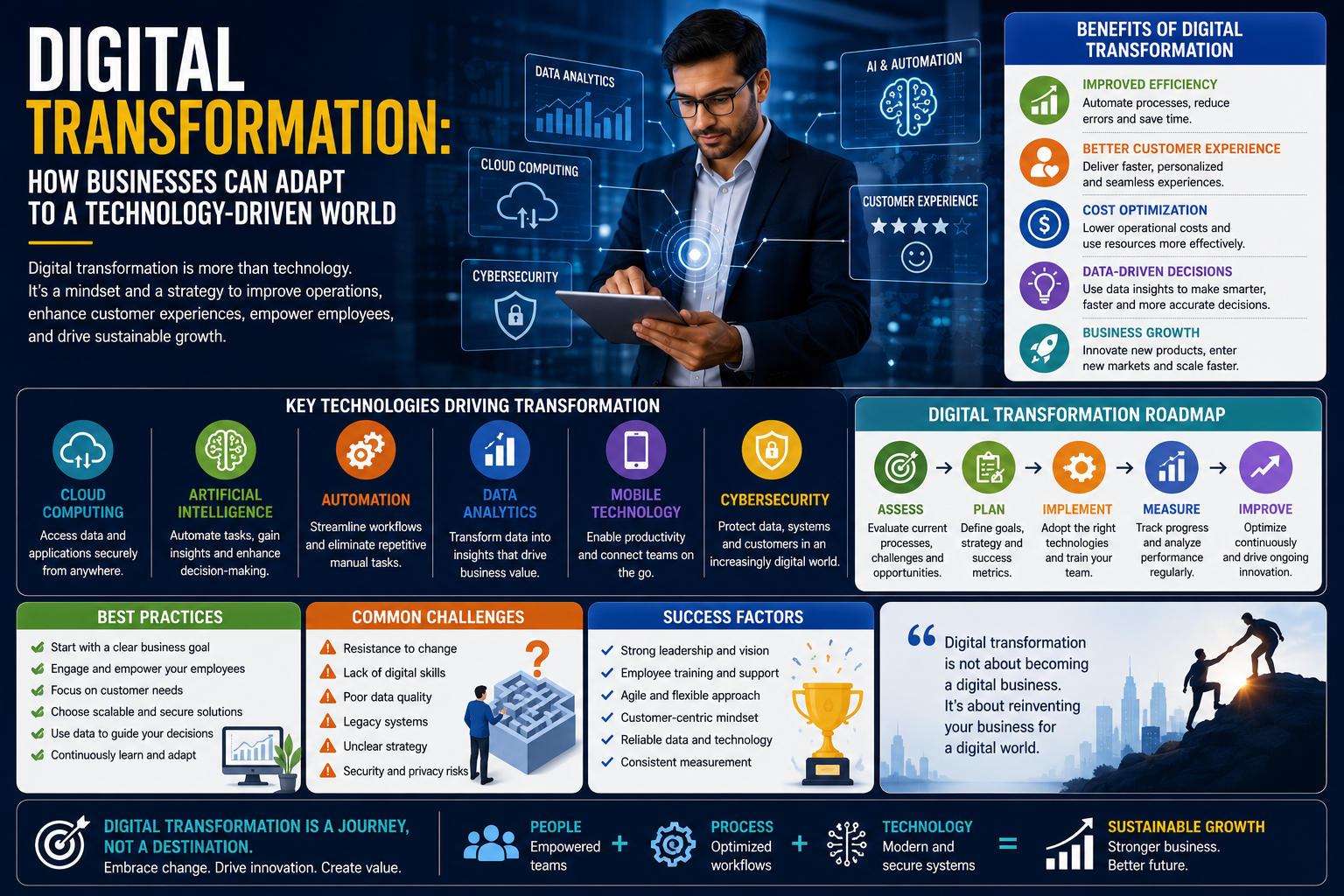
Digital transformation is the process of using digital technologies to improve business operations, customer experiences, products, services, and organizational strategies.
It can involve:
Cloud computing
Artificial intelligence
Automation
Data analytics
Digital platforms
Cybersecurity
Mobile technology
Digital customer experiences
The exact approach depends on the organization.
A small business may begin by moving from manual processes to cloud-based software, while a large enterprise may redesign entire operating models around digital systems.
Why Digital Transformation Matters
Customer expectations are changing.
People increasingly expect businesses to provide convenient digital experiences, fast communication, personalized services, and easy access to information.
Competitors are also adopting technology to improve efficiency.
Organizations that fail to adapt may find themselves relying on outdated processes that are slower, more expensive, or less convenient.
Digital transformation can help businesses remain competitive by improving how they operate and serve customers.
Transformation Starts With Business Goals
Technology should not be the starting point.
Business objectives should come first.
Leaders can ask:
What problem are we trying to solve?
What experience should we improve?
Which process is inefficient?
What information do we need to make better decisions?
How will technology create measurable value?
These questions prevent organizations from adopting technology simply because it is popular.
Improving Business Processes
Many organizations still rely on repetitive manual processes.
Employees may spend significant time:
Entering data
Sending routine emails
Preparing reports
Approving documents
Managing spreadsheets
Updating records
Digital tools and automation can reduce some of this repetitive work.
The objective isn't simply to automate everything.
Businesses should first understand the process and identify unnecessary steps.
A better approach is:
Simplify → Standardize → Digitize → Automate
Cloud Computing
Cloud technology has transformed how businesses access computing resources and software.
Instead of relying entirely on physical infrastructure, organizations can use cloud-based services for:
Data storage
Software
Collaboration
Computing
Backup
Business applications
Cloud systems can provide flexibility and make it easier for teams to access information from different locations.
However, businesses still need appropriate security, access controls, and data-management practices.
Artificial Intelligence
Artificial intelligence is becoming an important component of digital transformation.
AI can support:
Customer service
Data analysis
Research
Content creation
Forecasting
Document processing
Workflow automation
Decision support
Organizations should identify areas where AI can create meaningful value.
Human oversight remains important, particularly when AI systems influence important decisions.
Data-Driven Decision-Making
Digital transformation creates access to large amounts of information.
Businesses can use data to understand:
Customer behavior
Sales
Marketing performance
Operational efficiency
Product usage
Financial performance
Data can help leaders identify patterns and make more informed decisions.
But having more data doesn't automatically create better decisions.
Organizations need reliable data, appropriate analysis, and people who understand how to interpret results.
Customer Experience
Customer experience is one of the most visible areas of digital transformation.
Businesses can use technology to provide:
Online purchasing
Digital payments
Personalized recommendations
Self-service support
Mobile applications
Faster communication
Digital account management
The goal should be convenience.
Technology should make it easier for customers to accomplish what they want.
Personalization
Digital systems allow businesses to understand customer preferences more effectively.
Companies can use appropriate data to personalize:
Product recommendations
Marketing messages
Customer support
Offers
Content
Personalization can improve relevance, but businesses should respect privacy and provide transparency about data use.
Digital Marketing
Traditional marketing has been expanded by digital channels.
Businesses can use:
Search engines
Social media
Email
Content marketing
Online advertising
Websites
Digital communities
Digital marketing provides opportunities to reach specific audiences and measure campaign performance.
Businesses can analyze which channels generate engagement and conversions, then adjust their strategies accordingly.
Remote and Hybrid Collaboration
Digital transformation has also changed how teams communicate.
Cloud-based collaboration tools allow employees to:
Share documents
Communicate
Manage projects
Conduct meetings
Coordinate tasks
This can support remote and hybrid work.
However, technology alone does not create effective collaboration.
Organizations need clear communication practices, appropriate workflows, and strong management.
Cybersecurity
As businesses become more digital, cybersecurity becomes increasingly important.
Organizations may store customer information, financial data, employee records, intellectual property, and operational information digitally.
Protecting these resources requires:
Strong authentication
Access controls
Data protection
Employee training
Secure systems
Regular security reviews
Incident response planning
Cybersecurity should be considered part of digital transformation rather than an afterthought.
The Human Side of Digital Transformation
Technology changes how people work.
Employees may worry that automation will reduce the value of their roles.
Leaders should therefore communicate clearly about the purpose of transformation.
Employees need to understand:
What is changing?
Why is it changing?
How will their work be affected?
What training will be provided?
What new opportunities may emerge?
Transparency can help employees become participants in transformation rather than feeling that technology is being imposed on them.
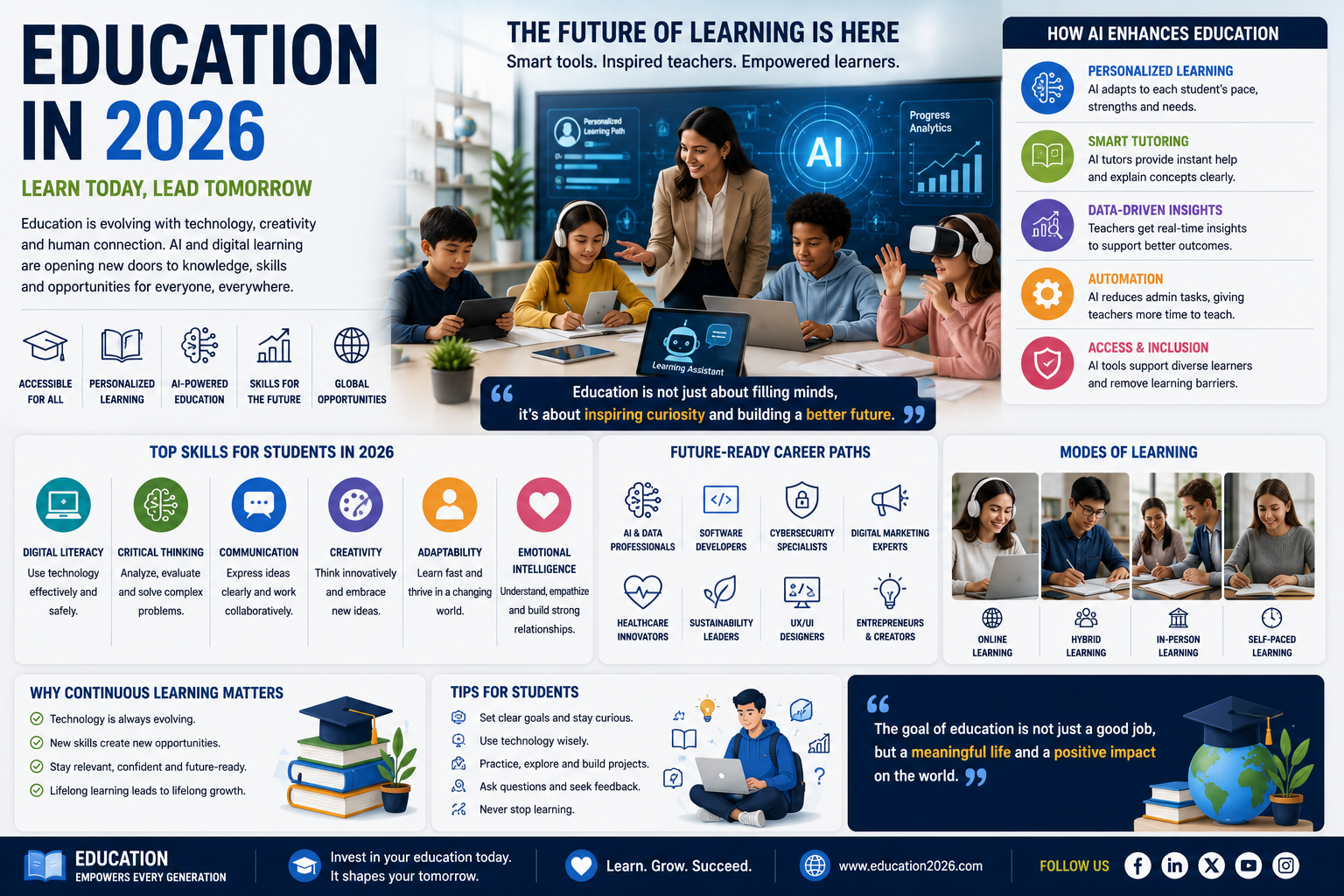
Employee Training
New technology is only useful when people know how to use it.
Organizations should provide appropriate training when introducing new systems.
Training can cover:
Technical skills
Digital workflows
AI literacy
Data awareness
Cybersecurity
Collaboration tools
Continuous training may become increasingly important as technologies evolve.
Creating a Digital Culture
Digital transformation is ultimately a cultural change.
A digitally capable organization encourages:
Learning
Experimentation
Collaboration
Data awareness
Innovation
Adaptability
Employees should feel comfortable learning new tools and suggesting improvements.
A culture that resists change can slow transformation even when the technology itself is excellent.
Leadership and Digital Transformation
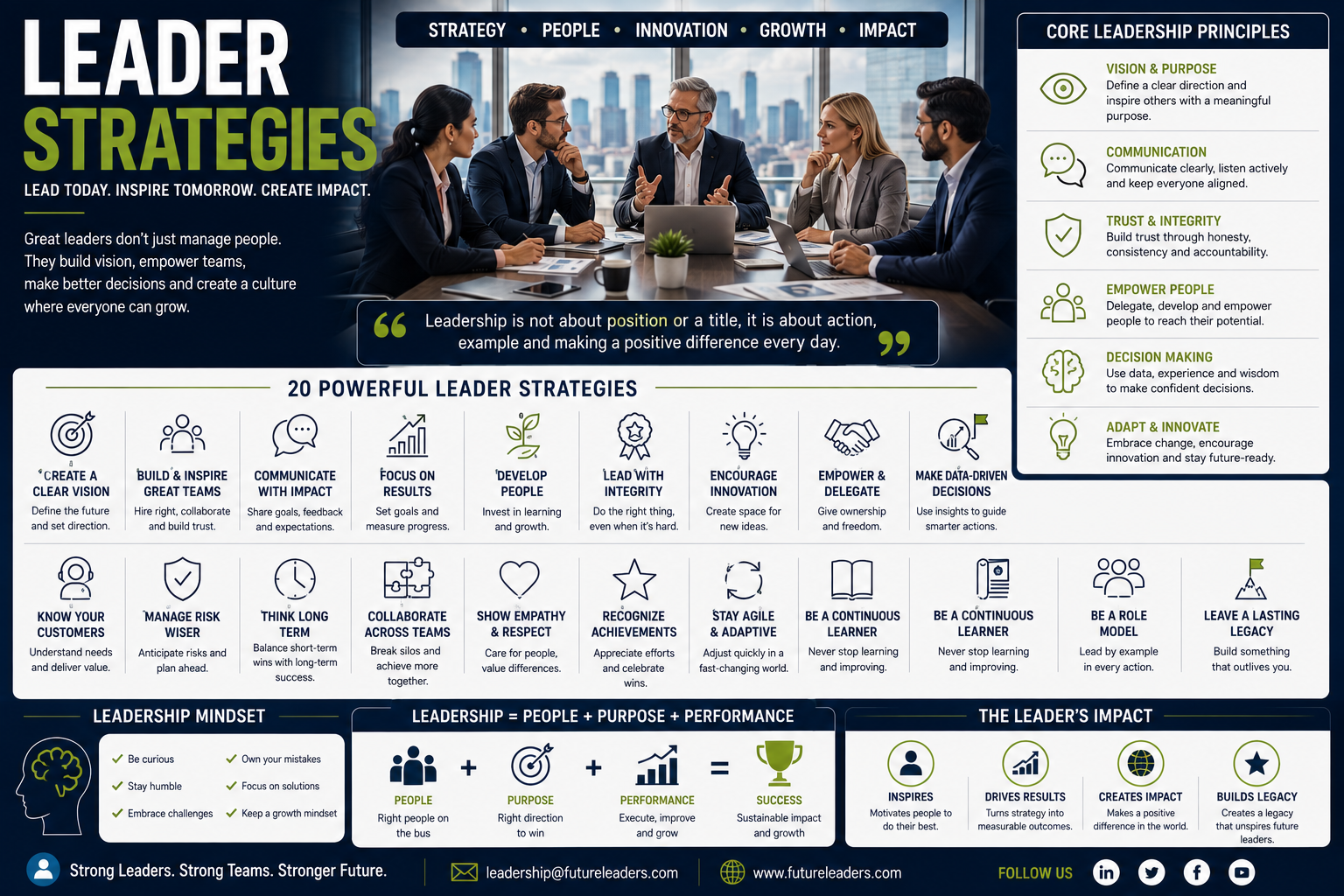
Leadership plays a critical role.
Executives need to understand both business strategy and technology.
They don't need to become technical specialists.
But they should be able to ask important questions:
What problem does this technology solve?
What will implementation cost?
What risks exist?
How will success be measured?
How will employees and customers be affected?
Strong leadership keeps transformation connected to business outcomes.
Start With Small Projects
Digital transformation doesn't always need to happen all at once.
A business can begin with a focused project.
For example:
Automating one repetitive process
Moving a department to cloud software
Improving online customer support
Creating a digital reporting system
Introducing an AI-assisted workflow
Small projects allow organizations to test technology, learn from experience, and build confidence before expanding.
Measure Results
Digital transformation should produce measurable outcomes.
Businesses can evaluate:
Cost savings
Productivity
Customer satisfaction
Revenue
Employee efficiency
Processing time
Error reduction
Digital adoption
The appropriate metric depends on the objective.
A project designed to improve customer service should not be evaluated only through cost savings.
Common Digital Transformation Challenges
Transformation can fail when organizations underestimate its complexity.
Common challenges include:
Poor Planning
Technology is introduced without a clear business objective.
Employee Resistance
Employees don't understand why the change is necessary.
Weak Data
Poor-quality information produces unreliable results.
Security Risks
New digital systems create vulnerabilities when security isn't properly managed.
Lack of Training
Employees receive new tools without sufficient support.
Too Much Technology
Organizations adopt too many systems that don't work well together.
Understanding these challenges can improve the chances of successful transformation.
Avoiding Digital Transformation Mistakes
Businesses can reduce risk by:
Defining clear objectives.
Understanding customer needs.
Improving existing processes.
Selecting appropriate technology.
Training employees.
Establishing security controls.
Measuring results.
Improving continuously.
Transformation should be treated as an ongoing process rather than a single project.
Digital Transformation for Small Businesses
Small businesses can benefit from digital technology without making massive investments.
Useful starting points can include:
Cloud accounting
Digital payments
Customer relationship tools
Online scheduling
E-commerce
Digital marketing
Automated communication
Data dashboards
The right technology depends on the business model and customer needs.
Small businesses should focus on tools that solve immediate problems and create measurable value.
Digital Transformation and Innovation
Digital transformation can create opportunities for innovation.
Businesses can use technology to develop:
New products
Digital services
Subscription models
Online marketplaces
Automated services
Personalized experiences
Technology can therefore change not only how a business operates, but also what the business can offer.
Building Digital Resilience
Digital organizations can become more adaptable.
Cloud systems, digital communication, automated workflows, and data-driven decision-making can help businesses respond to changing circumstances.
However, resilience also requires:
Backup systems
Security planning
Employee training
Flexible processes
Reliable suppliers
Contingency planning
Technology provides tools, but organizational resilience requires preparation.
Sustainability and Digital Transformation
Technology can also support more efficient resource use.
Digital systems can help businesses monitor:
Energy consumption
Supply chains
Inventory
Transportation
Waste
Improving efficiency can potentially reduce unnecessary resource use while also lowering operating costs.
The Future of Digital Business
Digital transformation will continue as new technologies develop.
Artificial intelligence, automation, cloud computing, advanced analytics, connected devices, and digital platforms are likely to become increasingly integrated into business operations.
But the fundamental goal will remain the same:
Create more value for customers while improving the organization.
Technology will change.
Business fundamentals will remain.
A Practical Digital Transformation Framework
Organizations can follow a simple cycle:
Assess → Plan → Prioritize → Implement → Measure → Improve
Assess
Understand current processes and challenges.
Plan
Define objectives and identify suitable technologies.
Prioritize
Start with initiatives that can create meaningful value.
Implement
Introduce the technology with appropriate training and support.
Measure
Evaluate results against clear objectives.
Improve
Learn from the results and continue refining the process.
This creates a continuous transformation cycle.
Final Thoughts
Digital transformation is not simply a technology upgrade.
It is a fundamental approach to improving how organizations operate, make decisions, serve customers, and adapt to change.
The most successful transformation strategies begin with business problems rather than technology trends.
Companies need to understand their customers, simplify processes, develop employees, protect data, measure results, and continuously improve.
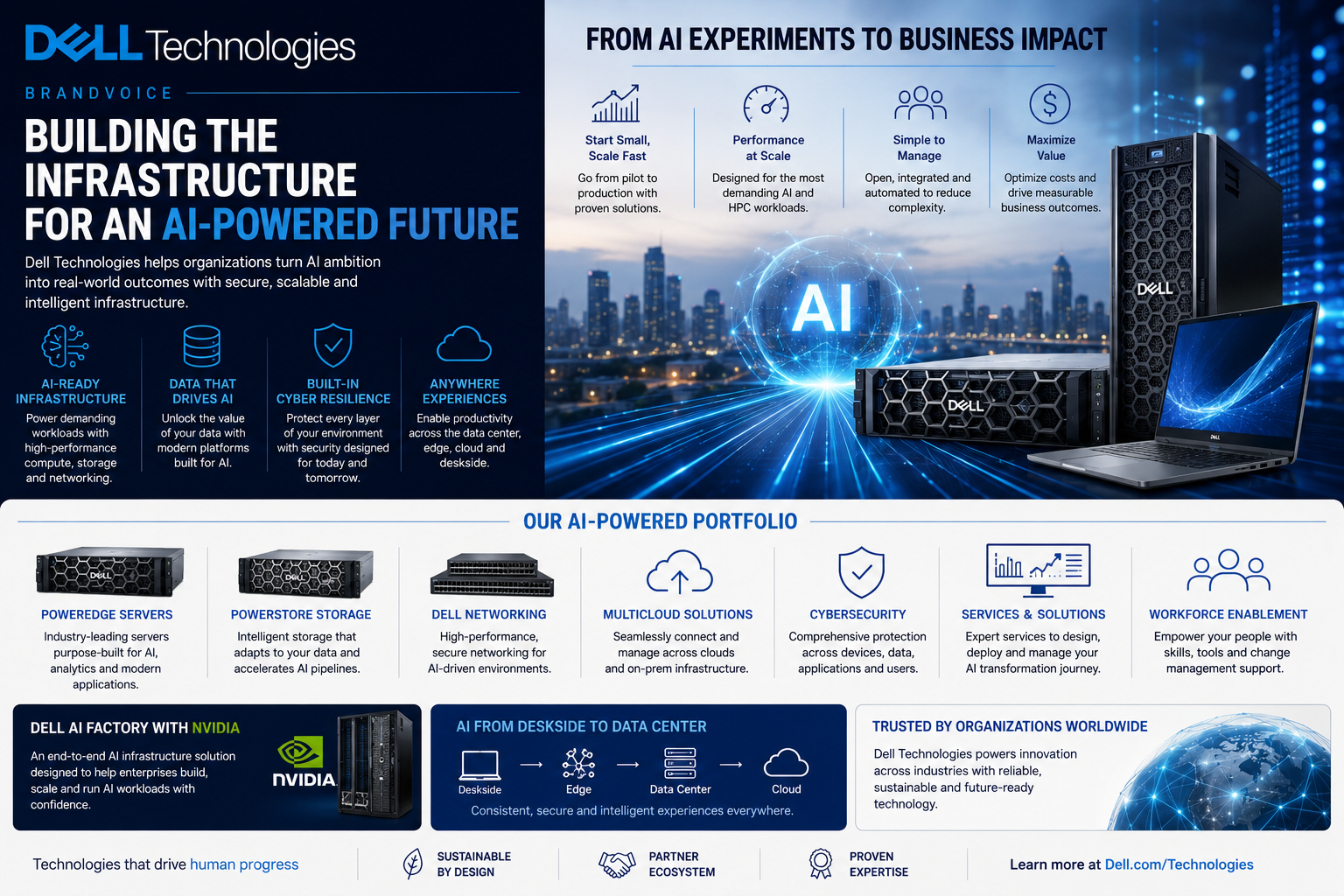
Artificial intelligence, cloud computing, automation, analytics, and digital platforms can provide powerful capabilities.
But technology only creates value when people use it effectively.
The organizations best prepared for the future will not necessarily be those with the most technology.
They will be those that know which technology to use, why it matters, and how to combine it with talented people and strong business strategy.
Digital transformation is not a destination.
It is a continuous journey of learning, adapting, and creating better ways to work.