Artificial intelligence is moving beyond screens and software. For years, businesses primarily experienced AI through chatbots, recommendation engines, analytics platforms, and automated digital workflows. Now, a new phase is emerging: AI systems are increasingly being connected to machines that can physically interact with the world.
This shift is often described as physical AI.
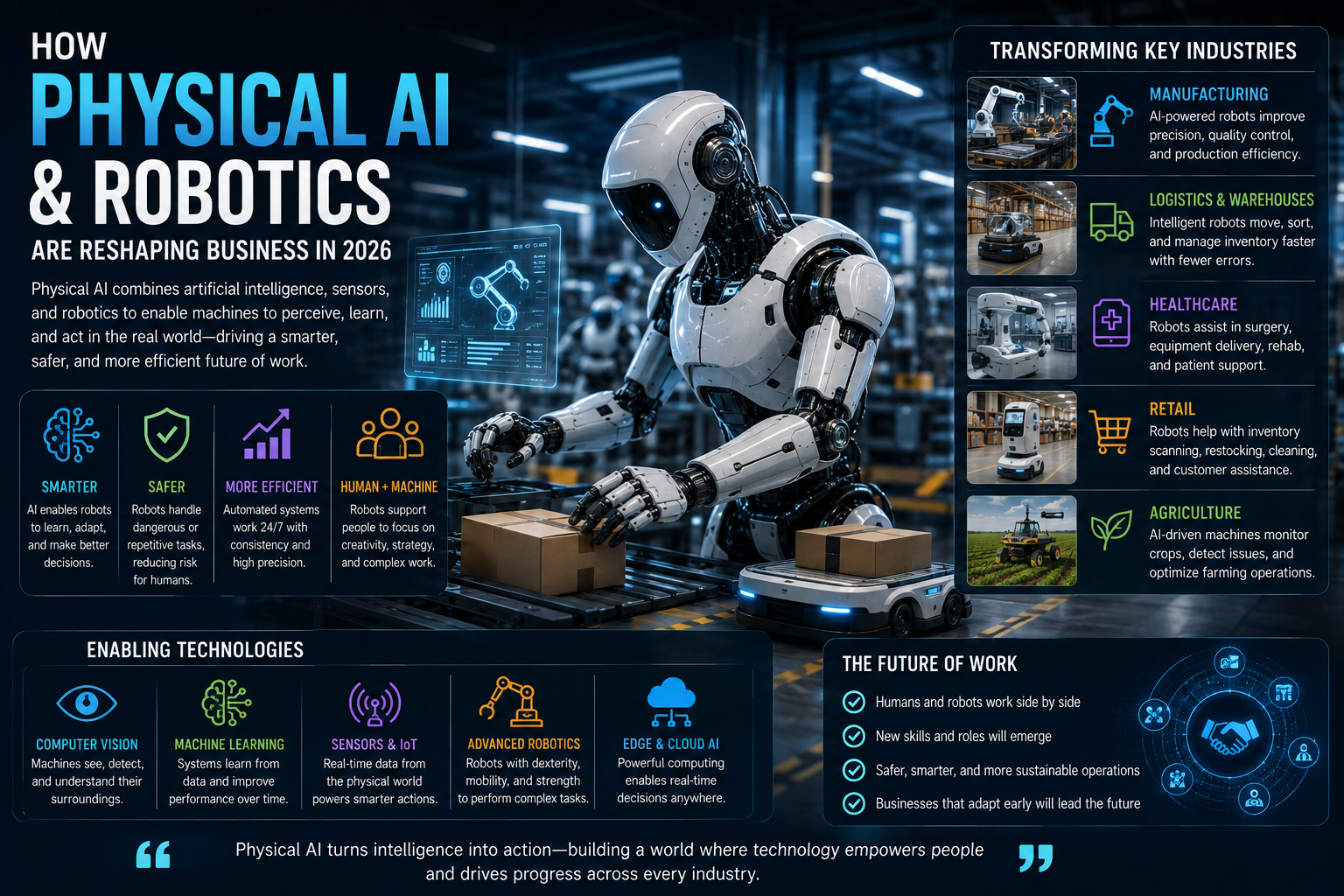
Physical AI combines artificial intelligence with robotics, sensors, computer vision, machine learning, and real-world automation. Instead of simply generating information or making digital recommendations, these systems can perceive their surroundings, make decisions, and perform physical tasks.
In 2026, businesses are increasingly exploring how intelligent robots can improve manufacturing, warehouses, logistics, healthcare, retail, agriculture, construction, and other industries.
The transformation is not simply about replacing human workers with machines. The larger opportunity is to create workplaces where people and intelligent machines work together, with robots handling repetitive, dangerous, or highly precise tasks while humans focus on judgment, creativity, communication, and complex problem-solving.
What Is Physical AI?
Physical AI refers to artificial intelligence systems that operate within the physical world.
Traditional AI can analyze information and produce a digital response. Physical AI adds the ability to perceive physical environments and interact with them.
A warehouse robot, for example, can use cameras and sensors to understand its surroundings, navigate through aisles, identify objects, and transport inventory.
A manufacturing robot can detect components, adjust its movements, and perform precise assembly tasks.
The combination of AI and robotics makes these systems more adaptable than traditional machines that simply follow a fixed sequence of instructions.
Why Businesses Are Paying Attention
Businesses are facing several challenges that make automation increasingly attractive.
Labor shortages, rising operating costs, repetitive manual processes, workplace safety concerns, and growing customer expectations are encouraging organizations to look for more efficient ways to operate.
Robotics can provide consistency and operate for extended periods without fatigue.
AI can make robots more flexible by allowing them to respond to changing environments.
Together, these technologies can create systems capable of performing tasks that previously required significant human involvement.
The economic opportunity is particularly important for industries where repetitive physical work represents a major part of operating costs.
AI-Powered Manufacturing
Manufacturing is one of the strongest use cases for physical AI.
Factories have used industrial robots for decades, but many traditional robots operate in highly controlled environments and perform predefined tasks.
AI is making robotics more adaptable.
Computer vision can help robots identify objects, detect defects, and understand their surroundings. Machine learning can help systems improve performance based on operational data.
An AI-powered production system could potentially identify a manufacturing defect, determine its location, and adjust a process to reduce future errors.
This can improve quality control while reducing waste.
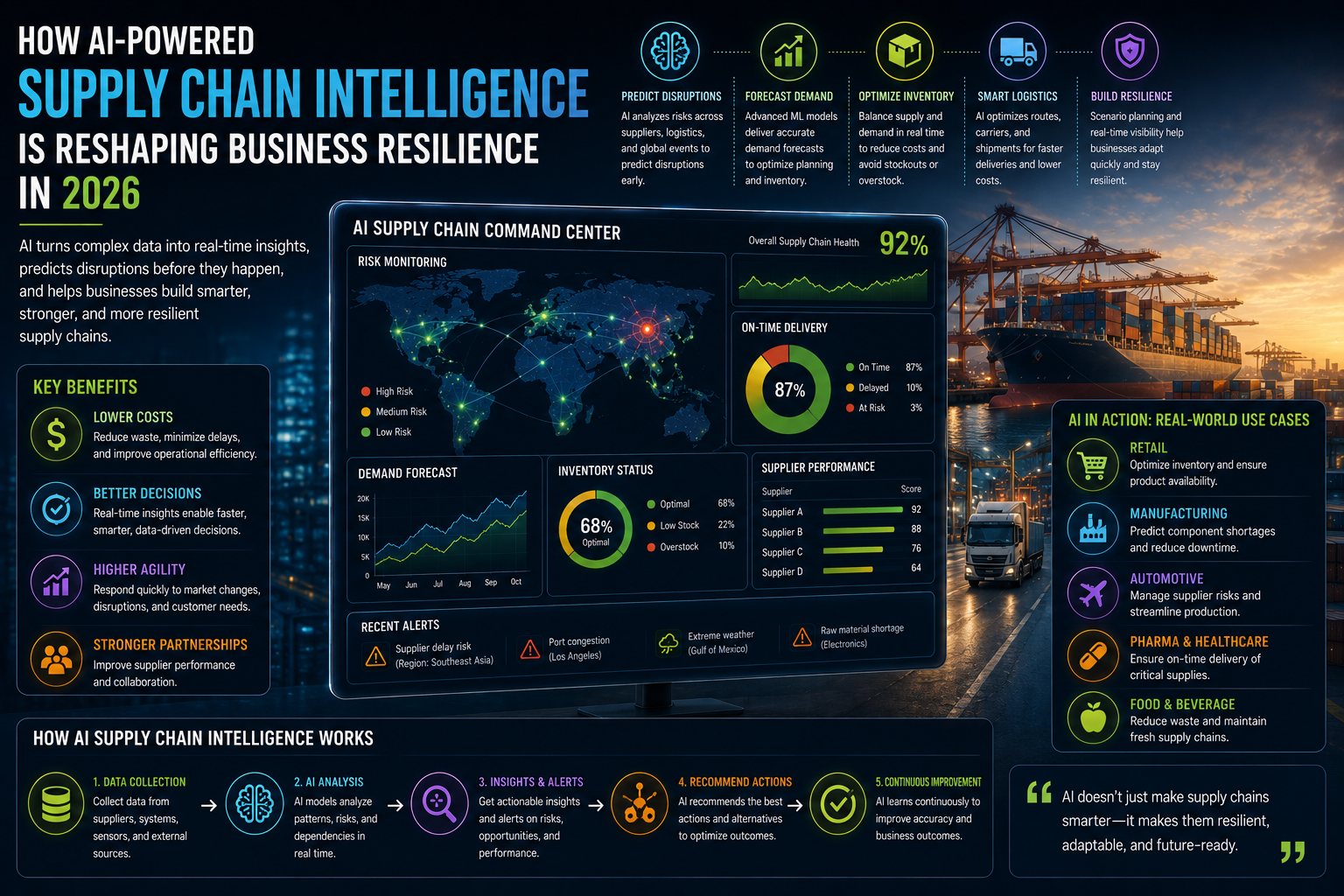
Smarter Warehouses
E-commerce has increased pressure on businesses to move products quickly and efficiently.
Modern warehouses can contain thousands of products that need to be picked, sorted, transported, and packaged.
Robotics can automate many of these physical activities.
AI allows robots to navigate warehouse environments, identify products, coordinate movements, and respond to changing conditions.
Instead of every robot following an identical path, intelligent systems can dynamically determine how resources should be allocated.
This can help warehouses process orders faster while reducing repetitive physical workloads.
The Rise of Collaborative Robots
Not all business robots need to operate independently.
Collaborative robots, often called cobots, are designed to work alongside people.
A human worker might perform tasks requiring judgment and dexterity while a robot handles repetitive lifting, positioning, or assembly.
This approach can be particularly useful for businesses that want automation without completely redesigning their operations.
Cobots can support employees rather than simply replacing them.
The future workplace may therefore contain teams where humans and robots perform complementary tasks.
Robotics and Workplace Safety
Some jobs involve dangerous environments.
Workers may need to operate around extreme temperatures, heavy machinery, hazardous materials, unstable structures, or other risks.
Robotics can help reduce human exposure to these environments.
AI-powered machines can inspect industrial equipment, enter hazardous areas, or perform repetitive tasks that could create long-term physical strain.
This creates an important benefit beyond productivity.
Automation can potentially make workplaces safer by moving people away from particularly dangerous activities.
However, automated equipment introduces its own safety requirements. Businesses must establish appropriate safeguards, training, maintenance, and emergency procedures.
AI-Powered Quality Control
Quality inspection is another area where physical AI can create significant value.
Human inspectors can perform excellent work, but repetitive inspection tasks can become tiring, especially when products need to be examined at high speed.
Computer vision systems can continuously inspect products for visual defects.
AI models can identify patterns that may indicate scratches, cracks, incorrect assembly, missing components, or other quality issues.
When connected to robotic systems, the technology can potentially go beyond identifying defects.
A robot could remove defective products from a production line or redirect them for additional inspection.
This creates a connected quality-control process.
Robotics in Logistics
Transportation and logistics companies are also exploring physical AI.
Autonomous systems can potentially support sorting centers, warehouses, delivery operations, and transportation infrastructure.
Inside logistics facilities, robots can move packages and optimize their routes.
AI can coordinate multiple machines and adjust operations when priorities change.
The technology may eventually support more autonomous delivery systems as regulatory and technical challenges develop.
However, physical environments are unpredictable.
Weather, traffic, pedestrians, infrastructure, and unexpected obstacles can create challenges that require advanced perception and decision-making.
The Role of Computer Vision
Computer vision is one of the technologies making physical AI possible.
Cameras and other sensors allow machines to collect information about their surroundings.
AI models can interpret this information to identify objects, recognize patterns, estimate distances, and detect changes.
For a robot, vision can be similar to a sensory system.
It allows the machine to understand what is around it before deciding what action to take.
Combining vision with additional sensors can create even richer environmental awareness.
AI Robots in Retail
Retail businesses are also exploring robotics.
Stores and distribution centers can use automated systems for inventory management, product movement, cleaning, and monitoring.
A robot could potentially scan shelves, identify missing products, and provide inventory information to employees.
This can reduce the amount of time workers spend performing manual checks.
Customer-facing robots may also become more common in certain environments.
However, customer acceptance will be important. People may prefer human interaction for complex or sensitive situations, while robots can handle simple, repetitive services.
Healthcare Robotics
Healthcare represents another major opportunity for physical AI.
Robotic systems can assist with logistics, equipment transportation, cleaning, rehabilitation, and other activities.
AI can help these systems navigate complex environments and interact with changing conditions.
Robotics may also support medical professionals in specialized procedures, although healthcare applications require particularly high levels of safety, validation, regulation, and human oversight.
The goal should be to enhance healthcare capabilities rather than assume that machines can replace professional judgment.
Agriculture and Intelligent Machines
Agriculture is increasingly becoming a technology-driven industry.
AI-powered machines can potentially monitor crops, identify weeds, analyze soil conditions, and support harvesting.
Robotics could automate physically demanding agricultural tasks while reducing dependence on manual labor.
Computer vision can help distinguish crops from weeds or identify signs of plant stress.
This could allow farmers to apply resources more precisely.
As agricultural environments vary significantly, intelligent machines need to adapt to changing weather, terrain, crops, and field conditions.
The Challenge of Real-World Environments
Physical AI is more difficult than software automation because the physical world is unpredictable.
Digital systems operate within structured computing environments.
Robots must deal with objects that move, surfaces that change, unexpected obstacles, weather, lighting differences, human behavior, and mechanical limitations.
An AI model that performs well in a laboratory may behave differently in a real workplace.
Businesses therefore need extensive testing before deploying autonomous machines at scale.
Reliability is particularly important when robots operate around people.
Human Skills Will Still Matter
The growth of robotics does not mean that human skills are becoming irrelevant.
In many cases, automation will change the nature of work rather than eliminate it completely.
Workers may supervise robots, maintain equipment, analyze performance, handle exceptions, and improve automated processes.
Employees will increasingly need technical literacy and the ability to work alongside intelligent systems.
Communication, leadership, creativity, problem-solving, and strategic thinking will remain valuable because machines do not automatically understand organizational goals or human priorities.
The Importance of Workforce Training
Companies adopting robotics need to invest in their employees.
Workers may need training in robot operation, safety procedures, data interpretation, troubleshooting, and AI-assisted workflows.
Organizations should also communicate clearly about why automation is being introduced.
If employees see robotics only as a threat to their jobs, adoption can become difficult.
If companies position automation as a way to remove dangerous and repetitive work while creating opportunities for higher-value roles, employees may be more willing to participate in the transformation.
Cybersecurity and Robotics
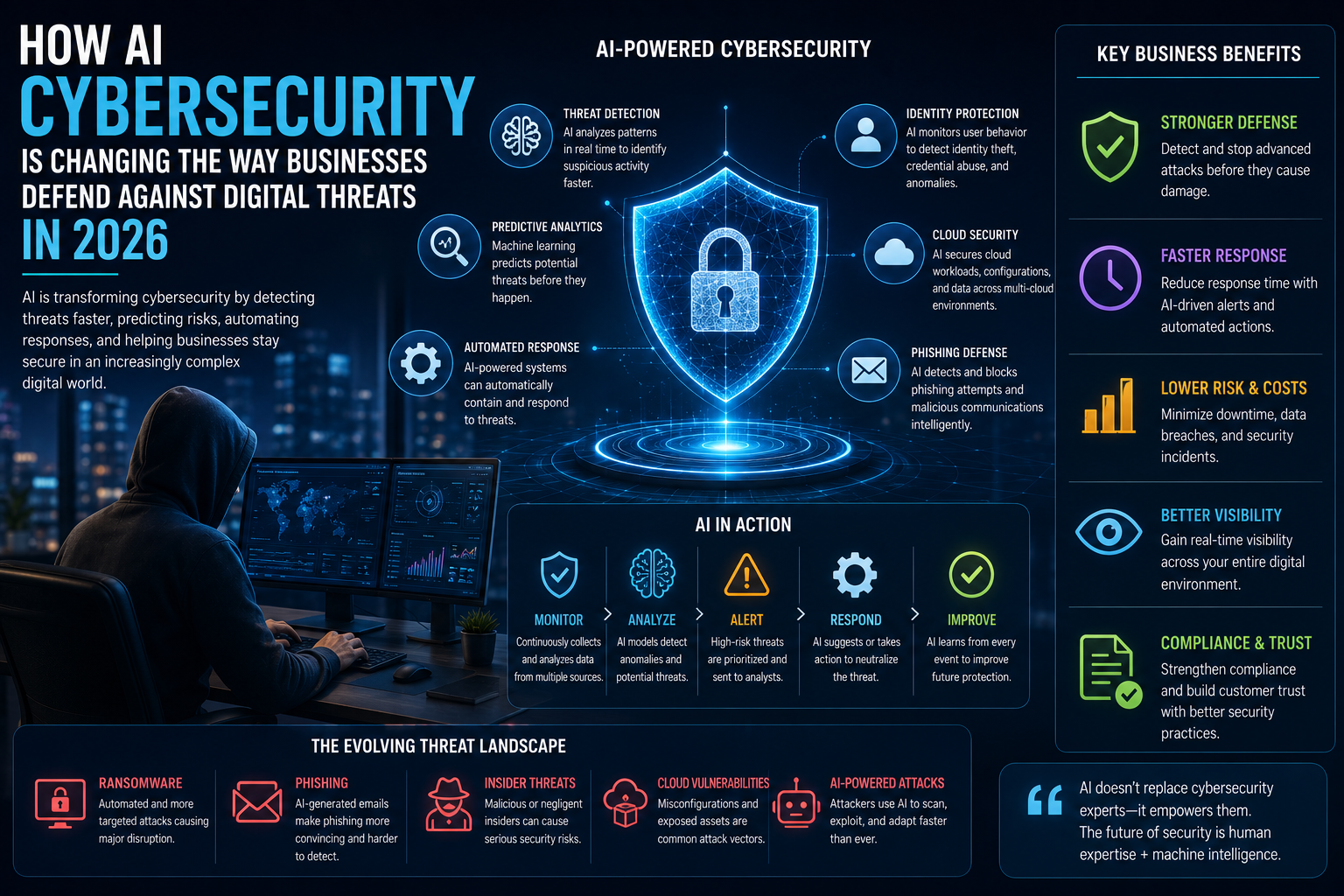
Connected robots create cybersecurity risks.
A robot connected to a business network can become another potential entry point for attackers.
Unauthorized access could disrupt operations, damage equipment, or create safety problems.
Businesses therefore need strong authentication, network segmentation, software updates, monitoring, and access controls.
Robotics security should be considered from the beginning rather than added after deployment.
The Future of Physical AI
The next stage of robotics is likely to involve increasingly capable AI systems.
Future robots may be able to understand natural-language instructions, learn new tasks more quickly, coordinate with other machines, and adapt to unfamiliar environments.
AI agents could potentially give robots higher-level instructions while robotics systems handle physical execution.
This could create a powerful connection between digital intelligence and physical operations.
A business manager might eventually describe an objective in natural language, while an AI system determines how robotic equipment should accomplish it.
Conclusion
Physical AI is bringing artificial intelligence into the real world.
By combining robotics, computer vision, sensors, machine learning, and automation, businesses can create machines that are more flexible and capable than traditional fixed-function systems.
Manufacturing, logistics, retail, healthcare, agriculture, and other industries could benefit from intelligent machines that improve productivity, safety, quality, and operational efficiency.
The transformation will not simply be about replacing people with robots. The more important shift may be the creation of workplaces where humans and machines perform complementary roles.
Businesses that prepare their infrastructure, workforce, cybersecurity systems, and operational processes today will be better positioned as physical AI becomes more capable.
The future of AI will not exist only on computer screens. Increasingly, it will move through factories, warehouses, stores, farms, hospitals, and other physical environments—turning intelligence into action.