
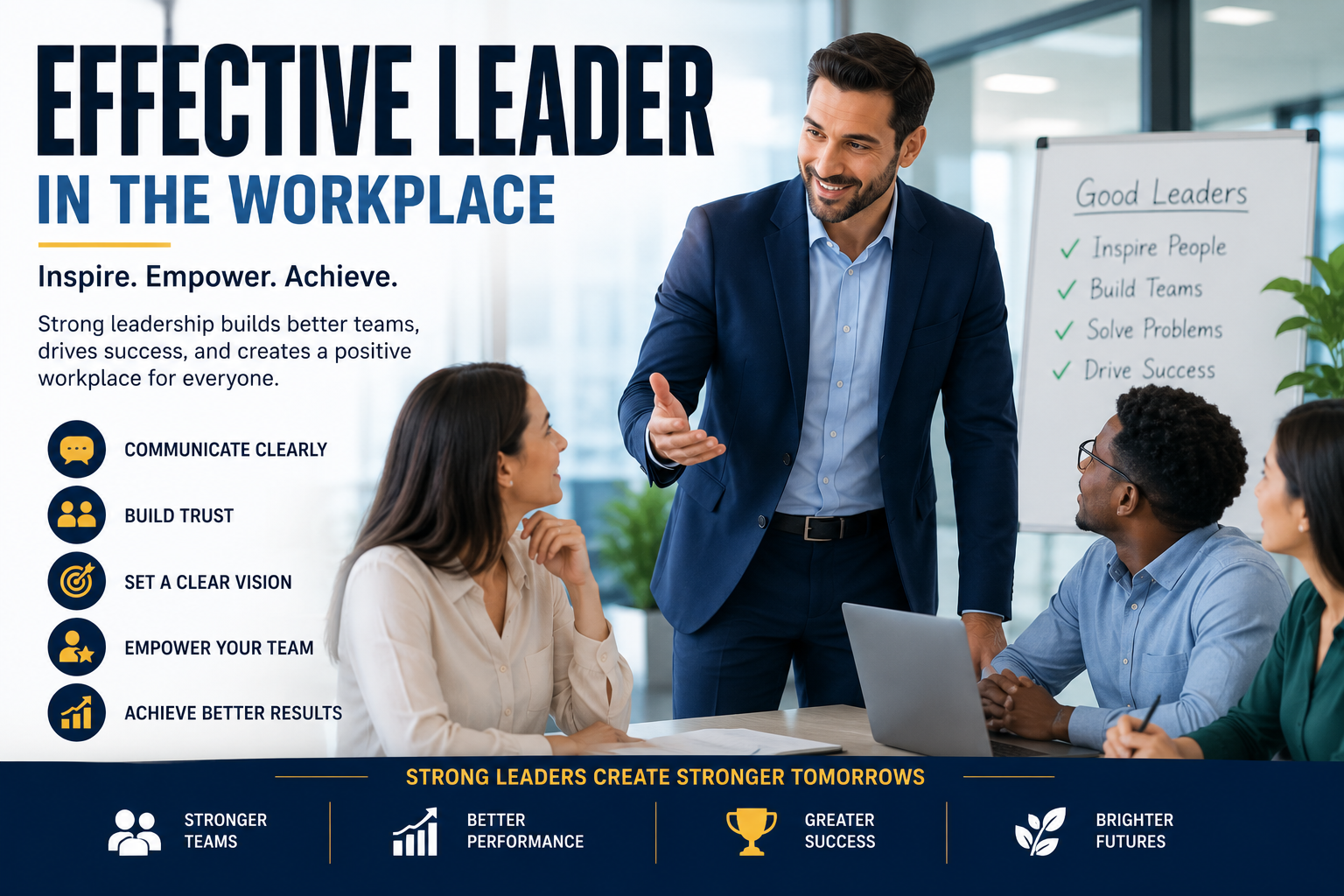
Leadership is one of the most valuable skills in today's professional world. Every successful organization depends on leaders who can inspire teams, solve problems, and create a positive work environment. Becoming an effective leader in the workplace is not about having a management title or years of experience. Instead, it is about influencing others through trust, communication, accountability, and the ability to guide people toward shared goals.
Modern workplaces are evolving rapidly due to technological advancements, remote work, globalization, and changing employee expectations. As a result, organizations need leaders who can adapt to change, encourage innovation, and build strong relationships with their teams. Employees are more motivated when they work under leaders who value collaboration, recognize achievements, and provide opportunities for professional growth.
The good news is that leadership is a skill that anyone can develop. By practicing the right habits, improving communication, and continuously learning, professionals at every career stage can become effective leaders. This comprehensive guide explores the qualities, skills, strategies, and best practices needed to become a successful leader in the workplace.
What Is an Effective Leader?
An effective leader is someone who motivates, supports, and guides others toward achieving common goals while creating a positive and productive work environment.
Unlike managers who primarily focus on processes and daily operations, effective leaders focus on people. They inspire confidence, encourage teamwork, solve problems, and help employees perform at their highest potential.
Effective leadership combines vision, communication, emotional intelligence, integrity, and the ability to make sound decisions.
Why Effective Leadership Matters
Leadership has a direct impact on organizational success. Businesses with strong leaders often experience higher employee engagement, increased productivity, better customer satisfaction, and improved financial performance.
Some of the key benefits of effective leadership include:
Improved teamwork
Higher employee motivation
Better communication
Increased innovation
Faster problem-solving
Strong workplace culture
Higher employee retention
Sustainable business growth
Employees are more likely to remain loyal to organizations where leaders provide guidance, encouragement, and opportunities for development.
Essential Qualities of an Effective Leader
Excellent Communication Skills
Communication is one of the most important leadership qualities.
Effective leaders clearly explain expectations, organizational goals, and company values while actively listening to employee feedback.
Strong communication builds trust, reduces misunderstandings, and encourages collaboration.
Ways to improve communication include:
Listening carefully
Giving constructive feedback
Encouraging open discussions
Asking thoughtful questions
Communicating with clarity
Emotional Intelligence
Emotional intelligence enables leaders to understand their own emotions while recognizing and responding to the emotions of others.
Leaders with strong emotional intelligence:
Show empathy
Resolve conflicts professionally
Build positive relationships
Handle stress effectively
Support employee well-being
This skill creates healthier workplace environments and stronger teams.
Integrity
Employees trust leaders who demonstrate honesty, fairness, and ethical behavior.
Integrity means making responsible decisions, keeping promises, and treating everyone with respect regardless of their position.
Ethical leadership strengthens organizational reputation and employee confidence.
Confidence
Confident leaders make decisions with clarity while remaining open to learning from others.
Confidence encourages employees to trust leadership during both opportunities and challenges.
However, confidence should always be balanced with humility.
Accountability
Effective leaders take responsibility for both successes and failures.
Rather than blaming others, they focus on learning from mistakes and improving future performance.
Accountability encourages employees to accept responsibility for their own work as well.
Leadership Skills Every Workplace Leader Needs
Decision-Making
Every workplace requires leaders who can make informed decisions.
Good decision-making involves:
Gathering relevant information
Considering alternatives
Evaluating risks
Making timely choices
Accepting responsibility
Confident decision-making helps organizations respond effectively to challenges.
Problem-Solving
Every business faces obstacles such as customer complaints, operational delays, employee conflicts, or financial challenges.
Effective leaders remain calm under pressure and focus on practical solutions rather than assigning blame.
Strong problem-solving encourages innovation and continuous improvement.
Team Building
Successful organizations depend on strong teamwork.
Effective leaders create environments where employees:
Collaborate openly
Respect one another
Share ideas
Support common goals
Celebrate achievements together
Strong teams consistently outperform individuals working alone.
Time Management
Leaders often manage multiple priorities simultaneously.
Effective time management allows leaders to:
Focus on important tasks
Meet deadlines
Delegate responsibilities
Improve productivity
Reduce workplace stress
Good planning helps leaders maintain both efficiency and work-life balance.
Adaptability
Today's workplaces change rapidly because of new technology, evolving customer expectations, and global competition.
Adaptable leaders embrace change, encourage innovation, and help employees remain confident during transitions.
Organizations led by adaptable leaders are better prepared for future challenges.
Practical Steps to Become an Effective Leader
Lead by Example
Employees observe their leaders every day.
Leaders who demonstrate professionalism, honesty, punctuality, and dedication inspire others to follow similar standards.
Leading by example is often more powerful than giving instructions.
Build Trust
Trust forms the foundation of every successful workplace.
Leaders build trust by:
Keeping commitments
Being transparent
Treating employees fairly
Listening carefully
Respecting different opinions
Trust increases employee confidence and strengthens workplace relationships.
Encourage Continuous Learning
Effective leaders support employee growth by encouraging training, skill development, mentoring, and career advancement.
Organizations that invest in learning often experience greater innovation and stronger employee retention.
Recognize Employee Achievements
Recognition improves motivation and workplace satisfaction.
Simple appreciation through praise, awards, bonuses, or public acknowledgment encourages employees to continue performing at high levels.
Employees who feel appreciated are generally more engaged and productive.
Delegate Responsibilities
Many new leaders make the mistake of trying to complete every task themselves.
Effective delegation allows employees to develop new skills while enabling leaders to focus on strategic priorities.
Delegation also demonstrates trust in team members.
Common Leadership Challenges
Even experienced leaders face workplace challenges.
Some of the most common include:
Managing conflict
Leading organizational change
Motivating diverse teams
Handling difficult conversations
Managing remote employees
Balancing multiple priorities
Successful leaders view challenges as opportunities for growth and improvement.
Mistakes New Leaders Should Avoid
Many professionals struggle during their transition into leadership roles.
Common mistakes include:
Micromanaging employees
Poor communication
Ignoring employee feedback
Resisting change
Avoiding difficult decisions
Failing to delegate
Showing favoritism
Neglecting professional development
Recognizing these mistakes early helps leaders improve more quickly.
Leadership in Remote and Hybrid Workplaces
Modern workplaces increasingly rely on remote and hybrid work models.
Effective remote leaders focus on:
Clear communication
Virtual collaboration
Performance measurement
Employee engagement
Flexible management
Digital tools
Technology has become an essential part of successful workplace leadership.
Technology and Modern Leadership
Today's leaders use technology to improve collaboration and productivity.
Popular workplace tools include:
Video conferencing platforms
Project management software
Team communication apps
Cloud-based collaboration systems
Performance tracking software
Technology supports better decision-making while improving organizational efficiency.
The Future of Workplace Leadership
The future of leadership will emphasize:
Emotional intelligence
Innovation
Diversity and inclusion
Digital transformation
Continuous learning
Employee well-being
Ethical leadership
Organizations increasingly seek leaders who can combine business knowledge with strong interpersonal skills.
Tips for Becoming a Better Leader Every Day
Developing leadership is a lifelong journey.
Daily habits that strengthen leadership include:
Read leadership books regularly.
Listen more than you speak.
Seek constructive feedback.
Stay organized.
Support your team consistently.
Learn from mistakes.
Stay positive during challenges.
Continue improving your skills.
Small daily improvements lead to significant long-term growth.
Conclusion
Becoming an effective leader in the workplace requires more than technical expertise or a management position. It involves building trust, communicating clearly, making thoughtful decisions, supporting employees, and inspiring people to achieve shared goals. Strong leadership creates motivated teams, improves organizational performance, and encourages innovation.
Whether you are beginning your leadership journey or looking to strengthen your existing abilities, continuous learning and consistent practice are essential. By developing communication, emotional intelligence, accountability, adaptability, and strategic thinking, you can become a leader who positively influences both individuals and organizations for years to come.
FAQs
Q1. What makes an effective leader in the workplace?
An effective leader communicates clearly, builds trust, supports employees, makes informed decisions, and inspires teams to achieve shared goals.
Q2. Can leadership skills be learned?
Yes. Leadership skills can be developed through experience, education, mentorship, and continuous self-improvement.
Q3. Why is communication important for leaders?
Strong communication builds trust, improves teamwork, reduces misunderstandings, and helps employees understand organizational goals.
Q4. What is the biggest mistake new leaders make?
Micromanaging employees and failing to delegate responsibilities are among the most common leadership mistakes.
Q5. How can I improve my leadership skills every day?
Practice active listening, seek feedback, continue learning, lead by example, and support your team's professional growth.