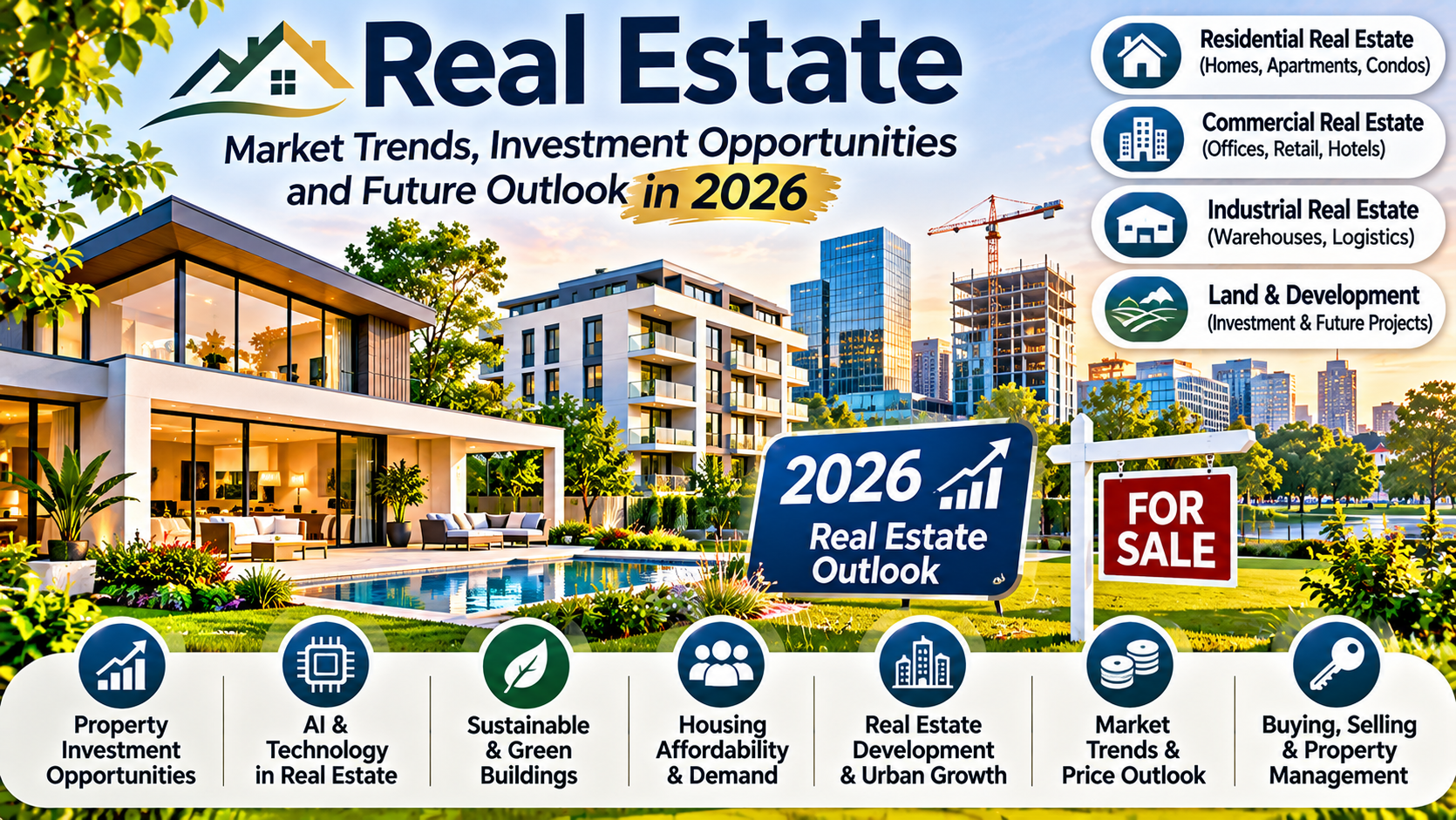
Real estate remains one of the most important sectors of the global economy. It influences how people live, work, invest, and conduct business. From residential homes and commercial buildings to industrial facilities, shopping centers, and modern infrastructure, property plays a significant role in economic development and wealth creation.
In 2026, the real estate industry is evolving through technological innovation, changing demographics, sustainability requirements, urban development, and shifting investment strategies. Buyers are exploring new ways to purchase homes, investors are evaluating emerging property sectors, and developers are adapting buildings to meet modern expectations.
Technology is also transforming the property experience. Artificial intelligence, virtual property tours, digital transactions, smart building systems, and data-driven investment platforms are changing how real estate professionals operate.
The global market is showing signs of renewed investment activity, although recovery remains uneven across property types and regions. Industry research from PwC and McKinsey highlights selective investment opportunities, including data centers, residential housing, senior living, and modern industrial properties.
This comprehensive guide explores the real estate industry in 2026, including property types, investment opportunities, market trends, technology, sustainability, challenges, and the future of property ownership.
1. What Is Real Estate?
Real estate refers to land and the permanent structures or improvements attached to it. It includes residential properties, commercial buildings, industrial facilities, agricultural land, and undeveloped plots.
Real estate is generally divided into four major categories.
Residential Real Estate
Residential real estate includes properties designed for individuals and families to live in.
Examples include:
Single-family houses.
Apartments and condominiums.
Townhouses.
Duplexes.
Vacation homes.
Residential rental properties.
Gated housing communities.
Residential property is one of the most familiar segments of the industry because housing is an essential human need.
Commercial Real Estate
Commercial real estate includes properties primarily used for business activities and income generation.
Examples include:
Office buildings.
Shopping centers.
Retail stores.
Hotels.
Restaurants.
Business parks.
Mixed-use developments.
Commercial properties can generate income through rental agreements, leases, and business occupancy.
Industrial Real Estate
Industrial real estate supports manufacturing, storage, transportation, and distribution.
Common property types include:
Warehouses.
Distribution centers.
Manufacturing facilities.
Logistics parks.
Cold storage facilities.
Industrial business parks.
The expansion of e-commerce, international trade, and modern supply chains has increased the importance of efficient industrial properties.
Land and Agricultural Real Estate
Land represents another important property category.
It includes:
Agricultural land.
Undeveloped plots.
Residential development land.
Commercial development sites.
Recreational land.
Natural resource properties.
Land can be purchased for agricultural use, future development, commercial projects, or long-term investment.
2. Understanding the Real Estate Market in 2026
The real estate market in 2026 is experiencing a period of adjustment and selective growth. Investment activity has improved in several markets, but property performance varies significantly depending on location, financing conditions, demand, and property type.
PwC's 2026 global outlook identifies improving investment conditions and renewed investor interest, while McKinsey highlights a market where capital is increasingly concentrated in selected sectors rather than distributed evenly across the industry.
Several factors are influencing the market.
Interest Rates and Financing
Interest rates affect mortgage affordability, property development costs, and investment returns.
When borrowing costs rise, buyers may find it harder to finance homes, while developers face higher project expenses.
When financing becomes more affordable, property transactions and development activity may improve.
Housing Affordability
Housing affordability remains a major issue in many cities.
Property prices, rental costs, construction expenses, and household income levels influence whether people can purchase or rent homes.
Developers and policymakers are increasingly exploring affordable housing solutions to address supply and accessibility challenges.
Urbanization and Population Growth
Urbanization continues to influence residential and commercial development.
Growing cities require additional housing, transportation systems, healthcare facilities, schools, offices, and retail spaces.
This creates opportunities for developers who understand local population growth and infrastructure requirements.
Investment Confidence
Investors are increasingly evaluating property opportunities based on long-term demand, operating performance, financing costs, and location-specific risks.
In 2026, market research and careful asset selection are particularly important because different property sectors are experiencing different growth patterns.
3. Residential Real Estate: Housing and Modern Living
Residential real estate continues to be a fundamental part of the property market.
People purchase homes for personal use, while property investors may acquire residential units to generate rental income or benefit from potential long-term appreciation.
Modern Housing Developments
Modern residential developments increasingly focus on convenience, security, functionality, and lifestyle.
Popular features include:
Energy-efficient construction.
Smart home technology.
Dedicated parking.
Shared recreational spaces.
Modern kitchens.
Secure access systems.
Green spaces.
Community facilities.
Apartments and Condominiums
Apartments are an important housing option in densely populated cities.
They can provide access to central locations, shared facilities, and relatively efficient use of urban land.
Condominium ownership also allows individuals to own residential units within larger developments, subject to applicable ownership and association rules.
Luxury Real Estate
Luxury real estate includes premium residential properties designed around location, architecture, privacy, comfort, and exclusive amenities.
Common features include:
High-end interior design.
Large living spaces.
Private gardens or terraces.
Swimming pools.
Smart security systems.
Premium building materials.
Dedicated recreational facilities.
Luxury property markets often depend heavily on location, buyer demand, and the availability of high-quality developments.
Affordable Housing
Affordable housing is becoming increasingly important as urban populations grow and housing costs place pressure on household budgets.
Developers can explore smaller residential units, efficient construction methods, and projects located near employment and transportation networks.
4. Commercial Real Estate and Business Properties
Commercial real estate supports businesses and economic activity.
Companies require physical spaces for employees, customers, inventory, and operations. The demand for commercial property depends on economic conditions, business expansion, consumer activity, and workplace preferences.
Office Buildings
Office properties provide workplaces for organizations, professional services, and corporate operations.
Modern offices increasingly prioritize:
Flexible floor plans.
Collaboration spaces.
Reliable connectivity.
Energy efficiency.
Employee amenities.
Smart building management.
The office market is becoming more selective, with modern, well-located properties often better positioned than older buildings that require significant upgrades.
Retail Properties
Retail real estate includes shopping centers, high-street stores, shopping malls, and mixed-use retail developments.
Retail properties depend on customer traffic, location, tenant quality, accessibility, and the surrounding population.
Retailers increasingly combine physical stores with digital shopping and delivery services.
Hospitality Properties
Hospitality real estate includes hotels, resorts, serviced apartments, and other accommodation facilities.
Tourism, business travel, events, and local economic activity influence demand for these properties.
Mixed-Use Developments
Mixed-use developments combine residential, commercial, retail, and recreational spaces within a single project.
They can offer residents convenient access to shops, workplaces, restaurants, and community facilities.
These developments are particularly relevant in growing urban areas where efficient land use is important.
5. Real Estate Investment Opportunities in 2026
Real estate investment can provide opportunities for rental income, portfolio diversification, and long-term capital appreciation. However, returns depend on market conditions, financing, property management, and individual investment decisions.
Some major investment categories are attracting attention in 2026.
Residential Rental Properties
Investors purchase houses or apartments and rent them to individuals or families.
Potential benefits include:
Recurring rental income.
Long-term ownership.
Potential property appreciation.
Demand from households that prefer renting.
Investors should evaluate rental demand, maintenance costs, taxes, insurance, vacancy rates, and financing expenses.
Industrial and Logistics Properties
Warehouses and distribution centers are important to modern supply chains.
E-commerce, manufacturing, and logistics operations require efficient storage and transportation facilities.
Properties with suitable locations, road access, infrastructure, and operational capacity may attract business tenants.
Data Centers
Data centers are specialized facilities that support cloud computing, artificial intelligence, digital platforms, and data storage.
Their importance is increasing as businesses depend on computing infrastructure.
However, data center development requires substantial investment in electricity, cooling, connectivity, security, and technical infrastructure.
Senior Housing
Population aging is creating demand for different types of senior living and care facilities.
These can include:
Independent senior living.
Assisted living communities.
Retirement residences.
Specialized care facilities.
Investors must consider healthcare regulations, operating requirements, staffing, and local demographic needs.
Student Housing
Student accommodation serves university and college populations.
Properties near educational institutions may benefit from demand for convenient and affordable housing.
Location, occupancy levels, rental affordability, and university enrollment trends are important investment considerations.
Self-Storage Facilities
Self-storage properties provide individuals and businesses with additional storage space.
Demand can be influenced by moving activity, housing constraints, business storage requirements, and changing lifestyles.
6. Technology Transforming Real Estate
Technology is changing how property professionals market, sell, manage, finance, and develop real estate.
Digital tools are improving access to information and helping businesses make more informed decisions.
Artificial Intelligence
Artificial intelligence is becoming increasingly relevant to real estate operations.
Potential applications include:
Property price analysis.
Automated customer support.
Lead qualification.
Rental demand forecasting.
Investment research.
Property management.
Market trend analysis.
AI can help real estate professionals process large amounts of information, but its predictions should be checked against reliable data and professional judgment.
Virtual Property Tours
Virtual tours allow prospective buyers and tenants to explore properties remotely.
These experiences can help customers understand room layouts, interior features, and property conditions before arranging physical visits.
Real Estate Platforms
Online property marketplaces make it easier to search for houses, apartments, commercial buildings, and land.
Common platform features include:
Property photographs.
Location maps.
Price filters.
Property descriptions.
Agent contact information.
Virtual tours.
Saved property listings.
Blockchain and Digital Transactions
Blockchain technology has potential applications in property records, transaction verification, and digital ownership systems.
Tokenization is another developing concept that involves representing ownership interests in real-world assets through digital tokens.
However, legal recognition, investor protections, regulatory compliance, and secure recordkeeping remain essential.
Smart Buildings
Smart building systems use connected devices and automation to manage facilities.
Examples include:
Smart lighting.
Automated climate control.
Security monitoring.
Energy management.
Building access systems.
Predictive maintenance.
These technologies can improve operational efficiency and the experience of occupants.
7. Sustainable Real Estate and Green Buildings
Sustainability has become an important consideration for developers, property owners, investors, and tenants.
Buildings consume energy and resources throughout their lifecycles. Sustainable development aims to reduce environmental impact while improving building performance and occupant comfort.
Energy-Efficient Buildings
Energy-efficient properties may include:
LED lighting.
Efficient heating and cooling systems.
Improved insulation.
Energy monitoring.
High-performance windows.
Renewable energy systems.
Green Construction Materials
Developers can consider responsibly sourced timber, recycled materials, low-emission finishes, and durable construction products.
Material selection can influence both environmental performance and long-term maintenance requirements.
Solar Energy
Solar panels can help properties generate electricity and reduce dependence on conventional energy sources.
The financial benefits depend on installation costs, electricity prices, sunlight availability, system performance, and applicable regulations.
Water Conservation
Water-efficient fixtures, rainwater harvesting, and efficient irrigation systems can help reduce water consumption.
Green Building Certifications
Various certification systems assess building sustainability and performance.
Examples include:
LEED.
BREEAM.
EDGE.
WELL Building Standard.
Certification requirements differ, and customers should verify the specific rating achieved by an individual building.
8. Real Estate Development Process
Real estate development involves transforming land or existing buildings into properties that meet market needs.
A successful project requires planning, financial management, technical expertise, regulatory compliance, and construction oversight.
Step 1: Market Research
Developers examine population growth, customer demand, property prices, rental activity, infrastructure, and competing projects.
Step 2: Site Selection
Location is one of the most important development decisions.
Developers evaluate:
Accessibility.
Road networks.
Nearby facilities.
Utilities.
Land characteristics.
Zoning regulations.
Environmental conditions.
Step 3: Financial Planning
Developers estimate land acquisition costs, design expenses, construction budgets, financing, taxes, and expected revenue.
Financial models help assess whether a project is commercially viable.
Step 4: Design and Approvals
Architects and engineers prepare development plans.
The project must comply with applicable building codes, planning regulations, safety requirements, and approval processes.
Step 5: Construction
Construction teams manage labor, materials, equipment, contractors, scheduling, and quality control.
Regular inspections help identify potential problems before they become more expensive.
Step 6: Marketing and Sales
Developers promote completed or under-construction properties through property websites, real estate agents, digital advertising, and direct sales.
Step 7: Property Management
After completion, buildings may require ongoing maintenance, tenant management, financial administration, and facility operations.
9. Real Estate Marketing and Digital Transformation
Digital marketing has become essential for real estate businesses seeking buyers, tenants, sellers, and investors.
A strong online presence can improve brand awareness and generate qualified leads.
Search Engine Optimization
SEO helps real estate websites appear in relevant search results.
Important SEO practices include:
Location-specific property pages.
Optimized property descriptions.
Relevant keyword research.
Fast-loading websites.
Mobile-friendly design.
High-quality property photographs.
Useful market guides.
Internal linking.
Social Media Marketing
Platforms such as Facebook, Instagram, LinkedIn, and YouTube provide opportunities to showcase properties and connect with potential customers.
Content ideas include:
Property walkthrough videos.
Neighborhood guides.
Home-buying advice.
Market updates.
Interior design inspiration.
Investment education.
Content Marketing
Educational articles can attract people researching property purchases and investments.
Useful topics include mortgage guidance, property valuation, home maintenance, rental management, and local housing market trends.
Paid Advertising
Search and social media advertising can help real estate businesses reach customers actively looking for properties.
Successful campaigns require clear targeting, accurate property information, realistic budgets, and lead follow-up systems.
10. Real Estate Risks and Challenges
Real estate can be a valuable asset class, but property ownership and investment involve risks.
Understanding these risks is essential before making financial decisions.
Market Volatility
Property prices can change because of economic conditions, supply and demand, financing costs, and local development activity.
A property may lose value even when the long-term outlook for its location appears positive.
High Initial Costs
Buying property often involves substantial upfront expenses.
These may include:
Down payments.
Legal fees.
Taxes and registration.
Brokerage commissions.
Inspection costs.
Renovation expenses.
Liquidity Risk
Unlike publicly traded shares, real estate can take considerable time to sell.
A property owner may need to reduce the asking price or wait for a suitable buyer.
Maintenance and Management
Property owners are responsible for maintenance, repairs, insurance, and other ongoing expenses.
Rental properties may also experience vacancies, tenant disputes, and unexpected repair costs.
Legal and Regulatory Issues
Property transactions require proper documentation and legal compliance.
Ownership disputes, zoning restrictions, title problems, unauthorized construction, and incomplete approvals can create significant financial risks.
Interest Rate Risk
Investors using loans may face higher repayment costs when financing rates increase or loan terms change.
11. How to Buy Real Estate: A Practical Guide
Purchasing property is a major financial decision. Buyers should follow a structured process rather than relying only on advertising or expected appreciation.
1. Define your purpose: Decide whether you are purchasing a primary residence, rental property, commercial space, or land for future development.
2. Establish your budget: Include the purchase price, transaction costs, maintenance, taxes, and financing expenses.
3. Research the location: Examine infrastructure, employment opportunities, transportation, local services, and future development plans.
4. Compare properties: Review multiple options instead of making a decision based on a single listing.
5. Verify ownership: Confirm the seller's legal right to transfer the property and review relevant title and ownership documents.
6. Inspect the property: Check the building's structural condition, utilities, access, and any required repairs.
7. Review legal requirements: Consult qualified legal and financial professionals before signing agreements or transferring funds.
8. Complete the transaction: Follow the applicable registration, payment, and transfer procedures.
A careful purchasing process can reduce the risk of expensive mistakes.
12. Real Estate Market Trends to Watch in 2026
Several developments are influencing the industry's direction.
AI Infrastructure and Data Centers
Demand for artificial intelligence and cloud computing is increasing the importance of data center infrastructure.
Power availability, cooling systems, connectivity, and suitable development locations are becoming major considerations.
Growth in Senior Living
Aging populations are increasing interest in senior housing and specialized residential services.
Developers may explore facilities that combine comfortable accommodation, wellness services, and appropriate care.
Demand for Energy-Efficient Properties
Energy performance is becoming a more important factor in building design, property operations, and investment decisions.
Flexible Office Spaces
Businesses continue to assess how office layouts can support collaboration, hybrid work, employee comfort, and efficient space utilization.
Industrial and Logistics Expansion
Modern supply chains require warehouses, distribution facilities, and logistics infrastructure in strategically located areas.
Housing Affordability
Affordability remains an important issue in many property markets.
Developers, financial institutions, and governments will continue to explore ways to improve housing availability and access.
Data-Driven Property Investment
Investors are increasingly using market analytics, property performance data, and digital research tools to evaluate opportunities.
Industry reports from PwC, McKinsey, and JLL indicate that technology, asset selection, and operational efficiency are becoming important competitive factors in 2026.
13. Major Real Estate Companies and Property Platforms
The global real estate industry includes property developers, brokerage companies, investment managers, and digital marketplaces.
Some well-known organizations include:
Company | Main Business Area |
|---|---|
CBRE | Commercial real estate services and investment |
JLL | Property services, consulting, and investment management |
Cushman & Wakefield | Commercial real estate services |
Colliers | Real estate advisory and investment services |
RE/MAX | Residential real estate franchising |
Keller Williams | Residential real estate brokerage |
Zillow | Online real estate marketplace |
Redfin | Residential property brokerage and technology |
Compass | Residential real estate brokerage |
Savills | International real estate advisory |
These organizations operate in different segments of the industry, from property transactions and advisory services to investment management and online property discovery.
14. The Future of Real Estate Beyond 2026
The future of real estate will be influenced by economic conditions, technology, population changes, climate considerations, and the availability of capital.
Several developments may shape the next phase of the industry.
Technology-Integrated Properties
Smart buildings and connected infrastructure may become more common as property owners seek greater efficiency and better occupant experiences.
AI-Driven Operations
AI may become more deeply integrated into property valuation, investment analysis, building maintenance, leasing, and customer service.
Flexible Residential Spaces
Changing lifestyles and working arrangements may encourage demand for adaptable homes, shared facilities, and multifunctional residential developments.
Sustainable Construction
Energy efficiency, water conservation, lower-emission materials, and climate resilience may become increasingly important in development decisions.
Alternative Property Investments
Data centers, senior housing, student accommodation, and specialized industrial properties may attract investment as demand patterns evolve.
Greater Transparency
Digital property records, improved data access, and stronger regulatory frameworks could help make property markets more transparent and efficient.
15. Frequently Asked Questions About Real Estate
What is real estate?
Real estate refers to land, buildings, and permanent improvements attached to land. It includes residential, commercial, industrial, and agricultural properties.
Is real estate a good investment in 2026?
Real estate may offer opportunities for rental income and long-term appreciation, but returns depend on location, property quality, financing, market conditions, and management. It is not a guaranteed investment.
What are the four main types of real estate?
The four main categories are residential, commercial, industrial, and land or agricultural real estate.
How does real estate generate income?
Real estate can generate income through rental payments, leasing arrangements, property development, and the sale of properties. Some investors also seek capital appreciation over time.
What is commercial real estate?
Commercial real estate includes properties used for business purposes, such as offices, shopping centers, hotels, and retail buildings.
What is the difference between residential and commercial real estate?
Residential real estate is primarily designed for people to live in, while commercial real estate is generally used for business activities and income generation.
How is AI changing real estate?
AI can help analyze property prices, identify potential customers, forecast rental demand, automate customer support, and improve building management.
What is sustainable real estate?
Sustainable real estate focuses on designing, constructing, and operating buildings in ways that improve resource efficiency and reduce environmental impact.
What are the biggest real estate trends in 2026?
Important trends include AI-powered property services, data center development, senior housing, energy-efficient buildings, industrial logistics, and changing housing affordability.
What should buyers check before purchasing property?
Buyers should verify ownership documents, legal approvals, property condition, location, transaction costs, financing terms, and applicable regulations.
Conclusion
Real estate remains a major component of global economic activity, offering opportunities across residential housing, commercial properties, industrial facilities, land development, and specialized investment sectors.
In 2026, the industry is evolving through artificial intelligence, digital property platforms, sustainable construction, changing demographics, and new infrastructure requirements. Investors are becoming more selective, while developers are focusing on properties that respond to real market demand and long-term economic changes.
Technology and sustainability are likely to play increasingly important roles in the way properties are designed, purchased, managed, and valued.
For buyers, investors, developers, and real estate professionals, understanding market conditions and evaluating individual opportunities carefully will remain essential. The future of real estate will depend not only on property location but also on innovation, operational efficiency, responsible development, and the ability to adapt to changing customer needs.