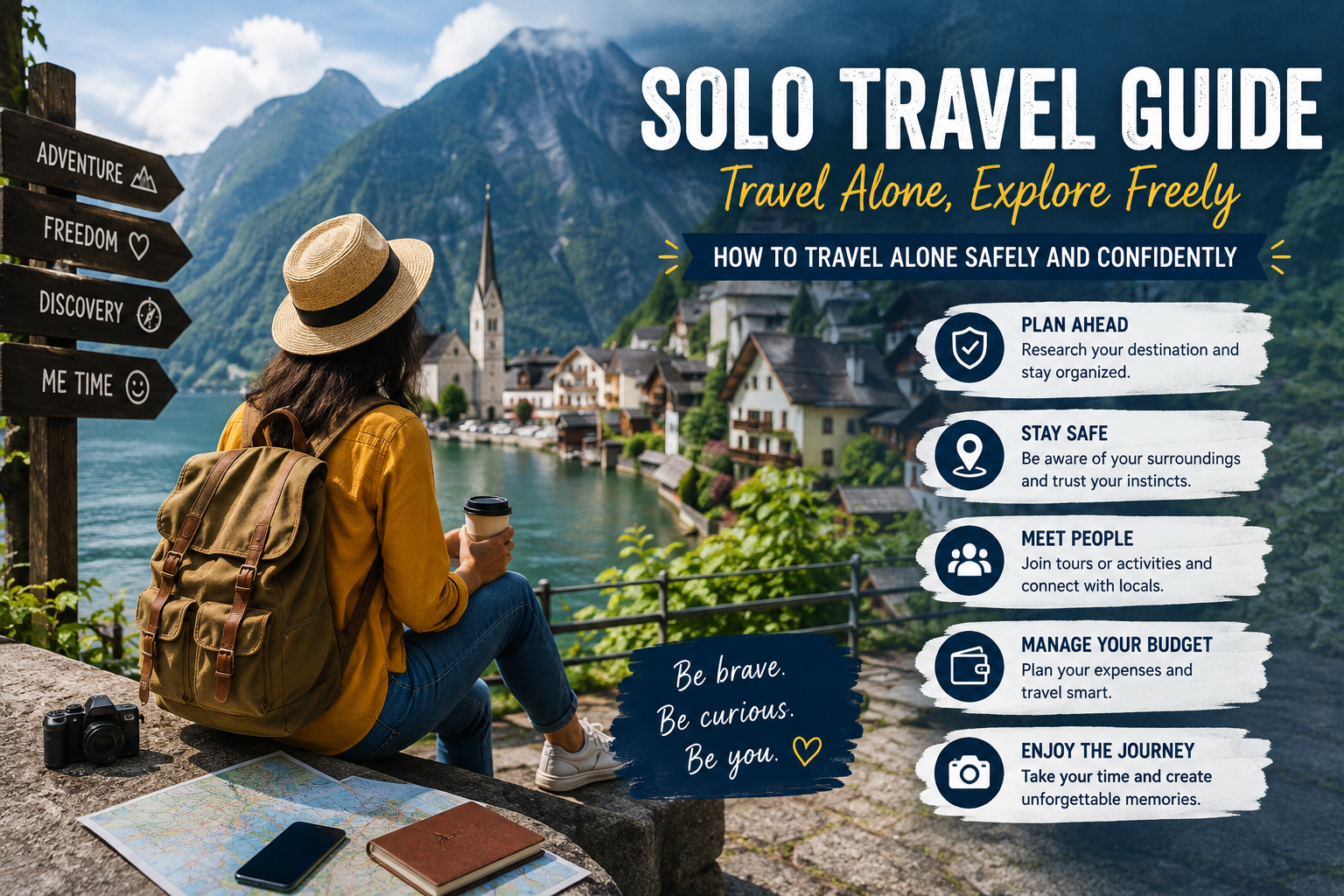
Traveling alone can be one of the most rewarding ways to explore the world. Without having to coordinate with other people, solo travelers have the freedom to choose their destination, create their own schedule, and change plans whenever they want.
However, traveling alone also requires thoughtful preparation. Safety, transportation, accommodation, communication, budgeting, and emergency planning become especially important when you are responsible for yourself.
The good news is that solo travel does not have to feel intimidating. With practical preparation and a flexible mindset, you can explore new places confidently while creating unforgettable experiences.
What Is Solo Travel?
Solo travel means taking a trip without traveling as part of a group or with a regular travel companion.
It can mean anything from spending a weekend exploring a nearby city to taking a longer international trip alone.
Solo travel offers several advantages:
Complete control over your itinerary
Freedom to change plans
More opportunities to meet new people
Personal time and independence
A chance to build confidence
Greater flexibility with your budget
You do not have to travel alone for months to experience these benefits. A short solo trip can be an excellent way to start.
1. Choose a Destination That Matches Your Experience
Your first solo trip does not have to be an extreme adventure.
If you are new to traveling alone, consider a destination with reliable transportation, accessible accommodation, clear tourist information, and activities that interest you.
When researching a destination, consider:
Safety conditions
Transportation options
Language barriers
Accommodation availability
Local customs
Weather
Healthcare access
Internet connectivity
Choose a destination where you feel reasonably comfortable rather than selecting a place simply because it is popular.
2. Research Before You Leave
Research is particularly valuable when traveling alone.
Learn about the neighborhoods where you plan to stay, transportation options from airports or stations, local customs, and important emergency information.
Researching in advance can help you avoid unnecessary confusion after arrival.
Save important information offline whenever possible, including:
Accommodation address
Reservation details
Transportation information
Emergency contacts
Maps
Important travel documents
Having offline information can be especially helpful if your phone loses internet access.
3. Choose Accommodation Carefully
Your accommodation can significantly affect your solo travel experience.
Look for a property with reliable reviews, a convenient location, secure access, and easy transportation connections.
You may also prefer accommodation with a reception desk or staff available to answer questions.
Before booking, consider:
Location
Recent guest reviews
Security features
Check-in arrangements
Transportation access
Cancellation policies
Nearby restaurants and shops
A convenient location can reduce the amount of time you spend traveling alone at night.
4. Share Your Travel Plans
Someone you trust should know your general travel plans.
Share information such as your destination, accommodation, transportation arrangements, and expected return dates.
You do not need to provide constant updates, but having someone aware of your itinerary creates an additional layer of security.
For longer trips, establish a simple check-in routine if that makes you feel more comfortable.
5. Keep Important Documents Secure
Your passport, identification, payment cards, and other important documents should be protected carefully.
Carry only what you need and store backup copies of important documents securely.
For international travel, keep your passport accessible and follow the document requirements applicable to your destination.
Avoid keeping all your money and payment methods in one place.
Having a backup payment option can be useful if a card is lost or temporarily unavailable.
6. Stay Aware of Your Surroundings
Awareness is one of the simplest safety habits for solo travelers.
Pay attention to your surroundings, particularly in crowded places, unfamiliar neighborhoods, transportation stations, and busy tourist areas.
Avoid becoming so distracted by your phone that you stop noticing what is happening around you.
If something feels uncomfortable or unsafe, trust your instincts and move toward a populated or secure location.
7. Be Careful With Your Personal Information
Meeting new people can be one of the best parts of solo travel, but you should still maintain reasonable boundaries.
You do not need to tell strangers exactly where you are staying, how long you will be there, or that you are traveling alone.
If someone asks overly personal questions, you can politely provide a general answer.
A friendly attitude and sensible boundaries can coexist.
8. Plan Your Transportation
Transportation can feel more complicated when you are alone, especially after arriving in a new destination.
Research how you will get from the airport, train station, or bus terminal to your accommodation before you arrive.
Understand the local transportation system and identify reputable transportation options.
If you expect to arrive late, confirm your accommodation's check-in arrangements in advance.
Having a basic transportation plan can make your first few hours in a new destination much easier.
9. Keep Your Phone Charged
Your smartphone can be an important travel and safety tool.
It can provide navigation, communication, reservations, translation, transportation information, and access to emergency contacts.
Before leaving your accommodation, make sure your phone has sufficient battery.
A power bank can be useful during long sightseeing days.
Also consider saving important information offline in case you lose mobile data or Wi-Fi access.
10. Create a Flexible Itinerary
Solo travel gives you freedom, but having some structure can make the experience easier.
Create a basic itinerary that includes the attractions and activities you want to experience.
Avoid scheduling every minute.
Leave enough time for meals, rest, unexpected discoveries, and changes in plans.
A flexible itinerary provides direction without making your trip feel like a strict checklist.
11. Start Your First Days Slowly
The first day in a new destination can be overwhelming.
Instead of immediately planning a packed schedule, give yourself time to become familiar with your surroundings.
Walk around your neighborhood during the daytime, locate nearby restaurants and transportation stops, and learn how the area feels.
Once you become comfortable, you can gradually explore further.
12. Meet People Safely
Solo travel does not mean you have to spend the entire trip alone.
You can meet other travelers through group tours, classes, cultural activities, hostels, cafés, or organized events.
When meeting someone new, choose public places and use reasonable judgment.
Group activities can be particularly useful because they allow you to socialize while still maintaining your independence.
13. Eat Alone With Confidence
Some people worry about eating alone, especially during their first solo trip.
In reality, dining alone is completely normal.
Choose a comfortable restaurant, café, food market, or casual dining location.
Bring a book, listen to a podcast, or simply observe your surroundings if you want something to do.
Solo dining can become one of the most relaxing parts of traveling alone.
14. Manage Your Money Carefully
Create a travel budget before leaving and track your spending during the trip.
Avoid carrying excessive amounts of cash.
Keep payment methods secure and consider having a backup card stored separately from your primary one.
Before traveling internationally, understand how your bank cards work abroad and check for applicable transaction or ATM fees.
15. Respect Local Customs
Learning basic cultural expectations can help you avoid uncomfortable situations.
Research local customs regarding clothing, photography, public behavior, tipping, religious sites, and communication.
Even learning a few words or phrases in the local language can make everyday interactions easier.
Respect for local culture also helps create more meaningful travel experiences.
16. Know When to Say No
Solo travelers may occasionally encounter people who pressure them into buying something, joining an activity, sharing information, or going somewhere they do not want to go.
You are allowed to say no.
A simple and confident response is often enough.
You do not owe anyone your time, money, personal information, or company.
17. Have an Emergency Plan
Before traveling, know what you would do if something unexpected happened.
Save local emergency numbers and identify nearby hospitals, police stations, or other relevant services.
Keep important documents backed up and maintain access to emergency funds.
If you lose your passport, phone, wallet, or payment card, having backup information can make the situation easier to manage.
18. Consider Travel Insurance
Travel insurance may provide protection against certain unexpected costs depending on the policy.
Coverage can vary significantly, so review the policy carefully before purchasing.
Pay particular attention to exclusions, limits, medical coverage, cancellation terms, and destination-specific conditions.
Travel insurance should complement good preparation rather than replace it.
19. Trust Your Instincts
One of the most important solo travel skills is recognizing when something does not feel right.
You do not need to prove that a situation is dangerous before leaving it.
If you feel uncomfortable, move to a busy public location, contact someone you trust, or seek assistance from appropriate local authorities or staff.
Your personal safety is more important than being polite.
20. Enjoy Your Independence
The biggest advantage of solo travel is freedom.
You can wake up whenever you want, choose your own activities, spend an afternoon in a café, change your itinerary, or simply do nothing.
You may discover that traveling alone helps you become more confident and comfortable making decisions independently.
The experience can also encourage you to step outside your normal routine and see the world from a different perspective.
Common Solo Travel Mistakes to Avoid
Sharing Too Much Personal Information
Avoid telling strangers exactly where you are staying or that you have no one traveling with you.
Ignoring Local Customs
Research the destination before arriving to understand important cultural expectations.
Having No Backup Plan
Keep backup payment methods and copies of important documents.
Overplanning
A packed itinerary can make solo travel exhausting. Leave room for flexibility.
Ignoring Your Instincts
If something feels wrong, remove yourself from the situation.
Arriving Without Transportation Research
Know how you will get from your arrival point to your accommodation before you travel.
Solo Travel Checklist
Research the destination
Check travel and entry requirements
Book reliable accommodation
Save accommodation details offline
Share your itinerary with someone you trust
Keep important documents secure
Prepare backup payment options
Save emergency contacts
Keep your phone charged
Carry a power bank
Research local transportation
Learn basic local customs
Consider travel insurance
Keep an emergency fund
Trust your instincts
Frequently Asked Questions
Is solo travel safe?
Solo travel can be safe when you research your destination, choose accommodation carefully, stay aware of your surroundings, protect your belongings, and have an emergency plan. Safety conditions vary by destination, so research current local guidance before traveling.
What is the best destination for a first solo trip?
There is no single best destination. Choose a place that matches your comfort level and has reliable transportation, suitable accommodation, accessible information, and activities you enjoy.
How can I stay safe while traveling alone?
Research your destination, share your itinerary with someone you trust, protect your documents and valuables, stay aware of your surroundings, avoid risky situations, and trust your instincts.
Should I tell people that I am traveling alone?
You do not need to advertise that you are alone to strangers. When meeting new people, it is usually better to keep personal information such as your accommodation details private.
How can I meet people while traveling alone?
Group tours, classes, cultural activities, social events, hostels, and organized excursions can provide opportunities to meet other travelers in relatively structured environments.
What should I do if I feel unsafe?
Move to a populated or secure location and seek help from appropriate staff, authorities, or someone you trust. Your safety should take priority over politeness.
Should I get travel insurance for solo travel?
Travel insurance can be worth considering because you are responsible for managing unexpected situations yourself. Carefully review what the policy covers and excludes before purchasing.
How much should I plan for a solo trip?
Your budget depends on the destination, trip length, accommodation, transportation, food, and activities. Create a realistic daily budget and keep an emergency reserve.
Is solo travel lonely?
It can sometimes feel lonely, but solo travel also creates opportunities to meet new people and spend time doing exactly what you enjoy. Group activities and social experiences can help if you want more interaction.
What should I do on my first day traveling alone?
Keep the first day relatively simple. Check into your accommodation, familiarize yourself with the surrounding area, identify nearby transportation and restaurants, and gradually begin exploring.
Conclusion
Solo travel can be an exciting opportunity to explore the world while gaining independence and confidence.
The key is preparation. Research your destination, choose reliable accommodation, plan transportation, protect important documents, maintain communication with someone you trust, and create a practical emergency plan.
At the same time, do not let safety concerns prevent you from enjoying the experience. Stay aware, trust your instincts, respect local customs, and remain open to new experiences.
Your first solo trip does not have to be complicated. Start with a destination that matches your comfort level, plan the important details, and give yourself the freedom to discover the journey at your own pace.