The modern workplace is changing rapidly. Technology, artificial intelligence, remote collaboration, evolving business models, and changing customer expectations are influencing how organizations operate and how people build careers.
Traditional career paths are no longer the only way to achieve professional success. Employees may move between industries, develop multiple areas of expertise, work remotely, start businesses, or build careers around specialized skills.
This changing environment creates new opportunities, but it also requires professionals to remain adaptable.
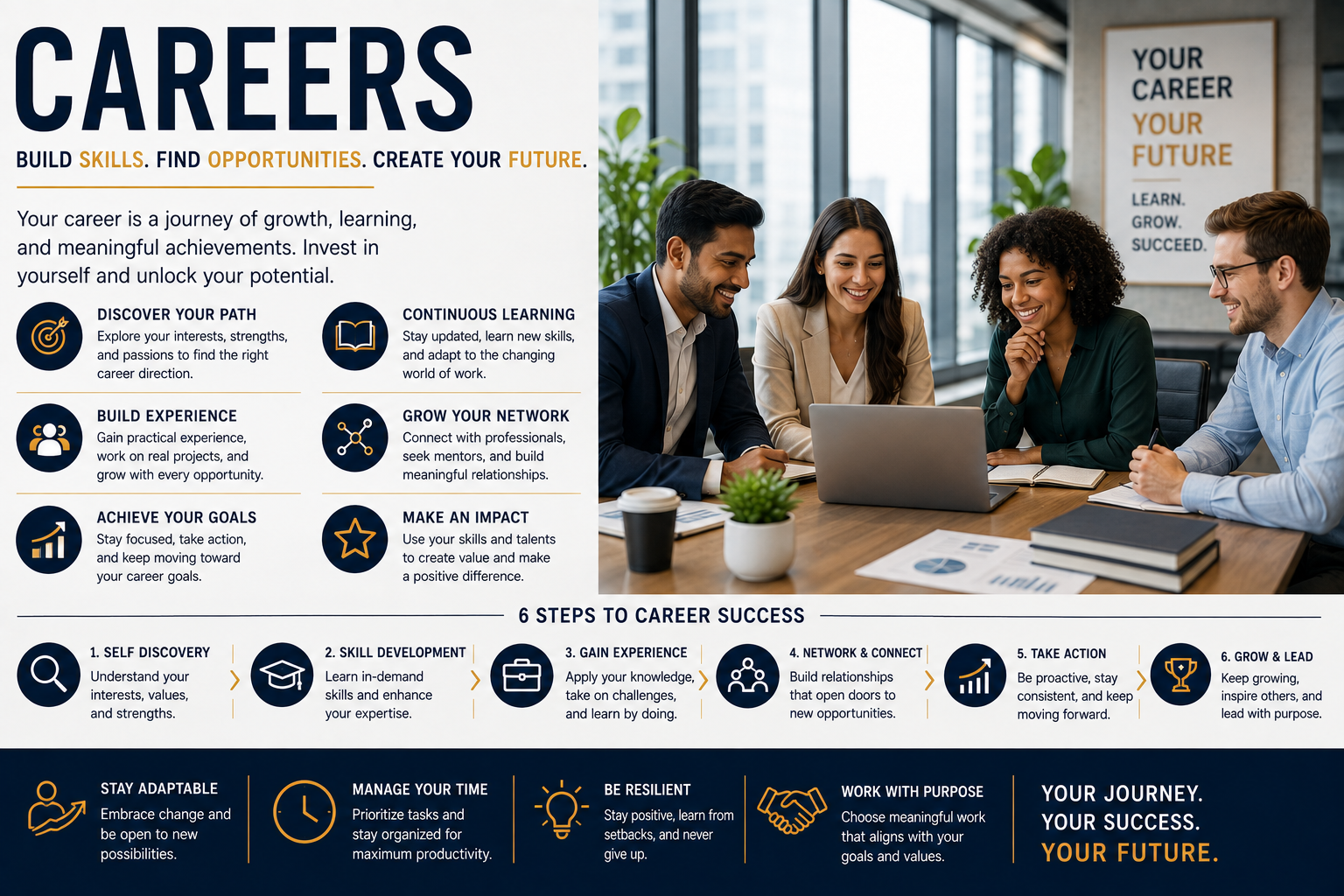
A successful career is no longer simply about finding one job and staying in the same position for many years. Career development increasingly involves continuous learning, building professional relationships, developing relevant skills, and making informed decisions about future opportunities.
Understanding Your Career Goals
The first step toward building a successful career is understanding what you want to achieve.
Career goals can vary significantly from one person to another. Some professionals may prioritize leadership opportunities, while others may value flexibility, creativity, financial growth, professional expertise, or meaningful work.
Clear goals provide direction.
Professionals should consider questions such as:
What type of work do I enjoy?
What skills do I already have?
Which skills do I need to develop?
What industries interest me?
Where do I want my career to be in five years?
What type of workplace environment suits me?
What opportunities can help me move toward my long-term goals?
Career goals do not have to remain unchanged. As people gain experience, their priorities and interests can evolve.
Developing Relevant Skills
Skills are among the most important assets in any career.
Employers increasingly value professionals who can combine technical expertise with communication, problem-solving, collaboration, and adaptability.
Technical skills may include data analysis, software development, digital marketing, financial management, project management, cybersecurity, design, or other specialized capabilities.
Soft skills are equally important. Communication, leadership, teamwork, critical thinking, emotional intelligence, and time management can influence professional performance across almost every industry.
Professionals should regularly evaluate which skills are becoming more valuable within their chosen field.
The Importance of Continuous Learning
Learning should not stop after completing formal education.
Industries continue to evolve, and new technologies can change the skills organizations require. Professionals who continue learning can remain competitive and better prepared for new opportunities.
Continuous learning can take many forms, including:
Professional courses
Certifications
Workshops
Industry conferences
Online learning
Mentorship
Books and publications
Practical projects
Professional communities
The most effective learning combines knowledge with practical application.
Rather than simply collecting certificates, professionals should look for opportunities to apply new skills to real projects and business challenges.
Building Professional Experience
Experience helps transform knowledge into practical capability.
Early-career professionals can build experience through internships, entry-level positions, freelance projects, volunteering, apprenticeships, and personal projects.
Professionals who are already employed can seek opportunities to take on additional responsibilities or participate in cross-functional projects.
Experience does not always need to come from a formal job title.
A professional who manages a complex project, develops a new process, leads a team initiative, or solves a difficult problem can demonstrate valuable capabilities regardless of their official position.
Building a Strong Professional Network
Professional networking can play an important role in career development.
A strong network can provide access to knowledge, mentorship, industry information, job opportunities, and professional relationships.
Networking does not have to be transactional.
Professionals can build relationships by attending industry events, participating in professional communities, communicating with colleagues, sharing useful information, and supporting other people in their careers.
Over time, these relationships can lead to opportunities that may not be publicly advertised.
The quality of a professional network is often more important than the number of connections.
Personal Branding and Professional Reputation
In a competitive employment environment, professionals should also consider how they present themselves.
A professional reputation develops through experience, communication, reliability, expertise, and the quality of work a person produces.
Online professional profiles can also influence how employers, recruiters, clients, and industry peers perceive an individual.
A strong professional profile should clearly communicate a person's skills, experience, accomplishments, and areas of expertise.
Personal branding should not mean exaggerating achievements. Instead, it should make genuine strengths and professional value easier to understand.
Adapting to Artificial Intelligence
Artificial intelligence is changing many aspects of work.
Some tasks are becoming automated, while new roles and responsibilities are emerging. Professionals in almost every industry may encounter AI tools that affect how they perform their jobs.
Rather than viewing technology only as a threat, professionals can approach it as an opportunity to improve productivity and develop new capabilities.
Learning how AI applies to a particular industry can help professionals remain relevant.
The most valuable approach is often to combine technology skills with uniquely human capabilities such as creativity, judgment, communication, leadership, and problem-solving.
Finding the Right Career Opportunity
Finding a suitable job involves more than searching for the highest salary.
Professionals should evaluate opportunities based on multiple factors, including responsibilities, organizational culture, career development, leadership, flexibility, learning opportunities, and long-term potential.
Before accepting an opportunity, candidates should research the organization and understand what the role actually involves.
A position that looks attractive on paper may not necessarily provide the environment needed for long-term professional development.
The right opportunity should ideally align with both immediate needs and broader career goals.
Preparing for Job Interviews
Interviews provide an opportunity for candidates to demonstrate more than their qualifications.
Successful candidates communicate how their experience can solve problems and contribute to an organization's goals.
Preparation should include researching the company, understanding the role, reviewing relevant experience, and preparing examples of previous achievements.
Candidates should be prepared to discuss challenges they have faced and explain how they responded.
Good interview preparation is not about memorizing perfect answers. It is about understanding your own experience well enough to communicate it clearly and confidently.
Career Growth Within an Organization
Career development does not always require changing employers.
Many organizations provide opportunities for employees to advance into senior roles, take on new responsibilities, or move into different departments.
Employees who want to progress should communicate their goals with managers and actively seek opportunities to demonstrate their capabilities.
Taking initiative can be valuable. Professionals can volunteer for important projects, develop new skills, support colleagues, and identify opportunities to improve processes.
Career growth is often the result of consistently demonstrating value rather than simply waiting for a promotion.
Mentorship and Career Development
Mentorship can provide valuable guidance throughout a professional journey.
A mentor can share experiences, provide feedback, introduce new perspectives, and help professionals understand potential career paths.
Mentorship can be formal or informal.
A professional may develop a relationship with a senior colleague, industry expert, former manager, or experienced professional who is willing to share advice.
The best mentoring relationships are based on trust, openness, and a willingness to learn.
Managing Career Transitions
Career changes are becoming increasingly common.
Professionals may decide to move into a new industry, change their specialization, return to work after a break, or pursue entrepreneurship.
A career transition can be challenging, but existing skills may often be transferable.
Communication, project management, leadership, customer service, analytical thinking, and problem-solving skills can apply across many different roles.
Before making a major transition, professionals should research the target field, identify skill gaps, develop relevant experience, and build relationships within the new industry.
Creating a Long-Term Career Strategy
Career development becomes more effective when professionals think beyond their next job.
A long-term career strategy can include short-term objectives, skill-development plans, networking goals, financial considerations, and potential leadership opportunities.
Professionals should review their career plans periodically.
Changes in technology, industry conditions, personal priorities, and professional interests may require adjustments.
A career strategy should therefore provide direction without becoming a rigid plan.
The Future of Careers
The future of work will likely create both challenges and opportunities.
Artificial intelligence, automation, digital collaboration, changing business models, and emerging industries will continue to influence employment.
Professionals who remain adaptable and committed to learning will be better positioned to respond to these changes.
The ability to learn quickly may become as important as existing expertise.
At the same time, human capabilities such as creativity, empathy, leadership, collaboration, and critical thinking will remain valuable.
Future careers will likely require professionals to combine technology awareness with strong human skills.
Conclusion
Building a successful career is an ongoing process rather than a single achievement.
Professionals can strengthen their career prospects by setting clear goals, developing relevant skills, gaining practical experience, building professional networks, creating a strong reputation, and remaining adaptable as industries evolve.
Continuous learning is particularly important in a world where technology is changing how work is performed.
Whether someone is entering the workforce, seeking career advancement, changing industries, or preparing for leadership, thoughtful career planning can help turn opportunities into long-term professional growth.
Ultimately, career success is not defined by one job title or one promotion. It is built through the combination of knowledge, experience, relationships, adaptability, and a willingness to keep developing.
Professionals who invest in themselves and remain open to learning can create careers that are not only successful today but also prepared for the opportunities of tomorrow.