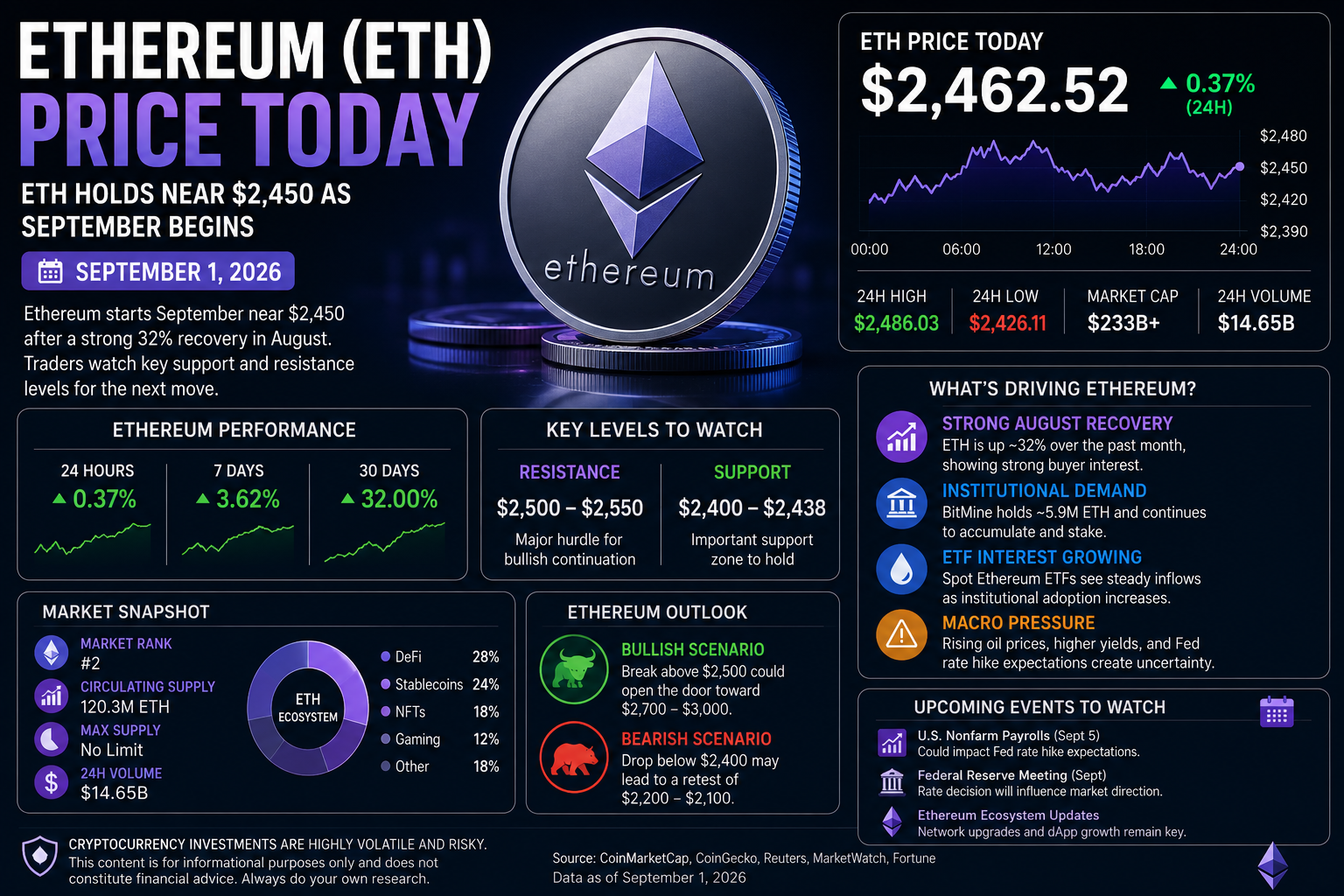
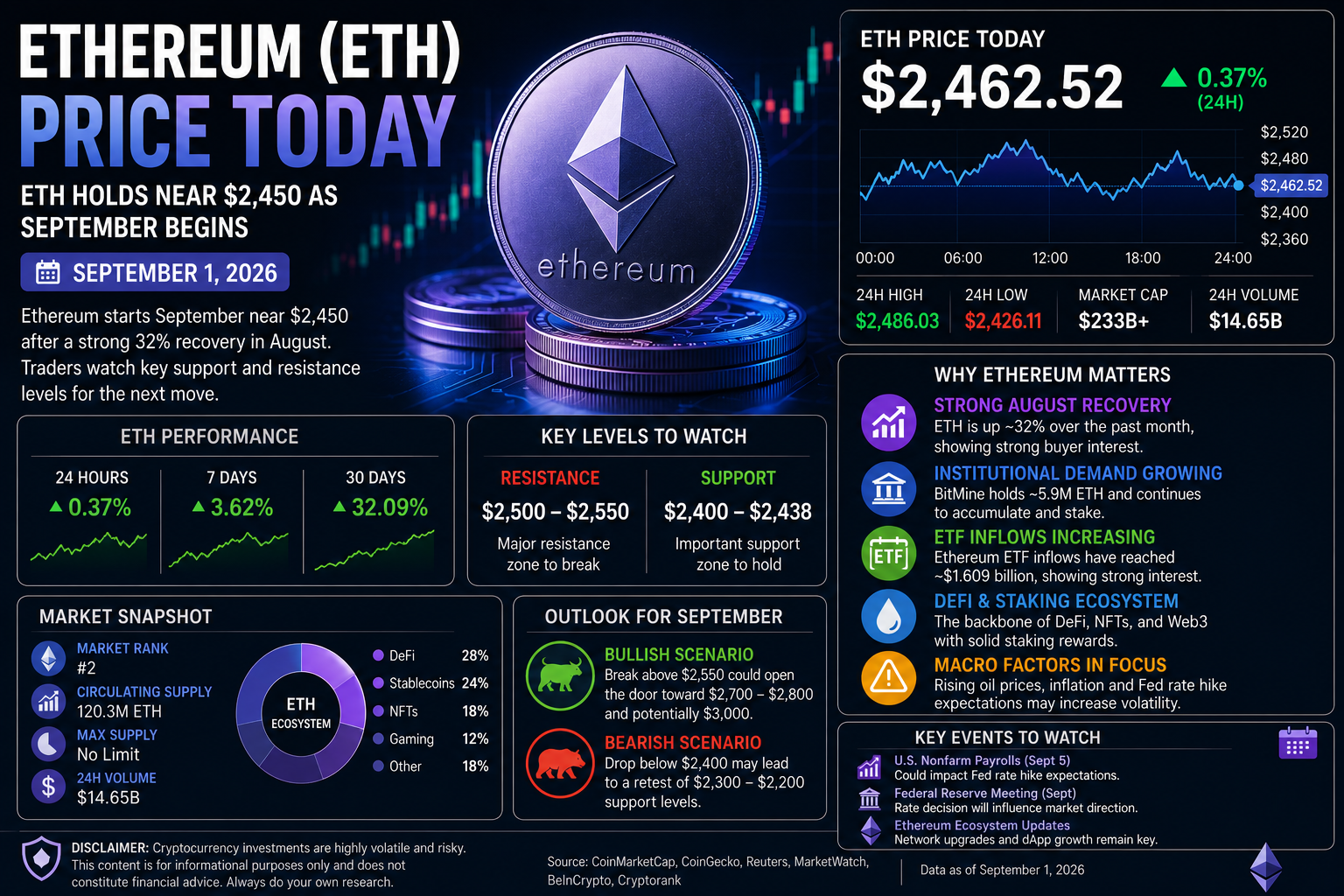
Ethereum (ETH) is beginning September near the $2,450 level, following a powerful recovery during August that pushed the world's second-largest cryptocurrency sharply higher from its earlier lows.
At 8 a.m. Eastern Time on September 1, Ethereum was trading at approximately $2,462.52, up 0.37% from the previous morning. ETH was also around 32.09% higher than one month earlier, when it traded near $1,864.19. However, Ethereum remained more than 40% below its price from the same time last year.
The latest market action comes after Ethereum climbed above $2,500 during its August rally before pulling back toward the mid-$2,400 range. Traders are now watching whether ETH can turn the recent breakout into a sustainable uptrend or whether the cryptocurrency will enter another period of consolidation.
Ethereum is also facing the same broader macroeconomic pressures affecting Bitcoin and other risk assets. Rising oil prices, higher Treasury yields and changing expectations for Federal Reserve policy have created a more uncertain environment for cryptocurrencies. Reuters reported that the U.S. 10-year Treasury yield reached approximately 4.8% on September 1, while Brent crude climbed to around $92.10 per barrel.
Ethereum Price Today
The latest market snapshot shows Ethereum around the following levels:
Ethereum Metric | Approximate Value |
|---|---|
ETH Price | $2,450–$2,465 |
Market Capitalization | Around $233 billion |
24-Hour Change | About +0.37% |
One-Month Change | About +32% |
Key Support | Around $2,438 |
Major Resistance | $2,500–$2,550 |
Market Rank | #2 |
Fortune's September 1 market snapshot put Ethereum at $2,462.52, with the cryptocurrency up $9.29 from the previous morning.
Another September 1 analysis placed ETH at approximately $2,453.36, describing the cryptocurrency as caught between a still-bullish broader structure and weaker short-term momentum.
Since cryptocurrency markets trade continuously, the exact price can change significantly after publication.
Ethereum's Strong August Recovery
August was an important month for Ethereum.
ETH started the month near the $1,800–$1,900 area before experiencing a sharp recovery. By the end of August, the cryptocurrency had moved back toward and above $2,500.
Fortune's September 1 data shows that Ethereum gained approximately 32% in one month, rising from $1,864.19 to $2,462.52.
Other market reports have described the August move as one of Ethereum's strongest rallies of the year.
The broader cryptocurrency market also strengthened during August, with Bitcoin returning toward $80,000 and major altcoins including XRP and Solana gaining momentum.
Ethereum's performance was particularly important because ETH often acts as a barometer for broader altcoin demand.
When investors become more comfortable taking risk beyond Bitcoin, Ethereum is frequently one of the first major assets to benefit.
Why $2,500 Is Important for Ethereum
The $2,500 level has become a major psychological and technical area for ETH.
Ethereum recently moved above $2,500 but failed to establish a decisive breakout.
Current market analysis identifies the $2,500–$2,550 region as an important resistance zone. A September 1 report said ETH entered the month around $2,440, while $2,550 had rejected two previous breakout attempts.
A sustained move above $2,500 could therefore strengthen the bullish outlook.
If buyers manage to push ETH above $2,550 and hold that level, traders could begin looking toward higher targets.
However, another rejection could lead to profit-taking and renewed selling pressure.
Ethereum Support Levels to Watch
While resistance is important, support levels are equally significant.
$2,438 Support
One of the most closely watched levels entering September is approximately $2,438.
BeInCrypto's September 1 analysis identified the $2,438.85 Fibonacci level as an important test for Ethereum following its recent breakout.
If ETH holds above this area, the recent bullish structure could remain intact.
$2,400 Support
The round-number $2,400 level is another important area.
A move below $2,400 would indicate increasing short-term weakness and could encourage traders to watch lower support levels.
$2,300 Support
If Ethereum experiences a deeper correction, the $2,300 region could become another area of interest.
Previous breakout zones can sometimes become support after an asset moves higher.
Ethereum Bullish Scenario
The bullish case for Ethereum is relatively straightforward.
If ETH holds above approximately $2,400–$2,438 and breaks through the $2,500–$2,550 resistance zone, momentum could strengthen.
A successful breakout could encourage traders to target the $2,700 area and potentially $3,000 if broader market conditions remain favorable.
Recent market analysis has identified approximately $2,800 as a potential September target if Ethereum's breakout structure continues to develop.
However, price targets are scenarios rather than guarantees.
For Ethereum to continue higher, the broader cryptocurrency market would also likely need to remain supportive.
Ethereum Bearish Scenario
The bearish case would develop if ETH loses the $2,400 region.
A sustained break below $2,438 would weaken the current technical structure and could indicate that the August rally is losing momentum.
A larger correction could then bring the $2,200–$2,300 region into focus.
Ethereum is also highly correlated with Bitcoin, meaning a sharp BTC decline could place additional pressure on ETH.
Ethereum's Institutional Demand
Institutional interest has become an increasingly important part of Ethereum's market story.
One of the most notable developments entering September is the continued accumulation of ETH by BitMine.
Recent reporting said BitMine purchased another 53,501 ETH, bringing its holdings close to 5.9 million ETH, equivalent to roughly 4.9% of circulating supply.
The company has also been staking a significant portion of its Ethereum holdings.
Large-scale accumulation is important because it demonstrates that some institutional investors are treating ETH as a long-term asset rather than simply a short-term trading instrument.
However, institutional purchases do not guarantee that ETH will rise.
Market prices remain influenced by liquidity, macroeconomic conditions, investor sentiment and broader cryptocurrency flows.
Ethereum ETF Demand
Ethereum exchange-traded funds have become another important source of institutional exposure.
Spot Ethereum ETFs allow traditional investors to gain exposure to ETH through financial-market products rather than directly holding cryptocurrency.
September begins with increased attention on Ethereum's ETF market as institutional investors consider both Bitcoin and Ethereum.
A September 1 report said Ethereum ETF inflows had reached approximately $1.609 billion, highlighting the growing importance of institutional demand.
ETF flows can have a meaningful influence on market sentiment.
Strong inflows can signal increasing demand, while sustained outflows can create additional selling pressure.
For Ethereum traders, monitoring ETF flows may therefore become just as important as watching technical charts.
Ethereum and Staking
One of Ethereum's most important characteristics is its proof-of-stake network.
Ethereum uses validators to help secure the blockchain, with ETH holders able to participate in staking either directly or through various services.
Staking can provide holders with rewards for helping secure the network.
This creates an additional reason for investors to hold ETH beyond simply expecting the token price to increase.
However, staking does not eliminate market risk.
ETH can decline substantially in price even while a holder continues earning staking rewards.
Investors should also consider the risks associated with the specific staking platform or service they use.
Ethereum's Role in the Crypto Economy
Ethereum is more than a cryptocurrency.
The Ethereum blockchain provides infrastructure for a huge range of decentralized applications.
Its ecosystem includes:
Decentralized finance
Stablecoins
Smart contracts
NFTs
Tokenized assets
Decentralized exchanges
Web3 applications
Blockchain gaming
Financial applications
This utility is one of the main reasons Ethereum remains the second-largest cryptocurrency by market capitalization.
Unlike Bitcoin, which is primarily viewed as a decentralized monetary asset, Ethereum is also a programmable blockchain platform.
Ethereum and Decentralized Finance
Decentralized finance, or DeFi, remains one of Ethereum's most important use cases.
DeFi applications allow users to access services such as lending, borrowing, trading and asset management through blockchain-based protocols.
Ethereum has historically been the dominant network for many DeFi applications.
As the decentralized-finance sector develops, activity across these applications can influence demand for Ethereum's blockchain.
However, DeFi also carries significant risks.
Smart-contract vulnerabilities, liquidity problems, market volatility and protocol failures can create substantial losses for users.
Ethereum and Stablecoins
Stablecoins are another major component of Ethereum's ecosystem.
Many stablecoins operate on Ethereum and are used for trading, payments and decentralized finance.
The growth of stablecoin activity can increase the importance of Ethereum's infrastructure.
It has also attracted growing regulatory attention because stablecoins are increasingly being used as digital representations of fiat currencies.
Changes in stablecoin regulation could therefore have an indirect impact on Ethereum's ecosystem.
Ethereum and Bitcoin
Ethereum's price remains strongly influenced by Bitcoin.
Bitcoin continues to account for the largest share of the cryptocurrency market.
When BTC rises strongly, investor confidence often spreads into Ethereum and other major altcoins.
When Bitcoin falls sharply, Ethereum can experience an even larger percentage decline.
This relationship means ETH investors should pay close attention to Bitcoin's price action.
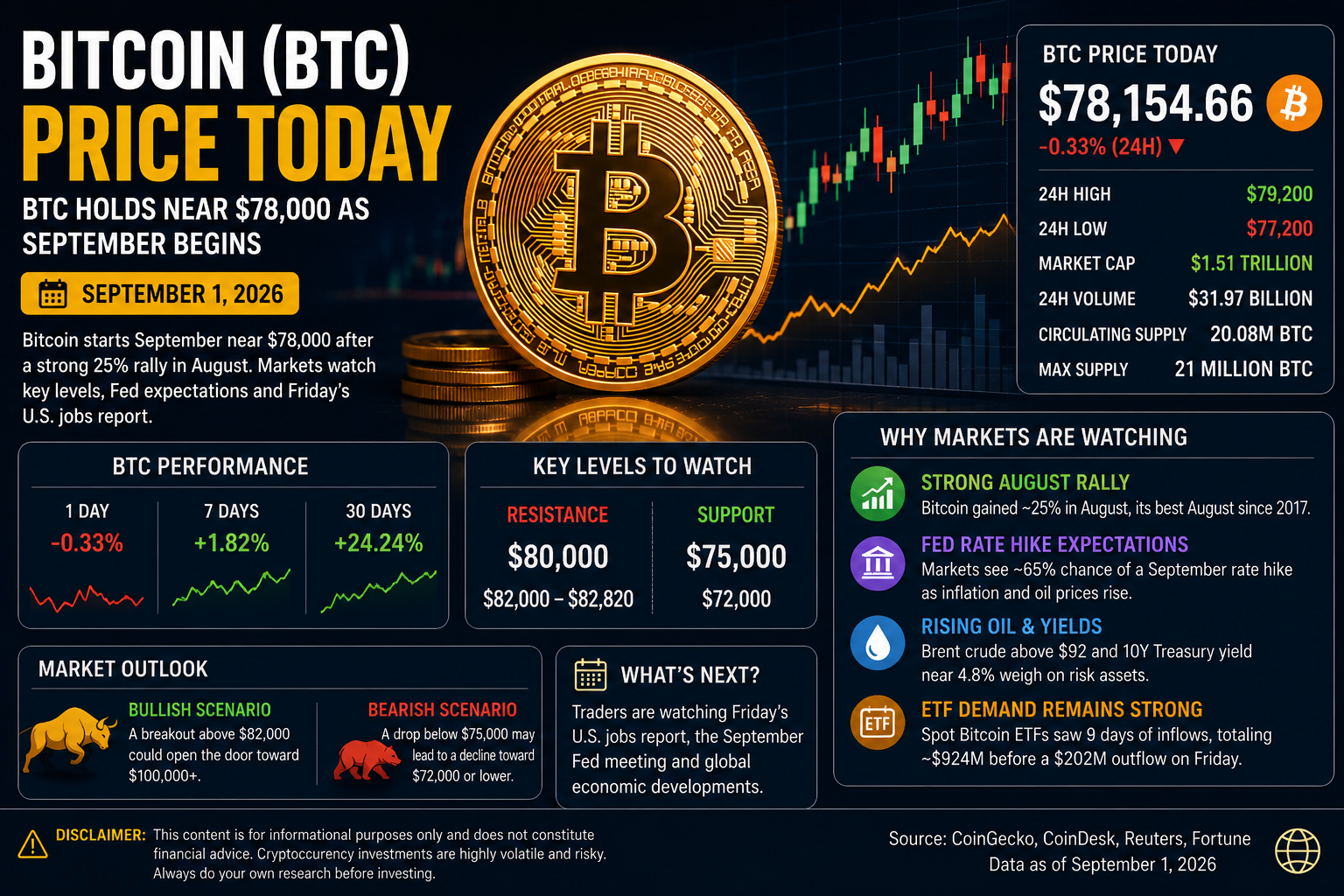
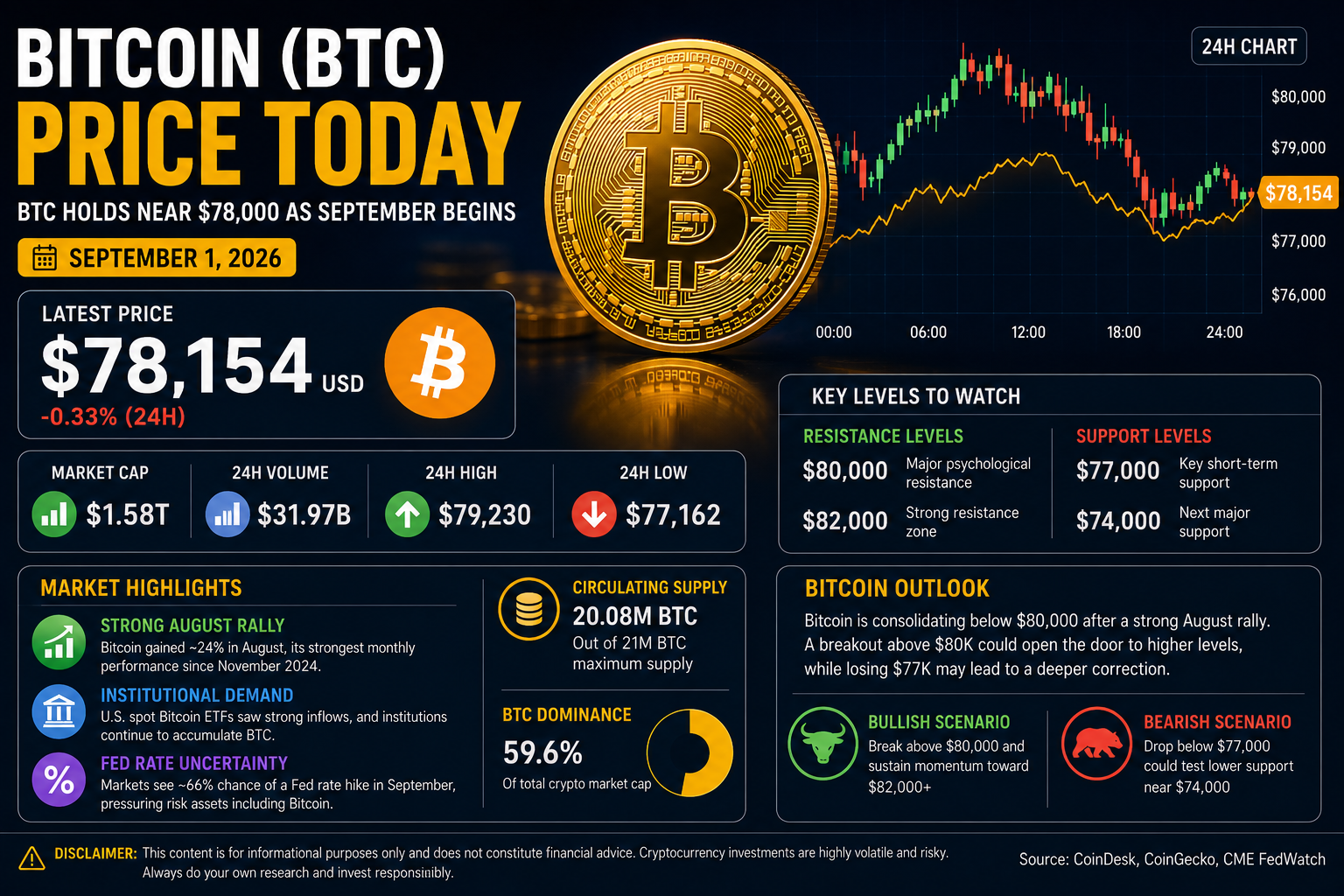
As September begins, BTC is trading near $78,000 while ETH is near $2,450, with both assets experiencing some pressure as global markets react to higher oil prices and rising bond yields.
Federal Reserve Policy and Ethereum
Macroeconomic conditions could become one of the biggest drivers of ETH during September.
Markets are increasingly focused on U.S. inflation and Federal Reserve interest-rate policy.
Reuters reported that financial markets were assigning approximately a 65% probability to a U.S. rate hike in September as inflation concerns increased.
Higher interest rates can put pressure on risk assets because investors may prefer assets offering more predictable yields.
Cryptocurrencies such as Ethereum can therefore become less attractive when bond yields rise significantly.
At the same time, Ethereum's strong August recovery shows that demand for the asset remains substantial.
Rising Oil Prices and Inflation
Oil prices are another major factor.
Brent crude rose to approximately $92.10 per barrel on September 1, according to Reuters.
Higher energy prices can increase inflation expectations.
If inflation remains elevated, central banks may be more cautious about cutting rates.
That could create additional headwinds for Ethereum and other risk assets.
The cryptocurrency market is therefore entering September at an important intersection between strong crypto-specific momentum and challenging macroeconomic conditions.
Could Ethereum Reach $3,000?
One of the biggest questions for ETH investors is whether Ethereum can return to $3,000.
At approximately $2,460, Ethereum would need to gain around 22% to reach $3,000.
Such a move is possible during a strong cryptocurrency rally, but ETH would first need to overcome several resistance levels.
The first major challenge is $2,500.
The next major area is around $2,550.
A successful move through these levels could potentially open the path toward $2,700 and eventually $3,000.
However, Ethereum would likely need support from Bitcoin and the wider crypto market.
If BTC falls sharply, ETH could struggle to maintain its momentum.
Ethereum Risks Investors Should Watch
Despite the strong August rally, Ethereum remains a high-risk asset.
Market Volatility
ETH can move hundreds of dollars in a relatively short period.
Regulatory Risk
Changes in cryptocurrency regulations can affect exchanges, ETFs, staking services and decentralized applications.
Competition
Ethereum faces competition from other smart-contract networks, including Solana and newer blockchain platforms.
Technical Risks
Applications built on Ethereum can experience smart-contract vulnerabilities even if the underlying blockchain remains operational.
Macroeconomic Risk
Interest rates, inflation and global financial conditions can significantly affect crypto prices.
Bitcoin Correlation
A major Bitcoin correction could quickly affect Ethereum.
What to Watch for Ethereum in September
Several developments could influence ETH during the coming weeks.
$2,500 breakout: A sustained move above this level could strengthen bullish momentum.
$2,550 resistance: Breaking this area could provide another confirmation of the uptrend.
$2,438 support: Holding this level could help preserve the recent bullish structure.
ETF flows: Continued institutional inflows could provide additional demand.
Institutional accumulation: Large ETH purchases remain an important market signal.
Federal Reserve policy: Interest-rate expectations could strongly influence risk appetite.
Bitcoin price: BTC's direction will remain one of the biggest drivers of ETH.
Global inflation: Rising energy prices could complicate the macroeconomic outlook.
Ethereum September 2026 Outlook
Ethereum enters September from a much stronger position than it held at the beginning of August.
The cryptocurrency is approximately 32% higher than one month ago, according to Fortune's September 1 data.
The August rally also produced an important technical development: Ethereum established a higher cycle high, something that earlier rallies had failed to accomplish. BeInCrypto reported that ETH broke a descending trendline that had capped rallies since the August 2025 peak.
That development gives bulls a reason to remain optimistic.
However, Ethereum now faces an important test.
The cryptocurrency must hold support around $2,438 while attempting to break through $2,500–$2,550.
A successful breakout could bring $2,700 and potentially $3,000 into focus.
A failure to hold support could instead lead to another correction.
Final Thoughts
Ethereum begins September 2026 near $2,450–$2,465, after recording a powerful recovery during August.
Fortune's September 1 snapshot placed ETH at $2,462.52, up 0.37% from the previous morning and approximately 32% above its price one month earlier.
The cryptocurrency now faces an important technical test.
The $2,500–$2,550 area represents major resistance, while approximately $2,400–$2,438 represents an important support zone.
A decisive breakout above resistance could strengthen the bullish outlook and potentially open the way toward higher levels.
At the same time, the broader financial environment remains challenging. Rising oil prices, higher Treasury yields and increasing expectations for a Federal Reserve rate hike could create additional volatility for Ethereum and the wider cryptocurrency market.
Institutional demand, Ethereum ETF activity, staking and continued blockchain adoption provide longer-term reasons for investors to remain interested in ETH.
For September, the key question is whether Ethereum can transform its strong August recovery into a sustained trend.
For now, traders are watching $2,438 support and $2,500–$2,550 resistance as the next major decision points.
Disclaimer: This article is for informational and educational purposes only and does not constitute financial, investment or trading advice. Ethereum and other cryptocurrencies are highly volatile assets, and investors can lose some or all of their capital. Always verify live market prices and conduct independent research before making financial decisions.