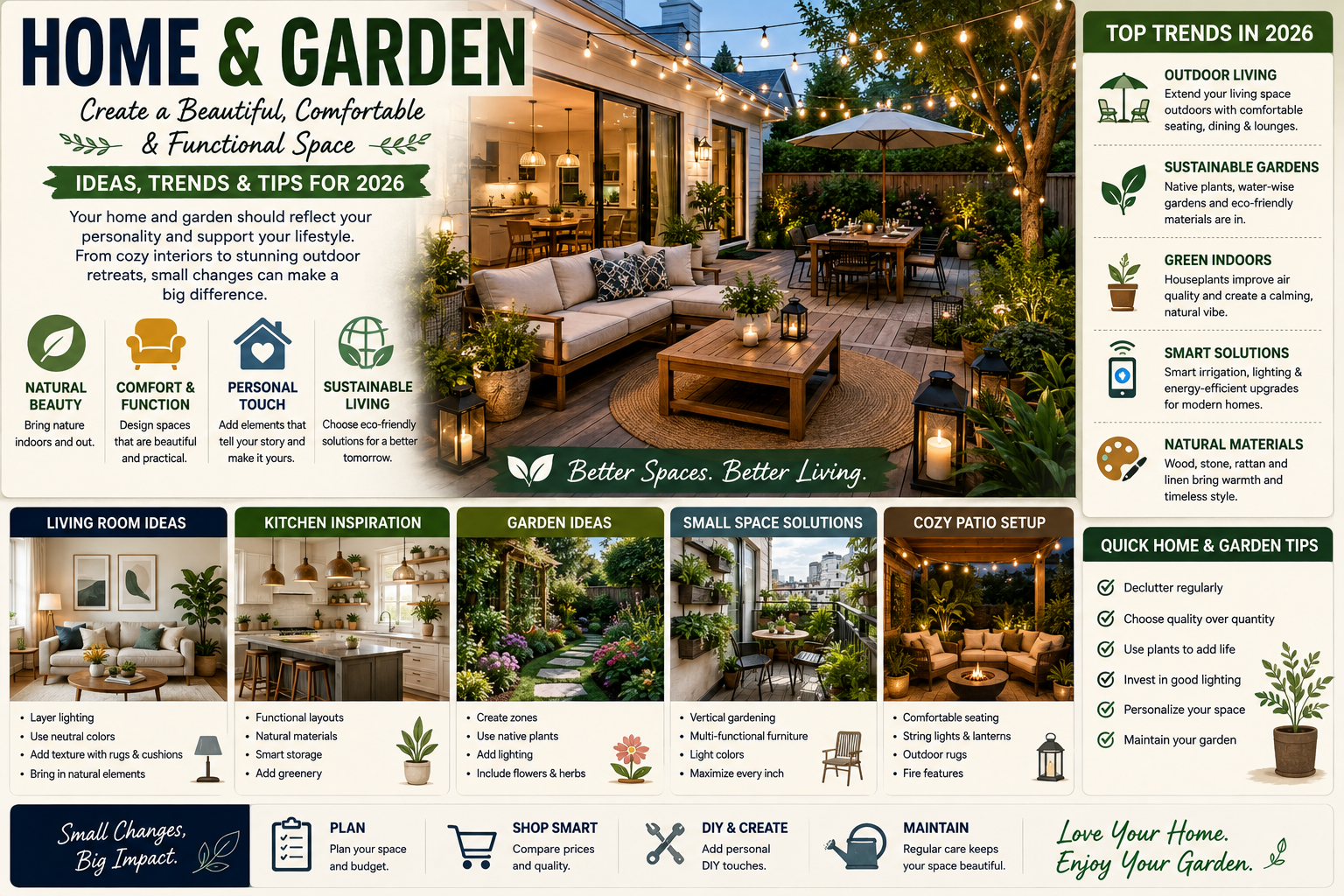
Your home and garden are more than places to live—they are spaces where you relax, entertain, work, grow plants, and spend time with family. In 2026, home and garden design is moving toward comfort, functionality, sustainability, natural materials, and personalized outdoor spaces.
Homeowners are increasingly treating gardens and patios as extensions of their indoor living areas. A 2026 Houzz study found that 83% of homeowners renovating outdoor spaces were including lounge or seating areas, while dining, quiet retreats, gardening, and outdoor cooking were also common.
Whether you have a large backyard, a small patio, a balcony, or a compact indoor space, thoughtful design can make your home feel more inviting and practical.
Creating a Comfortable Home
A beautiful home doesn't necessarily require expensive furniture or a complete renovation. Small changes can have a significant effect.
Start by focusing on the areas you use most. Comfortable seating, good lighting, organized storage, and carefully selected decorative pieces can transform an ordinary room.
Instead of filling every corner with furniture, consider leaving some open space. This can make rooms feel larger and easier to navigate.
Use Natural Materials
Natural materials continue to be popular in home design. Wood, stone, cotton, linen, rattan, bamboo, and other organic textures can introduce warmth and character.
These materials can work in almost any interior style, from modern and minimalist to rustic and traditional.
Add Layers of Lighting
Lighting can completely change the atmosphere of a room.
Consider combining:
Ceiling lighting
Floor lamps
Table lamps
Wall lights
Accent lighting
Natural daylight
Warm lighting can make bedrooms and living rooms feel cozy, while brighter task lighting can be useful in kitchens and work areas.
Make Your Home More Personal
One of the biggest design trends in 2026 is a move away from overly perfect, generic interiors.
Current home trends increasingly emphasize individuality, comfort, collections, nostalgic hobbies, and lived-in spaces.
Instead of copying an entire room from a catalog, incorporate things that reflect your personality.
You might display:
Travel souvenirs
Books
Artwork
Family photographs
Handmade objects
Vintage pieces
Plants
Collections
A personalized home can feel more welcoming than a space designed only around current trends.
Bring Nature Indoors
Plants are one of the easiest ways to introduce natural beauty into a home.
Indoor plants can add color, texture, and visual interest while creating a stronger connection between indoor and outdoor spaces.
Popular choices include:
Snake plants
Pothos
Peace lilies
Rubber plants
ZZ plants
Ferns
Herbs
Choose plants according to the amount of sunlight and humidity available rather than simply selecting the most attractive variety.
Designing a Better Garden
Gardens are increasingly being treated as outdoor rooms rather than simply areas filled with plants.
In 2026, homeowners are creating specific zones for relaxing, dining, gardening, entertaining, and wellness.
A simple backyard might include:
Relaxation zone: Comfortable chairs or an outdoor sofa.
Dining zone: A table for family meals and entertaining.
Garden zone: Raised beds, containers, herbs, vegetables, or flowers.
Quiet zone: A small bench or reading corner surrounded by plants.
You don't need a large yard to create separate zones. Even a balcony or small patio can be divided into functional areas.
Small Garden Ideas
Small outdoor spaces can be challenging, but they also encourage creative design.
Vertical gardening is one useful solution. Trellises, wall planters, hanging baskets, and vertical herb gardens can increase planting space without taking up much floor area.
Another approach is micro-zoning—dividing a compact garden into several small functional sections.
Research on 2026 garden trends shows growing interest in creating distinct zones even in smaller outdoor spaces.
For example, a small patio might have:
A two-person dining table
Vertical plants
A small storage bench
Outdoor lighting
A few decorative containers
Outdoor Living Rooms
Outdoor living rooms are becoming increasingly popular.
Instead of treating the patio as an empty area with a few chairs, homeowners are designing it more like an indoor living room.
Consider adding:
Comfortable seating
Outdoor rugs
Side tables
Cushions
Lighting
Plants
Shade
A dining area
Houzz's 2026 research found that outdoor renovations are increasingly focused on everyday enjoyment rather than simply increasing resale value.
Create a Cozy Patio
A patio can become one of the most enjoyable areas of a home with a few simple upgrades.
Warm lighting, comfortable seating, outdoor rugs, cushions, and fire features can make patios more inviting during cooler evenings.
String lights and lanterns can provide soft illumination without overwhelming the space.
If you have enough room, consider adding a small outdoor dining table so the patio can be used for breakfast, dinner, or entertaining guests.
Sustainable Gardening
Sustainability is becoming increasingly important in garden design.
Native and climate-adapted plants can be useful because they are generally better suited to local environmental conditions and may require less water and maintenance.
Current 2026 landscape trends show increasing interest in native planting, pollinator gardens, and climate-adapted species.
Sustainable gardening ideas include:
Growing native plants
Collecting rainwater where appropriate
Using mulch
Composting
Reducing unnecessary lawn areas
Choosing drought-tolerant plants
Creating pollinator-friendly spaces
Using efficient irrigation
Create a Wildlife-Friendly Garden
Your garden can become a small habitat for birds, bees, butterflies, and other wildlife.
Consider planting flowers that provide nectar and choosing plants that produce seeds or berries.
You can also add:
Bird feeders
Bird baths
Nesting boxes
Bee-friendly plants
Small water features
Natural shelter
The trend toward wildlife-friendly gardening is growing as homeowners look for ways to support biodiversity directly from their yards.
Grow Your Own Food
A vegetable or herb garden can provide both beauty and practical benefits.
You don't need a large backyard. Herbs and vegetables can be grown in containers, raised beds, balconies, or small garden areas.
Popular choices include:
Tomatoes
Chilies
Mint
Basil
Coriander
Lettuce
Cucumbers
Strawberries
Growing food also provides an opportunity to spend more time outdoors and understand where your food comes from.
Low-Maintenance Gardens
Not everyone wants to spend hours every weekend mowing, watering, pruning, and weeding.
Low-maintenance gardening has become a major trend in 2026, with designers focusing on attractive landscapes that require less ongoing work.
Some useful strategies include:
Choosing hardy plants
Using mulch
Grouping plants with similar water requirements
Installing efficient irrigation
Using ground covers
Reducing lawn areas
Selecting climate-appropriate plants
The goal isn't to create an empty garden. Instead, it is to create a landscape that remains attractive without requiring constant maintenance.
Smart Garden Technology
Technology is also entering the garden.
Smart irrigation systems can help control watering more efficiently, while gardening apps can provide plant information and reminders.
Modern garden technology can help homeowners monitor:
Soil moisture
Watering
Weather
Plant health
Garden schedules
Smart irrigation and precision gardening are among the trends being discussed for 2026.
Technology should complement good gardening practices rather than replace them.
French-Inspired Gardens
French garden design is gaining attention in 2026, with increased interest in structured yet romantic outdoor spaces.
Recent trend reporting highlights plants such as lavender, French roses, rosemary, boxwood, and ornamental grasses as key choices for creating a French-inspired look.
You don't need a huge formal garden to use the style.
A small courtyard could combine:
Lavender
Potted rosemary
Gravel
Structured greenery
Simple outdoor furniture
Soft lighting
The result can feel elegant without becoming overly complicated.
Green-on-Green Gardens
Another interesting 2026 trend is the green-on-green garden.
Instead of relying heavily on colorful flowers, this approach uses different shades, shapes, and textures of green foliage.
Combining glossy leaves with matte foliage, grasses with broad-leaf plants, and different plant heights can create depth while maintaining a calm aesthetic.
This style can work especially well for people who prefer peaceful, natural-looking gardens.
Home Organization
Good design isn't only about decoration. Organization is equally important.
Storage solutions can help keep frequently used items accessible while reducing visual clutter.
Consider:
Storage benches
Baskets
Wall shelves
Built-in cabinets
Under-bed storage
Entryway organizers
Multipurpose furniture
A well-organized home can feel larger and more comfortable without changing its actual size.
Home & Garden on a Budget
You don't need a huge budget to improve your home and garden.
Start with small projects that provide noticeable results.
For example:
Rearrange furniture.
Declutter unused items.
Add indoor plants.
Replace outdated lighting.
Paint one room.
Add cushions or throws.
Create a small balcony garden.
Add outdoor lighting.
Refresh plant containers.
Create a dedicated outdoor seating area.
Even inexpensive improvements can change how a space feels.
Final Thoughts
Home and garden design in 2026 is increasingly about comfort, personality, nature, sustainability, and everyday use.
Outdoor spaces are becoming extensions of the home, with dedicated areas for dining, relaxing, gardening, entertaining, and wellness. At the same time, sustainable planting, native plants, wildlife-friendly gardens, low-maintenance landscaping, and smart irrigation are becoming increasingly important.
The best home isn't necessarily the most expensive or trendiest one. It's the space that works for your lifestyle.
Whether you're decorating a living room, redesigning a backyard, creating a balcony garden, or simply looking for better organization, small thoughtful changes can make your home feel more comfortable, beautiful, and useful.
Frequently Asked Questions
1. What are the biggest home and garden trends in 2026?
Major trends include outdoor living rooms, garden zoning, sustainable planting, native plants, low-maintenance landscaping, wellness spaces, smart irrigation, and personalized interiors.
2. How can I make a small garden look bigger?
Use vertical planting, layered plants, multifunctional furniture, lighter surfaces, and clearly defined zones.
3. What is an outdoor living room?
An outdoor living room is a patio or garden area designed like an indoor living space, often with seating, rugs, lighting, tables, and decorative elements.
4. How can I create a low-maintenance garden?
Choose climate-appropriate plants, use mulch, reduce lawn areas, group plants according to water requirements, and consider efficient irrigation.
5. Are native plants good for gardens?
Native and climate-adapted plants can support local wildlife and may require less water and maintenance once established.
6. How can I make my patio more comfortable?
Add comfortable seating, cushions, outdoor lighting, rugs, shade, and—where appropriate—a fire feature.
7. Can I create a garden on a balcony?
Yes. Containers, vertical planters, hanging baskets, herbs, and compact furniture can transform a balcony into a small outdoor retreat.
8. What is a wildlife-friendly garden?
It's a garden designed to provide food, shelter, water, and habitat for birds, bees, butterflies, and other wildlife.
9. What is green-on-green garden design?
It is a landscaping style that uses different shades, textures, shapes, and heights of green plants rather than relying primarily on colorful flowers.
10. How can I improve my home without spending a lot?
Decluttering, rearranging furniture, adding plants, improving lighting, painting, and introducing inexpensive textiles can make a noticeable difference.