
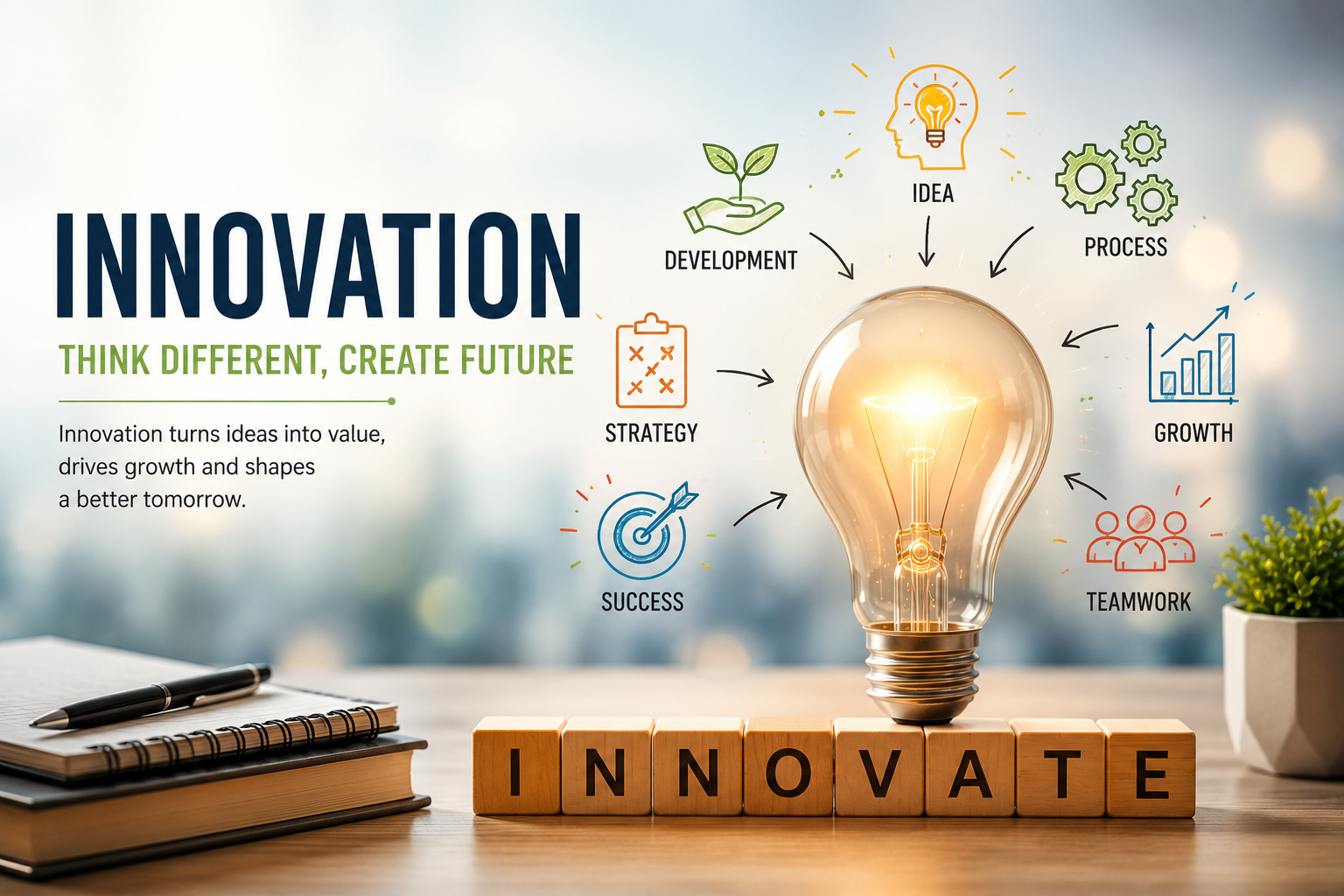
Innovation is no longer a luxury reserved for large corporations with massive research budgets. In today's competitive business environment, innovation has become an essential strategy for organizations of every size. Whether improving products, adopting new technologies, enhancing customer experiences, or streamlining operations, businesses that embrace innovation are better equipped to adapt to change and achieve sustainable growth.
As industries continue to evolve, customer expectations are rising, technology is advancing rapidly, and global competition is becoming more intense. Businesses that fail to innovate risk falling behind, while those that foster creativity and continuous improvement position themselves as industry leaders.
What Is Business Innovation?
Business innovation is the process of developing and implementing new ideas, products, services, technologies, or processes that create value for customers and improve organizational performance. Innovation is not limited to breakthrough inventions—it also includes making existing systems more efficient, solving customer problems in creative ways, and finding better methods of delivering products and services.
Successful innovation helps businesses remain competitive, increase profitability, and respond effectively to market changes.
Why Innovation Is Essential
Innovation provides organizations with the ability to adapt quickly in a constantly changing marketplace. Businesses that invest in innovation often experience higher customer satisfaction, stronger employee engagement, and improved financial performance.
Key benefits of innovation include:
Increased operational efficiency
Higher customer loyalty
Stronger competitive advantage
Improved productivity
Greater profitability
Faster adaptation to market trends
Enhanced brand reputation
Organizations that continuously innovate are more resilient during economic uncertainty and industry disruption.
Different Types of Innovation
Product Innovation
Product innovation focuses on developing new products or improving existing ones to better meet customer needs. Businesses that regularly update their products remain relevant and attract new customers.
Examples include AI-powered software, smart consumer devices, sustainable packaging, and advanced healthcare technologies.
Process Innovation
Process innovation improves how work is completed within an organization. Businesses optimize workflows, reduce costs, and improve efficiency by adopting better operational methods.
Examples include:
Workflow automation
Digital document management
Robotic process automation
Cloud-based collaboration
Artificial intelligence for repetitive tasks
Service Innovation
Outstanding customer service often becomes a competitive advantage. Service innovation improves customer experiences through faster support, personalized interactions, and digital convenience.
Examples include:
AI chatbots
Self-service portals
Mobile applications
Omnichannel customer support
Personalized recommendations
Business Model Innovation
Business model innovation changes how companies create, deliver, and capture value.
Examples include:
Subscription-based services
Online marketplaces
Direct-to-consumer models
Freemium software platforms
Digital ecosystems
Many of today's fastest-growing companies achieved success by transforming traditional business models.
Technology and Innovation
Technology continues to accelerate innovation across every industry.
Artificial Intelligence
Artificial intelligence helps businesses analyze data, automate tasks, improve customer experiences, and make faster decisions.
Applications include:
Predictive analytics
Fraud detection
Customer support
Inventory management
Marketing personalization
Cloud Computing
Cloud technology enables businesses to access scalable infrastructure, collaborate remotely, and reduce technology costs.
Internet of Things (IoT)
Connected devices generate valuable data that improves manufacturing, logistics, healthcare, agriculture, and smart cities.
Automation
Automation reduces repetitive manual work while increasing speed, accuracy, and efficiency.
Creating an Innovative Culture
Innovation begins with people.
Organizations that encourage employees to think creatively, experiment with new ideas, and collaborate openly build stronger innovation cultures.
An innovative workplace encourages:
Continuous learning
Creative problem-solving
Cross-functional collaboration
Employee empowerment
Knowledge sharing
Constructive feedback
Employees who feel supported are more likely to contribute valuable ideas.
Leadership and Innovation
Leadership plays a vital role in encouraging innovation.
Innovative leaders:
Inspire creativity
Encourage experimentation
Invest in employee development
Support calculated risk-taking
Promote collaboration
Focus on long-term value creation
Strong leadership creates an environment where innovation becomes part of everyday business operations.
Customer-Centered Innovation
The best innovations solve real customer problems.
Businesses should regularly gather customer insights through:
Surveys
Product reviews
Social media engagement
Customer interviews
Analytics platforms
Support interactions
Listening to customers enables businesses to create products and services that truly meet market needs.
Sustainable Innovation
Sustainability is becoming a major focus for businesses worldwide.
Organizations are developing environmentally responsible solutions through:
Renewable energy adoption
Sustainable packaging
Waste reduction
Circular economy initiatives
Energy-efficient manufacturing
Green supply chain management
Sustainable innovation not only benefits the environment but also strengthens brand trust and long-term profitability.
Common Challenges
Innovation often comes with obstacles.
Businesses frequently encounter:
Resistance to change
Budget limitations
Lack of skilled talent
Fear of failure
Rapid technological evolution
Poor communication
These challenges can be overcome through strategic planning, employee training, and strong leadership.
Measuring Innovation Success
Businesses should evaluate innovation using measurable performance indicators such as:
Revenue from new products
Customer satisfaction scores
Employee engagement
Productivity improvements
Market share growth
Cost savings
Return on investment
Time-to-market
Regular evaluation helps organizations refine their innovation strategies.
Emerging Innovation Trends
Several trends are shaping the future of business innovation:
Artificial intelligence integration
Hyper-personalized customer experiences
Automation across industries
Digital transformation
Sustainable technologies
Smart manufacturing
Data-driven decision-making
Collaborative innovation ecosystems
Companies that adopt these trends early often gain a significant competitive advantage.
Best Practices for Encouraging Innovation
Organizations can strengthen innovation by:
Investing in employee training
Encouraging creative thinking
Rewarding innovative ideas
Adopting emerging technologies
Promoting teamwork
Testing new concepts quickly
Learning from unsuccessful projects
Making customer needs a priority
These practices create a culture of continuous improvement and adaptability.
The Future of Innovation
Innovation will remain one of the most important drivers of business success over the next decade. Emerging technologies such as artificial intelligence, robotics, biotechnology, quantum computing, and advanced analytics will continue transforming industries and creating new opportunities.
Businesses that remain flexible, customer-focused, and committed to continuous innovation will be better prepared to thrive in an increasingly digital and competitive marketplace.
Conclusion
Innovation is the foundation of long-term business growth and resilience. By embracing new technologies, encouraging creative thinking, improving processes, and focusing on customer needs, organizations can unlock new opportunities and remain competitive in a rapidly changing world.
Businesses that make innovation part of their culture are more likely to increase efficiency, strengthen customer relationships, improve profitability, and build sustainable success. In an era defined by constant change, innovation is not simply an advantage—it is the key to shaping the future of business.