
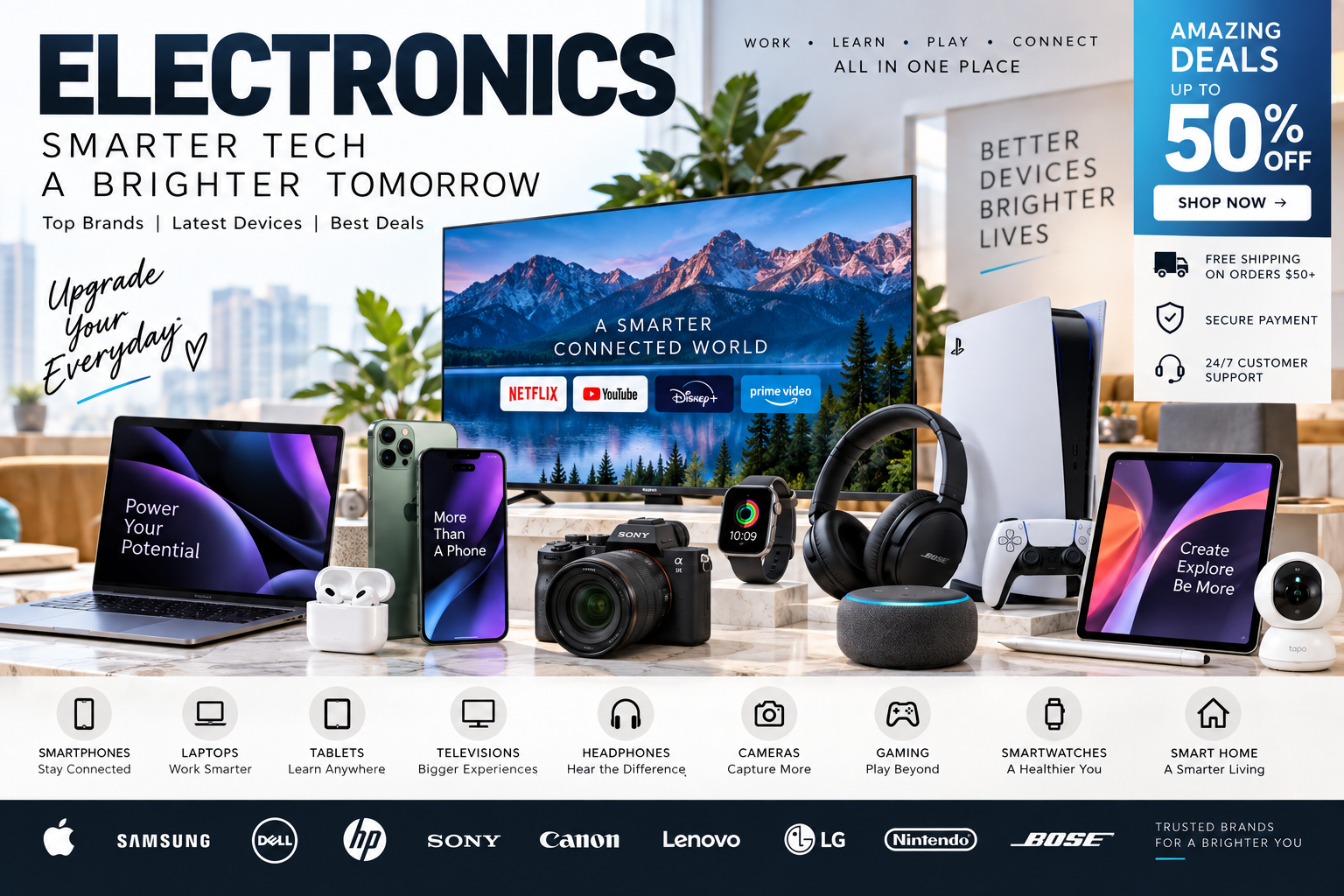
Electronics have become an essential part of modern life. From smartphones and laptops to televisions, headphones, smartwatches, gaming consoles, cameras, and smart home devices, electronic products influence how people communicate, work, study, shop, travel, and entertain themselves.
The electronics industry continues to evolve rapidly. New technologies are making devices faster, more connected, more energy-efficient, and increasingly intelligent. At the same time, consumers have more choices than ever, making it important to understand specifications, features, prices, warranties, and long-term value before purchasing a product.
Whether you are looking for a new smartphone, upgrading your computer, building a home entertainment system, or adding smart devices to your home, understanding the major electronics categories can help you make more informed shopping decisions.
What Are Electronics?
Electronics are devices and systems that use electrical circuits and components to control, process, store, transmit, or display information and energy.
Modern electronic products can range from very small accessories to sophisticated computing systems. Examples include smartphones, tablets, laptops, televisions, wireless earbuds, digital cameras, routers, smart speakers, gaming systems, and wearable technology.
Many modern products also combine electronics with software and internet connectivity. This has created the concept of connected or smart devices, allowing products to communicate with smartphones, cloud services, and other devices.
Smartphones
Smartphones are among the most widely used electronic devices in the world.
A modern smartphone can function as a communication device, camera, navigation system, entertainment center, payment tool, productivity assistant, and portable computer.
When choosing a smartphone, consumers often compare:
Display quality
Processor performance
RAM and storage
Camera systems
Battery capacity
Charging speed
Operating system
Connectivity
Water resistance
Software support
Price
Flagship smartphones generally focus on premium cameras, powerful processors, high-quality displays, and advanced features. Mid-range smartphones can offer many of the same everyday capabilities at lower prices.
Laptops and Computers
Computers remain essential for work, education, business, content creation, programming, gaming, and entertainment.
Laptops are particularly popular because they combine performance with portability. Desktop computers, meanwhile, can provide greater upgrade flexibility and performance for certain applications.
Important laptop specifications include processor type, RAM, storage, display resolution, battery life, graphics capability, and weight.
For everyday tasks such as web browsing, documents, video calls, and streaming, a mid-range computer may provide sufficient performance. More demanding tasks such as professional video editing, 3D design, engineering applications, and gaming can require more powerful processors and dedicated graphics hardware.
Tablets
Tablets sit between smartphones and traditional computers.
They are useful for reading, browsing, streaming, drawing, note-taking, studying, and light productivity. Some tablets can also work with keyboards and styluses, making them suitable for users who want a portable productivity device.
Display size, battery life, operating system, storage, processor performance, accessory compatibility, and cellular connectivity are important considerations.
For students and travelers, a lightweight tablet can provide a convenient way to access documents and entertainment without carrying a full-size laptop.
Televisions and Home Entertainment
Televisions have evolved considerably from traditional broadcast displays.
Modern smart TVs can connect to the internet and provide access to streaming platforms, applications, gaming systems, music services, and other digital content.
When buying a television, consumers commonly compare:
Screen size
Resolution
Display technology
Refresh rate
HDR support
Smart TV platform
HDMI connectivity
Audio capabilities
Gaming features
Energy consumption
Large screens are popular for home theaters, while smaller models can be suitable for bedrooms, kitchens, and smaller spaces.
A soundbar or dedicated home theater system can also improve the audio experience compared with built-in television speakers.
Headphones and Earbuds
Wireless headphones and earbuds have become major electronics categories.
They are used for music, podcasts, gaming, video calls, travel, and exercise. Modern models can include active noise cancellation, transparency modes, spatial audio, microphones, touch controls, and smartphone integration.
When comparing headphones, consider:
Sound quality
Battery life
Comfort
Noise cancellation
Microphone performance
Wireless connectivity
Water or sweat resistance
Charging case
Compatibility
Over-ear headphones can provide strong noise isolation and long listening comfort, while wireless earbuds are usually easier to carry.
Smartwatches and Wearable Technology
Wearable electronics have expanded beyond traditional watches.
Smartwatches can display notifications, track activity, provide navigation, control music, and connect with smartphones. Depending on the model and ecosystem, they can also provide health and fitness-related features.
Fitness trackers generally focus on activity monitoring, while premium smartwatches can offer a broader combination of communication, fitness, navigation, and lifestyle functions.
Battery life and compatibility are particularly important when selecting a wearable device.
Cameras
Although smartphones have reduced the need for dedicated cameras for casual photography, digital cameras remain popular among enthusiasts, professionals, travelers, and content creators.
Mirrorless cameras have become an important category for photographers who want interchangeable lenses and advanced controls in a relatively compact body.
Camera buyers often compare:
Sensor size
Megapixels
Autofocus
Video resolution
Stabilization
Lens availability
Battery life
Weight
Connectivity
The best camera depends heavily on the intended use. A travel photographer may prioritize size and weight, while a professional filmmaker may focus more on video features, lenses, and recording formats.
Gaming Electronics
Gaming is another major segment of the electronics industry.
Gaming consoles, gaming PCs, monitors, controllers, headsets, keyboards, mice, and streaming accessories are all part of the modern gaming ecosystem.
Performance is particularly important for gaming computers. Graphics processing capability, processor performance, memory, storage speed, cooling, and display refresh rate can all affect the gaming experience.
Gaming monitors often emphasize high refresh rates and low response times, while gaming accessories focus on comfort, precision, and customization.
Smart Home Electronics
Smart home devices allow consumers to automate and control different parts of their homes.
Examples include:
Smart lights
Smart speakers
Smart displays
Smart plugs
Security cameras
Video doorbells
Smart locks
Thermostats
Robot vacuum cleaners
Smart appliances
Many of these products can be controlled through smartphone applications or voice assistants.
Before building a smart home, consumers should check whether devices are compatible with their preferred ecosystem and whether they can communicate with each other.
Electronics for Work and Business
Businesses rely on electronics for communication, productivity, security, and operations.
Common workplace electronics include computers, monitors, printers, scanners, networking equipment, webcams, conference-room displays, projectors, and storage devices.
For remote workers, a reliable laptop, external monitor, webcam, microphone, keyboard, and high-speed internet connection can create a more productive workspace.
Businesses should also consider security, software compatibility, warranty coverage, and device management when purchasing electronics in larger quantities.
How to Choose the Right Electronics
Buying electronics can be confusing because manufacturers often advertise many technical specifications.
A better approach is to start with your actual needs.
1. Define Your Purpose
Think about what you will use the device for.
A person buying a laptop for basic office work has different requirements from someone purchasing one for professional video editing.
2. Set a Budget
Establish a realistic budget before comparing products.
A higher price does not automatically mean that a product is better for every user. The goal should be to find the features that provide the most value for your specific needs.
3. Compare Specifications
Important specifications vary depending on the category.
For smartphones, camera, processor, display, storage, and battery may be important. For televisions, screen technology and size may matter more. For headphones, sound quality, comfort, and noise cancellation may be priorities.
4. Check Compatibility
Compatibility can prevent many purchasing problems.
Check whether a device works with your existing smartphone, operating system, accessories, applications, chargers, and other electronics.
5. Consider Warranty and Support
Electronics can be expensive, so warranty coverage and customer support are worth considering.
Check how long the warranty lasts, what it covers, and whether authorized service centers are available in your region.
Online Electronics Shopping
Online shopping has changed how consumers purchase electronics.
Customers can compare prices, read specifications, check customer reviews, and research competing products before making a purchase.
However, buyers should be careful when purchasing expensive electronics online.
Look for reputable retailers, verify seller information, check return policies, and make sure the product is genuine and compatible with your region.
For electronics with warranties, purchasing from an authorized seller can also simplify future support.
How to Find Electronics Deals
Electronics frequently go on sale during major shopping periods and seasonal promotions.
Consumers can find discounts through:
Seasonal sales
Holiday promotions
Brand websites
Authorized retailers
Student discounts
Bundle offers
Clearance sales
Trade-in programs
Refurbished products
Comparing the final price rather than the advertised percentage discount is important. A product advertised as heavily discounted is not necessarily the best value if another retailer offers the same product at a lower regular price.
New vs. Refurbished Electronics
Refurbished electronics can provide an alternative for shoppers who want to reduce costs.
A refurbished product may have been returned, inspected, repaired, tested, and resold.
However, buyers should understand the difference between manufacturer-refurbished, retailer-refurbished, and third-party refurbished products.
Check the warranty, return policy, product condition, battery health when applicable, and seller reputation before purchasing.
Sustainable Electronics
Electronic waste is an increasing environmental concern.
Consumers can help reduce electronic waste by keeping devices for longer, repairing products when practical, recycling old electronics through appropriate programs, and avoiding unnecessary upgrades.
Buying durable products and maintaining them properly can also extend their useful life.
Some manufacturers have introduced recycled materials, repair programs, trade-in services, and energy-efficient technologies to address sustainability concerns.
The Future of Electronics
The electronics industry is likely to continue evolving through artificial intelligence, advanced processors, improved batteries, connected devices, robotics, and new display technologies.
Artificial intelligence is increasingly integrated into smartphones, computers, cameras, and other consumer products. These features can assist with tasks such as image processing, writing, translation, organization, search, and personalization.
Connectivity is also becoming more important. Instead of operating as isolated products, electronics increasingly communicate with each other through wireless networks and cloud platforms.
The future of electronics will likely involve greater integration between hardware, software, artificial intelligence, and connected services.
Final Thoughts
Electronics have become an essential part of everyday life, offering tools for communication, work, entertainment, education, travel, photography, gaming, and home automation.
With thousands of products available across different categories, smart shopping starts with understanding your needs rather than simply choosing the newest or most expensive device.
Comparing specifications, prices, compatibility, warranties, reviews, and long-term usability can help consumers make more informed purchasing decisions.
Whether you are upgrading a smartphone, purchasing a laptop, improving your home entertainment setup, or creating a smart home, the right electronics can provide useful technology and long-term value.
Frequently Asked Questions About Electronics
1. What are the most popular types of electronics?
Popular electronics include smartphones, laptops, tablets, televisions, headphones, earbuds, smartwatches, cameras, gaming devices, and smart home products.
2. How do I choose the right electronic device?
Start by identifying how you plan to use the product. Then compare the most important specifications, establish a budget, check compatibility, and review warranty and return policies.
3. Are expensive electronics always better?
Not necessarily. Expensive products may offer more advanced features, but the best choice depends on your needs. A less expensive device can provide better value if it includes everything you actually require.
4. Is it safe to buy electronics online?
Buying electronics online can be safe when using reputable retailers or authorized sellers. Check seller information, reviews, warranty coverage, return policies, and product authenticity before purchasing.
5. What should I check before buying a smartphone?
Consider the processor, RAM, storage, camera, display, battery, charging system, operating system, software support, connectivity, and price.
6. What should I consider when buying a laptop?
Consider processor performance, RAM, storage, display, battery life, graphics capability, weight, operating system, ports, and intended use.
7. Are refurbished electronics worth buying?
Refurbished electronics can offer lower prices, but buyers should check the condition, warranty, return policy, battery health when relevant, and reputation of the seller.
8. How can I get better electronics deals?
Compare prices across multiple retailers, monitor seasonal sales, consider previous-generation models, look for bundles and trade-in programs, and compare the final selling price rather than relying only on advertised discounts.
9. How long should electronics last?
Lifespan varies considerably by product and usage. Proper maintenance, software support, battery care, and repairability can all affect how long a device remains useful.
10. What is the future of consumer electronics?
Future electronics are expected to increasingly combine artificial intelligence, connectivity, advanced processors, improved battery technology, automation, and personalized software experiences.