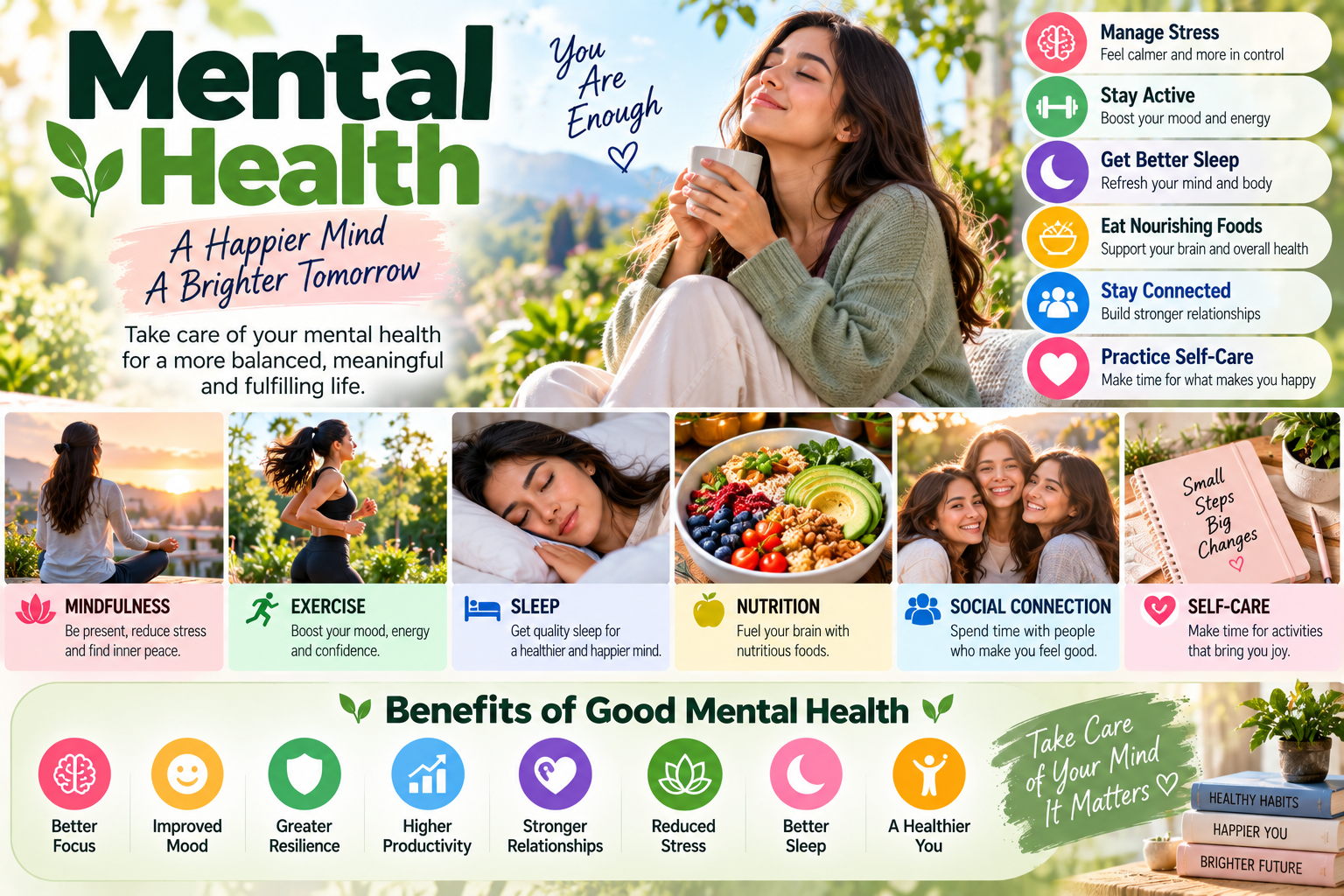
Mental health is an essential part of overall health. It influences how people think, feel, handle stress, build relationships, work, learn, and respond to challenges.
Mental health exists on a continuum and can change throughout a person's life. A person can experience periods of good mental well-being as well as periods of stress, anxiety, low mood, grief, or other difficulties. According to the World Health Organization (WHO), more than one billion people globally live with a mental health condition, highlighting the importance of accessible prevention, support, and treatment.
In 2026, mental-health conversations increasingly include prevention, early support, psychological self-help, digital health services, workplace well-being, social connection, and reducing stigma.
What Is Mental Health?
Mental health refers to a state of mental well-being that helps people cope with the normal stresses of life, recognize their abilities, learn and work effectively, and participate in their communities.
Mental health is not simply the absence of a mental illness.
A person may have a diagnosed mental health condition and still experience periods of positive well-being. Similarly, someone without a diagnosis may experience significant stress or emotional difficulties.
Mental health can be influenced by many factors, including:
Relationships
Family circumstances
Work and education
Financial pressures
Physical health
Sleep
Social connection
Trauma and difficult experiences
Living environment
Access to healthcare
Genetics and biology
Community and social conditions
WHO emphasizes that no single factor can reliably predict an individual's mental-health outcome. Protective and risk factors interact over time.
Why Mental Health Matters
Mental well-being affects many areas of everyday life.
Good mental health can support:
Concentration
Learning
Decision-making
Relationships
Productivity
Emotional regulation
Physical health
Coping with challenges
Participation in community life
Mental and physical health are also connected. Long-term stress, poor sleep, inactivity, and some mental health conditions can affect physical well-being, while chronic physical illness can affect emotional health.
Taking care of mental health is therefore an important part of maintaining overall wellness.
Common Mental Health Challenges
People can experience many different mental-health difficulties.
Common examples include:
Anxiety disorders
Depression
Stress-related difficulties
Panic attacks
Trauma-related conditions
Obsessive-compulsive disorder
Eating disorders
Substance-use disorders
Bipolar disorder
Psychotic disorders
These conditions differ considerably in symptoms, causes, severity, and treatment.
A person should not attempt to diagnose themselves solely from an online article. Persistent or concerning symptoms should be discussed with an appropriately qualified healthcare professional.
Stress and Mental Health
Stress is a normal human response to challenging situations.
WHO defines stress as a state of worry or mental tension caused by a difficult situation. Some stress can help people respond to challenges, but excessive or prolonged stress can affect mental and physical health.
Signs of significant stress can include:
Difficulty relaxing
Irritability
Anxiety
Trouble concentrating
Headaches
Muscle tension
Stomach problems
Sleep difficulties
Changes in appetite
Feeling overwhelmed
Long-term stress can affect everyday functioning and may contribute to worsening health problems.
Ways to Manage Everyday Stress
Practical strategies may include:
Maintaining a regular daily routine
Getting adequate sleep
Exercising regularly
Spending time with supportive people
Taking breaks from demanding activities
Practicing relaxation or breathing exercises
Limiting excessive exposure to stressful news
Organizing tasks into manageable steps
Seeking professional support when stress becomes difficult to manage
WHO specifically recommends maintaining routines, getting enough sleep, and practicing stress-management skills as ways of coping with stress.
Anxiety and Emotional Well-Being
Everyone experiences worry from time to time. Anxiety becomes more concerning when fear or worry is persistent, difficult to control, or interferes significantly with everyday life.
Possible symptoms can include:
Excessive worry
Restlessness
Irritability
Difficulty concentrating
Sleep problems
Rapid heartbeat
Muscle tension
Avoidance of certain situations
Anxiety disorders are treatable, and professional assessment can help determine the appropriate form of support.
Self-care strategies may help with everyday stress, but they should not be viewed as a replacement for professional treatment when an anxiety disorder is suspected.
Depression
Depression is more than temporary sadness.
WHO describes depression as a common mental disorder involving depressed mood or loss of pleasure or interest over a prolonged period. It can affect relationships, work, education, and daily functioning.
Possible symptoms include:
Persistent low mood
Loss of interest or pleasure
Low energy
Changes in sleep
Changes in appetite
Difficulty concentrating
Feelings of worthlessness or excessive guilt
Withdrawal from normal activities
Thoughts of death or suicide
WHO reports that depression is treatable and that effective treatments are available for mild, moderate, and severe depression.
Anyone experiencing persistent symptoms should consider speaking with a qualified healthcare professional.
The Importance of Sleep
Sleep plays an important role in emotional and physical well-being.
Insufficient or poor-quality sleep can make it harder to regulate emotions, concentrate, and cope with stress.
Healthy sleep habits can include:
Keeping a consistent sleep schedule
Creating a comfortable sleeping environment
Reducing stimulating activities before bedtime
Limiting excessive caffeine, especially later in the day
Keeping the bedroom quiet and comfortable
Developing a relaxing bedtime routine
Persistent insomnia or major changes in sleep should be discussed with a healthcare professional because sleep problems can have multiple causes.
Exercise and Mental Health
Physical activity can support mental well-being as part of a broader healthy lifestyle.
Exercise can provide an opportunity to:
Reduce daily tension
Spend time outdoors
Improve physical fitness
Build a routine
Connect socially through sports or classes
Support better sleep
Activities do not have to be intense.
Walking, cycling, swimming, dancing, stretching, recreational sports, and strength training can all be ways to incorporate movement into everyday life.
People who have medical conditions or significant physical limitations should seek appropriate professional advice about suitable activity.
Nutrition and Mental Well-Being
Nutrition and mental health are connected through complex biological and behavioral pathways.
A balanced eating pattern can support overall physical health, which is also important for mental well-being.
A varied diet can include:
Vegetables
Fruits
Whole grains
Beans and lentils
Nuts and seeds
Appropriate protein sources
Healthy fats
Adequate fluids
Nutrition alone should not be presented as a treatment for a mental health condition. Mental health conditions can have biological, psychological, social, and environmental influences and may require professional treatment.
Social Connection
Humans are social beings, and supportive relationships can play an important role in mental well-being.
Social connection may come from:
Family
Friends
Colleagues
Community groups
Religious or cultural communities
Sports groups
Volunteering
Support groups
Social isolation and loneliness can negatively affect well-being, while positive relationships can provide emotional support and a sense of belonging.
Even small interactions can matter. A phone call, shared meal, walk with a friend, or regular community activity can help maintain connection.
Self-Care and Mental Health
Self-care is often misunderstood as simply taking time for relaxation or buying wellness products.
WHO defines self-care more broadly as the ability of individuals, families, and communities to promote and maintain health, prevent disease, and cope with illness, with or without support from healthcare workers.
Mental-health self-care can include:
Maintaining healthy routines
Getting sufficient sleep
Eating balanced meals
Staying physically active
Connecting with others
Practicing stress-management techniques
Taking appropriate breaks
Monitoring changes in mood
Seeking professional help when necessary
Importantly, WHO states that self-care does not replace healthcare systems or healthcare professionals; it complements them.
Mindfulness and Relaxation
Mindfulness involves intentionally paying attention to the present moment without automatically reacting to every thought or feeling.
Some people find practices such as the following helpful:
Slow breathing
Meditation
Prayer
Progressive muscle relaxation
Gentle stretching
Mindful walking
Journaling
These techniques may help with everyday stress, but they are not universal treatments for every mental health condition.
Digital Mental Health
Technology is changing the way people access mental-health information and support.
Digital approaches can include:
Telehealth
Mental-health apps
Online therapy platforms
Digital screening tools
Guided psychological self-help
Educational resources
Online support communities
Wearable devices
In June 2026, WHO published guidance on psychological self-help interventions, highlighting structured approaches that can be delivered digitally, through printed materials, video, or with limited professional support.
WHO identifies psychological self-help as an evidence-based approach that can help expand access to support, particularly for conditions such as depression and anxiety.
Digital tools can be useful, but users should consider privacy, evidence quality, qualifications of providers, and whether a service is appropriate for their needs.
Mental Health in the Workplace
Work can be an important source of purpose, income, social connection, and personal development.
However, excessive workload, lack of control, unsafe conditions, discrimination, harassment, job insecurity, and poor work-life balance can negatively affect mental well-being.
Healthy workplaces can support employees through:
Reasonable workloads
Respectful communication
Safe working environments
Appropriate rest
Flexible arrangements where feasible
Access to mental-health resources
Anti-harassment policies
Supportive management
Clear expectations
Mental-health support should not be treated as solely an individual's responsibility when workplace conditions themselves contribute to distress.
Mental Health and Young People
Childhood and adolescence are important periods for mental-health development.
Young people may experience challenges related to:
School pressure
Social relationships
Bullying
Family changes
Social media
Identity development
Academic expectations
Physical health
Major life transitions
Supportive family relationships, safe schools, positive friendships, physical activity, adequate sleep, and access to appropriate professional care can all contribute to healthy development.
Adults should take significant changes in a young person's behavior, mood, school participation, sleep, eating patterns, or social activity seriously.
Reducing Mental Health Stigma
Stigma can prevent people from seeking help.
Mental health conditions are health conditions, not evidence of personal weakness or failure.
Reducing stigma involves:
Using respectful language
Avoiding stereotypes
Listening without judgment
Taking symptoms seriously
Encouraging appropriate professional support
Protecting privacy
Recognizing that recovery can take time
The CDC notes that stigma can prevent or delay people from seeking mental-health care or contribute to discontinuing treatment.
When Should Someone Seek Professional Help?
Professional support can be appropriate when emotional or behavioral difficulties:
Persist for an extended period
Interfere with work or education
Affect relationships
Make everyday activities difficult
Cause significant distress
Lead to major changes in sleep or appetite
Result in repeated panic or anxiety
Cause substance-use problems
Include thoughts of self-harm or suicide
Mental-health professionals can include psychiatrists, psychologists, counselors, therapists, social workers, and other appropriately trained healthcare providers, depending on the person's needs and local healthcare system.
Mental Health Emergencies
Mental-health emergencies should be treated seriously.
If someone is at immediate risk of harming themselves or another person, experiencing severe confusion, losing touch with reality, or facing another psychiatric emergency, they should receive urgent professional help through local emergency services or the nearest emergency medical facility.
If you are concerned about someone, staying with them when it is safe to do so and helping them connect with urgent professional support can be important.
For people experiencing suicidal thoughts, immediate local crisis or emergency support should be sought rather than relying solely on self-help resources.
Mental Health Trends in 2026
Several developments are shaping mental-health care and awareness in 2026.
Greater Focus on Prevention
Mental-health systems are increasingly emphasizing promotion and prevention alongside treatment.
WHO describes mental-health promotion and prevention as efforts that address individual, social, and structural factors that influence mental health.
Psychological Self-Help
Evidence-based self-help programs are receiving greater attention as a way to expand access to mental-health support.
WHO's 2026 guidance includes structured interventions such as Step-by-Step and Doing What Matters in Times of Stress.
Digital Mental Health
Telehealth, digital resources, and remotely delivered psychological interventions can help extend support to people who face geographic, financial, or service-access barriers.
Workplace Mental Health
Employers are paying increasing attention to burnout prevention, psychological safety, workload, flexibility, and employee well-being.
Mental Health Across the Life Course
Mental-health promotion increasingly considers childhood, adolescence, adulthood, and older age rather than treating mental health as an issue limited to a particular age group.
Reducing Stigma
Public education and open conversations continue to encourage people to view mental health as part of healthcare rather than something that should be hidden.
A Simple Daily Mental Wellness Routine
A realistic mental-wellness routine does not have to be complicated.
Morning
Start the day with a consistent routine, hydration, breakfast if appropriate for you, and some movement.
During the Day
Take short breaks, prioritize important tasks, stay connected with others, and avoid allowing work or study to consume every part of the day.
Evening
Reduce unnecessary stimulation, spend time with supportive people, and create a calming transition toward sleep.
Every Week
Make time for enjoyable activities, exercise, hobbies, social connection, and activities that provide meaning or relaxation.
The goal is consistency rather than perfection.
Frequently Asked Questions About Mental Health
What is mental health?
Mental health is a state of mental well-being that supports coping with life's stresses, learning, working, relationships, and participation in community life.
Is stress always bad?
No. Stress is a normal response to challenging situations. Short-term stress can sometimes help people respond to challenges, while prolonged or excessive stress can contribute to health problems.
Can exercise help mental health?
Regular physical activity can be part of a healthy lifestyle and may support emotional well-being, stress management, and sleep.
Can self-care replace therapy?
No. Self-care can complement professional healthcare but does not replace appropriate assessment or treatment when someone has a mental health condition.
Is depression the same as sadness?
No. Depression involves persistent symptoms such as depressed mood or loss of interest or pleasure and can substantially affect daily life. It is a treatable health condition.
When should I talk to a mental-health professional?
Consider seeking professional support when symptoms persist, cause significant distress, interfere with daily functioning, or become difficult to manage independently.
Conclusion
Mental health is an essential part of a healthy life. It affects emotional well-being, relationships, productivity, physical health, and the ability to cope with everyday challenges.
Maintaining supportive relationships, getting adequate sleep, staying physically active, eating well, developing stress-management skills, and making time for meaningful activities can support mental well-being.
At the same time, mental-health conditions can affect anyone and are not simply the result of insufficient self-care. Professional assessment and evidence-based treatment are important when symptoms become persistent, severe, or disruptive.
In 2026, the mental-health landscape is increasingly focused on prevention, accessible psychological support, digital care, self-help interventions, workplace well-being, and reducing stigma. WHO's latest guidance emphasizes that evidence-based psychological self-help can complement formal healthcare and help expand access to support.
Taking mental health seriously means recognizing both the value of everyday well-being practices and the importance of seeking professional help when it is needed.