
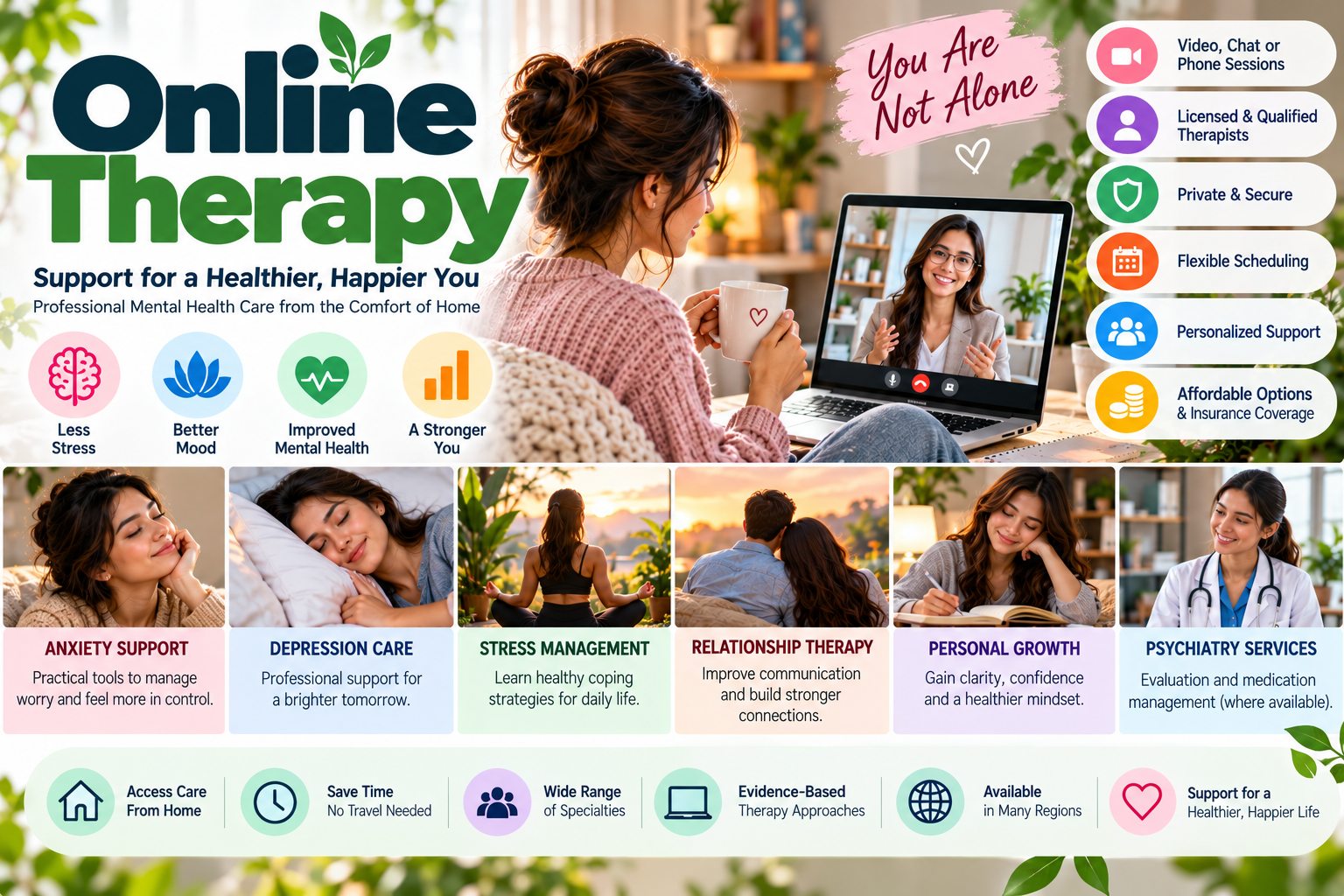
Online therapy has become an increasingly important way for people to access mental-health support. Instead of traveling to a therapist's office, individuals can connect with qualified professionals through video calls, telephone sessions, secure messaging, live chat, and other digital technologies.
The American Psychological Association (APA) describes telepsychology as psychological services delivered through telecommunications technology. Its current guidelines recognize that technology can expand access to psychological services while also creating important considerations around privacy, security, licensing, informed consent, and emergency procedures.
In 2026, online therapy is also part of a broader digital-health landscape that includes telehealth, guided self-help, digital psychological interventions, mental-health apps, and remote support programs.
What Is Online Therapy?
Online therapy, also called teletherapy, virtual therapy, or online counseling, is psychological support delivered remotely using digital communication technology.
Depending on the provider, online therapy may include:
Video therapy sessions
Telephone counseling
Live text chat
Secure messaging
Online assessments
Digital self-help programs
Remote psychiatric consultations
Guided psychological interventions
Some services focus exclusively on psychotherapy, while others combine therapy with psychiatric assessment and medication management.
The exact services available depend on the provider, the therapist's qualifications, the patient's location, and applicable healthcare regulations.
How Does Online Therapy Work?
The process is generally straightforward.
Step 1: Choose a Service
A person can search for an online therapy platform or contact a therapist who provides telehealth services.
Step 2: Complete an Assessment
Many services ask new clients questions about their concerns, goals, preferences, and previous treatment.
Step 3: Select a Therapist
The platform or practice may recommend therapists based on specialty, availability, treatment approach, location, or other preferences.
Step 4: Schedule a Session
Sessions may take place through a secure video platform, telephone, or another approved communication method.
Step 5: Continue Treatment
Depending on the individual's needs, therapy may involve weekly, biweekly, or another appropriate schedule determined by the clinician.
Online therapy should be treated as professional healthcare rather than simply an informal conversation over the internet.
Is Online Therapy Effective?
Evidence and professional guidance indicate that telepsychology can be an effective way to provide psychological services for many people and conditions.
The APA's telepsychology guidance recognizes remote psychological services as a legitimate method of delivering care and notes that technology can expand access to general and specialty psychological services.
However, effectiveness depends on factors such as:
The person's condition
Severity of symptoms
Therapist qualifications
Treatment approach
Therapeutic relationship
Session consistency
Privacy and technology
Appropriate clinical assessment
Online therapy is therefore not automatically suitable for every person or every mental-health situation.
Online Therapy vs. In-Person Therapy
Online and in-person therapy share many fundamental elements, but the experience can be different.
Online Therapy
Potential advantages include:
No travel to an office
Convenient scheduling
Access from home
Remote access to therapists
Multiple communication options
Useful for people with transportation limitations
In-Person Therapy
Potential advantages can include:
Face-to-face interaction
Dedicated clinical environment
Easier access to certain assessments
Fewer technology-related interruptions
Immediate access to local services when appropriate
Neither format is automatically appropriate for everyone.
A qualified professional can help determine which format is most suitable based on the person's needs.
Benefits of Online Therapy
Convenience
One of the biggest advantages is convenience.
A person may be able to attend therapy from home rather than spending time traveling to and from an office.
This can be particularly helpful for people with demanding work schedules, family responsibilities, mobility challenges, or limited transportation.
Accessibility
Online therapy can expand access to professionals for people who live far from mental-health clinics.
However, therapist licensing and jurisdiction rules still apply. The APA's telepsychology guidance specifically identifies licensing and jurisdiction as important considerations in remote psychological services.
Flexible Communication
Some platforms offer several communication methods, such as:
Video
Phone
Live chat
Secure messaging
This can allow people to choose a format that fits their circumstances and provider's clinical approach.
Familiar Environment
Some people feel more comfortable discussing personal concerns from a familiar environment.
A private room at home can feel less intimidating than visiting a new healthcare facility.
Continuity of Care
Online sessions can make it easier to continue treatment when travel, relocation, weather, or other circumstances make an office visit difficult.
Who Can Benefit From Online Therapy?
Online therapy may be useful for adults, adolescents, couples, and families when an appropriate service and qualified professional are available.
It may be considered for concerns such as:
Anxiety
Depression
Stress
Grief
Relationship difficulties
Work-related stress
Life transitions
Parenting concerns
Self-esteem
Trauma-related concerns
Sleep-related concerns
Other psychological difficulties
The appropriate treatment depends on the individual's symptoms and clinical circumstances.
Online Therapy for Anxiety
Anxiety is a common reason people seek psychological support.
Online therapy may provide access to therapists experienced in:
Generalized anxiety
Social anxiety
Panic symptoms
Specific fears
Stress
Obsessive-compulsive symptoms
Cognitive behavioral therapy (CBT) is one evidence-based psychological approach frequently used for anxiety-related conditions.
A qualified therapist can assess symptoms and determine whether online treatment is appropriate.
Online Therapy for Depression
Depression can involve persistent sadness, loss of interest or pleasure, changes in sleep, changes in appetite, low energy, difficulty concentrating, and other symptoms.
Online therapy can provide access to qualified professionals who treat depression.
However, people experiencing severe or worsening symptoms should seek professional assessment rather than relying only on digital self-help.
WHO states that psychological interventions can be effective for several mental-health conditions, particularly depression and anxiety.
Online Therapy for Stress
Everyday stress can result from work, education, finances, relationships, family responsibilities, or major life changes.
Therapy can help some people:
Identify sources of stress
Develop coping strategies
Improve boundaries
Understand thought patterns
Build healthier routines
Address underlying psychological concerns
Stress-management techniques may also include relaxation exercises, mindfulness, physical activity, adequate sleep, and social support.
Online Couples Therapy
Online therapy can also be used for relationship concerns.
Depending on the therapist and platform, couples may receive support for:
Communication problems
Conflict
Trust issues
Relationship transitions
Parenting disagreements
Separation
Marriage difficulties
Couples should confirm that a therapist has appropriate training and experience in couples counseling before beginning treatment.
Online Therapy for Young Adults
Young adults may experience mental-health challenges connected with:
University
Career decisions
Financial pressure
Relationships
Family expectations
Social isolation
Major life transitions
Identity development
Online therapy can offer a convenient format for people already comfortable with digital communication.
For younger clients, however, parents, guardians, age requirements, privacy rules, and local regulations may affect how online therapy is provided.
Types of Online Therapy
There are several approaches to digital mental-health care.
Video Therapy
Video therapy most closely resembles traditional face-to-face sessions.
The client and therapist communicate through a secure video platform.
Telephone Therapy
Some therapists provide sessions through telephone calls.
This can be useful when internet access is unreliable or when a person prefers audio-only communication.
Live Chat Therapy
Some platforms provide real-time written conversations between clients and therapists.
Secure Messaging
Messaging may allow communication between scheduled sessions, depending on the provider.
The exact response time and clinical purpose of messaging vary considerably.
Digital Self-Help
Digital psychological interventions can provide structured exercises and educational material.
In June 2026, WHO published guidance on scaling evidence-based psychological self-help interventions, including digital delivery.
WHO's Step-by-Step intervention, for example, is an evidence-based psychological self-help program designed for people affected by depression and can be delivered digitally with brief support from a trained helper.
Online Therapy and Psychiatry
Therapy and psychiatry are different forms of mental-health care.
Therapy
Psychotherapy generally involves working with a qualified mental-health professional to address psychological, emotional, behavioral, or relationship concerns.
Psychiatry
Psychiatry is a medical specialty. A qualified psychiatric professional can assess mental-health conditions and, where legally appropriate, prescribe medication.
Some digital services provide both therapy and psychiatric care.
Whether a person needs therapy, medication, or both should be determined with an appropriate healthcare professional.
Privacy and Online Therapy
Privacy is one of the most important considerations when choosing online therapy.
Before using a platform, consumers should review:
Privacy policies
Data storage practices
Security measures
Recording policies
Who can access health information
Communication technology
Confidentiality limitations
Emergency procedures
The APA's telepsychology guidance specifically identifies privacy and security, informed consent, emergency procedures, technical problems, fees, and licensing as issues that should be addressed in remote psychological services.
Creating a Private Therapy Environment
Clients can also take steps to protect their own privacy.
Whenever possible:
Use a private room
Wear headphones
Avoid public locations
Use a secure internet connection
Keep devices protected with passwords
Avoid recording sessions without permission
Understand who may be able to hear the conversation
Privacy is a shared responsibility between the provider and the client.
How Much Does Online Therapy Cost?
Online therapy prices vary significantly.
Factors affecting cost can include:
Therapist qualifications
Location
Platform
Session length
Frequency of sessions
Insurance
Therapy specialization
Psychiatry services
Subscription model
Some services charge per session, while others use weekly or monthly subscription structures.
Insurance may cover online mental-health services depending on the policy and applicable healthcare rules.
Consumers should verify:
Copay
Deductible
Coinsurance
Out-of-network costs
Cancellation fees
Session limits
Provider eligibility
Cost should be compared alongside therapist qualifications and clinical suitability rather than considered in isolation.
How to Choose an Online Therapist
Choosing the right therapist can have a major impact on the therapy experience.
Check Credentials
Verify that the therapist has appropriate professional qualifications and licensing.
Look at Specialties
Consider whether the therapist has experience with the concerns you want to address.
Understand the Treatment Approach
Ask whether the therapist uses CBT, interpersonal therapy, psychodynamic therapy, trauma-focused approaches, or another appropriate evidence-based method.
Consider Communication Style
Think about whether you prefer:
Video
Audio
Messaging
Live chat
Check Availability
A therapist may be highly qualified but difficult to schedule with.
Consistent appointments can be important for ongoing therapy.
Consider Compatibility
The relationship between therapist and client matters.
It is reasonable to discuss concerns if the therapeutic relationship does not feel productive and, where appropriate, consider another provider.
Questions to Ask Before Starting Online Therapy
Before signing up, consider asking:
What are the therapist's qualifications?
Where is the therapist licensed?
Can the therapist legally provide services where I am located?
What conditions or concerns do they specialize in?
What therapy approach do they use?
How are sessions conducted?
How long does each session last?
How much does treatment cost?
Does insurance cover the service?
What is the cancellation policy?
How is my personal information protected?
What happens if the internet connection fails?
What is the emergency procedure?
Can I change therapists if necessary?
These questions can help consumers make a more informed decision.
Advantages of Online Therapy
Online therapy may offer:
Convenience: Therapy can be accessed without traveling to an office.
Accessibility: Remote services may reach people who have limited access to local professionals.
Flexibility: Different communication formats may be available.
Continuity: Treatment can sometimes continue during travel or relocation.
Comfort: Some people prefer communicating from a familiar environment.
Specialist access: Depending on licensing and availability, online care can broaden the pool of professionals a person can consider.
Limitations of Online Therapy
Online therapy also has limitations.
These can include:
Internet connection problems
Device problems
Privacy challenges
Licensing restrictions
Limited access in some regions
Difficulty finding an appropriate therapist
Insurance restrictions
Reduced suitability for certain clinical situations
Lack of immediate physical access to emergency care
The APA recognizes that telepsychology creates both opportunities and unique challenges, including issues involving technology, privacy, clinical appropriateness, and jurisdiction.
Online Therapy and AI
Artificial intelligence is increasingly appearing in digital mental-health tools.
AI-powered systems may assist with:
Mental-health education
Mood tracking
Journaling
Guided exercises
Appointment support
Administrative tasks
Information discovery
However, AI should not automatically be considered a replacement for a qualified mental-health professional.
Professional therapy involves clinical assessment, individualized treatment planning, therapeutic relationships, professional responsibility, and appropriate responses to risk.
WHO continues to emphasize the need for safe and evidence-based digital environments for mental health.
Online Therapy Trends in 2026
Hybrid Mental-Health Care
Many providers are combining virtual and in-person care.
Patients may use online appointments for some sessions and visit a clinic when in-person assessment or treatment is more appropriate.
Digital Psychological Interventions
Evidence-based digital interventions are becoming increasingly important for expanding access to mental-health support.
WHO's 2026 guidance specifically highlights the potential of remotely delivered psychological self-help to reach large populations.
Guided Self-Help
Digital self-help can be delivered independently or with limited support from trained helpers.
This approach may help extend psychological services where specialist resources are limited.
Mental-Health Apps
Mobile applications increasingly provide:
Mood tracking
Meditation
Sleep tools
Journaling
Guided exercises
Mental-health education
Consumers should distinguish between wellness apps and clinically validated mental-health interventions.
Greater Attention to Privacy
As more healthcare moves online, privacy, cybersecurity, informed consent, and data handling remain important considerations.
Online Therapy and Accessibility
One of the biggest potential advantages of digital mental-health care is its ability to reach people who might otherwise struggle to access psychological services.
WHO reports that more than one billion people worldwide live with a mental-health condition and that many people still lack access to effective care.
Digital services cannot solve every access problem, but remote psychological interventions may help extend care to communities where traditional services are limited.
When Online Therapy May Not Be Enough
Online therapy should not be viewed as the appropriate solution for every situation.
A person may require in-person assessment or a higher level of care when they have:
Severe psychiatric symptoms
Immediate safety concerns
Serious substance-related problems
Significant impairment in daily functioning
Symptoms requiring physical medical assessment
A clinical situation that the provider determines cannot be safely managed remotely
If someone is at immediate risk of harming themselves or another person, they should seek urgent local emergency or crisis support rather than waiting for a routine online therapy appointment.
Online Therapy for Mental Wellness
Not everyone who uses online mental-health services has a diagnosed mental disorder.
Some people seek professional support for:
Personal growth
Life transitions
Relationship concerns
Stress
Workplace challenges
Confidence
Communication
Grief
Parenting
Decision-making
Therapy can therefore be part of broader mental wellness, not only treatment for diagnosed conditions.
Building a Healthy Digital Therapy Routine
People using online therapy can improve their experience by creating a consistent routine.
Choose a Quiet Space
Find a location where you can speak privately without frequent interruptions.
Test Your Technology
Check the camera, microphone, internet connection, and therapy platform before the appointment.
Prepare for the Session
Writing down important concerns or questions beforehand can help make sessions more focused.
Be Honest
Therapy works best when clients can communicate openly about their thoughts, emotions, symptoms, and concerns.
Follow Through
If a therapist recommends exercises, journaling, behavioral changes, or other appropriate activities, consistency may help support the treatment process.
Frequently Asked Questions About Online Therapy
What is online therapy?
Online therapy is psychological support provided remotely through technologies such as video calls, telephone, secure messaging, or digital platforms.
Is online therapy effective?
Online psychological services can be effective for many people and mental-health concerns, although suitability and outcomes vary by individual circumstances and treatment. The APA recognizes telepsychology as an established way of delivering psychological services.
Is online therapy confidential?
Online therapy is intended to protect confidentiality, but privacy depends on the provider's systems, applicable laws, technology, and the client's environment. Consumers should review privacy and security information before beginning treatment.
Can I get therapy through video?
Yes. Video conferencing is one of the most common forms of online therapy.
Can online therapy include messaging?
Some services offer secure messaging or live chat, although the exact format and response times vary between providers.
Can online therapy treat anxiety?
Qualified therapists can provide evidence-based psychological treatment for anxiety through online services when remote care is clinically appropriate.
Can online therapy treat depression?
Online psychological treatment can be used for depression in appropriate circumstances. WHO identifies psychological interventions as effective treatments for depression and anxiety.
Is online therapy cheaper than in-person therapy?
Not necessarily. Costs vary by therapist, platform, location, insurance, session length, and treatment type.
Can I use online therapy from another country?
Not automatically. Licensing and jurisdiction rules may restrict where a therapist can legally provide psychological services. Clients should verify the provider's authorization for their location.
Is online therapy suitable for emergencies?
Routine online therapy is not a substitute for emergency psychiatric care. People facing an immediate safety emergency should seek local emergency assistance.
Conclusion
Online therapy has become an important part of modern mental-health care.
Through video sessions, telephone appointments, secure messaging, digital psychological interventions, and guided self-help, technology can make certain forms of psychological support more accessible and convenient.
The APA's current telepsychology guidance recognizes the opportunities of digital psychological services while emphasizing privacy, security, informed consent, professional competence, emergency planning, and licensing considerations.
At the same time, WHO's 2026 work on psychological self-help demonstrates the growing role of evidence-based digital interventions in expanding access to mental-health support.
The right approach depends on the individual. Consumers should look beyond advertising and consider therapist qualifications, specialization, treatment approach, privacy, cost, insurance, availability, and whether online care is clinically appropriate.
As digital healthcare continues developing, online therapy is likely to remain an important option for people seeking accessible and flexible mental-health support.