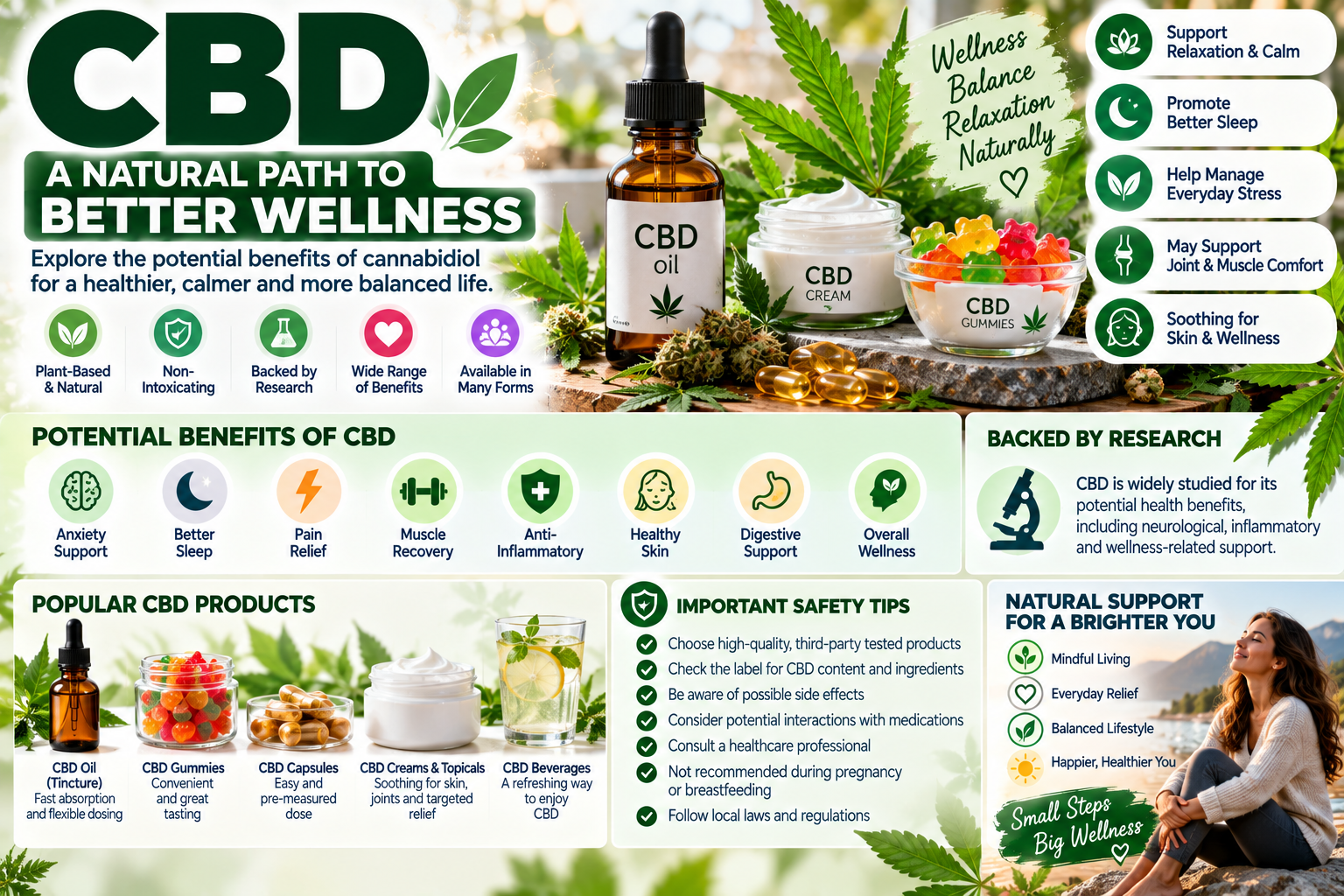
CBD, short for cannabidiol, has become one of the most widely discussed compounds derived from the cannabis plant. It appears in oils, capsules, topical products, cosmetics, beverages, foods, and prescription medicine.
Interest in CBD has grown because of research into its possible effects on neurological conditions, pain, sleep, anxiety, inflammation, and other areas of health. However, scientific evidence varies considerably depending on the condition, product, formulation, and dose.
It is also important to distinguish CBD from THC. CBD is a cannabinoid that does not produce the typical intoxicating "high" associated with THC. The World Health Organization's Expert Committee on Drug Dependence concluded that pure CBD does not appear to have the same abuse or dependence potential associated with several controlled substances.
At the same time, CBD should not automatically be considered risk-free. The U.S. Food and Drug Administration warns that CBD can potentially cause liver injury, interact with medications, and cause other adverse effects. Product quality can also vary considerably.
This guide explains what CBD is, what researchers currently know about its potential uses, possible benefits and risks, common forms, medication interactions, regulatory considerations, and important CBD trends in 2026.
What Is CBD?
Cannabidiol, commonly known as CBD, is one of the many naturally occurring compounds called cannabinoids found in cannabis plants.
The two cannabinoids most commonly discussed are:
CBD — cannabidiol
THC — delta-9-tetrahydrocannabinol
THC is primarily associated with the intoxicating effects of cannabis, while CBD does not produce the same type of high.
CBD can be derived from cannabis or hemp plants, depending on the product and applicable regulations.
The chemical compound itself is the same, but products can contain different combinations and concentrations of cannabinoids.
CBD vs. THC
CBD and THC interact with the body's endocannabinoid system in different ways.
CBD
CBD is generally not considered intoxicating in the same way as THC.
It is widely marketed in products designed for wellness, relaxation, topical use, and other purposes.
THC
THC is the cannabinoid primarily responsible for the intoxicating effects associated with marijuana.
Some CBD products may contain trace amounts of THC, depending on how they are produced and regulated.
This is one reason consumers should read product labels carefully and understand local laws.
Is CBD FDA Approved?
In the United States, the FDA has approved one prescription CBD product, a purified cannabidiol medicine used for seizures associated with Lennox-Gastaut syndrome, Dravet syndrome, and tuberous sclerosis complex in patients one year of age and older.
This distinction is important.
FDA approval of a prescription CBD medicine does not mean that all CBD oils, gummies, capsules, creams, beverages, or other commercial CBD products have been proven safe and effective for medical purposes.
The FDA states that other CBD products have not been approved as drug products for treating diseases or medical conditions.
What Are the Potential Uses of CBD?
CBD has been studied for several health conditions, but the strength of evidence differs.
Epilepsy and Seizure Disorders
The strongest established medical application for purified CBD is certain rare seizure disorders.
The FDA-approved cannabidiol medicine is indicated for seizures associated with:
Lennox-Gastaut syndrome
Dravet syndrome
Tuberous sclerosis complex
This is substantially different from saying that ordinary over-the-counter CBD products are proven treatments for epilepsy.
People with seizure disorders should discuss CBD or cannabinoid products with their healthcare professional rather than replacing prescribed treatment.
CBD and Pain
CBD is frequently marketed for pain relief.
Research into cannabinoids and chronic pain has produced mixed results. NCCIH notes that some evidence suggests modest benefits from cannabis or cannabinoids for chronic pain, but adverse events can also occur.
Researchers continue to study whether CBD alone provides meaningful pain relief for specific conditions.
Consumers should be cautious about products claiming to cure arthritis, severe pain, neuropathy, or other medical conditions.
CBD and Sleep
CBD is also commonly marketed as a sleep-support product.
However, current evidence does not establish CBD as a proven treatment for sleep disorders.
NCCIH reports that available evidence has been insufficient to support cannabinoid therapies for treating sleep disorders, with limited research and methodological concerns in existing studies.
Sleep problems can have many causes, including stress, medications, sleep apnea, mental-health conditions, and other medical issues.
Persistent sleep problems should therefore be evaluated rather than automatically treated with CBD.
CBD and Anxiety
Anxiety is another major reason consumers investigate CBD.
Some early research has explored cannabidiol and anxiety-related symptoms, but evidence for consumer CBD products remains insufficient to establish CBD as a general treatment for anxiety disorders.
People experiencing persistent anxiety should consider evidence-based mental-health care and discuss any CBD use with a healthcare professional.
CBD may also interact with medications used for anxiety, sleep, or other conditions.
CBD and Inflammation
CBD is frequently promoted for its possible anti-inflammatory properties.
Laboratory and preclinical research has investigated CBD's effects on biological pathways associated with inflammation.
However, laboratory findings do not automatically translate into proven benefits in humans.
More high-quality clinical research is needed to determine which inflammatory conditions, if any, can benefit from CBD.
CBD for Skin and Topical Use
CBD is increasingly found in:
Creams
Balms
Lotions
Serums
Cosmetic products
Massage products
Topical CBD products are commonly marketed for skin comfort and localized use.
However, the evidence for specific medical claims varies, and cosmetics are not automatically equivalent to approved medical treatments.
People with sensitive skin should also consider the possibility of irritation from other ingredients in a formulation.
Common Forms of CBD
CBD is available in many forms.
CBD Oil
CBD oil is commonly administered orally or used according to the product's instructions.
The concentration can vary considerably between products.
CBD Capsules
Capsules provide a premeasured format and are generally designed for oral use.
CBD Gummies
Gummies and other edible products are popular because they are convenient and easy to consume.
However, edible products may take longer to produce noticeable effects than some other formulations.
CBD Topicals
Topicals include creams, balms, lotions, and other products applied to the skin.
CBD Cosmetics
CBD is also incorporated into various cosmetic formulations.
Prescription CBD
Prescription cannabidiol products are pharmaceutical medicines with specific indications, dosing requirements, and medical supervision.
Prescription CBD should not be confused with general retail CBD products.
Is CBD Safe?
CBD is not automatically risk-free.
The FDA identifies several potential safety concerns, including:
Liver injury
Drug interactions
Sleepiness
Changes in alertness
Gastrointestinal symptoms
Potential reproductive concerns identified in research
The FDA also states that available safety information remains limited for many CBD products.
NCCIH similarly notes that CBD can cause side effects such as decreased alertness, mood changes, decreased appetite, diarrhea, and liver-related abnormalities.
CBD Side Effects
Possible side effects may include:
Drowsiness
Sleepiness
Diarrhea
Changes in appetite
Changes in alertness
Mood changes
Liver-related effects
Interactions with medications
Side effects can depend on the amount used, the formulation, other substances in the product, and individual factors.
Anyone experiencing concerning symptoms should stop and seek appropriate medical advice.
CBD and Drug Interactions
One of the most important considerations is interaction with other medicines.
CBD can affect how certain medications are processed by the body.
The FDA specifically warns that CBD can change how other drugs work and potentially increase the risk of serious side effects.
This means people taking prescription medications should not assume that CBD is harmless simply because it is plant-derived.
Healthcare professionals should know about all supplements and cannabinoid products a person is using.
CBD and Alcohol
Combining CBD with alcohol or other substances that slow brain activity may increase sedation and drowsiness.
The FDA specifically warns about increased risks of sedation when CBD is combined with alcohol or certain drugs that depress brain activity.
Avoid assuming that combining two individually tolerated substances is automatically safe.
CBD and Pregnancy
Pregnancy and breastfeeding require particular caution.
The FDA states that there are many unanswered questions about CBD exposure during pregnancy and breastfeeding, including possible effects on the mother and infant.
People who are pregnant, planning pregnancy, or breastfeeding should speak with a qualified healthcare professional before using CBD products.
CBD and Children
CBD should not be given casually to children.
The FDA has approved a specific prescription cannabidiol medicine for certain seizure disorders, but that does not mean general CBD products are appropriate for children.
Parents and caregivers should consult a pediatric healthcare professional before considering cannabinoid products for a child.
CBD Product Quality
One of the major challenges with consumer CBD products is quality control.
The amount of CBD in a product may not always correspond precisely to the amount stated on its label.
NCCIH notes that some over-the-counter CBD products may contain more or less CBD than indicated and may contain contaminants such as THC.
The FDA has also issued warnings about products marketed as CBD that contained undeclared pharmaceutical ingredients.
For example, in April 2026, the FDA warned consumers about a product marketed as KUKA FLEX CBD after laboratory testing found undeclared diclofenac, a prescription-strength nonsteroidal anti-inflammatory drug, in the product.
This illustrates why consumers should be cautious with products making aggressive medical claims.
How to Evaluate a CBD Product
Consumers researching CBD products can consider several factors.
Read the Label
Look for information about:
Amount of CBD
Serving size
Other cannabinoids
Ingredients
Manufacturer
Batch information
Testing information
Look for Independent Testing
Third-party laboratory testing can provide information about cannabinoid content and potential contaminants.
However, consumers should still evaluate the credibility and transparency of the testing process.
Avoid Unrealistic Medical Claims
Be cautious when a product claims to:
Cure cancer
Cure diabetes
Replace prescription medication
Treat every type of pain
Cure depression
Eliminate serious diseases
Extraordinary medical claims should be supported by strong clinical evidence.
CBD Legality
CBD laws vary significantly between countries and jurisdictions.
The legal status can depend on:
Source of the CBD
THC concentration
Product type
Intended use
Local regulations
Importation rules
Prescription status
The WHO has noted that countries have discretion in how they regulate CBD and cannabis-related substances under national law.
Consumers should therefore check the laws where they live before purchasing, possessing, importing, or traveling with CBD products.
CBD and Travel
Traveling internationally with CBD can create additional legal complications.
A product that is legal in one country may be restricted or prohibited in another.
Travelers should check:
Destination-country laws
Transit-country laws
Airline policies
THC restrictions
Prescription requirements
Import documentation
Never assume that a CBD product can cross an international border simply because it was legally purchased at home.
CBD Research in 2026
CBD research continues to expand.
Scientists are investigating:
Neurological disorders
Pain
Anxiety
Sleep
Inflammation
Drug interactions
Liver effects
Long-term safety
Cannabinoid pharmacology
New pharmaceutical formulations
The research landscape is important because CBD products are often marketed much more broadly than the current clinical evidence supports.
The FDA continues to emphasize that important questions about CBD safety, quality, and effectiveness remain unanswered.
CBD and the Wellness Industry
CBD has become part of a much broader wellness market.
CBD-related products may appear in categories such as:
Personal care
Skincare
Fitness recovery
Relaxation
Sleep products
Pet products
Food and beverages
Supplements
However, marketing popularity should not be confused with scientific evidence.
A product's presence in a wellness store does not establish that it treats a medical condition.
CBD vs. Medical Cannabis
CBD and medical cannabis are not necessarily the same thing.
Medical cannabis can contain multiple cannabinoids, including THC and CBD.
CBD is one specific cannabinoid.
Some prescription cannabinoid medicines contain purified CBD, while others contain different cannabinoids or combinations.
Treatment decisions should therefore be based on the specific medicine or product rather than the general term "cannabis."
CBD vs. Hemp
Hemp and cannabis are terms that can have different legal and botanical meanings depending on the jurisdiction.
CBD can be extracted from cannabis plants, including hemp varieties.
The presence of CBD does not automatically tell you how much THC a product contains or whether the product is legal where you live.
Always check the product's cannabinoid profile and applicable laws.
How Long Does CBD Take to Work?
There is no single answer because effects can vary depending on:
Product formulation
Route of administration
Amount used
Individual metabolism
Food intake
Other medications
Personal biology
Oral products can behave differently from topical formulations.
Consumers should avoid repeatedly increasing amounts simply because they do not immediately notice an effect.
CBD and Personalized Healthcare
As research develops, healthcare professionals may become increasingly interested in individualized approaches to cannabinoid-related treatments.
Important factors may include:
Medical history
Existing medications
Liver health
Age
Pregnancy status
Reason for use
Product composition
Dose
Treatment duration
This reinforces the importance of discussing CBD with a qualified healthcare professional when it is being considered for a health-related purpose.
Frequently Asked Questions About CBD
What is CBD?
CBD, or cannabidiol, is a cannabinoid found in cannabis plants. Unlike THC, it does not produce the typical intoxicating high associated with marijuana.
Does CBD get you high?
CBD itself is not considered intoxicating in the same way THC is. However, some commercial CBD products may contain THC or other cannabinoids.
Is CBD legal?
Its legal status varies by country and jurisdiction and may depend on the source, THC content, product type, and intended use.
Is CBD FDA approved?
In the United States, the FDA has approved one prescription cannabidiol medicine for specific seizure disorders. Other commercial CBD products have not received FDA approval as treatments for medical conditions.
Can CBD help with pain?
Some cannabinoid research suggests modest benefits for certain types of chronic pain, but evidence varies and CBD should not automatically be considered a proven treatment for all pain conditions.
Can CBD help with sleep?
Current evidence is insufficient to establish CBD as a reliable treatment for sleep disorders.
Can CBD interact with medication?
Yes. CBD can affect how certain medications work and may increase the risk of adverse effects. People taking medications should discuss CBD use with a healthcare professional.
Can CBD cause liver problems?
Yes. Liver injury has been identified as a potential risk associated with CBD, particularly in the context of certain doses and formulations.
Is CBD safe during pregnancy?
Safety during pregnancy and breastfeeding remains uncertain, and the FDA advises caution because important questions remain unanswered.
Conclusion
CBD has attracted significant attention in healthcare, wellness, cosmetics, and consumer products. Research has identified legitimate medical potential for purified cannabidiol in specific seizure disorders, while evidence for many of the broader claims surrounding commercial CBD products remains limited or mixed.
Safety is also an important consideration. CBD can cause side effects, interact with medications, and potentially affect the liver. Product quality can vary, and regulators have identified examples of products containing undeclared ingredients.
The most useful way to understand CBD in 2026 is to separate scientifically established medical uses from emerging research and marketing claims.
Anyone considering CBD for a medical purpose should discuss it with an appropriately qualified healthcare professional, particularly when taking prescription medication, managing a chronic condition, pregnant or breastfeeding, or considering CBD for a child.
This article is for general educational purposes and does not constitute medical advice, diagnosis, or treatment. CBD laws and regulations vary by jurisdiction.