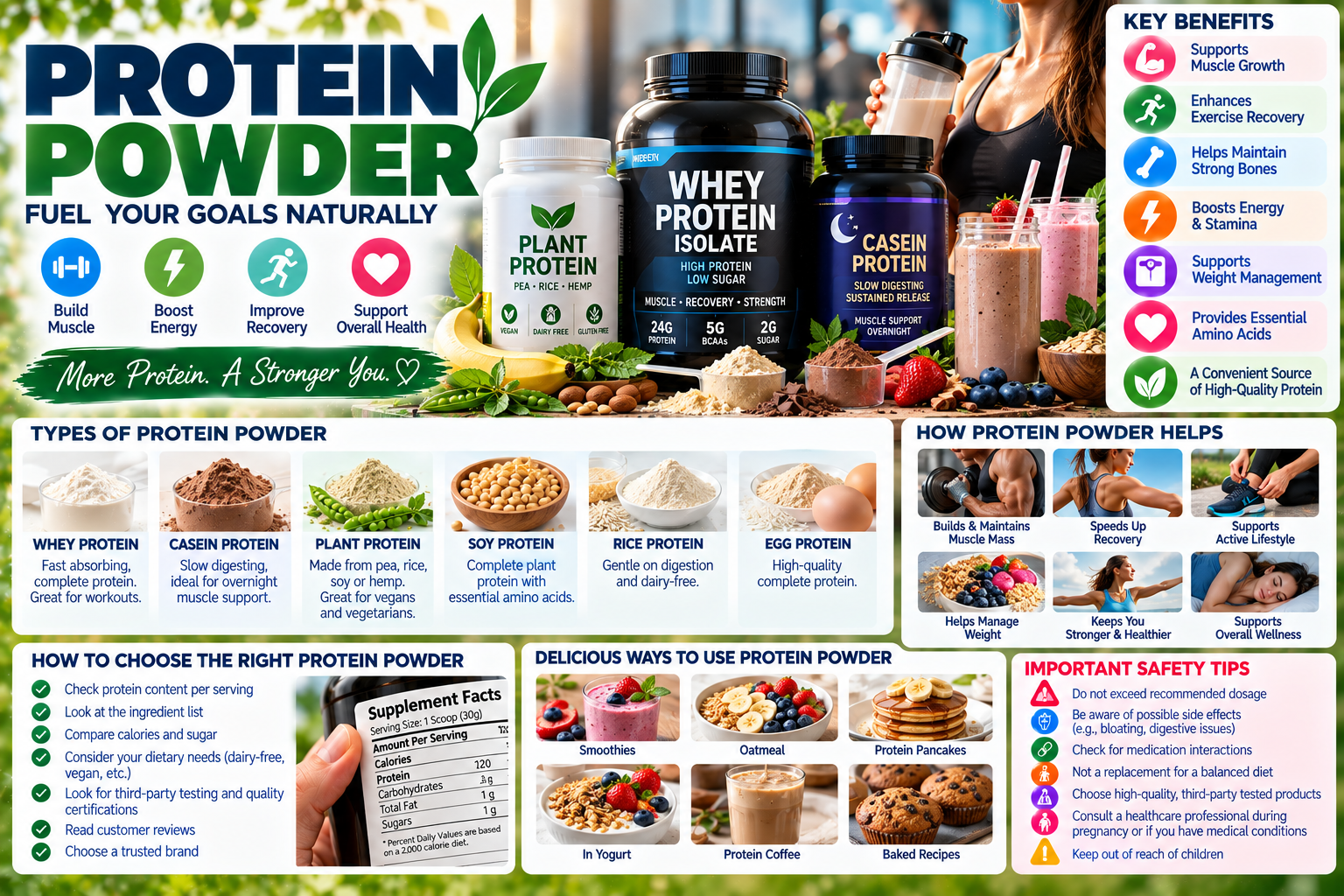
Protein powder has become one of the most popular nutrition supplements for people interested in fitness, muscle development, convenient nutrition, and active lifestyles. From whey and casein to plant-based options such as pea, soy, rice, and blended proteins, today's market offers products designed for many different dietary preferences.
Protein powder can be a convenient way to increase protein intake when food alone does not provide enough. However, it is not a replacement for a balanced diet, and choosing a quality product matters.
The U.S. Food and Drug Administration (FDA) considers protein powders dietary supplements when they are marketed as such. Like other dietary supplements, they are not approved by the FDA for safety and effectiveness before being marketed. Manufacturers are responsible for complying with applicable safety and labeling requirements.
What Is Protein Powder?
Protein powder is a concentrated source of protein available in powdered form. It is commonly mixed with water, milk, plant-based beverages, smoothies, oatmeal, yogurt, or other foods.
Protein is an essential macronutrient made up of amino acids. The body uses amino acids to build and maintain tissues and to support numerous biological processes.
Protein powders can be made from:
Milk
Whey
Casein
Soy
Peas
Rice
Eggs
Other plant or animal protein sources
Some products contain primarily protein, while others are formulated as meal-replacement or sports-nutrition products containing carbohydrates, fats, vitamins, minerals, creatine, caffeine, or other ingredients.
Why Do People Use Protein Powder?
The main attraction of protein powder is convenience.
Someone who has difficulty getting enough protein from regular meals may find a shake easier to prepare than another complete meal. Athletes and people participating in resistance training may also use protein powder as a convenient source of high-quality protein.
Common reasons people choose protein powder include:
Supporting daily protein intake
Convenient post-workout nutrition
Supporting muscle development alongside resistance training
Supporting recovery from exercise
Adding protein to smoothies and meals
Supporting nutrition when appetite or meal preparation is limited
Following vegetarian or vegan diets with appropriate plant proteins
Convenient nutrition while traveling
Protein powder itself does not automatically build muscle. Resistance training, sufficient overall nutrition, recovery, sleep, and an appropriate protein intake all contribute to muscle-related outcomes.
The NIH Office of Dietary Supplements notes that complete protein powders, particularly whey, can provide all essential amino acids and are relatively rich in leucine.
How Much Protein Does the Body Need?
Protein requirements vary according to age, body size, activity level, health status, pregnancy status, and other factors.
For healthy adults, the commonly referenced Recommended Dietary Allowance is approximately 0.8 grams of protein per kilogram of body weight per day. People participating in structured athletic training may have different requirements.
It is important to remember that more protein is not automatically better.
A protein powder should generally be viewed as a convenient way to complement the diet rather than as a reason to consume extremely high amounts of protein.
The NIH Office of Dietary Supplements reports that the Food and Nutrition Board has not established a tolerable upper intake level for protein, while also advising caution with very high protein intakes from foods and supplements because long-term data on excessive intake are limited.
People with kidney disease, certain metabolic conditions, or other medical concerns should discuss protein intake with a qualified healthcare professional.
Types of Protein Powder
Different protein powders have different nutritional characteristics, digestion rates, amino-acid profiles, textures, and suitability for different diets.
Whey Protein
Whey is a milk-derived protein and one of the most widely used protein powders.
It is considered a complete protein because it contains all nine essential amino acids.
Common forms include:
Whey concentrate
Whey isolate
Hydrolyzed whey
Whey Concentrate
Whey concentrate generally contains protein along with smaller amounts of carbohydrates and fat.
It is often less expensive than whey isolate.
Whey Isolate
Whey isolate undergoes additional processing to remove more lactose, fat, and other components.
It can provide a higher percentage of protein by weight and may be preferred by people who tolerate less lactose, although it is not necessarily completely lactose-free.
Hydrolyzed Whey
Hydrolyzed whey has been partially broken down into smaller protein fragments.
It is often marketed as easier or faster to digest, although the practical advantage can vary depending on the individual and product.
Casein Protein
Casein is another milk-derived protein.
Compared with whey, casein generally digests more slowly. It is commonly used in protein shakes and sometimes consumed between meals or before sleep.
Soy Protein
Soy protein is a plant-based complete protein.
It contains all essential amino acids and can be a useful option for people who avoid dairy.
Soy protein can be found in powders, shakes, bars, and other nutrition products.
Pea Protein
Pea protein is commonly made from yellow peas.
It is popular among people following vegetarian or vegan diets. Because individual plant proteins can have different amino-acid profiles, some products combine pea protein with rice or other plant proteins.
Rice Protein
Rice protein is another plant-based option.
It can be useful for people avoiding dairy and soy. However, rice protein is often combined with other plant proteins to create a broader amino-acid profile.
Egg Protein
Egg protein is derived from eggs and provides a complete protein source.
It can be an alternative for people who do not want dairy-based protein but do consume animal products.
Plant Protein Blends
Many modern protein powders combine several plant sources, such as:
Pea
Rice
Soy
Pumpkin seed
Hemp
Other legumes or grains
Blends are designed to provide complementary amino acids while improving texture and nutritional balance.
Protein Powder and Muscle Growth
Protein is important for maintaining and building muscle tissue.
However, protein powder does not work independently.
Resistance training provides the stimulus for muscle adaptation, while adequate nutrition and recovery help support that process.
The American College of Sports Medicine published a 2026 position stand reviewing resistance-training evidence for muscle function, hypertrophy, and physical performance in healthy adults.
For someone doing resistance training, a protein shake can therefore be a convenient way to add protein to an overall nutrition plan.
Is Protein Powder Necessary for Muscle Growth?
No.
People can obtain protein from ordinary foods such as:
Eggs
Fish
Meat
Dairy
Yogurt
Milk
Beans
Lentils
Soy
Tofu
Nuts
Seeds
Whole grains
Protein powder is primarily a convenience product.
Someone who already obtains sufficient protein from a varied diet may not need a protein supplement.
Protein Powder for Exercise Recovery
Exercise creates physiological demands on the body, and nutrition contributes to recovery.
Protein provides amino acids needed for tissue maintenance and repair.
However, the idea that there is only a very short "30-minute anabolic window" after exercise is an oversimplification. The NIH Office of Dietary Supplements notes that the period during which protein intake can influence muscle-related processes extends well beyond a single narrow post-workout window.
This means there is usually no need to panic if a protein shake cannot be consumed immediately after a workout.
Overall daily nutrition remains important.
Protein Powder for Weight Management
Protein can contribute to feelings of fullness, which may make it useful as part of an overall balanced eating pattern.
However, protein powder is not automatically a weight-loss product.
A shake can contain significant calories depending on:
Protein powder
Milk
Nut butter
Fruit
Oats
Sweeteners
Additional ingredients
A product marketed as a "protein shake" can therefore range from a relatively low-calorie protein drink to a high-calorie meal-like beverage.
Weight management depends on overall energy intake, dietary quality, physical activity, sleep, and many other factors.
Protein Powder and Meal Replacement
Not every protein powder is designed to replace a meal.
A basic protein powder may provide protein but relatively little fiber, fat, vitamins, minerals, or other nutrients.
If a product is being used as a meal replacement, check its full nutrition panel rather than assuming that a high protein number makes it nutritionally complete.
Protein Powder for Vegetarians and Vegans
Plant-based protein powders have expanded considerably.
Vegetarians may choose:
Whey
Casein
Egg protein
Soy protein
Pea protein
Rice protein
Vegans generally choose plant-based products such as:
Pea protein
Soy protein
Rice protein
Hemp protein
Pumpkin seed protein
Plant protein blends
When selecting a plant protein, check the complete ingredient and nutrition labels rather than focusing only on the front of the package.
What to Look for on a Protein Powder Label
Reading the label is one of the most important steps when selecting a protein powder.
1. Protein Per Serving
Look at the actual amount of protein per serving.
Do not judge a product simply by the size of the scoop.
2. Serving Size
Some products define one serving as one scoop, while others use two scoops.
Always compare products using the actual serving size.
3. Added Sugar
Flavored protein powders can contain added sugar.
If you are trying to reduce added sugar, compare different flavors and brands.
4. Calories
Protein powders can vary substantially in calorie content.
Consider the complete nutrition panel rather than protein alone.
5. Ingredient List
Look for ingredients you recognize and understand.
Common additional ingredients include:
Natural or artificial flavors
Sweeteners
Thickeners
Emulsifiers
Cocoa
Salt
Vitamins and minerals
6. Allergens
Milk-based products can contain milk proteins and lactose.
Other products may contain soy, egg, or other allergens.
People with food allergies should carefully review the ingredient and allergen information.
Is Protein Powder Safe?
For many healthy adults, protein powder can be used as part of an appropriate diet.
However, "protein powder" describes a broad category of products, and quality can vary.
The FDA does not approve dietary supplements for safety and effectiveness before they reach the market. Consumers are therefore encouraged to read labels carefully and discuss supplement use with healthcare professionals when appropriate.
Potential concerns can include:
Allergic reactions
Digestive discomfort
Lactose intolerance
Excessive calorie intake
Excessive protein intake
Interactions with medications or other supplements
Contamination or inaccurate labeling
Unnecessary ingredients
Protein Powder and Digestive Problems
Some people experience:
Bloating
Gas
Stomach discomfort
Diarrhea
Constipation
These effects can be related to lactose, sugar alcohols, artificial sweeteners, fiber, or other ingredients rather than protein itself.
Trying a different formulation may help some people, but persistent digestive symptoms should be discussed with a healthcare professional.
Protein Powder and Allergies
Milk-based protein powders may cause problems for people with milk allergies.
Lactose intolerance is different from a milk allergy, but both can make certain dairy-based products difficult to tolerate.
Plant proteins can also cause allergic reactions.
Always check the allergen declaration before consuming a new product.
Protein Powder and Medications
Dietary supplements can interact with medications or other supplements.
The FDA specifically advises consumers to discuss supplement use with a doctor, pharmacist, registered dietitian, or other qualified healthcare professional when appropriate.
This is particularly important for people who:
Take prescription medications
Have chronic health conditions
Are pregnant or breastfeeding
Are preparing for surgery
Have kidney or liver conditions
Are giving supplements to children or teenagers
Third-Party Testing
Third-party testing can provide additional information about a supplement's identity, purity, and contents.
When shopping for protein powder, consumers may look for products carrying certification or testing from reputable independent organizations.
However, third-party certification does not mean that a product is medically necessary or guaranteed to produce a specific health outcome.
It is one quality consideration among several.
Protein Powder and Sports Supplements
Some protein powders are simple products containing primarily protein.
Others are marketed as sports-performance formulas and may contain additional ingredients such as:
Creatine
Caffeine
Amino acids
Electrolytes
Carbohydrates
Vitamins
Minerals
A more complicated ingredient list is not automatically better.
If you only need additional protein, a simpler product may make it easier to understand exactly what you are consuming.
Protein Powder vs. Protein Bars
Both can provide convenient protein.
Protein powder is often more flexible because it can be mixed into:
Smoothies
Oatmeal
Yogurt
Pancakes
Milk
Plant-based beverages
Protein bars can be more convenient when traveling but may contain more calories, sugar alcohols, sweeteners, or other ingredients.
Compare the complete nutrition labels rather than choosing based only on marketing claims.
How to Choose the Right Protein Powder
A practical checklist can make shopping easier.
Step 1: Identify Your Dietary Preference
Decide whether you prefer:
Whey
Casein
Soy
Pea
Rice
Egg
Plant-based blends
Step 2: Check Protein Content
Compare protein per serving.
Step 3: Review Calories and Sugar
Look beyond the protein number.
Step 4: Check Allergens
Look for milk, soy, egg, and other relevant allergens.
Step 5: Read the Ingredient List
Avoid choosing a product simply because the front label looks impressive.
Step 6: Look for Quality Testing
Independent certification or testing can provide an additional quality signal.
Step 7: Consider Taste and Mixability
A product that fits your nutrition needs but is unpleasant to consume may not be practical.
Common Protein Powder Myths
Myth 1: Protein Powder Automatically Builds Muscle
Fact: Protein provides nutrients needed for muscle maintenance and development, but resistance training and overall nutrition are also important.
Myth 2: Everyone Needs Protein Powder
Fact: Many people can meet their protein requirements through normal foods.
Myth 3: More Protein Is Always Better
Fact: Extremely high protein intake is not automatically beneficial. Individual needs vary.
Myth 4: Plant Protein Is Always Incomplete
Fact: Some individual plant proteins have different amino-acid profiles, but appropriately selected plant proteins and blends can provide substantial amounts of essential amino acids.
Myth 5: You Must Drink Protein Immediately After Exercise
Fact: Protein timing matters, but the concept of an extremely narrow post-workout window is an oversimplification. Overall protein intake and training are important.
Protein Powder Trends in 2026
The protein supplement market continues to evolve.
Plant-Based Protein Growth
Pea, soy, rice, hemp, and blended plant proteins continue to give consumers more alternatives to dairy-based products.
Cleaner Labels
Consumers increasingly look at:
Ingredient lists
Added sugar
Artificial sweeteners
Protein source
Allergen information
Testing and certification
Personalized Nutrition
Protein products are increasingly marketed around specific dietary preferences and lifestyles, including sports nutrition, vegetarian diets, vegan diets, and convenient meal planning.
Functional Protein Products
Manufacturers increasingly combine protein with other ingredients such as fiber, electrolytes, vitamins, minerals, and other sports-nutrition ingredients.
Consumers should evaluate each additional ingredient individually rather than assuming a longer ingredient list means greater benefits.
Greater Focus on Transparency
As the supplement category grows, consumers are paying more attention to manufacturing information, independent testing, ingredient sourcing, and accurate labeling.
How to Use Protein Powder Responsibly
Protein powder works best as part of a broader healthy lifestyle.
A balanced approach includes:
Eating a variety of whole foods
Getting adequate protein from food
Including fruits and vegetables
Staying physically active
Getting sufficient sleep
Drinking adequate fluids
Using supplements when they provide a practical nutritional benefit
Checking supplement labels carefully
Avoiding exaggerated health claims
Protein powder should complement a healthy diet rather than replace it.
Frequently Asked Questions
Is protein powder healthy?
Protein powder can be a convenient source of protein for many people, but its value depends on the product, the person's nutritional needs, and how it fits into the overall diet.
Is whey protein better than plant protein?
Not necessarily. Whey is a complete protein and is particularly rich in leucine, while appropriately selected plant proteins and blends can also provide substantial essential amino acids. Individual dietary needs and preferences matter.
Can you take protein powder every day?
Some people use protein powder regularly, but the appropriate amount depends on total dietary protein intake and individual circumstances.
Can protein powder replace food?
Usually, protein powder should be viewed as a supplement to food rather than a replacement for a varied diet.
Is protein powder good for workouts?
It can be a convenient way to consume protein around an exercise routine, but muscle development also depends on appropriate resistance training, overall nutrition, and recovery.
What is the best protein powder?
There is no single best protein powder for everyone. The right choice depends on protein source, dietary restrictions, ingredients, protein content, taste, price, and product quality.
Is protein powder safe for everyone?
No supplement is appropriate for everyone. People with medical conditions, allergies, pregnancy, or medication use should consider discussing protein supplements with a healthcare professional.
Conclusion
Protein powder can be a convenient and practical way to add protein to an everyday diet, especially for people with active lifestyles or those who have difficulty meeting their protein needs through food alone.
Whey, casein, soy, pea, rice, egg, and plant-based blends offer different choices for different dietary preferences. The best product is not necessarily the one with the most ingredients or the biggest marketing claims.
Instead, look at the protein amount, serving size, calories, sugar, ingredient list, allergens, and available quality-testing information.
Most importantly, protein powder should complement a balanced diet rather than replace nutritious whole foods. As the protein supplement market continues to develop in 2026, informed label reading, responsible use, and evidence-based nutrition remain the foundation of smart supplement choices.
This article is for general educational purposes and is not a substitute for individualized medical or nutritional advice.