Protein is one of the most important nutrients your body needs. It helps build and maintain muscles, supports tissue repair, and contributes to many essential functions throughout the body. While protein can come from foods such as eggs, dairy, fish, meat, beans, lentils, nuts, seeds, and soy, protein powder offers a convenient way to increase protein intake when food alone does not provide enough.
Protein powders are especially popular among people who exercise regularly, strength-train, follow vegetarian or vegan diets, have busy schedules, or simply find it difficult to consume enough protein through meals.
But does everyone need protein powder? Not necessarily.
For most healthy people, protein-rich foods can provide all the protein needed in a balanced diet. Protein powder is best viewed as a convenient food supplement rather than a replacement for nutritious meals. The National Institutes of Health notes that athletes and active individuals can obtain additional protein from foods and, when needed, protein supplements.
This guide explains what protein powder is, the main types, potential benefits, how much protein people may need, safety considerations, and how to choose a suitable product.
What Is Protein Powder?
Protein powder is a concentrated source of protein that is usually made from milk, eggs, soy, peas, rice, or other protein-rich ingredients.
It is commonly sold as a powder that can be mixed with water, milk, or another beverage. It can also be added to smoothies, oatmeal, yogurt, or other foods.
Common protein powders include:
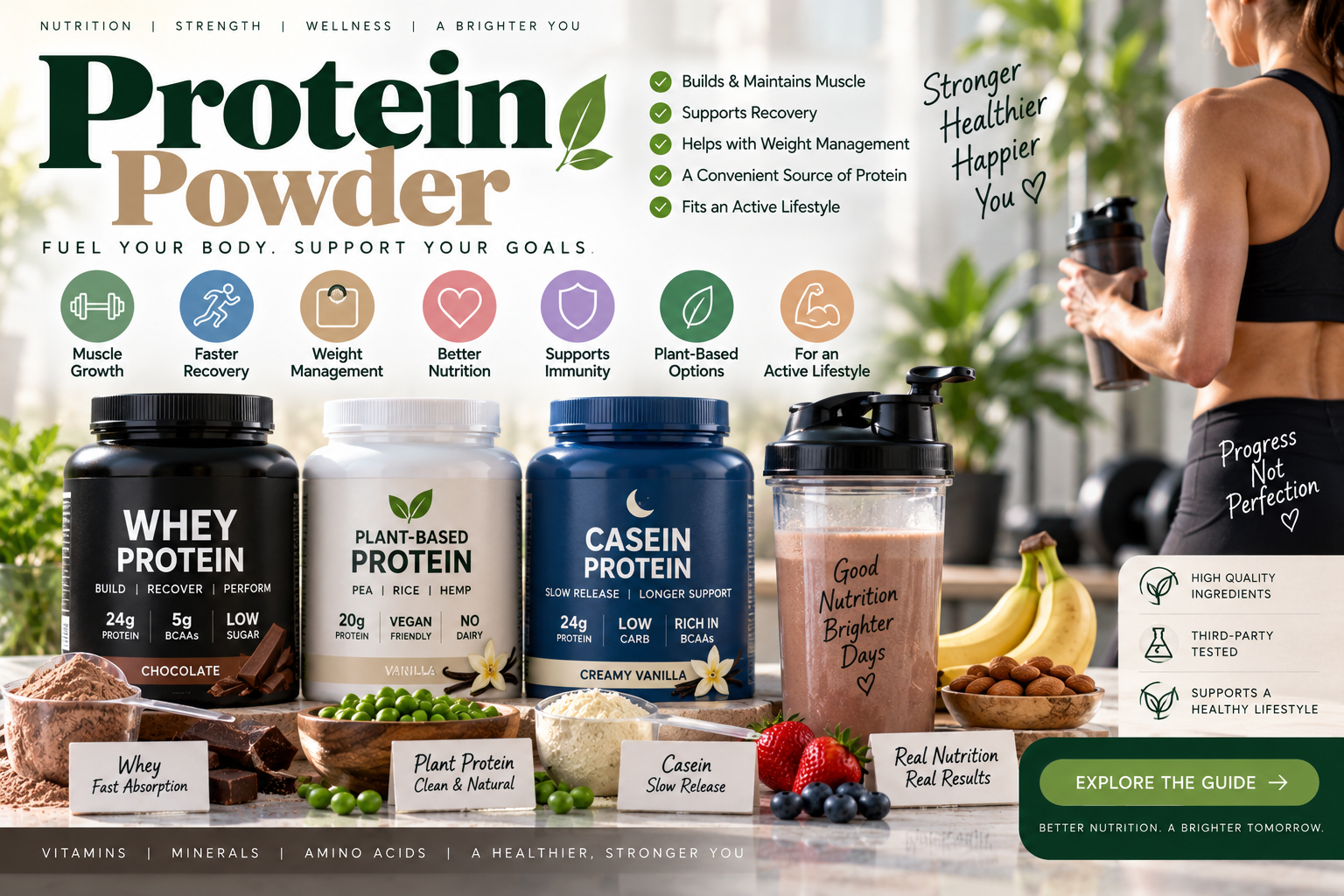
Whey protein
Casein protein
Soy protein
Pea protein
Rice protein
Egg protein
Blended plant proteins
Other specialized protein formulas
Protein is made from amino acids. Nine amino acids are considered essential because the body cannot make enough of them and they must come from food.
Protein sources that provide all essential amino acids in adequate amounts are generally called complete proteins.
Why Does Your Body Need Protein?
Protein plays an important role throughout the body.
It helps with:
Building and maintaining muscle
Repairing tissues
Supporting bones
Producing enzymes
Making hormones and other proteins
Supporting normal immune function
Maintaining skin and other tissues
Protein is continually broken down and rebuilt in the body, which is why it needs to be consumed regularly. Unlike carbohydrates and fats, the body does not maintain a dedicated storage system for excess protein.
Getting enough protein is therefore an important part of overall nutrition.
Who May Benefit From Protein Powder?
Protein powder is not essential for everyone, but certain people may find it useful.
People Who Exercise Regularly
Resistance training and other forms of exercise increase the importance of adequate protein intake for muscle repair and adaptation.
The NIH notes that protein helps build, maintain, and repair muscle and can support the body's response to training and recovery.
People With Busy Schedules
Preparing high-protein meals throughout the day is not always convenient.
A protein shake can provide a quick option when someone does not have time to prepare a full meal.
People With Higher Protein Requirements
Some athletes and physically active people may need more protein than less-active adults.
The NIH's exercise and athletic performance guidance cites approximately 1.2–2.0 grams of protein per kilogram of body weight per day as a range suggested by more recent data for athletes, depending on training and other factors.
People Following Vegetarian or Vegan Diets
Plant-based diets can provide adequate protein, but some people may find it convenient to use soy, pea, rice, or blended plant protein powders.
Eating a variety of plant protein sources throughout the day can help provide the essential amino acids the body needs.
Whey Protein
Whey is one of the most popular types of protein powder.
It is derived from milk and is considered a complete protein because it provides all essential amino acids.
Whey protein is commonly used by people who participate in resistance training because it provides a concentrated source of high-quality protein.
The NIH notes that many protein powders and drinks contain whey and that whey provides all essential amino acids.
Whey protein is available in several forms, including:
Whey Concentrate
Whey concentrate generally contains protein along with varying amounts of carbohydrates and fat.
Whey Isolate
Whey isolate undergoes additional processing to produce a higher protein concentration and generally less lactose and fat than whey concentrate.
Hydrolyzed Whey
Hydrolyzed whey has been partially broken down into smaller protein fragments.
The best option depends on dietary preferences, tolerance, nutritional needs, and budget.
Casein Protein
Casein is another milk-derived protein.
Unlike whey, casein is digested more slowly, resulting in a slower release of amino acids.
The NIH notes that casein releases amino acids into the bloodstream more slowly than whey.
Some people choose casein as a convenient protein source later in the day or before sleep, although total daily protein intake is generally more important than focusing on one specific timing strategy.
Plant-Based Protein Powder
Plant-based protein powders are made from ingredients such as:
Peas
Soy
Rice
Hemp
Other legumes and grains
Some individual plant proteins have lower amounts of one or more essential amino acids. However, combining complementary plant protein sources can provide a broad range of essential amino acids.
Blended plant protein powders are often formulated specifically to improve the overall amino acid profile.
Plant protein can be a useful option for people who avoid dairy or animal products.
Protein Powder and Muscle Growth
One of the most common reasons people use protein powder is to support muscle growth.
Muscle development requires both resistance training and adequate nutrition.
Protein provides the amino acids needed for muscle protein synthesis. Consuming enough protein can help support the body's adaptation to resistance exercise.
However, drinking protein shakes alone will not automatically build large muscles.
Muscle growth depends on several factors, including:
Resistance training
Total protein intake
Overall calorie intake
Training consistency
Sleep
Recovery
Genetics
Overall diet
Protein powder is simply a convenient way of supplying protein.
How Much Protein Do You Need?
Protein needs vary depending on age, body size, activity level, health status, and goals.
For healthy adults, protein is generally recommended as part of the overall diet rather than as a fixed supplement dose.
MedlinePlus states that protein can provide approximately 10% to 35% of total calories in a healthy adult diet.
People who participate in regular athletic training may require more.
The NIH cites research suggesting approximately 1.2–2.0 g/kg/day for athletes, depending on exercise and other factors.
For example, a 70-kg person following an athletic protein target of 1.2–2.0 g/kg would consume approximately 84–140 grams of protein per day.
This includes protein from all food sources, not just protein powder.
Do You Need Protein Powder Every Day?
Not necessarily.
If your normal meals provide enough protein, you may not need a protein supplement.
For example, protein can come from:
Eggs
Milk
Yogurt
Fish
Meat
Beans
Lentils
Tofu
Soy
Nuts
Seeds
Protein powder becomes useful when it helps fill a nutritional gap or makes it easier to meet your protein target.
The goal should be adequate nutrition overall, rather than consuming protein powder simply because it is marketed as a fitness product.
Protein Powder for Weight Management
Protein can contribute to feelings of fullness and satisfaction, which may be useful as part of an overall weight-management diet.
A protein shake can sometimes be a convenient snack or meal component, particularly when it replaces a less nutritious option.
However, protein powder is not automatically a weight-loss product.
Some protein powders contain significant amounts of:
Added sugar
Fat
Calories
Flavoring ingredients
If weight management is your goal, consider the complete nutrition label rather than looking only at the grams of protein.
Protein Powder and Recovery
Exercise creates a need for tissue repair and adaptation.
Adequate protein supports this process by providing amino acids.
The NIH notes that sufficient protein is important for optimizing the training response and recovery period after exercise.
However, the idea that protein must be consumed within a very narrow “anabolic window” after exercise has been overstated.
The NIH notes that research has not consistently shown that consuming protein within exactly one hour before or after exercise produces superior muscle outcomes compared with other timing approaches.
Total daily protein intake and consistent nutrition are generally more important.
Is Protein Powder Safe?
For healthy adults, protein powder can generally be incorporated into a balanced diet when used appropriately.
The NIH reports no known safety concerns with protein intake around recommended athletic levels up to approximately 2.0 g/kg/day. It also notes that the Food and Nutrition Board has not established a tolerable upper intake level for protein.
However, this does not mean that everyone should consume extremely high amounts of protein.
People with certain medical conditions may require individualized dietary advice.
If you have kidney disease, liver disease, digestive problems, or another chronic condition, discuss high-protein diets or protein supplements with a healthcare professional.
Can Protein Powder Cause Side Effects?
Some people may experience digestive symptoms after using protein powder.
Potential problems can include:
Bloating
Gas
Stomach discomfort
Diarrhea
Constipation
Nausea
These effects may depend on the type of protein, serving size, lactose content, sweeteners, or other ingredients.
People who are lactose intolerant may find whey concentrate more difficult to tolerate than whey isolate or a lactose-free option.
Plant-based powders may also contain ingredients that cause digestive symptoms in some people.
If a particular product consistently causes symptoms, changing the formulation or discussing the problem with a healthcare professional may be appropriate.
Protein Powder and Allergies
Protein powders can contain common allergens.
Milk-based products may contain milk proteins, while some plant-based products may contain soy or other allergens.
Some products are also manufactured in facilities that process:
Milk
Soy
Eggs
Wheat
Peanuts
Tree nuts
Always check the ingredient list and allergen statement if you have food allergies.
The FDA has reported recalls involving protein supplement products because of undeclared allergens, demonstrating why label accuracy matters.
How to Choose a Protein Powder
There are many protein powders on the market, and their nutritional profiles can vary significantly.
Consider the following when choosing a product.
1. Check the Protein Amount
Look at how many grams of protein are provided per serving.
Do not judge a product solely by the size of the scoop.
2. Check Calories
A protein powder may contain additional calories from carbohydrates, fats, sugars, or other ingredients.
3. Check Added Sugar
Some flavored protein powders contain significant amounts of added sugar.
If you want a lower-sugar option, compare the nutrition labels.
4. Look at the Ingredient List
A shorter ingredient list may be preferable for people who want a simpler product, although ingredient quality matters more than simply counting ingredients.
5. Check for Allergens
Look for milk, soy, gluten, nuts, or other allergens that may be relevant to you.
6. Consider Independent Testing
Independent testing can provide additional information about product identity and contamination.
However, third-party testing does not automatically prove that a product will produce a specific health benefit.
7. Avoid Unrealistic Claims
Be cautious about products claiming to:
Build muscle instantly
Burn fat automatically
Replace meals completely
Produce dramatic results without exercise
Guarantee weight loss
FDA does not approve dietary supplements for safety and effectiveness before they are marketed in the same way as drugs. Consumers should therefore evaluate supplement claims carefully.
Protein Powder vs. Whole Foods
Protein powder is convenient, but whole foods offer more than protein.
For example, foods such as beans, eggs, dairy products, fish, nuts, and seeds can also provide vitamins, minerals, healthy fats, fiber, or other nutrients.
A balanced diet should therefore remain the foundation of nutrition.
Protein powder can fill a practical gap when preparing or eating a protein-rich meal is inconvenient.
Think of it as a supplement to your diet rather than a replacement for nutritious food.
Is Plant Protein as Good as Whey?
Plant protein can absolutely contribute to adequate protein intake.
However, individual plant proteins differ in their amino acid profiles and digestibility.
Whey is a complete protein and is particularly rich in essential amino acids.
Plant-based diets can still provide adequate essential amino acids when a variety of protein sources are consumed throughout the day.
People who avoid dairy can therefore choose soy, pea, rice, or blended plant proteins based on their nutritional needs and preferences.
Protein Powder for Women
Protein needs are not determined simply by whether someone is male or female.
Women who exercise, strength train, or have increased nutritional requirements may benefit from ensuring adequate protein intake.
Protein can support:
Muscle maintenance
Exercise recovery
Tissue repair
Overall nutrition
However, protein powder is not inherently necessary for women.
The appropriate amount depends on individual dietary needs, activity level, body size, and health status.
Protein Powder for Older Adults
Maintaining adequate protein intake can become increasingly important with aging because muscle mass and strength can decline.
Older adults may benefit from paying attention to protein-rich foods and overall nutrition.
A healthcare professional or registered dietitian can help determine appropriate protein intake, particularly if appetite, chewing, swallowing, kidney function, or other medical issues affect food choices.
Protein Powder for Vegetarians and Vegans
Vegetarians and vegans can meet protein needs through foods such as:
Lentils
Beans
Chickpeas
Tofu
Tempeh
Soy milk
Nuts
Seeds
Whole grains
Protein powder can provide an additional convenient option.
For vegans, plant-based powders made from pea, soy, rice, or mixed plant proteins may be suitable depending on individual preferences and dietary requirements.
When Should You Take Protein Powder?
There is no universal requirement to drink protein powder at a particular time.
Some people prefer it:
After exercise
With breakfast
Between meals
Before or after a busy workday
Before bed
The most important factor is whether the supplement helps you meet your overall nutritional needs.
The NIH notes that the period during which protein can support recovery after exercise extends beyond a narrow one-hour window.
Can You Mix Protein Powder With Water or Milk?
Yes.
Protein powder can usually be mixed with water, milk, plant-based milk, or other beverages depending on the product.
Water provides a lower-calorie option, while milk can add additional protein, carbohydrates, and calories.
Protein powder can also be incorporated into:
Smoothies
Oatmeal
Yogurt
Pancakes
Shakes
Homemade snack recipes
Always follow the manufacturer's instructions for preparation and storage.
What About Protein Bars and Ready-to-Drink Shakes?
Protein bars and ready-to-drink shakes can provide convenient protein sources.
However, their nutritional profiles vary.
Check:
Protein content
Calories
Added sugar
Saturated fat
Fiber
Sodium
Ingredient list
A product labeled “high protein” is not automatically a healthier choice.
The Bottom Line
Protein powder can be a convenient way to increase protein intake, especially for people who exercise regularly, have higher protein needs, follow plant-based diets, or have difficulty getting enough protein from food.
Whey, casein, soy, pea, rice, and blended plant proteins are among the most common options.
However, protein powder is not a requirement for building muscle or maintaining a healthy diet. Whole foods can provide plenty of protein along with other important nutrients.
For active people, the NIH cites approximately 1.2–2.0 grams of protein per kilogram of body weight per day as a range supported by more recent research for athletes, depending on training and other factors.
The best approach is to consider your total daily protein intake, choose a product that fits your nutritional needs, read the label carefully, and seek professional guidance if you have a medical condition or take medications.
Frequently Asked Questions About Protein Powder
Is protein powder good for you?
Protein powder can be useful when it helps someone meet their protein needs, but it is not automatically necessary or healthier than protein-rich whole foods.
Does protein powder build muscle?
Protein provides amino acids needed for muscle protein synthesis, while resistance training stimulates muscle adaptation. Protein powder can support adequate protein intake, but it does not build muscle by itself.
How much protein powder should I take?
There is no universal amount. The appropriate amount depends on how much protein you already get from food and your individual nutritional needs.
Is whey protein safe?
Whey protein is generally well tolerated by many healthy people, but individuals with milk allergies or lactose intolerance may need to choose another formulation.
Is plant protein as good as whey protein?
Plant proteins can contribute effectively to total protein intake. Different plant proteins have different amino acid profiles, so consuming varied plant proteins or using a blended protein can help provide essential amino acids.
Can protein powder help with weight loss?
Protein can contribute to fullness, and a protein shake may be useful as part of a calorie-controlled diet. However, protein powder itself does not guarantee weight loss.
Should I drink protein powder before or after a workout?
Either can fit into a healthy diet. Total daily protein intake is generally more important than focusing on a very narrow post-workout window.
Can I take protein powder every day?
Many healthy adults can incorporate protein powder regularly, provided their overall protein intake is appropriate and the product fits their diet. People with certain medical conditions should seek individualized advice.
Does protein powder have side effects?
Some people experience bloating, gas, stomach discomfort, diarrhea, or constipation. The type of protein and other ingredients can affect tolerance.
Is protein powder a dietary supplement?
Protein powders can be sold as dietary supplements, and FDA specifically includes whey protein among dietary supplement products. Dietary supplements are regulated differently from medicines and are not FDA-approved for safety and effectiveness before marketing.