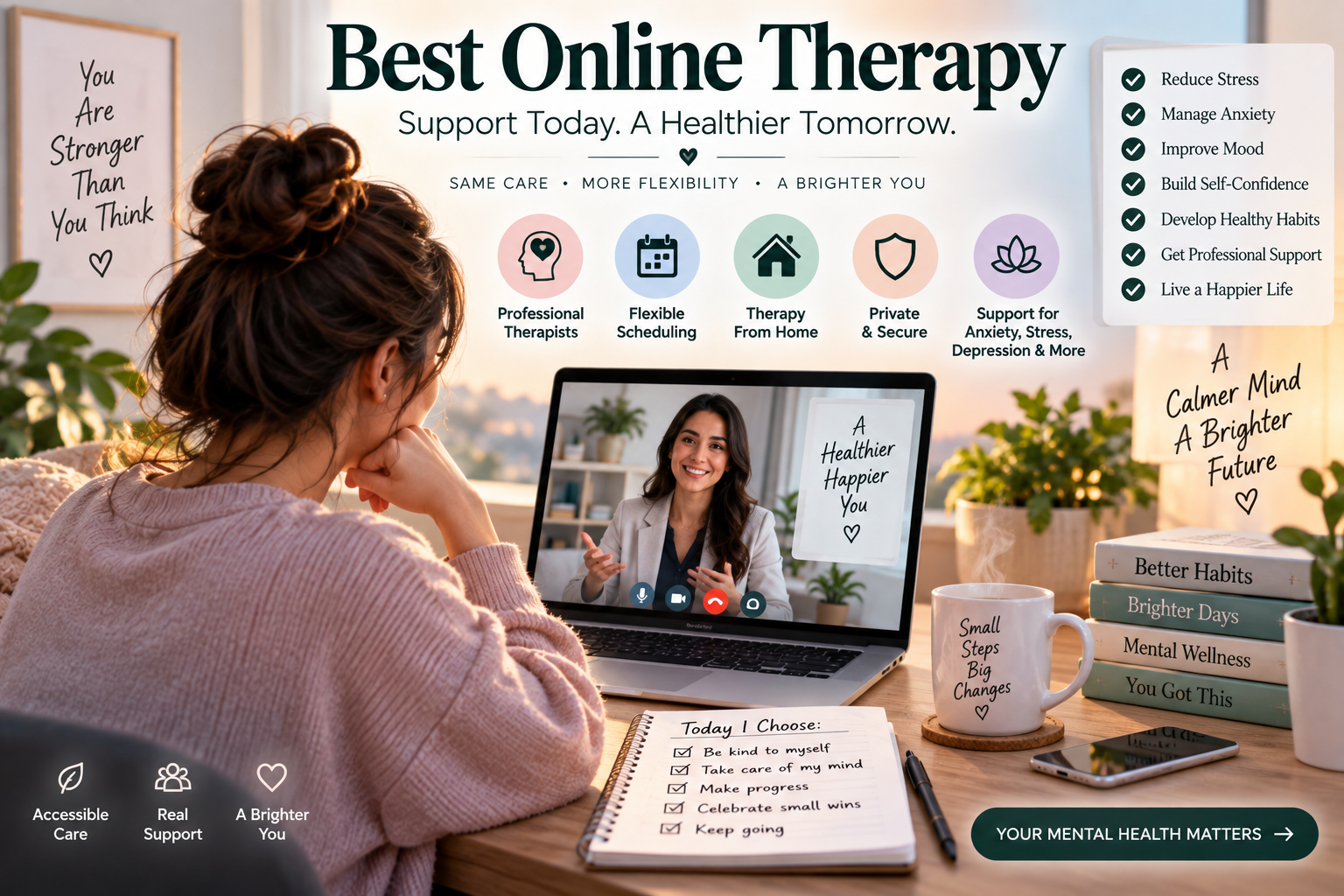
Online therapy has become an increasingly accessible way for people to connect with mental health professionals without traveling to a traditional clinic. Depending on the service and location, therapy may be provided through video sessions, phone calls, live chat, or secure messaging.
The growing availability of online therapy gives people more flexibility when looking for support with concerns such as stress, anxiety, depression, relationship difficulties, grief, burnout, and other emotional challenges. However, choosing an online therapy service requires more than simply selecting the first platform that appears in a search.
The right service depends on factors such as therapist qualifications, treatment needs, communication options, privacy, cost, insurance coverage, location, and personal comfort.
The American Psychological Association recommends checking whether an online provider is appropriately licensed and considering privacy, payment, and whether online therapy is suitable for the person's needs.
What Is Online Therapy?
Online therapy, also called teletherapy or telepsychology, is psychological treatment delivered through digital communication technology.
Depending on the provider, a person may communicate with a therapist through:
Video sessions
Audio sessions
Live text chat
Secure messaging
Telephone sessions
A combination of these methods
The exact services available depend on the platform, therapist, location, and subscription or insurance plan.
Online therapy can make treatment more convenient for people who have difficulty traveling to an office or prefer receiving therapy from a private location. The APA recognizes telepsychology as a way of delivering psychological services through technology, either independently or alongside in-person care.
Why People Choose Online Therapy
Convenience is one of the main reasons people consider online therapy. Instead of traveling to an office, clients can potentially attend a session from home or another suitable private location.
This can be particularly useful for people with busy schedules, transportation difficulties, mobility limitations, or limited access to nearby mental health professionals.
Online therapy can also provide more flexibility in communication. Some services offer scheduled video appointments, while others include messaging between sessions.
However, convenience should not be the only factor considered. The quality and suitability of care are equally important.
What Makes an Online Therapy Service Suitable?
There is no single online therapy service that is right for everyone. Different people have different needs.
When comparing services, consider the following factors.
1. Therapist Qualifications
The qualifications and licensing of the therapist are among the most important factors to check.
The APA recommends confirming that the professional is licensed and qualified to provide psychological services in the relevant jurisdiction.
Look for information about:
Professional qualifications
Licensing
Areas of specialization
Clinical experience
Types of therapy provided
The location where the therapist is licensed
A platform's reputation alone does not replace checking the credentials of the individual professional providing care.
2. Areas of Specialization
Different therapists may specialize in different concerns.
For example, some professionals may have experience with:
Anxiety
Depression
Stress
Relationship concerns
Grief
Trauma
Family issues
Workplace stress
Self-esteem
Life transitions
Before selecting a therapist, consider whether their experience matches the type of support you are looking for.
The APA recommends asking potential psychologists about their experience with the specific problems or concerns a client is experiencing.
3. Video, Audio, or Messaging?
Online therapy platforms may offer different communication formats.
Video sessions are often closest to traditional face-to-face therapy because the therapist and client can communicate in real time.
Audio sessions may be useful for people who prefer not to use video.
Messaging can provide flexibility because communication does not necessarily have to happen at the same time. However, messaging is different from a scheduled psychotherapy session and may not be appropriate for every situation.
For example, Talkspace currently offers licensed-provider care through messaging and live video or audio sessions depending on the plan.
The best format depends on personal preferences, treatment requirements, therapist availability, and the service being used.
4. Privacy and Security
Mental health conversations can contain highly personal information, making privacy an important consideration.
Before signing up, review the platform's privacy policy and understand how personal information and therapy communications are handled.
The APA recommends considering whether an online therapy service has appropriate privacy and security measures and whether users can verify the identity of the provider.
Clients should also choose a private location for therapy sessions and use secure internet connections when possible.
5. Cost and Insurance
The price of online therapy varies significantly.
Some platforms operate through subscriptions, while others charge for individual sessions. Insurance coverage may also differ depending on the provider, location, plan, and service.
For example, BetterHelp currently states that its U.S. subscription pricing generally ranges from approximately $70 to $100 per week, although prices can vary based on location, availability, preferences, and promotions.
Talkspace states that it works with many major U.S. insurance plans, while also offering self-pay options.
Because prices and coverage can change, users should check the current cost directly with the provider before subscribing.
6. Therapist Matching
Some online therapy platforms use questionnaires to help match clients with therapists.
Matching systems can make it easier to find professionals with relevant specialties, but an automated match does not necessarily mean the therapist will be the right personal fit.
A comfortable therapeutic relationship can be important. The APA notes that personal comfort and rapport are significant considerations when choosing a psychologist.
If the relationship does not feel productive or comfortable after a reasonable period, asking about changing therapists may be appropriate.
Popular Online Therapy Platforms
Several established platforms provide online mental health services. Their features, availability, pricing, and eligibility can change, so users should check the providers' current information before making a decision.
BetterHelp
BetterHelp offers online therapy through communication methods such as video, phone, and messaging. Its current information describes teletherapy as mental health care delivered remotely through technology and says its network includes licensed therapists.
BetterHelp's current U.S. pricing information describes subscriptions that generally range from $70 to $100 per week, although actual pricing can vary.
Potential considerations include the subscription structure, therapist availability, location restrictions, and whether the service meets an individual's particular treatment needs.
Talkspace
Talkspace provides online therapy and other mental health services. Depending on the plan, users can communicate with providers through live video, audio, or messaging.
Talkspace states that its providers are licensed in the state where they practice and that its services can include therapy, psychiatry, and medication management.
Its insurance availability is primarily relevant to eligible users in the United States, so people outside the U.S. should verify whether the service is available in their location.
Online Therapy vs. In-Person Therapy
Online therapy and traditional in-person therapy both have potential advantages.
Online therapy may offer:
Convenient access
Reduced travel time
Flexible communication options
Remote appointments
Access to therapists who may not have a nearby physical office
In-person therapy may be preferable for some people because they value face-to-face interaction or require services that are better provided in a clinical setting.
The appropriate format depends on the individual's needs.
Online therapy should not automatically be considered a replacement for in-person treatment in every situation. The APA notes that online therapy may not be suitable for everyone or every circumstance.
Is Online Therapy Effective?
Research into telepsychology has expanded considerably, and online therapy can be a legitimate method of receiving psychological care.
However, effectiveness depends on many factors, including the type of therapy, the condition being treated, the therapist's qualifications, the client's engagement, and the communication method.
A platform's marketing claims should therefore not be treated as proof that it will work equally well for every person.
The quality of the therapeutic relationship and use of appropriate evidence-based treatment remain important.
Online Therapy for Anxiety and Stress
People experiencing anxiety or everyday stress may consider online therapy as one way to access professional support.
A qualified therapist can help a person explore thoughts, behaviors, emotions, coping strategies, and circumstances contributing to distress.
Different therapeutic approaches may be used depending on the individual's needs. Cognitive behavioral therapy, for example, is one approach commonly used for various mental health concerns.
People experiencing persistent or severe anxiety should consider professional evaluation rather than relying solely on self-help applications or online articles.
Online Therapy for Depression
Depression can affect mood, motivation, sleep, appetite, concentration, relationships, and daily functioning.
Online psychotherapy may be an option for some people with depression, depending on the severity of symptoms and the type of support required.
However, people experiencing severe symptoms should receive appropriate professional assessment. In situations involving immediate safety concerns or thoughts of suicide or self-harm, urgent local emergency or crisis services should be contacted.
Online therapy platforms are not designed to replace emergency services.
Questions to Ask Before Choosing an Online Therapist
Before starting therapy, consider asking:
Are you appropriately licensed?
What conditions or concerns do you specialize in?
What type of therapy do you provide?
How are sessions conducted?
How long is each session?
How much does treatment cost?
Does insurance cover the service?
How is personal information protected?
Can I change therapists if the match is not suitable?
What should I do if I experience an urgent mental health problem?
These questions can help clarify whether a service is appropriate.
How to Prepare for an Online Therapy Session
A quiet and private environment can make online therapy more comfortable.
Before a session, check your internet connection, microphone, camera, and device. Choose a place where you can speak privately without unnecessary interruptions.
It can also help to write down the issues you want to discuss.
You do not need to prepare a perfect explanation of your feelings. A therapist can help guide the conversation.
When Online Therapy May Not Be Appropriate
Online therapy is not suitable for every situation.
Someone experiencing an immediate psychiatric emergency, severe impairment, or an urgent safety concern may require in-person emergency care or crisis services.
People with complex medical or psychiatric needs may also require a level of assessment or treatment that cannot be provided through a particular online platform.
A healthcare professional can help determine the appropriate level of care.
Tips for Finding the Right Online Therapist
Finding an appropriate therapist may require some comparison.
Start by identifying what you want help with. Then look for professionals with relevant qualifications and experience.
Check licensing and professional credentials. Review the available treatment formats and costs. Consider whether you feel comfortable communicating through video, audio, or messaging.
After beginning therapy, pay attention to whether communication feels respectful and whether the treatment approach makes sense for your goals.
Therapy is a collaborative process, and finding a suitable professional can take time.
Conclusion
Online therapy can make mental health support more convenient and accessible for many people. Services may provide therapy through video, audio, live chat, or secure messaging, depending on the platform and plan.
Rather than searching for one universally “best” online therapy service, people should compare providers according to their own needs. Therapist qualifications, licensing, specialization, privacy, communication options, cost, insurance coverage, and personal comfort are important factors.
Platforms such as BetterHelp and Talkspace provide different approaches to online mental health care, but availability and pricing can vary by location and over time. Users should review current information directly from providers before signing up.
Most importantly, online therapy should be provided by appropriately qualified professionals and should be used at a level of care appropriate to the individual's circumstances. For urgent or emergency mental health situations, immediate local professional or emergency support is more appropriate than relying on a standard online therapy platform.
Frequently Asked Questions
1. What is online therapy?
Online therapy is psychological treatment delivered remotely through technologies such as video calls, audio sessions, live chat, or secure messaging.
2. What is the best online therapy platform?
There is no single platform that is best for everyone. The appropriate choice depends on factors such as therapist qualifications, specialization, communication options, cost, location, privacy, and individual treatment needs.
3. Is online therapy effective?
Online therapy can be an appropriate form of psychological care for many people, but outcomes depend on the person, therapist, treatment approach, and circumstances.
4. How much does online therapy cost?
Costs vary significantly between providers and locations. Subscription-based services, individual sessions, insurance coverage, and therapist fees can all affect the final price.
5. Is BetterHelp legitimate?
BetterHelp is an online therapy platform that connects users with licensed therapists. Users should still review the individual therapist's credentials, treatment approach, availability, and suitability for their needs.
6. Is Talkspace legitimate?
Talkspace is an online mental health platform offering therapy and other services through licensed providers. Services and eligibility vary by location and plan.
7. Can online therapy help with anxiety?
Online therapy can provide professional support for people experiencing anxiety, depending on the severity of symptoms and the therapist's qualifications and treatment approach.
8. Can online therapy help with depression?
Online psychotherapy may be appropriate for some people experiencing depression. However, severe symptoms or immediate safety concerns require appropriate professional evaluation and potentially a higher level of care.
9. Is online therapy private?
Reputable platforms use security and privacy measures, but users should review the provider's privacy policies before sharing sensitive information. The APA recommends considering privacy and security when selecting an online therapy service.
10. Can I change my online therapist?
Some platforms allow users to change therapists. For example, Talkspace currently states that members can switch providers without an additional cost.
11. Is online therapy cheaper than in-person therapy?
It can be, but not always. Pricing varies by therapist, platform, location, insurance coverage, and treatment format.
12. What should I look for in an online therapist?
Look for appropriate licensing, relevant experience, suitable treatment methods, clear fees, secure communication, and a therapist with whom you feel comfortable working.
13. Can online therapy replace a psychiatrist?
Not necessarily. Psychotherapy and psychiatric care serve different purposes. Some platforms offer both therapy and psychiatric services, while others focus primarily on therapy.
14. Can online therapy be used during a mental health emergency?
Standard online therapy platforms should not be relied upon for emergencies. Someone facing an immediate safety risk should contact local emergency or crisis services or seek urgent in-person medical care.
15. How do I start online therapy?
Start by identifying your needs, researching qualified providers, checking licensing and costs, reviewing privacy information, and selecting a communication format that suits you. Then schedule an initial appointment or consultation where available.