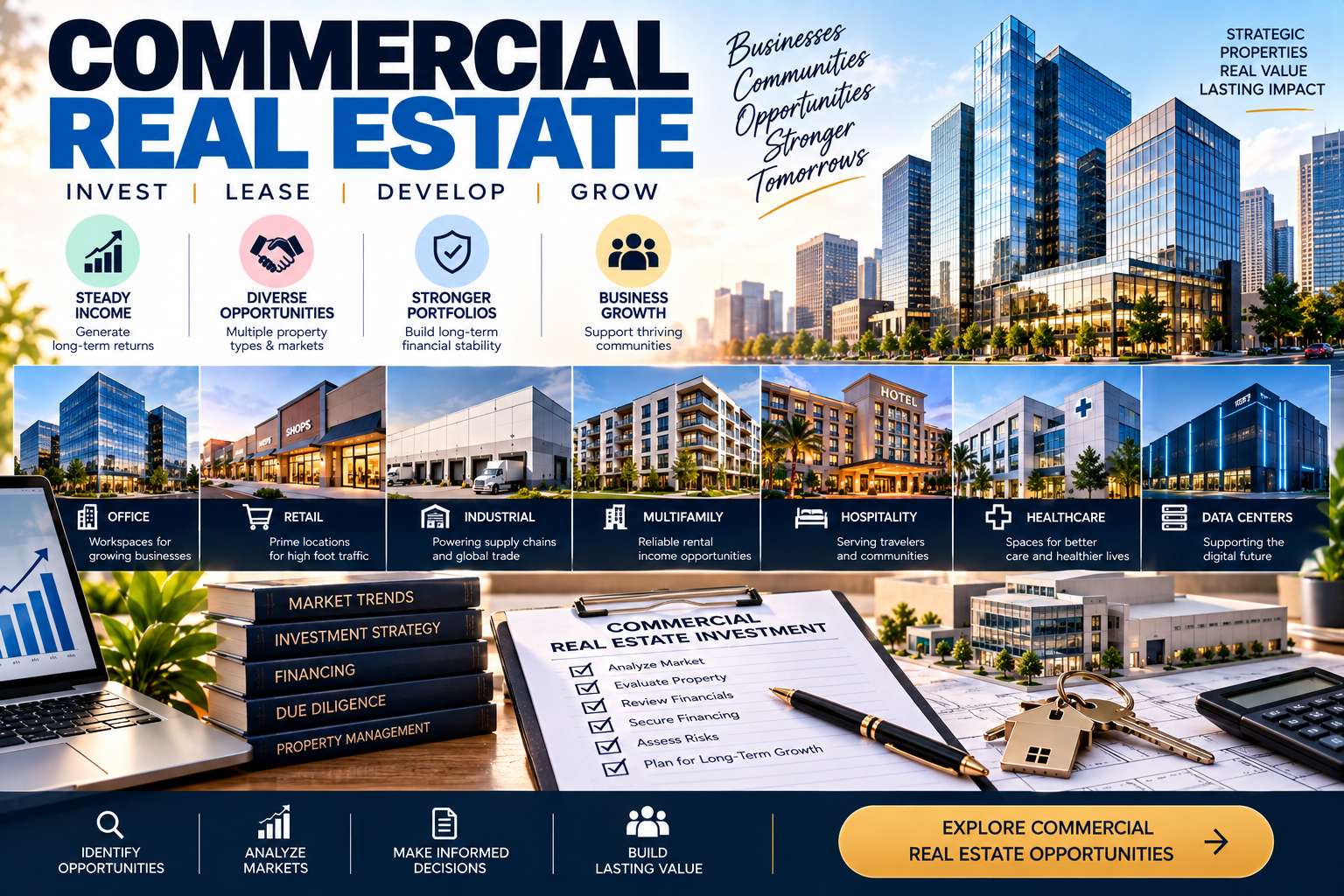
Real estate is one of the most important parts of the global economy and one of the biggest financial decisions many people make. Whether you are buying your first home, selling a property, investing in rental real estate, or simply learning how the property market works, understanding the fundamentals can help you make more informed decisions.
Real estate includes residential homes, apartments, commercial buildings, land, industrial properties, and other structures. Unlike many financial assets, real estate is a physical asset that can provide a place to live, generate rental income, or potentially appreciate in value over time.
However, buying property involves more than simply finding a house you like. Buyers need to consider affordability, financing, taxes, insurance, maintenance, location, inspections, closing costs, and long-term financial goals. The CFPB advises prospective homeowners to consider the complete cost of ownership rather than focusing only on the mortgage payment.
What Is Real Estate?
Real estate refers to land and the permanent structures attached to it.
The major categories include:
Residential real estate
Commercial real estate
Industrial real estate
Vacant land
Agricultural property
Multifamily properties
Special-purpose properties
Residential real estate includes houses, condominiums, townhouses, and apartments. Commercial real estate can include offices, retail stores, hotels, and other properties used for business purposes.
How Does Real Estate Work?
Real estate transactions generally involve buyers, sellers, lenders, agents, attorneys, inspectors, title companies, insurers, and other professionals.
A typical residential purchase may involve these steps:
Determine your budget.
Review your financing options.
Get preapproved for a mortgage if financing is needed.
Search for suitable properties.
Make an offer.
Complete inspections and other due diligence.
Finalize financing.
Review closing documents.
Complete the closing.
Transfer ownership.
HUD's homebuying guidance similarly recommends determining affordability, shopping for a loan, shopping for a property, making an offer, getting a home inspection, arranging insurance, and carefully reviewing documents before closing.
Types of Real Estate
Residential Real Estate
Residential property is designed primarily for people to live in.
Examples include:
Single-family homes
Condominiums
Townhouses
Duplexes
Multifamily buildings
Manufactured homes
For many buyers, residential real estate represents both a home and a significant long-term financial commitment.
Commercial Real Estate
Commercial real estate is generally used for business activities.
Examples include:
Office buildings
Shopping centers
Restaurants
Hotels
Retail properties
Medical buildings
Commercial properties can involve different financing structures, leases, operating costs, and investment considerations than residential properties.
Industrial Real Estate
Industrial real estate supports activities such as manufacturing, storage, logistics, and distribution.
Examples include:
Warehouses
Distribution centers
Manufacturing facilities
Industrial parks
Demand for industrial property can be influenced by manufacturing activity, transportation infrastructure, logistics networks, and business expansion.
Land
Land can be purchased for residential development, agriculture, commercial development, recreation, or long-term investment.
Before purchasing undeveloped land, buyers should investigate zoning, access, utilities, environmental considerations, property boundaries, and development restrictions.
Why Location Matters in Real Estate
Location is one of the most important factors in property value and demand.
Important location factors can include:
Employment opportunities
Schools
Transportation
Shopping
Healthcare
Public services
Neighborhood development
Property taxes
Crime and safety information
Future infrastructure projects
Local housing supply
A property with attractive features may still perform differently from a similar property in another neighborhood because local conditions can affect demand and prices.
Buying a Home
Buying a home is a major financial commitment. Before beginning your search, establish a realistic budget.
Consider:
Income
Existing debts
Savings
Credit history
Down payment
Mortgage payment
Property taxes
Homeowners insurance
Mortgage insurance
HOA fees
Maintenance
Utilities
Closing costs
The amount a lender is willing to lend is not necessarily the amount you can comfortably afford. CFPB specifically recommends considering your broader household budget, savings, insurance, taxes, repairs, and other expenses when determining affordability.
Getting Preapproved for a Mortgage
A mortgage preapproval can help a buyer understand the approximate amount a lender may be willing to finance.
A lender generally reviews information such as:
Income
Employment
Credit history
Existing debts
Assets
Down payment
Financial documents
Preapproval can also make it easier to understand the price range you may be considering.
However, buyers should avoid treating the maximum approved amount as their target budget.
Choosing a Mortgage
There are different mortgage products available to qualified borrowers.
Common options include:
Conventional mortgages
FHA loans
VA loans
USDA loans
Fixed-rate mortgages
Adjustable-rate mortgages
Each option can have different eligibility requirements, interest rates, fees, insurance requirements, and repayment structures.
When comparing mortgages, look at the interest rate, APR, loan term, points, closing costs, and other loan features.
Down Payments
A down payment is the portion of the property's purchase price that the buyer pays upfront.
For example, if a home costs $300,000 and the buyer makes a 10% down payment, the down payment would be $30,000.
A larger down payment can reduce the amount borrowed, but buyers should also maintain sufficient savings for emergencies, closing costs, repairs, and other expenses.
Some mortgage programs allow qualified buyers to purchase with relatively low down payments.
Understanding Closing Costs
The purchase price isn't the only expense involved in buying a home.
Closing costs can include expenses associated with:
Loan origination
Appraisal
Title services
Recording
Insurance
Taxes
Escrow
Other settlement services
Buyers should review these costs carefully before closing.
For many mortgages, borrowers receive a Closing Disclosure before closing that details the final loan terms and closing costs. CFPB advises reviewing it against the earlier Loan Estimate and asking questions about anything that does not match expectations.
Why a Home Inspection Matters
A home inspection can help buyers identify potential problems with a property before completing the purchase.
An inspection may identify issues involving:
Roof
Foundation
Plumbing
Electrical systems
Heating and cooling
Windows
Structural components
Water damage
An inspection does not eliminate every possible risk, but it can provide valuable information for the buyer.
In some transactions, buyers may negotiate repairs or other contract terms based on inspection findings.
Buying Real Estate as an Investment
Real estate can also be used as an investment.
Common investment strategies include:
Long-term rental properties
Multifamily properties
Commercial real estate
Real estate development
Land investment
Real estate investment trusts (REITs)
Property renovation and resale
Each strategy has different risks, costs, liquidity characteristics, and management requirements.
Rental Real Estate
Rental property investors purchase properties and rent them to tenants.
Potential income can come from:
Monthly rent
Parking fees
Storage fees
Other permitted property-related charges
However, rental income is not the same as profit.
Investors may need to pay for:
Mortgage payments
Property taxes
Insurance
Maintenance
Repairs
Property management
Utilities
Vacancies
Legal expenses
A property that produces significant rent can still generate limited cash flow if operating expenses and financing costs are high.
Real Estate Investment Returns
Real estate investors may evaluate several potential sources of return.
Rental Income
Rental income can provide recurring revenue when a property is occupied.
Property Appreciation
A property's market value may increase over time, although appreciation is never guaranteed.
Equity Building
When a mortgage balance decreases through principal payments, the owner's equity may increase, assuming other factors remain constant.
Tax Considerations
Some real estate investments may have tax implications or potential tax benefits. Tax treatment depends on the investor's circumstances and applicable laws, so professional tax advice may be appropriate.
What Is Real Estate Appreciation?
Real estate appreciation refers to an increase in a property's market value.
Potential factors include:
Increased demand
Limited housing supply
Neighborhood improvements
Population growth
Employment growth
Infrastructure investment
Economic conditions
However, property values can also decline.
Real estate should therefore not be viewed as an investment that automatically increases in value.
Real Estate Market Supply and Demand
Like many markets, real estate is influenced by supply and demand.
When demand for homes increases while available inventory remains limited, prices can experience upward pressure.
When inventory increases relative to demand, buyers may have more choices and sellers may face greater competition.
Local conditions can differ substantially from national trends, which is why buyers and investors should examine the specific market where they plan to purchase.
Buying vs. Renting
The decision between buying and renting depends on personal circumstances and local housing economics.
Potential advantages of buying
Building home equity
Greater control over the property
Potential long-term appreciation
Potential stability for long-term residents
Potential advantages of renting
Lower upfront commitment in some situations
Greater flexibility to move
Less responsibility for certain property repairs
No need to sell a property when relocating
Buying isn't automatically financially better than renting. The appropriate choice depends on housing costs, expected length of stay, finances, local market conditions, and personal priorities.
Selling a Property
Selling real estate involves more than listing a property online.
A seller may need to:
Determine an appropriate asking price.
Prepare the property.
Gather relevant documents.
Market the property.
Review offers.
Negotiate terms.
Complete inspections or repairs.
Work through the financing and closing process.
Complete the transfer of ownership.
Selling costs can include commissions, taxes, repairs, concessions, closing expenses, and other transaction-related costs.
How Is a Property's Value Determined?
Property valuation can consider:
Recent comparable sales
Property size
Location
Condition
Number of bedrooms and bathrooms
Lot size
Improvements
Local demand
Market conditions
A professional appraisal may also be required by a mortgage lender.
Comparable properties, commonly called "comps," can help buyers and sellers understand how similar properties have recently performed in the same market.
The Role of a Real Estate Agent
A real estate agent can help buyers or sellers navigate the transaction.
Depending on the arrangement and local laws, an agent may assist with:
Finding properties
Scheduling showings
Preparing offers
Negotiating
Coordinating inspections
Communicating with other parties
Navigating paperwork
Buyers should understand whom an agent represents and how the agent or brokerage is compensated. CFPB recommends asking these questions before working with an agent.
Real Estate Due Diligence
Due diligence means investigating a property and transaction before committing.
Important areas can include:
Property inspection
Title search
Zoning
Property taxes
Insurance availability
Flood or disaster risk
Neighborhood conditions
HOA rules
Property boundaries
Permits
Existing liens
Environmental concerns
Thorough due diligence can help buyers identify issues before completing a transaction.
Real Estate and Homeowners Insurance
Homeowners insurance can protect against certain covered risks involving the property.
Insurance requirements can also affect mortgage financing.
Buyers should understand:
Premiums
Deductibles
Coverage limits
Exclusions
Flood coverage
Other specialized coverage
CFPB recommends considering insurance costs and potential risks when determining whether a property fits within your budget.
Property Taxes
Property taxes are an important recurring expense for homeowners.
Tax rates and assessment systems vary by location.
Before purchasing, buyers should investigate the property's current tax bill and understand whether taxes could change after the purchase.
A property that appears affordable based only on its mortgage payment may become considerably more expensive after taxes, insurance, HOA fees, maintenance, and utilities are included.
Homeowners Association Fees
Some properties belong to homeowners associations, commonly called HOAs.
HOA fees may help pay for services and maintenance associated with shared community areas.
Before purchasing an HOA property, review:
Monthly or annual dues
Rules and restrictions
Reserve funds
Special assessments
Maintenance responsibilities
Rental restrictions
Community regulations
Understanding HOA requirements before buying can help prevent unexpected costs or restrictions.
Common Real Estate Mistakes to Avoid
1. Buying More House Than You Can Afford
A lender's maximum approval does not necessarily represent a comfortable budget.
2. Ignoring Additional Costs
Taxes, insurance, maintenance, repairs, HOA fees, and closing costs can significantly affect the total cost of ownership.
3. Skipping the Inspection
A property may look attractive while having expensive underlying problems.
4. Failing to Compare Mortgages
Different lenders can offer different rates, fees, and loan structures.
5. Using All Your Savings for the Down Payment
Homeownership comes with unexpected expenses. Maintaining an emergency reserve can be important.
6. Ignoring Location
The neighborhood can influence property demand, resale potential, insurance costs, taxes, and everyday convenience.
7. Making an Emotional Purchase
Buyers should evaluate the property's financial and practical characteristics rather than focusing exclusively on appearance.
Real Estate Market Trends
Real estate markets can change because of:
Mortgage rates
Employment
Population changes
Housing supply
Construction activity
Inflation
Consumer confidence
Local regulations
Economic conditions
Mortgage rates can influence purchasing power because higher borrowing costs can increase monthly payments.
Buyers should therefore evaluate current market conditions while also considering their own long-term financial position.
Technology and Real Estate
Technology has transformed the way people search for and transact real estate.
Modern tools can help users:
Search property listings
Compare prices
View virtual tours
Estimate mortgage payments
Research neighborhoods
Communicate with agents
Submit documents
Track transactions
Digital tools can make the process more convenient, but important legal and financial documents should still be reviewed carefully.
Real Estate and Long-Term Financial Planning
A property purchase should fit into a broader financial plan.
Before buying, consider:
Emergency savings
Retirement contributions
Existing debts
Income stability
Future family needs
Expected length of ownership
Maintenance costs
Potential relocation
Investment goals
Homeownership can be rewarding, but it also creates ongoing financial responsibilities.
A Simple Real Estate Buying Checklist
Before purchasing a property, consider the following:
Financial preparation
Check your credit.
Review your income and expenses.
Build savings.
Determine your comfortable budget.
Mortgage preparation
Compare lenders.
Review interest rates and APR.
Understand closing costs.
Obtain and compare official loan offers.
Property research
Research the neighborhood.
Compare similar properties.
Review taxes and HOA fees.
Investigate insurance costs.
Check potential environmental or disaster risks.
Due diligence
Arrange an inspection.
Review title information.
Check permits and property records.
Understand the purchase contract.
Closing
Review the final documents.
Compare the Closing Disclosure with the Loan Estimate.
Confirm the amount required to close.
Make sure ownership documents are properly recorded.
Final Thoughts
Real estate can provide a home, business location, rental income, or a long-term investment, but every property transaction involves financial and practical considerations.
Successful real estate decisions begin with understanding affordability, financing, property condition, location, taxes, insurance, maintenance, and transaction costs.
For homebuyers, the goal should not simply be to find a property they like. It should be to find a property and financing arrangement that fits their budget and long-term plans.
Taking time to compare mortgage offers, inspect properties, research locations, and review closing documents can make the buying process easier to understand and help reduce avoidable surprises. HUD and CFPB both provide resources designed to help consumers navigate the homebuying process from budgeting through closing.
FAQs About Real Estate
What is real estate?
Real estate refers to land and permanent structures attached to it, including residential, commercial, industrial, agricultural, and other types of property.
Is real estate a good investment?
Real estate can be an investment, but returns are not guaranteed. Property values, rental income, financing costs, taxes, maintenance, vacancies, and local market conditions can all affect investment performance.
What should I consider before buying a home?
Consider your income, debts, savings, credit, down payment, mortgage payment, taxes, insurance, maintenance, closing costs, location, and long-term plans.
How much should I spend on a house?
There is no universal price that works for everyone. Your budget should account for your complete housing costs and other financial priorities rather than simply the maximum amount a lender is willing to approve.
What is a down payment?
A down payment is the portion of a property's purchase price that the buyer pays upfront instead of borrowing through a mortgage.
Why is a home inspection important?
A home inspection can identify potential problems with a property's structure, systems, and condition before the purchase is completed.
What are closing costs?
Closing costs are expenses associated with completing a real estate transaction. They can include loan-related fees, title services, taxes, insurance, recording fees, and other settlement expenses.
Should I buy or rent?
The answer depends on your finances, local housing costs, expected length of stay, flexibility needs, and long-term goals.
Can real estate prices fall?
Yes. Property values can decline due to changes in supply and demand, economic conditions, interest rates, local employment, or other market factors.
What is real estate appreciation?
Appreciation is an increase in a property's market value over time. Appreciation is possible but not guaranteed.
What is a real estate agent?
A real estate agent is a licensed professional who can assist with buying, selling, or leasing property, depending on their role and applicable local laws.
What is due diligence in real estate?
Due diligence is the process of researching and evaluating a property and transaction before completing the purchase. It can include inspections, title research, financial analysis, zoning checks, and reviewing contracts.
What is an HOA?
A homeowners association, or HOA, is an organization that manages certain shared community areas and enforces community rules for properties within its jurisdiction. HOA fees and restrictions vary by community.
What should I check before closing on a home?
Review your final loan and closing documents, confirm the amount you need to bring to closing, check the property and transaction details, and ask about anything you do not understand. CFPB recommends comparing the Closing Disclosure with your earlier Loan Estimate.